Travel
Best Places to Visit. AI-Generated.
When planning a vacation, people often look for an experience that aligns with their personal interests, budget, and the level of relaxation or adventure they desire. Here are some common factors that shape what people search for when planning their perfect getaway.
By Lost in Destinations2 years ago in Chapters
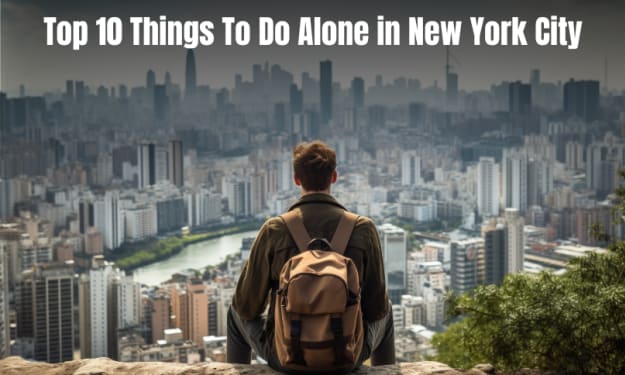
Top 10 Things To Do Alone in New York City. Content Warning. AI-Generated.
New York City is one of the most exciting places in the world, and it offers plenty of things for solo travelers to enjoy. Whether you’re in NYC for the first time or you’ve been here before, there’s something special about exploring it alone. In this guide, we’ll cover the best things to do alone in New York City to make the most of your solo trip.
By Pristine Traveller Tales2 years ago in Chapters
Top 5 Benefits of Choosing Contractor Accommodation in Liverpool for Your Next Project
Working on a project in a busy city like Liverpool can be a challenge, especially when it comes to finding convenient, affordable accommodation for your team. Contractor accommodations in Liverpool offer solutions that go beyond the basics, making it easier to keep your crew comfortable, focused, and ready for work. Here are the top five reasons why choosing contractor accommodation in Liverpool can be a game-changer for your project.
By All Elite Stays2 years ago in Chapters
Agun Pan: The Fiery Street Food Sensation of Old Dhaka
Agun Pan is a new and exciting version of the traditional paan from Old Dhaka, a city rich in culture and street food. Known as "Fire Paan," this dish consists of a betel leaf wrapped around various fillings, which is briefly set on fire before being eaten. Originating in India, Agun Pan quickly gained popularity in Bangladesh, attracting both locals and tourists eager to try this daring culinary adventure.
By Md Mostafizur Rahman2 years ago in Chapters
Stand Against Injustice and Remain Just: A Call for Humanity
Stand Against Injustice and Remain Just: A Call for Humanity In a world filled with complexities and inequalities, standing up against injustice is one of the most powerful actions we can take. The notion of “do not tolerate injustice and do not do injustice to anyone” is a moral directive that challenges us to lead lives rooted in fairness, compassion, and responsibility. When we stand against unfairness, not only do we protect others, but we also preserve our own integrity. This article explores why opposing injustice is crucial, how it shapes our society, and how small, compassionate acts of justice create ripples that inspire and transform lives. The Impact of Injustice: Lessons from History Throughout history, societies that tolerated or engaged in injustice have seen division, suffering, and eventual downfall. The examples of civil rights leaders like Mahatma Gandhi and Martin Luther King Jr. stand as a testament to the power of resisting oppression peacefully. Gandhi, in his struggle for India's freedom, demonstrated that one need not resort to violence to oppose injustice. He faced imprisonment, discrimination, and physical threats but remained steadfast in his resolve for a free and fair India. His resistance was not just for his benefit but for the freedom and dignity of millions. Dr. King, inspired by Gandhi, took a similar stance against racial discrimination in America. His non-violent protests, courage, and resilience inspired countless others to fight for equal rights, sparking a movement that transformed American society. Both leaders exemplified the value of standing against injustice, teaching us that even in the face of severe adversity, one should never remain passive or indifferent. By following their example, we recognize that true strength lies in upholding justice without imposing harm on others. Everyday Injustice: Turning a Blind Eye or Taking a Stand? Injustices happen daily, not only in grand political or historical contexts but also in everyday situations. Consider the small yet significant acts of injustice we might witness—bullying at school, mistreatment in the workplace, or discrimination based on someone’s appearance, background, or abilities. Each time we see someone being marginalized or wronged, we face a choice: to ignore it or to take a stand. Standing up doesn’t always mean confronting an oppressor directly. Sometimes, it’s about offering a supportive hand, a listening ear, or simply standing beside someone who is struggling. An inspiring example is a story from an ordinary workplace: a new employee, often ridiculed for their slow learning pace, felt isolated and discouraged. One colleague noticed this treatment and decided to reach out, helping the new employee learn the tasks with patience and encouragement. This act not only helped the newcomer succeed but also changed the office culture, encouraging others to be more compassionate. The Courage to Act: Why It's Easier Said Than Done Taking a stand against injustice often comes with personal challenges. It might mean going against a popular opinion, risking your own comfort, or even jeopardizing relationships. In some cases, it can bring threats or retaliation. Despite these challenges, those who choose to speak up often discover a deep sense of purpose and fulfillment. Imagine a young student who decides to report a case of bullying, risking social exclusion to protect a fellow student. This act might isolate them temporarily, but it also sets an example that encourages others to act with kindness and courage. Over time, such choices shape the moral fabric of our communities. A society becomes stronger when individuals choose to do the right thing, even when it’s difficult. Stories of Compassion and Justice: Small Actions, Big Changes Examples of small actions that resist injustice remind us that everyone has the potential to make a difference. Consider the story of a woman who, upon noticing the discrimination faced by street vendors in her city, decided to use her voice. She started a social media campaign sharing the stories of these vendors, highlighting their struggles and contributions. As her campaign gained support, it brought awareness to the unfair treatment they faced, prompting local authorities to create a fairer environment for these vendors. Similarly, there are countless stories of individuals standing up to social stereotypes, challenging discrimination against people with disabilities, different races, or gender identities. Each act, however small, contributes to a ripple effect that impacts society. This commitment to fairness fosters empathy and respect, essential qualities that a compassionate society needs. Balancing Justice with Compassion While it’s vital to stand against injustice, it’s equally important to approach it with compassion. Fighting injustice doesn’t mean confronting every instance with anger or retaliation. Instead, it involves a balanced response that seeks to correct wrongs while understanding the complexities of each situation. Many times, those committing injustices are products of ignorance, bias, or societal conditioning. Approaching them with patience and empathy can lead to more lasting change than aggressive confrontation. For instance, if someone harbors prejudices against a particular group, a calm conversation might open their eyes in ways that hostility cannot. When we address injustice with an open mind and a genuine desire to understand, we create the opportunity for education and growth, both for ourselves and others. The Strength of Unity in Justice Taking a stand against injustice is most effective when done collectively. Communities that uphold values of fairness and respect can create a supportive network where individuals feel safe to raise their voices. By supporting each other in this way, we cultivate a culture of mutual trust and accountability. A beautiful example of collective justice is when neighborhoods come together to support marginalized individuals, like families affected by poverty, or children who cannot access quality education. People unite to offer resources, mentorship, or financial assistance, building a system where everyone has a fair chance at success. Such communities become a beacon of hope, showing that when people act together, they can overcome the harshest inequalities. Creating a Legacy of Justice Imagine a world where children grow up in an environment that teaches them to stand up for what's right, to treat others with fairness, and to lend a hand to those in need. The values we instill in the next generation will shape the society of tomorrow. By setting examples of justice and kindness today, we create a legacy of compassion that will guide future generations. When we choose to oppose injustice—no matter how insignificant it may seem—we send a message to those around us. Our actions tell our friends, family, and colleagues that fairness is non-negotiable, that respect is essential, and that kindness is strength. By fostering these qualities in our homes, schools, and workplaces, we create a ripple effect that extends beyond our immediate lives. Conclusion: Our Collective Responsibility To live by the principle of not tolerating injustice and not doing injustice to anyone is to commit ourselves to a life of integrity and empathy. It is a pledge to act in ways that protect the rights, dignity, and well-being of all. While the journey may not always be easy, it’s one worth taking because it builds a world we all want to live in—a world where everyone feels valued and respected. Whether it’s helping a bullied child, defending a marginalized colleague, or challenging social prejudices, each act of justice is a powerful statement. Together, these actions can build a society where no one is subject to injustice, and everyone is inspired to be just. In the end, we find that when we give justice to others, we receive peace and purpose in return—a reward that cannot be measured but one that changes lives.
By Dipak Pawar2 years ago in Chapters
Movile Cave: A Unique Isolated Ecosystem in Romania
Cristian Lascu discovered Movile Cave in 1986 during a geologic survey above a derelict mining pit in Mangalia. Its groundwater is rich in hydrogen sulfide and carbon dioxide but deficient in oxygen. Locked down about 60 feet below the surface of the earth, it is not naturally connected to the outside world.
By Tauheed Ahmad Nawaz2 years ago in Chapters
Read this if you are in need for comfort
Hey there stranger! If you are reading this, I hope you are doing okay:) Even if you are not it is okay. I do not want to tell you to be optimistic or pretend to have it all together because I know how chaotic and messy life can be sometimes. While I know you are not feeling okay, that is why probably you have reached upon this video. I hope you remember that there are still so many days when life will feel lighter, where the beauty of nature will astonish you with the warmth of the sun and the somberness of the night.
By Hridya Sharma2 years ago in Chapters
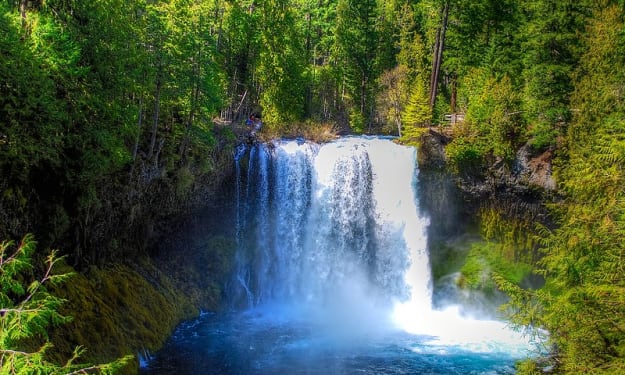
Koosah Falls: The Mesmerizing Cascade Gem of the McKenzie River
The Koosah waterfall is located close downstream of another renowned waterfall, Sahalie Falls, producing a pair of spectacular waterfalls that captivate visitors from all over. It lies a hidden gem of natural beauty Southeast of Salem, northeast of Eugene, Oregon, and west of Mount Washington are the locations of Koosah Falls.? Actually, you do not have to see both falls because they are accessible separately, but you would be a fool not to! So schedule some time to see both of them. Both sites include parking lots, although Koosah Falls has a larger one that may be less busy. A short hike connects Koosah with Sahalie Falls.
By Tauheed Ahmad Nawaz2 years ago in Chapters
The green Light
In a humble community encompassed by slopes and backwoods, there was an unusual legend about a strange green light. The light would show up overhead consistently, on that very night, sparkling splendidly over the slopes. Individuals from the town had numerous tales about it. Some said it was a sign from a different universe, while others accepted it was only a characteristic peculiarity. Nobody knew without a doubt what it was, however everybody concurred that it was a strange thing.
By Mafuz Rahman2 years ago in Chapters
Narrows Dam Arkansas: Engineering Marvel in the Heart of Nature
The Lake Greeson is used for hydroelectric power generation, leisure, and flood management. The primary developer of Lake Greeson was Martin White Greeson, who was born on November 7, 1866. There are about fifteen parks all around the lake where people can go camping, fishing, boating, biking, and swimming.
By Tauheed Ahmad Nawaz2 years ago in Chapters