Technology
How has the Israel-US war with Iran affected air travel?
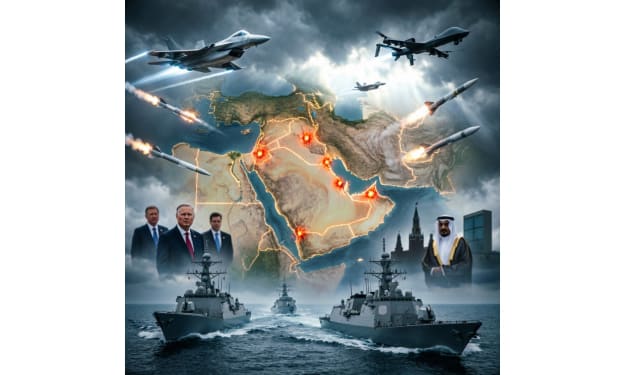
On February 28, Israel and the United States launched a coordinated military operation against Iran, killing Supreme Leader Ali Khamenei. Since then, the conflict has rapidly expanded and affected multiple countries. Dubai Airport, the world’s busiest airport for international travel, was struck by drone debris during a retaliatory attack and was closed for three days, leaving millions of passengers stranded. A projectile also hit Dubai’s luxury Fairmont The Palm hotel, causing a fire that was widely shared on social media. John Rose, Senior Risk Advisor at corporate travel management firm Altour, said: “Retaliation specifically against regions like the UAE was surprising to me and many others.” He added that although some countries such as Israel were expected to face retaliatory attacks, the United Arab Emirates has so far been one of the safest travel destinations in the region, with Dubai alone attracting nearly 20 million travelers in 2025. U.S. President Donald Trump said he expects the attacks to continue for several weeks. As the situation continues to change rapidly, many travelers are wondering whether and when it will be safe to travel to the region again. Countries around the world have quickly tightened their travel advisories. The U.S. State Department, in a social media post, ordered American citizens to leave at least 14 countries in the Middle East immediately, including Egypt, which has not been directly affected by the attacks. Each country’s situation is complex and changing rapidly, sometimes within hours. Because of this, travelers should consider their risk tolerance and the reasons for their travel. At the time of writing, the status of the affected countries is as follows: Iran All civilian travel to and from Iran has been suspended. The country’s airspace was closed immediately after the attacks began and remains closed. The United States, United Kingdom, Canada, and Australia have issued their highest-level travel advisories for Iran. Canada stated that its ability to assist citizens in the country is “severely limited.” Land routes to Armenia remain open for those trying to leave Iran, while reports indicate movement restrictions at the Iran–Turkey border. United Arab Emirates Despite Iranian attacks on Dubai International Airport and Zayed International Airport in Abu Dhabi, both airports are gradually resuming operations. Etihad Airways has resumed its first flights from Abu Dhabi. Emirates has restarted its first flights from Dubai. Airlines are offering free ticket changes, and the UAE government has announced it will cover food and accommodation expenses for 20,200 stranded passengers in the country. Currently, the U.S., U.K., Canada, and Australia advise their citizens to avoid non-essential travel to the UAE. However, John Rose believes the situation could change quickly since the UAE is one of the world’s most important economic and trade hubs, and conditions may stabilize by the weekend. Qatar Qatar’s Ministry of Foreign Affairs said it intercepted several Iranian attacks targeting civilians, including an attempt targeting Hamad International Airport in Doha. The airport remains closed due to the closure of Qatar’s airspace. The U.S. and U.K. have advised citizens to stay indoors since March 2. Australia and Canada have issued “Do Not Travel” warnings. Oman According to John Rose, many travelers from the UAE have gone to Oman, where flights are still operating and the risk of attacks is considered lower than in other regional countries. However, the commercial port of Duqm in Oman was targeted by a drone strike, which surprised many because Oman had been mediating peace talks between the U.S. and Iran. Travel advisories for Oman are somewhat softer compared to other regional countries: The U.K. urged its citizens in Duqm or within a 100 km radius to leave the country via commercial routes. Canada advised against all non-essential travel. Australia urged travelers to reconsider travel. The U.S. State Department urged citizens to leave Oman immediately. Israel Israel continues to exchange fire with Iran and Hezbollah in Lebanon. Air-raid sirens have sounded repeatedly across Israel, including Tel Aviv. Ben Gurion Airport, Israel’s main international airport near Tel Aviv, was closed due to the closure of Israeli airspace, but it is expected to reopen soon with limited flights from Israeli airlines. The U.S., U.K., Canada, and Australia have issued their highest-level travel warnings for Israel. Lebanon Lebanon was already under the highest level U.S. travel warning before the recent escalation. Days before the attacks began, the U.S. ordered non-essential embassy staff to leave due to threats from Hezbollah. Hezbollah leaders had previously said they would not remain neutral if the U.S. attacked Iran. The U.S. Embassy has now urged all American citizens to leave the country while commercial flights are available. Australia and Canada issued “Do Not Travel” warnings. The U.K. advises avoiding all travel to some areas and all but essential travel to others. John Rose said he does not expect travel warnings to be lifted anytime soon. The U.S. State Department has also urged its citizens to leave Lebanon immediately. Kuwait and Bahrain Both countries have closed their airspace after being targeted by Iranian attacks. The U.K. urged citizens in both countries to stay safe and avoid unnecessary travel. Canada and Australia advised against all travel. The U.S. State Department urged citizens to leave Kuwait and Bahrain immediately. Saudi Arabia Saudi Arabia has also been targeted by attacks, including two drone strikes on the U.S. Embassy in Riyadh. The U.S. has urged all citizens to stay indoors and incoming travelers to leave the country immediately. King Khalid International Airport in Riyadh is one of the few airports in the region still operating, and some travelers stranded in other Gulf countries have recently traveled there. Australia warned travelers to reconsider their travel plans. Canada advised against non-essential travel. The U.K. urged citizens to stay indoors due to the risk of missile and drone attacks. Jordan Jordan temporarily closed its airspace for several hours. Australia issued a “reconsider travel” warning. Canada and the U.K. advised against all non-essential travel. The U.S. State Department urged citizens and other travelers to leave Jordan immediately. Iraq Iraq’s airspace is closed. The U.S. has issued a Level 4 “Do Not Travel” warning and had already ordered the evacuation of non-essential embassy staff before the recent attacks. The U.K., Canada, and Australia advise against all travel to Iraq. The U.S. has urged its citizens to leave the country immediately. Cyprus On the morning of March 2, a drone targeted the British Royal Air Force base at Akrotiri in Cyprus. The attack caused minor damage but no casualties, marking the first sign that the conflict was spreading into Europe. Paphos International Airport, used for both civilian and military purposes, was evacuated after a suspicious object appeared on radar, and about 60 flights were canceled. EasyJet has also suspended flights between the U.K. and Cyprus until March 5. However, the U.K. has not yet issued an official travel warning for Cyprus, though British citizens near the military base have been advised to follow local guidance. Egypt Egypt has not been directly targeted by retaliatory attacks, but the U.S. State Department included it in a list on social media urging its citizens to leave the country immediately via commercial routes. Australia and Canada advise travelers to exercise extreme caution. The U.K. has issued regional travel advisories.
By Real content8 months ago in Chapters
Taliban Drone Attacks on Pakistan: Types of Kamikaze Drones, Technology, Range and Military Impact
In recent days, Afghanistan’s Taliban interim government has reportedly used drones for the first time in attacks against Pakistan. In a statement, the Taliban Ministry of Defense claimed that it carried out “multiple aerial strikes” using drones at several locations in three Pakistani cities. According to them, this step was taken in response to Pakistani airstrikes. Since the Taliban government possesses little to no conventional air force capability, it resorted to explosive drones to conduct aerial attacks. It is worth noting that according to Pakistani media reports, during a media briefing on February 27, DG ISPR Ahmed Sharif Chaudhry said that the Afghan Taliban regime had attempted to use some basic drones to conduct attacks in Sibi, Abbottabad, and Nowshera. However, he claimed that “our anti-drone systems thwarted this attempt. On the same day, February 27, Federal Minister for Information Attaullah Tarar also claimed on X that the Taliban had attempted to launch small drones toward Abbottabad, Swabi, and Nowshera, but anti-drone systems shot down all of them. No casualties were reported. Taliban drones reportedly targeted three locations, including the Artillery School in Nowshera and a primary school building in Swabi. However, security sources claimed that all these drones were destroyed. The Taliban government reportedly used two types of drones against Pakistan: some suicide drones and several quadcopters (drones that fly using four rotors). A military affairs expert suggested that it is possible the Taliban government does not have the capability to manufacture drone components itself, and it is likely that these parts were purchased from other countries and assembled in Afghanistan. In recent years, unmanned aerial vehicles (UAVs) and suicide drones have been widely used in various conflicts, significantly changing the nature of conventional warfare. These drones have played a prominent role in conflicts ranging from the ongoing Russia-Ukraine war to the clashes between Pakistan and India in May 2025. One of the key characteristics of these drones is that they are equipped with explosive materials and detonate upon reaching their target, which is why they are called suicide drones. These are also known as kamikaze drones and resemble small missiles in shape. They are capable of striking targets at low altitude. The term “kamikaze” is a Japanese word used during World War II for Japanese pilots who deliberately crashed their explosive-laden aircraft into enemy ships and targets. What drones did the Taliban government use? In one confirmed attack, a Taliban drone targeted a location in the Swabi district of Khyber Pakhtunkhwa. Footage of another confirmed drone strike was also analyzed. According to image analysis, the drones had a wingspan of about three meters and an overall length of roughly two meters. Since these drones cannot carry large amounts of explosives, their destructive power is relatively limited. In one incident, when a drone fell near a wall in Swabi and exploded (or was shot down), the blast was not strong enough to cause significant damage to the wall. However, even drones carrying small amounts of explosives can cause deadly injuries and fatalities if they land in areas where people are present. An Afghan information technology expert said the drones used by the Taliban government could be deployed in two ways. According to him, the first type can strike targets up to 20 kilometers away and is operated using a special remote control. These drones can carry about six to eight kilograms of explosives. The second type operates using software, where the target’s location details are fed into the system beforehand. The flight range of these drones depends on several factors, such as the weight of the explosives, the amount of fuel, and weather conditions. The drone itself weighs around 15 kilograms. Ray Gardner, head of Ukraine’s Defense and Information Technology division, said that these drones can strike targets at distances between 150 and 400 kilometers, although this depends on the weight of the warhead. Gardner said that some of the drones are not well-known models and appear to be locally produced. Some of the drones used by the Taliban resemble the “Daily” drone, which was previously manufactured by a Turkish technology company called Tetra. According to Gardner, the Taliban drones are fixed-wing types with a single-cylinder gasoline engine and a wooden propeller. Machines like these are commercially available for hobbyist aviation enthusiasts. He also suggested that it is highly likely that the components for these machines were manufactured in another country. Analysis of the remaining parts of the drones used in attacks on Pakistan suggests that the maximum market price of such drones is around $250 (about 15,000 Afghanis). According to Gardner, the cost of producing kamikaze drones is generally around $700 (approximately 45,000 Afghanis). An Afghan technology expert, speaking on condition of anonymity, said that the drones’ small size, low-altitude flight, and fiber-based structure make them difficult to detect by radar. One type of drone runs on fuel, while another operates on lithium batteries. Images released by the Taliban Ministry of Defense also suggest that quadcopters were used in several alleged attacks. Quadcopters are generally not designed for military use, but militant groups often modify them slightly and equip them with explosives for attacks. It is worth noting that the banned Tehrik-e-Taliban Pakistan (TTP) has also previously used quadcopters to target police checkpoints and stations in Khyber Pakhtunkhwa. According to the technology expert, these drones are operated by remote control and have a flight range of up to 25 kilometers, which is why they are not used for long-distance targets. Images released by the Taliban Ministry of Defense show that these drones were used to attack Pakistani security posts along the Durand Line.
By Real content8 months ago in Chapters
Is the Middle East War Turning Into World War III?
Is the Middle East War Turning Into World War III? The current situation in the Middle East has once again raised a serious question around the world: could this conflict grow into World War III? Tensions in the region have increased due to military strikes, political warnings, and the involvement of several global powers. While no country has officially declared a world war, the combination of regional conflicts and international alliances has made many experts worry about the possibility of a much larger confrontation.
By Wings of Time 8 months ago in Chapters
AI in Digital Governance: How Smart Systems Can Strengthen Transparency and Public Trust
Governments around the world face growing pressure to improve services, protect data, and remain transparent. Citizens expect fast digital systems and clear communication. At the same time, people want strong safeguards that protect fairness and accountability. This is why many governments are now exploring AI in digital governance to modernize public systems while maintaining trust. When used with clear rules and ethical oversight, artificial intelligence can help public institutions work faster, smarter, and more openly. The idea is not to replace human judgment but to support it with better insights and stronger data analysis.
By Ehab Al Kuttub8 months ago in Chapters
US CENTCOM Deploys LUCAS Drone Against Iran, Raising Questions Over Starlink Integration
The United States Central Command (CENTCOM) has announced that the US has used new long-range drones against Iran. Structurally, these drones resemble the Iranian “Shahed” drones. Based on published images, it is being suggested that these drones are equipped with satellite communication terminals. Many analysts refer to the “low-cost unmanned combat attack system” as a drone known as “LUCAS,” calling it an “unlicensed version of the Shahed-136,” and believe the drone was “reverse engineered,” meaning it was designed after examining a crashed drone. At least structurally, there are similarities between them: a similar aerodynamic design, an internal combustion engine, and a pusher propeller. In images released in December by US Central Command, light-colored rectangles can be seen on the upper body of the drones, resembling Starlink satellite internet terminals. The United States has officially confirmed the first use of these drones in Iran but has not mentioned the use of satellite terminals in their structure. It is also unclear what type of terminal was used in the LUCAS drone. In addition to the commercial Starlink network, the manufacturer has developed a military system with different capabilities. The use of drones equipped with satellite communication terminals allows them to be controlled throughout the entire flight. If the drone is equipped with a camera, guidance can be visual and conducted in real time. Disrupting satellite signals is not easy. An operator can fly the drone at low altitude to avoid radar detection or bypass known air defense zones. This makes such drones very difficult to intercept. This capability can further enhance the drone’s performance and increase its operational precision and autonomy. Russian Experience In December, Russian forces also began using drones equipped with Starlink terminals in the war in Ukraine. The equipment was purchased abroad and then imported into Russia while bypassing sanctions. At the end of January, Ukrainian Defense Minister’s adviser Serhii Beskrestnov announced that hundreds of confirmed cases of drone attacks equipped with Starlink had been recorded. “What is the threat? Imagine a large first-person view drone being directed in real time by an operator from Russian territory. We all know that Starlink works well and provides a relatively clear channel for image transmission and guidance. So this is one of the challenges we are currently facing and must address,” he said. In early February, Ukraine’s Ministry of Defense reached an agreement with the manufacturer to disable satellite communication terminals that were not registered on Ukraine’s “whitelist.” As a result, the Russian military not only lost the ability to use drones equipped with those terminals, but also lost internet access in many frontline areas, as Starlink had provided reliable communications to many Russian units. Russia is unable to replace Starlink satellite communications because it does not have a comparable space-based system. A private Russian company called Bureau 1440 is developing a constellation of low-orbit communication satellites similar to those deployed by Starlink. The company had planned to launch its first group of satellites in 2025, but the plan failed. Cheap and Abundant There is no information in public sources about who first came up with the idea of installing a Starlink terminal on a drone. On December 15, 2025, a leading Ukrainian expert in military radio technologies, Serhii Beskrestnov (known by the nickname “Flash”), announced for the first time the discovery of a Russian drone equipped with Starlink. Two weeks earlier, on December 3, US Central Command had released images of completed LUCAS drones that appeared to be equipped with Starlink-like terminals. However, the idea of widespread use of inexpensive attack drones originally came from Iran and Russia. Russia began its attacks on Ukraine in 2022 using Iranian “Shahed” drones, which it renamed “Geranium-2,” and has steadily increased production of these systems. In addition to directly damaging targets, these attack drones also force air defense systems to expend resources. In some cases, the cost of interception exceeds the value of the target. The low-cost concept is also reflected in the name of the American system: “Low-Cost Unmanned Combat Attack System,” emphasizing affordability. Each drone may cost approximately $35,000. To deploy these drones, a special unit was created in the United States and deployed to the Middle East, called the “Operation Scorpion Strike Group.
By Real content8 months ago in Chapters
A Powerful, Personal Review of Kikoff
👉👉👉FOR MORE INFROMATION CLICK HERE Building credit today isn’t just about improving a number—it's about reshaping your financial future, increasing your independence, and opening doors that were once closed. Many people want better credit but don’t know where to begin, and traditional systems are often designed to make the process confusing, slow, or expensive. That’s where Kikoff comes in, and why I personally believe it stands out as one of the most effective, accessible, and stress‑free credit‑building solutions available.
By Press Release 8 months ago in Chapters
AI, Nuclear Escalation, and Pakistan’s Critical Role
AI, Nuclear Escalation, and Pakistan’s Critical Role If World War III begins, it is unlikely to start with marching armies or formal declarations. Instead, it may begin silently—inside algorithms, early-warning systems, and automated decision tools powered by artificial intelligence. Nowhere is this risk more serious than in regions where nuclear weapons exist alongside historical rivalries, limited decision time, and high political tension. South Asia, especially Pakistan, sits at the center of this emerging danger.
By Wings of Time 8 months ago in Chapters
Has World War III Started?
Has World War III Started? The question “Has World War III started?” is no longer limited to academic debate or fictional movies. It is now openly discussed in newsrooms, policy circles, and online platforms around the world. While the simple answer remains no, the conditions shaping today’s global environment are deeply alarming. The world is experiencing an unprecedented convergence of regional wars, technological disruption, and power competition that closely resembles the early stages of past global conflicts.
By Wings of Time 8 months ago in Chapters