Self-help
Heavy Rain, Thunderstorms Expected as Iran Oil Depot Attacks Raise Acid Rain and Air Pollution Concerns
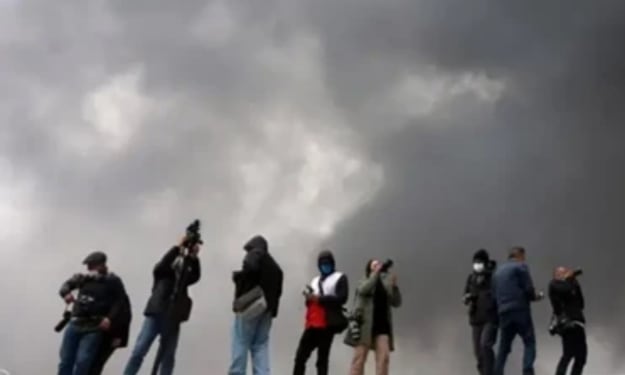
Pakistan’s Meteorological Department says that strong winds and thunderstorms with rain are expected in the upper parts of the country over the next three days. In a statement issued on Monday, the department said that a western weather system is likely to enter the western parts of the country on Monday evening and will persist until 12 March. According to the Meteorological Department, under the influence of this weather system, from 9 March to 12 March, districts including Chitral, Dir, Swat, Kohistan, Shangla, Battagram, Buner, Malakand, Mansehra, Abbottabad, Haripur, Gilgit-Baltistan, and Kashmir are expected to experience cloudy weather along with moderate rain accompanied by strong winds and thunderstorms, while heavy rainfall is expected at a few places. In addition, Khyber, Mohmand, Peshawar, Swabi, Mardan, Charsadda, Nowshera, Bajaur, Bannu, Waziristan, Orakzai, Kurram, Kohat, Hangu, and Mianwali are expected to receive light rain with strong winds and thunderstorms on 10 and 11 March. The Meteorological Department has also forecast that Islamabad, the Potohar region, Murree, Galiyat, and surrounding areas may experience rain accompanied by strong winds and thunderstorms from 9 to 11 March. During this period, hailstorms are also possible at some places in the upper areas and Islamabad. Due to this spell of rain, daytime temperatures in the upper parts of the country are expected to drop by 3 to 4 degrees Celsius. Meanwhile, landslides may also occur at some places in upper Khyber Pakhtunkhwa, Gilgit-Baltistan, and Pakistan-administered Kashmir. While the forecast of rain after a long dry spell is being seen as positive in Pakistan, the Meteorological Department has warned in its advisory that because of the ongoing situation in Iran, pollution particles may spread into Pakistan through westerly winds, which could worsen air quality in the western parts of the country. Acid rain and polluted air after attacks on oil depots in Iran On the night between Saturday and Sunday, Israel targeted several oil depots and refineries in Iran. Following these attacks, large parts of Tehran were covered with smoke. The Environmental Protection Organization advised Iranian citizens to avoid unnecessary outdoor activities and stay indoors as much as possible due to increasing pollution in Tehran. Meanwhile, the Iranian Red Crescent warned about the possibility of acid rain resulting from the fires. Images posted on Sunday at 9 a.m. local time showed the sky over Tehran appearing black. It was claimed that rain had occurred in some areas. Another Iranian user wrote that black particles also fell to the ground along with the rain. Later, Iranian Foreign Ministry spokesperson Esmail Baghaei said that the Israeli attacks on oil depots and refineries were releasing dangerous and toxic substances into the atmosphere, which are putting many lives at risk.
By Real content7 months ago in Chapters
The Life and Leadership of Ayatollah Ali Khamenei
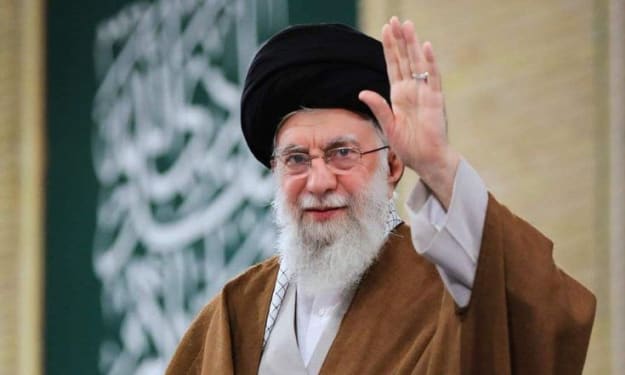
Ayatollah Seyyed Ali Hosseini Khamenei’s story begins in Mashhad, one of Iran’s holiest cities, where he was born on July 17, 1939 into a deeply religious family. His father, Ayatollah Seyyed Javad Khamenei, was a respected cleric of Azerbaijani origin, known for his strict scholarship and modest lifestyle. His mother, a devout woman from a clerical family, raised her children in an environment where faith, discipline, and humility were woven into daily life. Growing up in a small home with limited means, young Ali spent his childhood surrounded by religious texts, sermons, and the rhythms of Islamic scholarship. His father insisted on a traditional religious education, and by his teenage years, Ali was already immersed in the study of Quranic interpretation, jurisprudence, and philosophy. Early Education and the Seeds of Rebellion In the 1950s, Khamenei continued his studies in the seminaries of Mashhad and later Najaf, one of the most important centers of Shia learning. But his education was not limited to theology. He was drawn to political writings, anti-imperialist ideas, and the growing movement against the Shah of Iran. By the early 1960s, he had become a follower of Ayatollah Ruhollah Khomeini, whose fiery opposition to the Shah inspired a generation of young clerics. Khamenei began giving speeches, distributing pamphlets, and organizing underground networks. His activism led to multiple arrests, interrogations, and periods of exile under the Shah’s regime. These years hardened him. They shaped his belief that political power and religious authority were inseparable—and that Iran needed a system where clerics guided the nation. The 1979 Revolution and the Rise of a New Leader When the Iranian Revolution erupted in 1979, Khamenei was no longer a young student—he was a seasoned activist. After the Shah fell and the Islamic Republic was established, he quickly rose through the ranks: - Member of the Assembly of Experts - Tehran’s Friday Prayer Leader - Deputy Minister of Defense - A key figure in the Islamic Revolutionary Guard Corps (IRGC) In 1981, after the assassination of President Mohammad-Ali Rajai, Khamenei became the President of Iran, serving two terms until 1989. He was known for his calm demeanor, loyalty to Khomeini, and ability to navigate political factions during the turbulent years of the Iran–Iraq War. Supreme Leader: An Unexpected Successor When Ayatollah Khomeini died in 1989, Iran needed a new Supreme Leader. Many clerics doubted Khamenei—he was younger, less senior in religious rank, and not considered a grand ayatollah. But he was trusted, politically experienced, and deeply loyal to the revolution. The Assembly of Experts elected him as the Second Supreme Leader of Iran, a position he would hold for 36 years, making him one of the longest-ruling leaders in the modern Middle East. A Rule Defined by Power, Conflict, and Control Khamenei’s leadership reshaped Iran’s political landscape. Under his rule: - The IRGC became the most powerful military and economic force in Iran. - Iran expanded its influence across the Middle East through proxy groups. - Domestic dissent was tightly controlled. - The nuclear program became a central pillar of Iran’s strategy. Supporters saw him as a guardian of Iran’s independence and Islamic identity. Critics saw him as an authoritarian figure who consolidated power and suppressed opposition. His leadership style was marked by caution, ideological rigidity, and a belief that Iran must resist Western influence at all costs. The Final Chapter In February 2026, Ayatollah Ali Khamenei was killed at age 86 during U.S.–Israeli airstrikes targeting his compound in Tehran, marking the end of an era that had defined Iran for nearly four decades. His death was confirmed by Iranian state media and global news outlets. His passing left Iran at a crossroads, with an interim leadership council stepping in as the nation faced uncertainty about its future. Legacy of a Controversial Figure Ayatollah Ali Khamenei leaves behind a legacy that is complex and deeply debated: - To some, he was a defender of Iran’s sovereignty and Islamic values. - To others, he was a symbol of repression and authoritarian rule. - To historians, he was one of the most influential—and polarizing—leaders of the 21st century. But beyond politics, his story is also the story of a boy from Mashhad, raised by a humble cleric father, shaped by faith, revolution, and the belief that he was destined to guide his nation.
By Haroon Pasha7 months ago in Chapters
Dox Thrash (1896–1965)
Dox Thrash and the invention of the carborundum printmaking process Dox Thrash was born in 1896 in the heart of rural Georgia, a place where creativity lived quietly in the corners of daily life. Long before he would become known for revolutionizing printmaking with the carborundum process, Thrash grew up surrounded by the textures and tones of the natural world—wood grain shimmering under sunlight, dusty roads blending into thick summer air, hand‑stitched quilts patterned with the stories of generations. These impressions would later fuel his artistic instincts, shaping a style that felt both grounded and luminous.
By TREYTON SCOTT7 months ago in Chapters
Is the Middle East War Turning Into World War III?
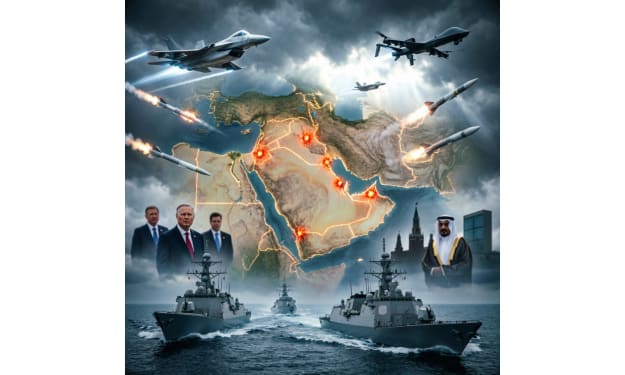
Is the Middle East War Turning Into World War III? The current situation in the Middle East has once again raised a serious question around the world: could this conflict grow into World War III? Tensions in the region have increased due to military strikes, political warnings, and the involvement of several global powers. While no country has officially declared a world war, the combination of regional conflicts and international alliances has made many experts worry about the possibility of a much larger confrontation.
By Wings of Time 7 months ago in Chapters
Why doesn't Iran target US bases in Turkey?
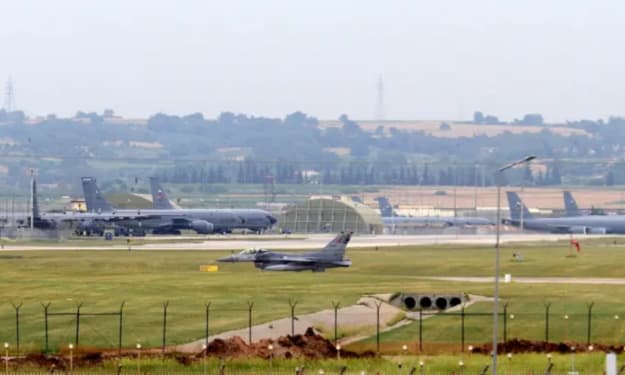
In the war that began on February 28 with attacks by the United States and Israel on Iran and continued with retaliatory strikes from Tehran, the intensity of casualties and destruction has been increasing every day. Iran and militia groups affiliated with Tehran have so far targeted military bases and civilian infrastructure in Kuwait, Saudi Arabia, Oman, Bahrain, Qatar, Jordan, the United Arab Emirates, and Iraq, all of which host American bases. In addition, a British base in Cyprus has also been targeted. In this war, which has spread from Turkey’s border neighbors to the Arabian Peninsula, Turkey is one of the few countries where air-raid sirens have not sounded. Experts say that despite hosting U.S. forces, Turkey has not been targeted because of its membership in the North Atlantic Treaty Organization (NATO). They emphasize that good relations between Ankara and Tehran also reduce the likelihood of any retaliatory action. However, in its recent position, Turkey has criticized the attacks by the United States and Israel as well as Iran’s retaliatory actions. Turkish President Recep Tayyip Erdoğan announced on February 28 that Ankara would increase its diplomatic efforts. Mr. Erdoğan said: “If rationality and wisdom do not prevail and no room is given for diplomacy, our region could be engulfed in widespread flames.” He added: “If Iran attacks Turkey, it will have to face all NATO countries.” Sinan Ülgen, head of the Center for Economics and Foreign Policy Studies (EDAM), says that what distinguishes Turkey from other countries in the region targeted by Iranian attacks is its NATO membership. He added: “Such an attack would fully fall under Article 5 of NATO. Therefore, if Iran were to take such an action, it would effectively face all NATO member states.” According to this fundamental NATO principle, an attack on any member state is considered an attack on all members, activating the alliance’s collective defense mechanism. Sinan Ülgen believes that Iran will not expand the conflict by attacking U.S. bases in Turkey. He said: “Iran is not willing to open a new front in its immediate neighborhood by attacking Turkey. I see no possibility that it would want to provoke a country like Turkey, which has strong military power and impressive deterrence capability. Therefore, I consider the likelihood of a direct Iranian attack on Turkey to be very low.” Mr. Ülgen also emphasized that the Incirlik Air Base in Adana was not used for attacks on Iran. Ural Toğa, a researcher at the Center for Iranian Studies (IRAM), also considers it unlikely that Tehran would include parts of Turkey among its targets in retaliatory strikes. He said: “Unless a group inside Iran decides to act independently, which I also consider unlikely, Iran would not want to complicate the situation at this stage by opening a new front against a NATO member country.” Mr. Toğa noted that Turkey and Iran, which share a 534-kilometer border, are mutually dependent in certain areas. He said: “Iranians, especially after the death of former President Ebrahim Raisi, have continuously sought to expand strategic cooperation with Turkey. I do not think they will reverse this trend or move relations in another direction.” Incirlik and Kürecik Turkey has announced that its airspace and air bases located on its territory that host U.S. forces were not used in U.S. or Israeli attacks against Iran. A statement issued on February 28 by the Center for Combating Disinformation, which is affiliated with the Presidential Communications Directorate, emphasized that Turkey will not allow its airspace or related facilities to be used for operational purposes in any conflict or war in which it is not involved. Another statement issued on March 2 by the same center denied claims of an attack on the Incirlik base, stating: “There are no military bases belonging to any foreign country in Turkey. The air, land, and maritime space of the Republic of Turkey, as well as its military installations, are fully controlled and owned by the country. No attempt has been made to directly attack the country’s port. Portraying Turkey as a party to regional conflicts is a clear attempt to spread misinformation.” The most important U.S.-related military bases in Turkey are the Incirlik Air Base and the Kürecik radar base in Malatya. According to information published on the Incirlik Base website, construction of the military facility began in 1951 by a team called the American Engineering Group. In 1954, an agreement was reached between the General Staff of the Turkish Armed Forces and the U.S. Air Force for the joint use of the base. The use of the base is regulated through the Defense and Economic Cooperation Agreement (DECA), which was signed between the United States and Turkey in 1980. The facility was initially called “Adana Air Base,” but in 1958 its name was changed to “Incirlik,” which is still in use today. Turkey’s Ministry of Defense emphasizes that the base is under the command of the Turkish Armed Forces and owned by the Republic of Turkey. The Kürecik radar base, located in the Akçadağ district of eastern Malatya province, is an early warning center established in 2012 and operates under NATO supervision. The command center of this facility is located at the Diyarbakır Air Base, and its mission is to transmit data related to identifying and intercepting long-range aerial threats to the THAAD missile defense systems in Romania and Poland. In 2011, the then-Iranian President Mahmoud Ahmadinejad criticized the establishment of the base, saying the installation was designed to protect Israel from possible Iranian missile attacks. After the Hamas attack on Israel on October 7, 2023, and the subsequent Israeli military operations, pro-Palestinian activists claimed that both bases were being used to support Israel and held rallies demanding their closure. Large-scale migration is very unlikely
By Real content7 months ago in Chapters
A Powerful, Personal Review of Kikoff
👉👉👉FOR MORE INFROMATION CLICK HERE Building credit today isn’t just about improving a number—it's about reshaping your financial future, increasing your independence, and opening doors that were once closed. Many people want better credit but don’t know where to begin, and traditional systems are often designed to make the process confusing, slow, or expensive. That’s where Kikoff comes in, and why I personally believe it stands out as one of the most effective, accessible, and stress‑free credit‑building solutions available.
By Press Release 7 months ago in Chapters