Science
India to Buy 114 Rafale Jets in $40 Billion Defense Boost Ahead of French President’s Visit
India on Thursday granted initial approval for the purchase of $40 billion (3.6 trillion Indian rupees) worth of defense equipment, including additional French Rafale fighter jets for the Indian Air Force. India’s Ministry of Defence said that the Defence Acquisition Council has given preliminary approval for additional Rafale fighter jets and missiles for the Air Force, anti-tank missiles for the Army, and P-8I surveillance aircraft for the Navy. Indian media reported on Thursday that the Defence Acquisition Council approved 3.25 trillion Indian rupees for the purchase of 114 Rafale aircraft from Dassault Aviation. The budget was approved during a meeting held in New Delhi on Thursday, under which more Rafale fighter jets will be inducted into the Indian Air Force. In a social media post, India’s Ministry of Defence said the objective is to enhance air power and strengthen surveillance systems. The approval comes just days before the French president’s visit to India, and it is expected that an agreement will be finalized during the visit. It is worth noting that last April, India signed a deal with France to purchase 26 Rafale fighter jets. The total cost of those aircraft was approximately 630 billion rupees, or about $8 billion. Officials said this is further proof of the superiority of the French defense industry in international competition. “At the geopolitical level, this decision also highlights the importance of the strategic bilateral partnership between India and France. According to them, this relationship of mutual trust—based on sovereignty and respect for mutual interests—serves as a strong foundation for global stability and will be further strengthened in the coming years.” It should be noted that Rafale aircraft were also mentioned during the fighting between Pakistan and India last May. Pakistan had claimed that during the conflict, it shot down six Indian fighter jets, including Rafales. Defense expert Ashwini Sewach said that the approval of this amount would prove to be a game changer for India. India will acquire 114 Rafale aircraft, forming six to seven squadrons. According to him, the aircraft are expected to arrive over the next seven to eight years, and most of them will be manufactured in India. A user named Ferd wrote that this is the biggest deal of the century for France’s Dassault Aviation. It is the largest export contract in the company’s history. Bhoumik Doshi wrote that even with a $40 billion deal, if the Rafales are manufactured in India, it would not be a good bargain. According to him, under the “Make in India” framework, the deal would only be considered better if France provides full autonomy and complete cooperation. Manjit Negi wrote, “A nightmare for Pakistan. India has approved the purchase of 114 Rafale jets. This is a major step toward a stronger India.” Will India Gain Superiority Over Pakistan with This Fighter Jet? These aircraft will be equipped with full combat systems, weapons, simulators, and spare parts. The deal also includes pilot training and equipment supply. The Rafale fighter jet is capable of carrying nuclear weapons. It will be equipped with Exocet AM39 anti-ship missiles with a range of 70 kilometers, SCALP air-to-ground missiles with a range of 300 kilometers, and Meteor air-to-air missiles with a range of 120 to 150 kilometers. Defense expert Sanjeev Srivastava said that although many countries today are conducting attacks using drones, fighter jets remain important due to their precision and long-range strike capabilities. Analyst Rahul Bedi said that purchasing these aircraft had become necessary because the Indian Navy currently operates Russian-made MiG-29 aircraft, which will become unusable in the coming years. The approval of this defense budget comes at a time when tensions between India and Pakistan are at their peak following the Pahalgam attack. So, will India gain superiority over Pakistan with this fighter jet? How important is the Rafale deal for India in the current tense situation with Pakistan? Responding to this question, Rahul Bedi said that in this part of Asia, apart from China and Thailand, no other country possesses an aircraft carrier. In this regard, there is no comparison between Pakistan and India. However, experts say that amid rising tensions after the Pahalgam attack, India will benefit from the Rafale deal, but the most important factor is delivery, which will take several months. In response to this question, defense expert Sanjeev Srivastava said, “India currently has two aircraft carriers, INS Vikrant and INS Vikramaditya, while Pakistan does not have a single aircraft carrier. India has China in mind. The Air Force previously deployed Rafale aircraft keeping China in consideration.” How many fighter jets does India need for its security? One answer to this question is that the more aircraft you have, the more locations you can fight in. That means numbers matter in this case.
By Real content8 months ago in Chapters
Should You Wash Chicken Before Cooking? Health Experts Warn About Salmonella and Campylobacter Risks
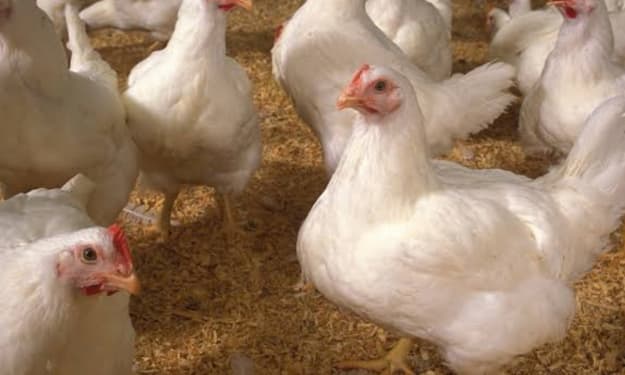
Whether chicken should be washed before cooking is a question that sparks a fresh debate on social media every time it comes up. Official food safety guidelines in the Western world are very clear: “Do not wash chicken because it can spread harmful bacteria. However, in many parts of the world, washing chicken is a long-standing cultural tradition associated with cleanliness and care. For example, Jamaican TV chef and author April Jackson deliberately includes clips of washing chicken in her videos because she knows it is a “hot topic.” She says, “People say I shouldn’t wash chicken in a bowl or sink; some call it dirty and inappropriate behavior.” On the other hand, some believe that cooking and eating chicken without washing it is unhealthy. Content creator Fidwa Hlili, who shared her Moroccan mother’s ten-step chicken-washing method on TikTok, says she enjoys reading the comments. She says, “People write that this is why you don’t eat at other people’s houses or join shared meals at work.” This distrust exists in parts of Asia, the Caribbean, South America, Africa, and some Mediterranean cultures. Why Is Washing Chicken So Dangerous? Raw chicken contains bacteria called Campylobacter and Salmonella, which cause food poisoning. Dr. Kimon Andreas Karatzas, Associate Professor of Food Microbiology at the University of Reading in the UK, says, “When you wash chicken in your kitchen, it creates tiny water droplets or splashes that can spread disease.” These droplets can carry invisible bacteria and spread them widely over sinks, kitchen surfaces, and nearby food. To demonstrate this, Karatzas conducted an experiment. He applied a chemical substance to raw chicken that allowed bacteria to be seen under ultraviolet light. He then washed the chicken under running water for less than ten seconds. The water splashed around the sink area. To the naked eye, these appeared to be harmless water droplets that could easily be wiped away. However, under ultraviolet light, the germs were clearly visible. Droplets containing bacteria had landed on the counter, on the professor’s lab coat, on the camera, and most importantly on lettuce leaves and carrots that were meant to be eaten raw in a salad. This means that even if you cook the chicken thoroughly, you can still get sick because other foods placed on contaminated surfaces may have become infected. Karatzas says, “This is the most common way people get infected with Salmonella and Campylobacter—you contaminate something you plan to eat raw with bacteria from something that will be cooked later.” Why Is Campylobacter So Dangerous? According to the World Health Organization, Campylobacter is one of the four main global causes of diarrheal diseases and is the most common bacterial cause of gastroenteritis (inflammation of the stomach and intestines), particularly in young children, leading to diarrhea and vomiting. It is considered more dangerous than Salmonella partly because vaccination programs have reduced Salmonella levels in chickens, while there is no vaccine against Campylobacter. Both bacteria naturally live in chickens’ intestines. During slaughter and processing, intestinal contents can contaminate the surface of the meat. Karatzas says, “You should always assume chicken contains Campylobacter and Salmonella. Most chickens worldwide are free-range and are not raised under strict, controlled systems, so they are more likely to carry these bacteria.” The infectious dose of Campylobacter is very small. A single drop can contain about 10 trillion Campylobacter bacteria—one thousand times more than the number of people on Earth. Karatzas adds, “If even a tiny drop of Campylobacter or chicken juice gets onto something, that alone can easily make you sick.” What Are the Symptoms of Infection? According to the UK Food Standards Agency, more than 250,000 people in the UK alone are infected each year. Symptoms usually appear two to five days after infection. The most common symptom is diarrhea, often bloody. Other symptoms include stomach pain, fever, headache, nausea, and vomiting. People over 60 and young children are more likely to develop severe illness. In some cases, symptoms can be severe or prolonged and may require antibiotic treatment. In rare cases, the infection can lead to other conditions such as chronic bowel problems, arthritis, and a type of paralysis known as Guillain-Barré syndrome. However, people often do not associate stomach illness with preparing chicken. Experts say many infections are never officially diagnosed, and statistics include only those cases where patients were sick enough to seek medical help and provide samples for testing. Karatzas says, “We only see what is visible, and the real number of cases may be ten times higher.” Why Do People Still Wash Chicken? According to a study published in the scientific journal Food Control in 2024, 96 percent of people in eight Southeast Asian countries wash chicken. Research over the past decade in the US, Europe, and Australia found that between 39 and 70 percent of consumers also admitted to washing chicken. In much of the Western world, chicken is produced under highly regulated and strictly monitored industrial conditions and is sold already cleaned. However, in many parts of the world, meat is slaughtered locally, sometimes in open markets where access to clean running water and proper sanitation may be limited. In such environments, washing chicken is considered necessary. For some people, it is not just about cleanliness but also about identity, upbringing, and memories associated with home and country. When Chef Jackson first moved to the UK and saw a warning on chicken packaging advising not to wash raw chicken, she was so surprised that she took a photo and sent it to her family in Jamaica. She says she understands the science, but “when we wash chicken, you can see the water become very cloudy.” She explains, “It looks very dirty, and we don’t want to eat something like that.” Many argue that the real issue is how chicken is washed. Both chefs interviewed said they wash chicken in a bowl, often with vinegar or lemon, and then thoroughly clean and disinfect the surrounding area. Hlili says, “My mother completely cleans the sink with hot water and soap and then uses antibacterial spray.” Those strongly in favor of washing chicken argue that the general advice not to wash it is part of a broader inconsistency in food safety guidelines. Jackson says, “For example, when you wash a chopping board that had chicken on it, the same risk exists.” She adds, “In French cooking, chicken is soaked in salted water before cooking, which is called brining. That means you soak chicken in salted water, and I’ve never heard anyone say you shouldn’t do that. But essentially, it’s the same process.” Although Karatzas agrees that washing chicken in a bowl may be relatively safer, he says there is still risk, and washing with lemon or vinegar does not reliably reduce large amounts of bacteria. “The only way to kill bacteria is to cook it,” he says, “and most chicken has already been washed by the company that sells it to you. So there is no need to wash it again.
By Real content8 months ago in Chapters
Pakistan Launches PRSC-EO2 Satellite: SUPARCO Successfully Sends Second Indigenous Earth Observation Satellite into Orbit
Pakistan has announced another important milestone in its national space program by successfully sending its second indigenous Earth Observation Satellite into space. The launch was carried out from the Yangjiang Sea Shore Launching Center in Guangdong Province, China, where during an offshore mission Pakistan’s satellite, along with six other satellites, was placed into orbit. The satellite has been developed by Pakistan’s national space agency, the Space and Upper Atmosphere Research Commission (SUPARCO). According to officials, it will significantly enhance the country’s Earth observation and high-resolution imaging capabilities. What is the EO-2 satellite? Senior engineer associated with the project, Hamid Zubair Waraich, said, “It is a high-resolution remote sensing satellite, meaning it is equipped with Earth observation capability. This is Pakistan’s sixth remote sensing satellite and the third indigenous satellite whose design and development were carried out in Pakistan.” According to SUPARCO officials, this satellite captures extremely clear images of the Earth from space. With the help of these images, changes occurring in different parts of the Earth can be analyzed, whether they are agricultural lands, rivers, glaciers, or urban areas. What will this satellite do? According to SUPARCO officials, EO-2 will provide important data for national development planning, natural resource management, environmental monitoring, and tracking urban expansion. Engineer Hamid Zubair Waraich said, “The primary purpose of this satellite is to improve Earth observation. Through it, population mapping, planning, flood early warning, glacier monitoring, and crop monitoring can be carried out. It will be very beneficial for Pakistan in civil applications.” According to SUPARCO, with the inclusion of EO-2, Pakistan’s satellite fleet has expanded, which will significantly improve the continuity, coverage, and accuracy of Earth observation data. Where and how does it operate in space? EO-2 is orbiting in Low Earth Orbit at an altitude of approximately 500 kilometers above Earth. Engineer Hamid Zubair Waraich said, “It is a low Earth observation satellite, meaning it is in low orbit. It makes about seven revolutions around the Earth daily, but it does not remain fixed over one place; it keeps changing location.” This means the satellite continuously revolves around the Earth and captures images of different areas during each orbit. Regarding future plans, Engineer Hamid Zubair Waraich says that the more satellites there are, the faster monitoring of different regions will be possible. Why was it not launched from Pakistan? This question also surfaced on social media: if the satellite was developed locally, why was it not launched from Pakistan? Hamid Zubair Waraich says, “SUPARCO currently does not have a launch pad in Pakistan. Work on this technology is ongoing, but this facility is not available at present.” Pakistan’s Deputy Prime Minister and Foreign Minister Ishaq Dar described China-Pakistan space cooperation as historic and, in his message on the social media platform X, congratulated the entire Pakistani nation on the historic milestone of the successful launch of Pakistan’s advanced Earth observation satellite PRSC-EO2, which was completed with the cooperation of the People’s Republic of China. According to Ishaq Dar, “This achievement reflects continued progress in strengthening Pakistan’s national space capabilities and promoting technological self-reliance.” Chinese officials also described the launch as a symbol of bilateral relations. Chinese journalist and analyst Shen Shiwei claimed that a senior Pakistani minister told him in conversation that the “all-weather strategic cooperative partnership” between China and Pakistan is higher than the skies. Shen Shiwei, who comments on China’s politics and economy, said on the social media platform X (formerly Twitter) that he has closely observed space cooperation between China and Pakistan. Satellite lifespan and commissioning phase According to SUPARCO officials, the expected lifespan of EO-2 is approximately seven years. SUPARCO engineer Hamid Zubair Waraich said that after launch, a satellite does not immediately become fully operational. There is an initial phase called “commissioning.” “It has reached orbit, and the commissioning phase is ongoing. In-orbit testing is being carried out. Initial results will start coming in within a day or two.” During this phase, all the satellite’s instruments, sensors, and communication systems are tested in space to ensure they are functioning properly. Engineer Hamid Zubair Waraich said that although the launch took place from China, the satellite will be fully operated from Pakistan.
By Real content8 months ago in Chapters
AI, Surveillance, and the Fragile Line Between Deterrence and Disaster
AI, Surveillance, and the Fragile Line Between Deterrence and Disaster The next great danger in global conflict is not only missiles or soldiers, but machines that think faster than humans. As artificial intelligence (AI) becomes deeply embedded in military planning, surveillance, and nuclear command systems, the risk of accidental war is growing quietly but dangerously. What once depended on human judgment is now increasingly shaped by algorithms, sensors, and automated decision-making. In this new environment, a single error, misreading, or cyber manipulation could push the world toward catastrophe.
By Wings of Time 8 months ago in Chapters
The Story of the Surgeon Who Operated on Himself
The Story of the Surgeon Who Operated on Himself Normally, whenever a person feels unwell and suffers from a disease ,they immediately go to a doctor for treatment because he knows that doctor will treat me well. But if the doctor himself becomes ill and suffer from such a painful disease and disorder that without surgery can not be recovered and there is no other doctor available to treat him, then he may have no choice but to treat himself,because life is very beautiful and beauty of life based on good and sound health .Treating oneself is understandable to some extent—but a doctor performing surgery on himself might sound unbelievable and a miracle even like an exaggeration. However, in reality, such an extraordinary and marvelous event did take place in the past when a surgeon operated on himself to save his own life.
By Ibrahim Shah 8 months ago in Chapters