Romance
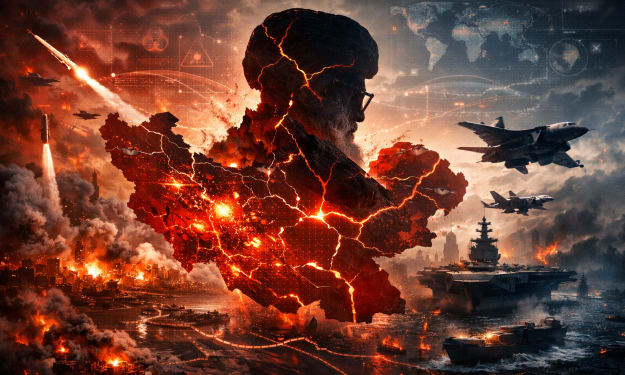
After Khamenei: How the Middle East Crisis Could Redraw Global Politics
After Khamenei: How the Middle East Crisis Could Redraw Global Politics The confirmed death of Ayatollah Ali Khamenei after joint strikes by the United States and Israel has sharply intensified the ongoing conflict in the Middle East—turning what was a dangerous regional crisis into a moment with global implications. Khamenei, who led Iran for nearly four decades and wielded extraordinary political and military influence, was killed when missiles and airstrikes hit Tehran in the opening phase of a major military operation targeting Iranian leadership and strategic infrastructure. The impact of his death is already reverberating across the region and the world in ways that may last for years.
By Wings of Time 7 months ago in Chapters
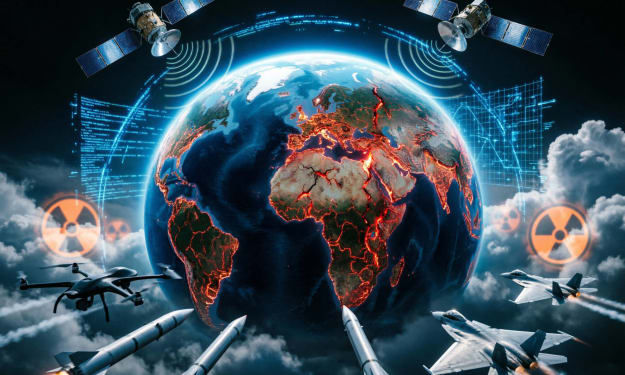
The First Hours of World War III
The First Hours of World War III World War III will not begin with a formal declaration, a single invasion, or a dramatic announcement on television. If it comes, it will begin quietly—through alerts, miscalculations, automated systems, and decisions made under extreme pressure. The early hours of a global war will feel confusing, fragmented, and unreal, long before the world understands what has happened.
By Wings of Time 7 months ago in Chapters
How World War III Could Begin in Our Time
The First Sparks: How World War III Could Begin in Our Time World War III may not start with a single declaration or one massive attack. Instead, it could begin quietly, through a series of connected crises, misunderstandings, and power struggles already happening today. The world is more connected than ever, but that connection also makes global conflict easier to spread.
By Wings of Time 7 months ago in Chapters
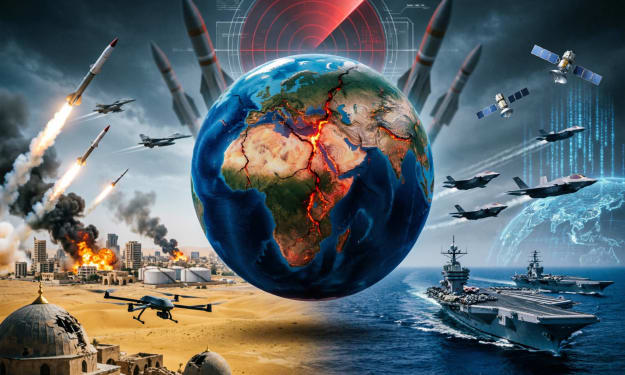
Is This War Turning Into World War III?
Is This War Turning Into World War III? The question many people around the world are quietly asking today is unsettling but unavoidable: Is the current war climate pushing humanity toward World War III? What once appeared to be localized conflicts in the Middle East are now entangled with global rivalries, advanced technologies, and fragile alliances. History shows that world wars rarely begin with a single dramatic declaration. Instead, they grow out of overlapping crises, miscalculations, and escalating power struggles—many of which are visible today.
By Wings of Time 7 months ago in Chapters
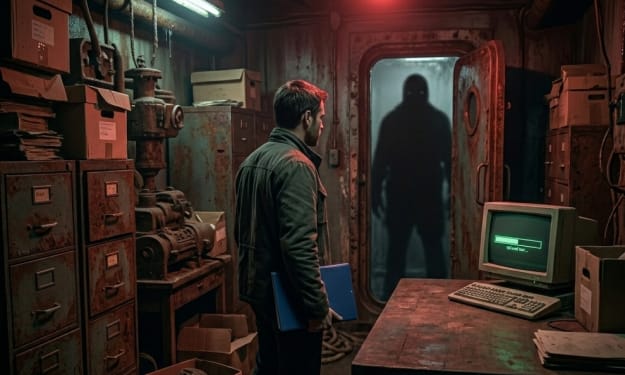
FLUENT IN FORBIDDEN — CHAPTER FIFTEEN
"The clock has struck three, the coffee is cold, and the shadows are beginning to speak. Welcome back to the desk of The Night Writer, where the stories are brewed in the dark. Tonight, we find that the most dangerous place to be isn't in the line of fire—it’s in the memory of a man who has nothing left to lose but his secrets." The interior of the Dead Ship didn't smell like the ocean. It smelled of oxidized iron, stale tobacco, and the heavy, metallic tang of a world that had been forgotten by time. Boris led us through a labyrinth of weeping pipes and flickering fluorescent lights that buzzed like a hive of angry hornets. "In here," Boris grunted, shoving open a heavy steel door that groaned on its hinges.
By The Night Writer 🌙 7 months ago in Chapters
FLUENT IN FORBIDDEN — CHAPTER FOURTEEN
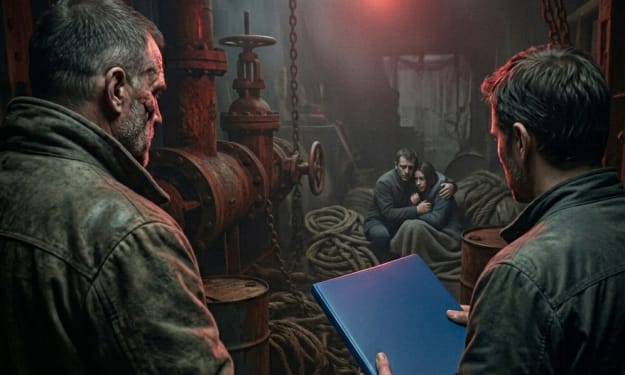
"The clock has struck three, the coffee is cold, and the shadows are beginning to speak. Welcome back to the desk of The Night Writer, where the stories are brewed in the dark. Tonight, we find that the hardest thing to translate isn't a dead language—it’s the living silence of a man who is deciding whether or not to pull the trigger." The red light high on the "Dead Ship’s" hull didn't blink again. It was a single, silent permission, a punctuation mark at the end of a very long, very wet sentence. The massive basket, designed to lift machinery or wounded crew, continued its slow, creaking descent, its shadow stretching over our raft like a net. I reached out and grabbed the cable. The metal was grease-blackened and coarse, biting into my already raw hands. Julian and Layla watched me, their faces illuminated by the eerie crimson glow from above. There was no more panic in their eyes; they had crossed the threshold of terror and arrived at a cold, exhausted resignation. They were trusting me, and in the Trench, trust is the only currency that Elias’s money couldn't devalue. "Get in," I whispered, holding the basket steady against the swell. We had to lift Layla over the side, her small body shivering violently against Julian’s chest as she stepped onto the industrial grille. We followed, the three of us huddled in the center of the basket, the blue folder clutched in my vest like a second heart. The chain groaned, a sudden, jarring CLACK as the winch engaged, and we were yanked into the air. The ocean retreated beneath us. The Odyssey’s graveyard was now just an expanse of black water and grey fog, our raft a discarded speck. I didn't look back; in my line of work, looking back is how you let the past rewrite your ending. As the basket cleared the gunwale of the tanker, a hand reached out from the gloom. It wasn't the manicured hand of a diplomat or the calloused hand of a soldier. It was the hand of a man named Boris—a Russian smuggler with a face that looked like it had been carved out of granite and left in the rain. Boris had a signature smell: a mixture of high-proof vodka, gun oil, and pickled herring. But tonight, it was just the comforting scent of a man who had survived the Cold War and seen the downfall of three different governments. He nodded at me, a microscopic acknowledgement of our shared history, and then looked at Julian and Layla. "Cargo looks wet, Mikael," he said, his voice a low rumble. "And very expensive. This one..." he pointed at Julian, "...looks like he’s trying to be a prince who lost his way. And the girl...she is too young for this kind of game." "They aren't cargo, Boris. They're clients," I corrected. "And they are the reason the folder I have is so heavy." Julian stepped forward, trying to summon a shred of his brother’s dignity. "Thank you for the...hospitality. We require a place to rest, medical attention, and a secure communication line. We have ample means to pay." Boris laughed, a dry, coughing sound. "Pay? In the Trench, we do not take credit cards. We do not take wire transfers from banks that your brother and his allies owns. We take things that can be traded for fuel. Things that can keep this ghost of a ship afloat for one more night. What do you have?" I stepped between them and reached into my vest. I didn't pull out the blue folder, not yet. I pulled out a small, leather-bound box I’d grabbed from Elias’s safe during the chaos. Inside was a set of cufflinks, made from flawless, deep-blue sapphires that had once belonged to Elias’s mother. The family history said they were worth a small fortune. I tossed the box to Boris. He caught it with one hand, opened it with a click, and examined the stones. His face didn't change, but his eyes narrowed. He snapped the box shut. "It is a good deposit, Mikael," he said, tucking the box into his heavy coat. "But it is not enough for the language you are speaking. This prince and the girl...they bring the kind of attention that sinks a ship. Mansour’s ships are circling the Trench. My own crew is nervous. This is not a shelter; it is a fortress that is running out of bullets." "Then I have something better," I said. I pulled out the blue folder. I didn't open it. I just held it up, letting the dim moonlight catch the plastic casing. "This is not a list of banks, Boris. It’s a roll call of treason. It’s the names of the men who are helping Mansour buy your country. It includes the schematics for the national power grid’s fail-safes. The Minister of Defense’s private offshore accounts. The details of the weapon systems they plan to use in the coup. Mansour wants this back so badly that he’ll sink this entire Trench to get it." Boris looked at the folder, then back at me. I could see the gears turning in his head. This was the transaction he was waiting for. This wasn't just fuel money; this was a weapon. "And what is the price for this...dictionary of destruction?" he asked, his voice low and dangerous. I looked at Julian and Layla. "A safe passage to the mainland for them. A new identity for the girl. And for me...a place to start a fire. I’m done translating monsters. I want to publish a book of secrets that will burn Elias’s legacy to ashes." Boris reached out and took the folder. He didn't open it; he didn't need to. He trusted me. And in the Trench, trust, combined with a manual for a coup, is the only code that matters. "You have five minutes to get clean," he said, motioning toward the inner hatch. "Then we talk. We talk in the old language. The language of a revolution." I looked at Julian. He was watching us, his face pale, realizing that he was no longer a player in this game, only a pawn in a transaction that could start a war. He didn't say anything; he didn't need to. He’d signed the contract the moment he jumped into the water. "Welcome to the inner sanctum, lost prince," Boris said, a small, dangerous smile touching his lips. "Try not to get too comfortable. In the Trench, the only ending that matters is survival." "Daylight is coming to claim the quiet, but these words stay with you. We have crossed the threshold, and the secrets have found a new owner. But can a man who trades a kingdom for safe passage ever truly be free? Or is Julian Elias just trading one cage for another, built by a writer who knows exactly where all the bodies are buried? If you enjoyed this journey into the midnight hours, leave a heart or a tip to keep the candles burning. The story is rising from the depths, and it is hungry. Sleep well—if you can. — The Night Writer."
By The Night Writer 🌙 7 months ago in Chapters
FLUENT IN FORBIDDEN — CHAPTER THIRTEEN
"The clock has struck three, the coffee is cold, and the shadows are beginning to speak. Welcome back to the desk of The Night Writer, where the stories are brewed in the dark. Tonight, we find that the hardest part of surviving an explosion isn't the fire—it’s the silence that follows when the world stops burning and starts waiting." The fire was a memory now, an orange smudge on the black velvet of the horizon. The Odyssey had taken its secrets to the seabed, leaving us in a rubber life-raft that felt less like a vessel and more like a floating coffin. The ocean was no longer a highway; it was a hungry, rhythmic beast, breathing beneath us in slow, nauseating swells. I sat at the stern, my hands raw from the salt and the rope, clutching the emergency paddle like a talisman. Across from me, Julian was huddled with Layla. The "Prince of the House of Elias" was gone. In his place was a shivering man in a soaked tuxedo shirt, his teeth chattering a frantic code against the cold. "They'll have seen the flare," Julian whispered, his voice barely audible over the slap of water against the raft's sides. "They'll have seen the explosion. Mansour isn't the type to assume we're dead. He's the type to count the teeth in the ashes." "Let him count," I said, though my own chest felt like it was lined with lead. "By the time he realizes we aren't among the debris, we need to be within the perimeter of the Trench. The fog is our only ally now. It confuses the radar." Layla stirred, her small face pale and ghost-like in the moonlight. "Mikael? Is the fire gone?" "It's gone, Layla," I said, softening my voice. "We’re just drifting now. Like a message in a bottle." "But who is going to find us?" she asked. That was the question I didn't want to translate. In this part of the sea, being found was often worse than being lost. I pulled the blue folder from my vest. The plastic was slick, and the weight of it felt immense—not just the physical weight of the paper, but the gravitational pull of the names written inside. I thought about Elias’s face when I’d showed him the footage. I thought about the car "accident" that had claimed his parents. The family business wasn't just shipping and logistics; it was a slaughterhouse built on the foundations of silence. "You're looking at it again," Julian noted, his eyes tracking the folder. "The map to the end of the world." "It’s not a map, Julian. It’s a confession," I corrected. "Your brother didn't just let that car be tampered with. He provided the schematics for the brake lines. He didn't just inherit the empire; he executed the previous administration." Julian closed his eyes, a single tear tracing a path through the salt-grime on his cheek. "I knew he was cold. I knew he was ambitious. But to kill our parents for a seat at a table that Mansour owns anyway? It’s a pathetic kind of evil." "The most dangerous kind," I added. "Because a man who will kill his own blood for a middle-management position in a coup is a man who has nothing left to lose. He's not running a company anymore; he's running a crime scene." The raft dipped sharply into a trough, and a spray of icy water hit us. I looked toward the bow. The fog was thickening, turning from a mist into a solid, grey wall. And then, I heard it. Not the whine of an interceptor's turbine, but something older. Something heavier. A rhythmic, metallic thud-thud-thud. The sound of a heavy-duty pump. "Stay down," I hissed, pushing Julian and Layla toward the center of the raft. A shadow began to coalesce within the fog. It wasn't sleek like Mansour’s boats. it was a jagged, towering silhouette of rusted iron and protruding cranes. A "Dead Ship"—one of the massive oil tankers that had been abandoned in the Trench years ago, now used as floating outposts for the very people we were looking for. "Is that... a city?" Layla breathed, looking up at the tiers of rusted decks that seemed to touch the clouds. "No," I said, grabbing the hook-rope from the raft's emergency kit. "That's the front door." A single red light flickered high above us on the tanker’s hull. A signal. They knew we were here. They had been watching us drift for miles. In the Trench, nothing happens by accident. Everything is a transaction. "Mikael," Julian said, grabbing my wrist as I prepared to signal back. "The people on that ship... do they know you?" "They know my work," I said, looking him dead in the eye. "And they know that I never come to them unless I’m bringing something they can use. Today, I’m bringing them the downfall of a kingdom. I think that’s worth a night’s lodging." As a rusted metal basket began to descend from the heights of the tanker, creaking and groaning on a grease-blackened chain, I realized that we weren't just fugitives anymore. We were the new architects of the chaos. I looked at the folder, then at the girl, then at the broken prince. "Welcome to the second act, Julian," I whispered. "Try not to forget your lines." "Daylight is coming to claim the quiet, but these words stay with you. We have left the fire for the rust, and the ocean for a fortress of iron. But in the Trench, the only thing cheaper than life is the truth. Can Mikael navigate a world where there are no dictionaries, only demands? If you enjoyed this journey into the midnight hours, leave a heart or a tip to keep the candles burning. The story is rising from the depths, and it’s hungry. Sleep well—if you can. — The Night Writer."
By The Night Writer 🌙 7 months ago in Chapters
How Power Structures Protect Themselves
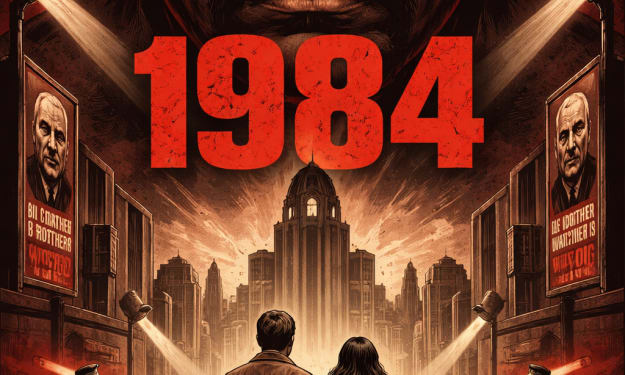
In 1949, a book was written titled Nineteen Eighty-Four, in which George Orwell fictionally explained how, in the future, systems and governments would become so powerful that they would prioritize their own power struggles over people’s well-being. And remember, we’re talking about the West, where democracy is considered very mature. According to Orwell, such states never truly end conflicts or wars; one way or another, they keep fear alive among people. If fear remains intact, people stay obedient.
By Ibrahim Shah 7 months ago in Chapters