Resolution
What was said about Afghanistan at the UN Security Council meeting?
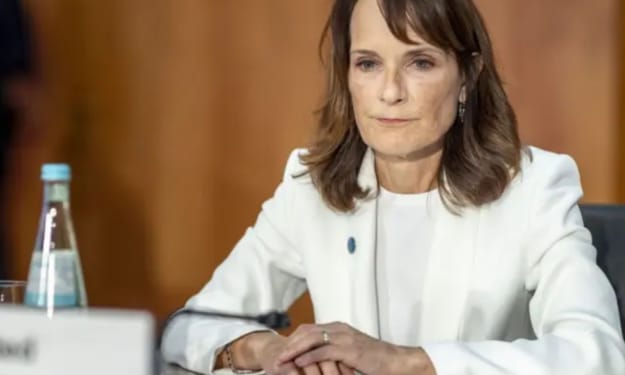
The United Nations Security Council held a mNew York, Uni, to discuss the situation in Afghanistan. Representatives froGeorg, the head of the United, exchanged views on the situation in Afghanistan. In the UNAMA delegation’s remarks, several issues were covered, ranging from the situation of women and girls in Afghanistan to security concerns and recent clashes with Pakistan. At the beginning of the meeting, she said that the Council hopes that “Afghanistan will become a country that lives in peace with itself and its neighbors, is fully integrated into the international community, and fulfills its international obligations, particularly in the areas of women’s rights, human rights, and counter-t Ms. Georgette referred to the recent clashes and violence between the Taliban government in Afghanistan and Pakistan and called on both sides to immediately stop the fighting, declare a ceasefire, and resolve their differences through diplomacy. She also emphasized the protection of civilians and the delivery of humanitarian aid in Afghanistan, saying that after routes through Pakistan were closed, Iran had be According to Ms. Georgette, Afghanistan’s isolation has not proven effective in addressing issues such as economic self-reliance, security cooperation, counter-terrorism, human rights concerns, and the humanitarian crisis. If these issues are not addressed, Afghanistan could once again become a source of instability for the region and the world through i She also pointed out a reduction in poppy cultivation in Afghanistan, saying that it has decreased by 20 percent compared to 2024 and has significantly declined compared with the past. She emphasized the need for greater cooperation from the international community to sustain progress in combating drugs. Ms. Georgette also mentioned projects initiated by the Taliban government, saying, “The authorities have launched major infrastructure projects which, if completed, could help Afghanistan’s economic development.” She also referred to the return of nearly 5.5 million Afghan refugees over the past two and a half years, saying that there are no clear signs of social unrest even if international aid decreases. Ms. Georgette condemned the restrictions imposed on women and girls in Afghanistan and called for their removal. She said, “The unacceptable situation for Afghan women and girls continues. They are now entering their fifth year of being completely excluded from public life and education beyond the sixth grade.” “Solutions for girls’ education exist, and we urge the authorities to address this issue… The international community is ready to help create acceptable conditions.” Ms. Georgette also described the latest punishments imposed by courts as “discriminatory” against women and religious minorities. In her speech, she described the Taliban government’s actions against ISIS-K as effective but added that Afghanistan’s neighbors still have concerns about the spread of militancy from the country. She referred to a report by the sanctions monitoring group indicating that the unresolved conflict regarding the Pakistani Taliban (TTP) is approaching a full-scale conflict between the two countries. “In general, the potential threat of terrorism from Afghanistan remains a major concern for the entire international community.” What did the representatives of countries say at the Security Council meeting? U.S. Representative
By Real content7 months ago in Chapters
Mojtaba Khamenei Becomes Iran’s New Supreme Leader After Death of Ayatollah Ali Khamenei
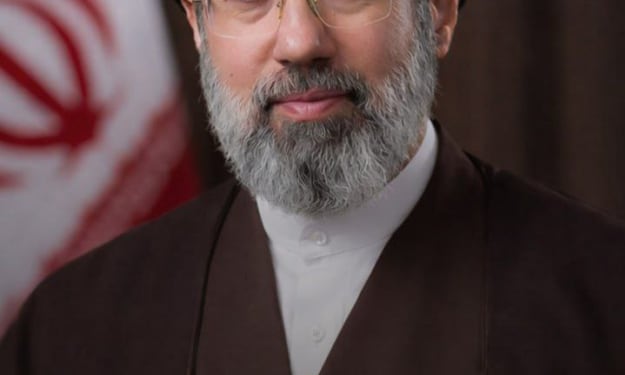
Iran’s Assembly of Experts has elected Mojtaba Khamenei as the country’s new Supreme Leader, succeeding his father Ayatollah Ali Khamenei. The announcement of Iran’s newly appointed Supreme Leader was read on state television by an anchor, citing an official statement from the Assembly of Leadership. The statement said: “Despite severe wartime conditions and direct threats from enemies against this public institution, and even though several members of staff and the security team were martyred due to the bombing of the secretariat offices, there was not even a moment’s delay in the process of selecting and introducing the leader of the Islamic system.” It should be remembered that U.S. President Donald Trump had previously said that selecting Mojtaba Khamenei—the son of Iran’s Supreme Leader Ayatollah Ali Khamenei, who was reportedly killed in U.S. and Israeli attacks—as his successor would be “unacceptable.” The U.S. president had insisted that he should also have a role in the selection of Iran’s new Supreme Leader, similar to what happened during the selection of new leadership in Venezuela. During an interview, Trump acknowledged that Mojtaba Khamenei was the front-runner for the position but made it clear that he considered such an outcome unacceptable. Iran’s Supreme National Security Council Secretary Ali Larijani said Tehran’s “enemies” had hoped that the country would fall into paralysis after Ali Khamenei’s death, but the Assembly of Experts ultimately completed the process of electing Mojtaba Khamenei. Unlike his father, Mojtaba has remained largely out of the public spotlight. He has never held any official government position, nor has he delivered public speeches or interviews. Only a limited number of photos and videos of him have ever been published. However, for many years there have been rumors about his significant influence, suggesting that access to his father often required going through Mojtaba. According to The Associated Press, U.S. diplomatic cables published by WikiLeaks in the late 2000s described him as “a power behind the cloak,” widely regarded within the government as a capable and powerful figure. The son who spent decades working in his father’s shadow has now taken his place. Mojtaba Khamenei also has close ties with Iran’s powerful Islamic Revolutionary Guard Corps (IRGC). He joined the force immediately after high school and later pursued religious studies under senior clerics. Following his selection, the IRGC issued a statement expressing “respect, devotion, and obedience” to Mojtaba Khamenei and said it was fully prepared to follow his orders. Two years ago, Ali Khamenei had rejected the idea that Mojtaba might succeed him, saying he wanted to avoid the hereditary style of governance that the Iranian Revolution had sought to abolish. However, after his death, the remaining religious system now faces a crisis over its future. At present, real power lies with the Revolutionary Guards, who control nearly all major sources of state authority. His appointment also sends a clear message of resistance to Donald Trump, who had called his selection unacceptable, and to Israel, which has reportedly threatened to assassinate him. Who is Mojtaba Khamenei? Mojtaba Khamenei was born on September 8, 1969, in the northeastern city of Mashhad. He is the second of six children of Ali Khamenei. He completed his secondary education at the religious Alavi School in Tehran. According to Iranian media, at the age of 17, Mojtaba briefly served several times in the military during the Iran–Iraq War. The eight-year conflict made the Iranian government even more suspicious of the United States and Western countries, which supported Iraq. In 1999, Mojtaba moved to Qom—a holy city and major center of Shiite theology—to continue his religious education. Notably, he had not worn clerical robes until that time, and it remains unclear why he entered the seminary at the age of 30. Mojtaba is currently considered a mid-ranking cleric. In recent days, Iranian media outlets close to the centers of power and some officials have begun referring to Mojtaba Khamenei as “Ayatollah,” which is a senior religious rank. Some observers believe this change reflects an effort to elevate his religious status and present him as a credible candidate for the country’s highest leadership. Within the seminary system, holding the rank of Ayatollah and teaching advanced religious studies is seen as a sign of scholarly authority and is often considered a requirement for future leadership. However, there is already a precedent. When Ali Khamenei was elected Iran’s second Supreme Leader in 1989, he too was elevated to the rank of Ayatollah beforehand. Allegations of Political Interference Mojtaba first came into public attention during the 2005 presidential election, which resulted in Mahmoud Ahmadinejad becoming Iran’s president. In an open letter addressed to Ali Khamenei, reformist candidate Mehdi Karroubi accused Mojtaba of interfering in the voting process through elements of the Revolutionary Guards and the Basij militia, claiming they distributed money among religious groups to help Ahmadinejad win. Four years later, Mojtaba faced similar accusations again. Ahmadinejad’s re-election triggered widespread protests across the country known as the Green Movement. At the time, Deputy Interior Minister Mostafa Tajzadeh described the election result as an “electoral coup.” He was later sentenced to seven years in prison and said the decision was “a direct wish of Mojtaba Khamenei. Two reformist candidates, Mir-Hossein Mousavi and Mehdi Karroubi, were placed under house arrest after the 2009 election. Iranian sources reported that in February 2012, Mojtaba met with them and asked Mousavi to end the protests. Many observers expect that Mojtba will continue his father’s hardline policies. Some also believe that a person who has reportedly lost his father, mother, and wife in U.S. and Israeli attacks may be less likely to yield to Western pressure. However, he now faces the difficult task of ensuring the survival of the Islamic Republic and convincing the public that he is the right person to lead the country out of political and economic crisis. His leadership record remains largely untested, and the perception that Iran may be turning into a hereditary system could deepen public unrest. It should also be noted that Israel’s Defense Minister has stated that eliminating any successor of Ali Khamenei would be a clear objective.
By Real content7 months ago in Chapters
If the Strait of Hormuz is closed for a long time, it will benefit Russia.
A war involving the United States and Israel with Iran carries the risk that the Strait of Hormuz could remain closed for a prolonged period. This is a crucial route in the global economy through which 20% of the world’s oil and liquefied natural gas is supplied from the countries of the Persian Gulf. Any disruption in this route would create problems for Europe, the United States, and even Donald Trump himself. However, it would also benefit Russia, because it would give the Kremlin an opportunity to increase oil exports and earn billions of dollars to finance the war against Ukraine. Iran controls the northern coast of the narrow Strait of Hormuz. It has repeatedly threatened to close the strait in response to what it calls American and Israeli “aggression,” but even after the deaths of senior leaders and days of bombardment, it has not acted on this threat. However, shipping has almost stopped because shipping companies are unwilling to take the risk and insurance costs have skyrocketed. “The Strait of Hormuz is technically open, but in practice it has been closed to shipping,” say analysts at Kpler, which monitors tanker traffic. “This is not just an abstract geopolitical risk; it is a real disruption to supply.” How the war helps the Kremlin According to Kpler analysts, “This conflict will significantly strengthen Russia’s position in the global oil market.” Disruptions in Middle Eastern oil supply would increase India and China’s dependence on Russian oil. In recent months, these two major buyers of Russian oil have reduced their imports under Western pressure, forcing Russia to cut prices further and reduce exports. But even these steps have not fully sold the sanctioned oil, and millions of barrels remain at sea in shadow-fleet tankers waiting for buyers. If the Strait of Hormuz is closed, the world will not only lose official Middle Eastern oil from Saudi Arabia, the United Arab Emirates, Kuwait, and Iraq, but also be cut off from the supply chain of smuggled and sanctioned Iranian oil. With Venezuela under U.S. blockade, Russia would effectively become the only country able to sell cheap oil through the shadow fleet. With global prices inevitably rising, it will become easier for Moscow to sell cargo that is currently stranded at sea. Bloomberg energy expert Javier Blas says: “This war will benefit Vladimir Putin because oil prices will rise and demand for sanctioned Russian crude will increase. If the White House ignores it, India could become a buyer of that oil.” Mr. Trump has demanded that India stop importing Russian oil. However, with congressional elections approaching in November, keeping gasoline prices low in the United States may become a higher priority for him. Blas writes that although this option may not be easy for those trying to counter Putin’s aggressive policy, it could partially offset the oil shortage caused by disruptions in the Strait of Hormuz. Analysts say that even if Trump remains dissatisfied, India is likely to resume buying Russian oil. S&P Global Ratings has also stated that India’s strategic oil reserves are currently below the level set by the International Energy Agency. In contrast, China has actively increased its reserves in recent months, but Kpler analysts say that if the Strait of Hormuz is blocked, Beijing will also be prepared to increase maritime oil imports from Russia. “In the short term, disruptions will most likely put pressure on India, which will probably immediately turn to Russian oil due to its availability and well-established logistics mechanisms,” analysts say. China, which has recently reduced imports of Russian oil, may also abandon this caution if the conflict continues for weeks. But Russia’s interests are not limited to this Shipping disruptions have given the Kremlin hope that it can maintain pipeline exports to Europe. However, there are two obstacles. First, the European Union is preparing a full-scale oil embargo against Russia, and its details were expected to be announced in mid-April. An oil crisis would not be the right time to announce such a decision. Second, key European buyers of Russian oil and Kremlin allies Hungary and Slovakia have not received oil via the “Druzhba” pipeline for more than a month because it was damaged in Ukraine due to Russian bombing. As a result, both countries have vetoed new sanctions against the Kremlin and European loans to Ukraine. The European Union proposed that the two countries obtain oil through a pipeline connected to Croatia’s maritime terminal instead of Russian oil. But if maritime oil supplies decrease due to problems in the Strait of Hormuz, this option will become practically ineffective, and the EU may be forced to pressure Ukraine to repair the pipeline more quickly. How the West is affected
By Real content7 months ago in Chapters