Resolution
Potential Role of Pakistan Army in the Gaza Peace Force: Benefits and Drawbacks
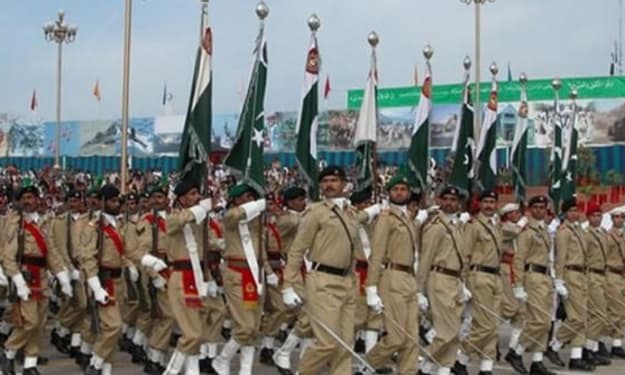
t Potential Role of Pakistan Army in the Gaza Peace Force: Benefits and Drawbacks Officials at Pakistan’s Foreign Office in Islamabad have stated that “Pakistan is also evaluating the possibility of joining this force; however, discussions are still at an initial stage, and much remains to be finalized.” According to the 20-point peace agreement for Gaza, the deployment of a multinational force is one of the key elements. Pakistani officials confirmed that “Pakistan is assessing whether to be part of this force.” However, such a decision could introduce several complexities for Pakistan. U.S. President Donald Trump’s peace plan, presented in late September 2025, also included the establishment of an International Stabilization Force (ISF). Following reports that the Pakistan Army may join the Gaza Peace Force, a nationwide debate has emerged among political and social circles. While some support the deployment, others are raising serious concerns. Defense Minister Khawaja Asif said that Pakistan is “still considering sending its troops to Gaza under the international stabilization initiative proposed by U.S. President Donald Trump.” He added that “no final decision has been made yet, and the matter remains under consideration. The government will make a decision only after fulfilling all necessary requirements.” The minister also assured that “any decision in this regard will be made after taking the Parliament and all relevant institutions into confidence.” The proposed force aims to ensure security in Gaza, train a new Palestinian police force, oversee the demilitarization of the Gaza Strip, and monitor reconstruction efforts. The initiative is backed by Arab countries and international partners. So far, Indonesia, Azerbaijan, and Turkey have expressed readiness to send troops. However, Israel has objected to Turkey’s participation. The opposition party, Pakistan Tehreek-e-Insaf (PTI), expressed deep concern over reports circulating in Israeli and international media suggesting Pakistan’s potential military involvement. PTI demanded that the government immediately take Parliament and all political leadership—including former Prime Minister Imran Khan—into confidence, clarify all facts, and avoid any non-transparent or secret policy. Lt. Gen. (Retd.) Ghulam Mustafa said, “Although no final decision has been made, I believe Pakistan should not join this force because its main objective seems to be disarming Hamas. What would Pakistan gain from this? Moreover, if Israel continues its aggression, what actions would this force take? If the United Nations sends a peacekeeping mission, Pakistan can contribute to that—but under current circumstances, most of the burden would fall on Pakistan.” Former senior diplomat Abdul Basit remarked, “Hamas has not yet agreed to disarm. Therefore, I do not believe Pakistan should participate in any campaign designed to pressure Hamas into surrendering weapons under American or Israeli influence.” Meanwhile, Senator Raja Allama Nasir wrote on social media that “the ISF lacks a formal UN Security Council mandate, meaning it would inevitably operate under U.S. leadership. This compromises its neutrality, making it subservient to Washington and Tel Aviv’s interests. The force would depend on Israel for access, logistics, and movement—undermining both its independence and credibility. Sustainable peace in Gaza cannot come from foreign military presence but through Palestinian leadership, governance, reconstruction, and national reconciliation.” However, some analysts argue that sending Pakistani troops would be an honor, not a liability. Brigadier (Retd.) Haris Nawaz said, “Pakistan is one of eight key Muslim countries supporting the Gaza peace initiative to end the genocide and pave the way for a two-state solution. The essential goal is to immediately replace the occupying Israeli forces with a peacekeeping presence to restore security and stability in Gaza.” He added, “Pakistan is among the top contributors to UN peacekeeping missions. Therefore, if Pakistan joins a globally approved mission alongside Muslim nations to support peace, address the humanitarian crisis, and aid in Gaza’s reconstruction, it would not only be a distinctive honor but also a sacred duty—one that should be fulfilled with pride and devotion.” Senior journalist Kamran Yousaf said he believes Pakistan is likely to join the force. However, he insisted that “the issue must be viewed realistically, not emotionally. Pakistan’s participation in the ISF alongside other Muslim nations, though risky, cannot automatically be deemed a wrong step. The perception that this force will be used against Palestinians is far from the truth. “No policymaker in Pakistan would take such an irresponsible step. For instance, if the Palestinians themselves consent to the plan, then there remains little room for objection. Foreign policy should not be shaped purely by emotion; any country seeking relevance in global politics must remain proactive and pragmatic.” Defense analyst Dr. Qamar Cheema stated, “Pakistan has always contributed troops to UN peace missions. Regarding Palestine, Pakistan has a special emotional and religious connection; therefore, deploying forces to Gaza would be an honor, particularly in the defense of the first Qibla (Al-Aqsa Mosque). “I do not believe this poses any serious risk. The important thing is that Pakistan would also be contributing to Arab security, particularly since it already has a defense pact with Saudi Arabia. Furthermore, these troops are not being sent for combat but for maintaining peace, training Palestinian police, and overseeing reconstruction in Gaza.” Possible Advantages and Disadvantages of Pakistan Army’s Role in Gaza Peace Force Advantages Pakistan’s participation in the Gaza Peace Force would enhance its international profile and representation. It would reinforce Pakistan’s image as a peace-loving, responsible state contributing to regional stability. Disadvantages Deployment of Pakistani troops in Gaza could raise domestic security concerns. The move might trigger political and public opposition or distrust within Pakistan, especially if the government fails to provide clear communication or parliamentary approval. Israeli and other international reports suggest that such military deployments could heighten regional tensions, exposing Pakistan to criticism or diplomatic friction from other states.
By Real content11 months ago in Chapters
The House Beneath the River
The river shifted its course long ago, but beneath its surface lay the remains of a village swallowed by floods. Locals whispered that on foggy nights, a faint glow rose from the water, outlining the roof of a house that no longer existed. Travelers who followed the light were never seen again.
By GoldenSpeech11 months ago in Chapters
Negotiations between Pakistan and Afghanistan and Russia's threat to Pakistan
between Pakstan and Afghanistan and Russia's threat to Pakistan The Russian embassy in Pakistan has declared a video attributed to Russian President Vladimir Putin—purportedly threatening Pakistan—to be fake, stating that the clip is actually part of the president’s remarks to the media in which Pakistan was not mentioned. A video showing the Russian president allegedly threatening Pakistan in the context of Pakistan–Afghanistan tensions had been circulating on social media for several days. The deepfake clip purportedly shows the Russian president saying, “Pakistan should refrain from any aggression against Afghanistan.” In the fake video, the Russian president is shown warning that if Afghanistan is attacked, the response will not come only from Kabul. The video also falsely portrays the Russian president offering full support to the Afghan Taliban and promising assistance to help them counter any external threat. After the video went viral and was shared by several prominent accounts—causing concern—the Russian embassy in Islamabad has now declared it fake. Russian Embassy’s Clarification In a statement issued on Thursday, the Russian embassy said, “A video is currently circulating on social media claiming that Russia’s President Vladimir Putin threatened Pakistan in the context of tensions between Pakistan and Afghanistan. This video is entirely fake.” The explanatory statement said that the clip is from President Vladimir Putin’s media remarks on October 23, 2025, following a meeting of the Board of Trustees of the Russian Geographical Society, where he answered various general questions. In the original remarks, he mentioned neither Pakistan nor Afghanistan. The Russian embassy’s statement further clarified: “We want to make it clear that Russia supports a political and diplomatic resolution of differences between Pakistan and Afghanistan. Russia supports the continuation of constructive dialogue between the two countries and the strengthening of meaningful cooperation on counterterrorism and regional security issues. Social Media Reaction Social media users in Pakistan also expressed surprise over the fake video of the Russian president. Recently, Pakistan–Russia relations have improved, and the leaders of the two countries have met warmly at various international forums. But the fake video of President Putin generated diverse comments on social media. Reacting to the Russian embassy’s statement, a user named Naveed Babar wrote that he had suspected the video was fake because Russia could never support a group like the Afghan Taliban. A user named Hadiya posted that the fake video appeared to be circulated from accounts based in Afghanistan. Faisal Ansari commented that the video was an attempt to widen distances between two states, which the Russian embassy has thwarted. Akmal Bhatti wrote that given the region’s politics and geography, the Russian president could never have made such a statement. What Has Russia’s Position Been in the Pakistan–Afghanistan Dispute? Earlier this month, Russia expressed concern about the tensions and border clashes between Pakistan and Afghanistan and urged the parties to exercise restraint. Russia welcomed the temporary ceasefire agreement reached between the parties after talks in Doha. The Russian Foreign Ministry said it welcomed the ceasefire agreement mediated by Qatari and Turkish authorities. Historically, Pakistan–Russia relations were cool because of Russia’s closeness to India, but in recent years the two countries have grown closer. Pakistan has appreciated Russia’s balanced regional foreign policy, a view expressed by Pakistan’s Prime Minister Shehbaz Sharif during his meeting with President Putin at the Shanghai Cooperation Organization (SCO) summit last month. At that meeting, Putin called Pakistan a traditional partner, spoke of increasing trade and cooperation at the United Nations Security Council, and invited Prime Minister Sharif to visit Moscow. Prime Minister Sharif noted that last year bilateral trade increased due to oil imports from Russia. He also pointed out that numerous delegation exchanges have taken place and that new agreements were made in sectors such as agriculture, steel, and transport—particularly on the Belarus–Pakistan corridor. What Is a Deepfake? In simple terms, deepfake technology allows one person’s face and voice to be superimposed onto another person’s face and voice. Many people wonder whether this is the same as using Photoshop or other editing software. The answer is no. With tools like Photoshop, we typically edit a single image ourselves. Deepfake technology, however, uses artificial intelligence. When someone makes a deepfake of Michael Jackson, for example, the software trains on a large set of images and videos of Jackson. The deepfake program examines the facial movements and expressions from those materials. The software does not only replace someone’s face with Jackson’s; it also makes the subject’s facial movements and expressions resemble those of Jackson.
By Real content11 months ago in Chapters
Ditched - All Chapters
I finished and published this long story or short novella of 6,000 words recently. I tried to link all previous parts of the story in the next one, so if you went along you shouldn't have been lost. This index is just to put everything in one place.
By Lana V Lynx12 months ago in Chapters
The Man, The Mountain, and The Climb
". . .He keeps climbing because stopping would mean surrendering everything he has built, every promise he swore to keep. The air thins as he ascends, and though he’s given everything—strength, time, conviction—the mountain gives little back. Once, it felt sacred to climb.
By Peter Thwing - Host of the FST Podcast12 months ago in Chapters
The Sand Palace: The Death of Jasmine
In 1820, a British explorer named Henry Cartwright claimed to have found “a city made of glass and gold buried beneath the Arabian dunes.” His journals mention a woman he called the Desert Bride — a queen who ruled without shadow, whose palace rose and fell with the wind.
By GoldenSpeech12 months ago in Chapters
Pakistan-Afghanistan Ceasefire: Torkham Border Reopening Likely as Trade Losses Mount
Pakistan-Afghanistan Ceasefire: Torkham Border Reopening Likely as Trade Losses MountThe positive effects of the ceasefire following tensions between Pakistan and Afghanistan have begun to emerge. There is a strong possibility that the Torkham border, closed for ten days, will reopen soon. According to sources, Islamabad and Kabul have reached a principled agreement on reopening the border crossing, after which customs staff have been instructed to immediately return to the Torkham terminal. Sources also report that scanners for clearing cargo vehicles have been delivered to the Torkham terminal to avoid further delays in resuming trade activities. It should be noted that in Balochistan, the Chaman border, and in Khyber Pakhtunkhwa, the Ghulam Khan and Angoor Adda borders, remained closed for nine days due to Pakistan-Afghanistan tensions, completely halting trade and pedestrian movement. Hundreds of transit trade vehicles were stranded on both sides of the border due to the closure. The perishable goods fruits and vegetable inside many vehicles spoiled, causing heavy financial losses to traders. According to security sources, thousands of import, export, and transit trade vehicles have been halted due to the closure, forming long queues stretching far back. Customs officials state that trade worth approximately 850 million rupees takes place daily through the Torkham crossing—580 million rupees in exports and 250 million rupees in imports. Pakistan exports cement, medicines, textiles, fruits, and vegetables to Afghanistan, while Afghanistan exports coal, soapstone, and both dried and fresh fruits to Pakistan. The suspension of trade activities has not only affected traders but also thousands of workers associated with the transport sector. However, government sources have stated that both countries have agreed to ensure that border trade continues in an organized manner and in line with international norms. Federal Defense Minister Khawaja Asif said that Afghanistan will once again be able to use Pakistani ports. According to the defense minister, Afghan citizens holding valid visas and identification documents will be allowed to stay in Pakistan, while the repatriation process of illegal migrants will continue. Khawaja Asif further stated that the use of the Pakistan-Afghanistan border must now adhere to complete transparency and international standards to prevent any future misunderstandings or tensions. Afghanistan’s fresh fruit exporters are enduring severe losses as a major land route to Pakistan remains closed, leaving around 200 trucks loaded with tomatoes, onions, grapes, and apples stranded at the Torkham crossing, effectively suspending trade with South Asian markets. The Dried Fruit Exporters Union reports that the shipment of fresh produce has almost completely stopped, though a small volume of dried fruits continues to be exported. “It’s apple season now, and the only nearby and accessible route to sell our produce has been shut down,” a spokesperson stated. Traders estimate that Afghanistan’s fresh fruit exports have dropped by 60 to 70 percent since shipments were first disrupted nearly six months ago. With ground routes blocked, exporters say air freight is now the only means of delivery. However, the high cost of air transport and weak demand caused by inflated shipping prices have made this option financially unviable for most exporters. 5000 Pakistanis stranded in Afghanistan await return 5,000 Pakistanis stranded in Afghanistan await return Bab Dosti remained closed for trade activities for the 11th day. Vehicles returning after transferring Afghan nationals at Bab Dosti in Chaman were allowed to pass. According to customs officials in Chaman, a large number of visa passport travelers are stranded on both sides of Bab Dosti. More than 5,000 Pakistanis stranded in Afghanistan due to the border closure are waiting to return. The Pak-Afghan border Bab Dosti remained closed for all types of trade activities for the 11th day. Long queues of cargo vehicles are lined up at the Torkham trade crossing due to the closure of bilateral trade. According to officials, thousands of cargo vehicles of transit trade are parked, in which goods worth millions of rupees including cement, medicines, cloth, fresh fruits and vegetables are stuck. Similarly, Angoor Adda in South Waziristan, Ghulam Khan in North Waziristan, and Kharlachi border in Kurram district are also closed. The border closure has increased the prices of food items, while hundreds of daily laborers who commute to Afghanistan to work are also severely affected.
By Real content12 months ago in Chapters
The Cabin
I left the cabin for the first time, on my own terms. It did not kick me out, catch fire, or try to harm me in any way. Maria walked me to the door and waved goodbye from the window. We had sat together for hours discussing our life. She wanted to know what happens to us, and why we needed to come back to the cabin and find the artefact. I couldn’t find it in my heart to tell her.
By ThatWriterWoman12 months ago in Chapters
UK, Canada and France Recognize Palestinian State
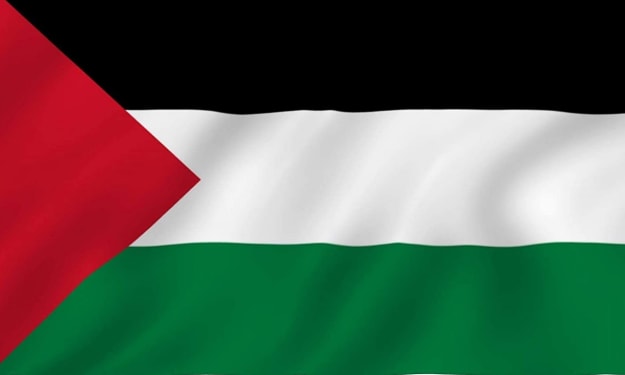
.Destruction in Gaza and the severe humanitarian crisis are bringing notable changes to the diplomatic landscape. On Sunday, the United Kingdom, Canada, Australia, and Portugal recognized the existence of the Palestinian state, while more countries are preparing to do so during the 80th session of the United Nations General Assembly. The governments of Finland and New Zealand have also given similar signals. Among the countries that have recently recognized the Palestinian state, the decisions by the UK and Canada are particularly significant. The UK is one of the five permanent members of the UN Security Council and holds veto power over its decisions, while Canada is the first G7 country to recognize the Palestinian state. After France’s recognition of Palestine, the United States will remain the only permanent Security Council member that does not recognize the Palestinian state. The other two permanent members, China and Russia (then part of the Soviet Union), recognized Palestine just days after the Palestine Liberation Organization (PLO) declared independence in Algeria in November 1988. France has announced it will recognize Palestine unconditionally. The UK decided to act because Israel is unwilling to end the “horrific situation” in Gaza and refuses to agree to a ceasefire with the Palestinian armed group Hamas. In addition, the British Labour government has demanded that Israeli Prime Minister Benjamin Netanyahu stop further annexations in the West Bank and commit to a long-term peace process leading to a two-state solution. London has also called on Hamas to release all hostages, sign a ceasefire agreement with Israel, lay down its weapons, and have no role in the future governance of Gaza. Although these demands have not been met, Sir Keir Starmer has rejected claims by Israeli officials and some relatives of hostages that this move is tantamount to a “reward” for Hamas. The British Prime Minister said their demand for a two-state solution is the exact opposite of Hamas’s hateful vision. Similar conditions were laid down for Hamas at the end of July in a declaration signed in New York by the Arab League’s 22 member states, the European Union, and 17 other countries. In response, Hamas said it would not disarm until an independent Palestinian state is established. the Gaza War and the Two-State Solution Since the start of the Gaza war, 13 countries have formally recognized the Palestinian state: Spain, the UK, Canada, Australia, Portugal, Ireland, Norway, Slovenia, the Bahamas, Jamaica, Barbados, Armenia, and Trinidad. French President Emmanuel Macron announced on X his readiness to join this list of countries, writing: “The most urgent need today is to end the war in Gaza and protect the civilian population.” He added: “Peace is possible. We need an immediate ceasefire, the release of all hostages, and large-scale humanitarian aid for the people of Gaza. We must disarm Hamas and work on Gaza’s security and reconstruction.” The Israeli president, however, emphasized that these steps could fuel “terrorism” and create “another Iranian proxy” in the Middle East. Last August, Israeli Prime Minister Netanyahu said: “Under these conditions, a Palestinian state would not live in peace but would serve as a launching pad for Israel’s destruction.” Israel claims these moves amount to a “reward” for Hamas. What Does Recognition of a State Actually Mean? Recognition by other countries is one of the four main factors of statehood. But it is not the sole decisive factor for the existence of a state. From the perspective of international relations, the three essential elements of a state are: defined borders, a permanent population, and sovereignty. There are several places that fulfill these three elements but function as active states only with recognition by a handful of governments. The most prominent example is Taiwan, which China considers a breakaway province. Taiwan also lacks full UN membership. On the other hand, there are failed states that are recognized by the UN and its members yet lack full control over their territory and borders or the ability to ensure the welfare of their citizens. More countries recognizing Palestine means an increasing number of governments view the Palestinian Authority as a legitimate entity — capable of establishing normal diplomatic relations, opening embassies, and cooperating in various forms. However, this is not enough to grant Palestinians full representation at the UN. Admission of new members requires approval by the Security Council, which means either gaining votes in favor or at least the US abstaining from voting. In April 2024, the US vetoed a resolution to admit Palestine as a member state. If Palestine were admitted, it would gain rights and responsibilities equal to other UN member states. But this alone would not improve realities on the ground or create a fully functioning state. For that, it would be necessary not only to end the Gaza war but also to resolve the decades-long Israeli–Palestinian conflict. Israel not only controls Palestinian borders but is also regarded by many international bodies as an occupying power. For decades, hopes for peace between Israel and Palestine have largely revolved around the two-state solution. Yet progress has repeatedly stalled due to multiple complex issues. One of the most significant is the future of Israeli settlements built on land captured during the 1967 Six-Day War in the West Bank and East Jerusalem, where about 700,000 people now live. : A Core Issue Palestinians want East Jerusalem as the capital of their state, but Israel has established its capital there — a move not recognized by the majority of the international community, which maintains that Jerusalem cannot be divided. Israel’s position is rooted in the fact that many Jewish holy sites are located in East Jerusalem. Moreover, after the 1948 war, the city was divided for nearly 20 years, during which time Israeli Jews were denied access to worship at the Western Wall, then under Jordanian control. Another key issue is the right of return for Palestinians displaced during wars with Israel. It is estimated that around 700,000 Palestinians were forced to flee or were expelled from their homes after the first Arab–Israeli war, and today their descendants number nearly six million. Palestinian leadership demands that these people be allowed to resettle not only in a future Palestinian state but also within Israel’s current borders. Israel, however, categorically rejects this.
By Real contentabout a year ago in Chapters
Doha Summit: Arab and Islamic Nations Meet After Israeli Strike on Qatar Amid Abraham Accords Anniversary
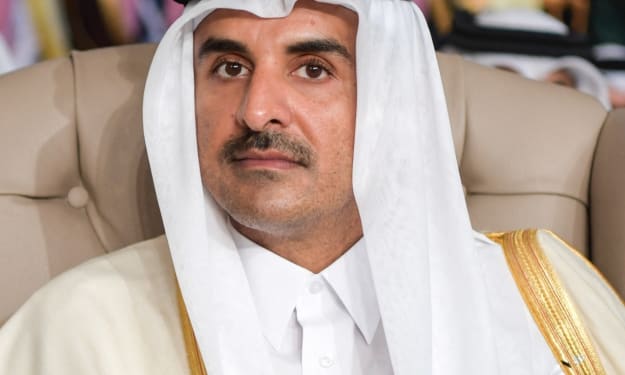
Less than a week has passed since the Israeli attack on Qatar, and already a joint summit of the Arab League and other Islamic countries is being held in the capital, Doha. Call it coincidence or something else, but this summit comes on the fifth anniversary of the signing of the “Abraham Accords.” It should be remembered that in 2021, as a result of the Abraham Accords, Israel and several Arab countries announced the establishment of normal relations. This meeting is taking place at a time when political tensions between Middle Eastern countries and Israel are intensifying. Israel’s war in Gaza has entered its third year, while other countries in the region are also suffering from its devastation. Last week, Israel attacked Qatar, which had been mediating efforts to end the Gaza war. Prior to this, Israel had already launched strikes on Lebanon, Iran, Yemen, and Syria. Despite the Israeli attack, Doha has expressed its determination to continue its mediation efforts with Cairo and Washington to stop the Gaza war. On Sunday, during a closed-door session of Arab and Islamic foreign ministers in Doha, Qatar’s Prime Minister Sheikh Mohammed bin Abdulrahman Al Thani urged the international community to abandon its “double standards.” He said, “What encourages Israel to continue its behavior is the silence of the international community and its failure to hold Israel accountable.” While some hope that serious measures will be taken in this regard, many others are doubtful that Arab countries will present a united response. The Doha summit is being jointly organized by the 22-member Arab League and the Organization of Islamic Cooperation. Arab Force On Sunday, the foreign ministers of member states discussed a draft resolution concerning last Tuesday’s Israeli attack on Qatar, which will be presented for approval at an emergency Arab-Islamic summit. Egyptian President Abdel Fattah el-Sisi is reportedly once again trying to gain Arab countries’ support for the formation of a NATO-style “Joint Arab Force.” Analysts are calling it the “Arab NATO,” intended to defend any Arab country against potential aggression. According to Pakistan’s state news agency, Ishaq Dar stated that in order to monitor Israeli planning in the region and effectively curb its expansionist agenda, an Arab-Islamic task force must be established and coordinated, aggressive measures must be adopted. Qatar’s former Prime Minister Hamad bin Jassim Al Thani, in a message on X, stressed the importance of Arab and other Islamic countries adopting clear and practical decisions at the summit. He said that at the Doha summit, decisions must be made to end Israel’s reckless attacks against different countries under the pretext of fighting terrorism, as well as its hatred towards the Arab and Islamic world. Hamas Calls for Boycott of Israel Meanwhile, Hamas has called on Arab and Islamic foreign ministers, as well as influential powers worldwide, to boycott Israel and work to isolate it politically and economically. It has also demanded an end to Israel’s open violations of international law. In a memorandum issued on Sunday, Hamas demanded that international pressure be applied to stop Israeli “aggression and genocide of Palestinians” in Gaza, the West Bank, and Jerusalem, and that Israeli leaders be prosecuted in international courts. Hamas leader Izzat al-Risheq urged participants at the Doha summit to express historic consensus to halt “genocide in Gaza” and crimes of Zionist occupation in the West Bank, Jerusalem, Lebanon, Syria, Yemen, Tunisia, and Qatar. He said the Israeli prime minister is pushing the entire region to the brink of destruction in order to achieve the “Greater Israel” project, reshape the Middle East, and establish dominance. Arab Governments Do Not Understand the Language Israel and the U.S. Understand However, some believe that the Doha summit will prove useless, and criticism has also been directed at the Qatari prime minister’s visit to Washington following the Israeli attack. Yemeni politician and academic Sheikh Hussein Hazib expressed similar views. Criticizing the Doha summit, he said this alliance would be “stillborn.” He pointed towards the use of force, saying that Arab governments “do not understand the language that Israel and the U.S. understand.” A social media user named Hamad Nasser Muneef also said he expects nothing more than condemnation from the summit. Yahya Sinwar’s Major Achievement This summit coincides with the fifth anniversary of the Abraham Accords. Although the agreement has survived despite the Gaza war, the Washington Institute for Near East Policy has said the deal is facing new complications. These include the indefinite suspension of talks to normalize relations between Israel and Saudi Arabia. In a recent report published in September, the institute stated that the late Hamas leader Yahya Sinwar succeeded in linking efforts to normalize relations between Israel and Saudi Arabia with the Palestinian issue, by capitalizing on Arab anger over the Gaza war. The report added that as long as Israel’s campaign continues in Gaza without any possibility of Palestinian governance, there is little chance of expanding the Abraham Accords—particularly in terms of achieving normalization between Israel and Saudi Arabia.
By Real contentabout a year ago in Chapters