Politics
How Iran Attacks Are Affecting Pakistani Workers in Dubai and the Gulf
Until a few days ago my work was going very well, but now several days pass without getting any work. Over the past five years I manageid to pay off the debts that were on me and my family. Now my goal was to build my own house. But if the situation continues like this, it may even become difficult to earn a living in Dubai.” This was stated by 34-year-old electrician Imran Khan from Mardan, who has been working in Dubai for the past five years. Imran is among thousands of Pakistani laborers who work in Gulf countries on free or informal visas in various sectors on a temporary basis. Last week, attacks on Iran by the United States and Israel and Tehran’s retaliatory actions created uncertainty in the Middle East, increasing the difficulties of migrant workers like Imran Khan. For a long time, the United Arab Emirates had the image of a country largely insulated from problems affecting the rest of the region. However, after the death of Iran’s Supreme Leader Ayatollah Ali Khamenei last Saturday, Iran targeted Gulf countries—including the UAE with drones and missiles. Following this, the UAE had to close its airspace. According to Imran Khan, this uncertain situation has also affected job opportunities. He says that earlier he used to get work almost every day of the week. “Now sometimes I have to wait three or even four days. For people like us, when work stops it becomes very difficult because our income depends entirely on daily labor.” Construction work slowing in the UAE The construction sector has long been an important pillar of the UAE economy. Skyscrapers, residential projects, and large infrastructure developments have provided employment to millions of foreign workers. But workers on free visas say that small and medium-sized projects are now slowing down. Waqas Ahmed, a laborer in Dubai, says: “Large projects are still going on, but smaller contractors have less work now. Earlier we were called to sites every day, but now we’re not.” Khalid Mahmood (a pseudonym), who works in Sharjah, says that most projects there are small residential developments. “When the market slows down, these projects are the first to be affected.” He adds that earlier, if work was scarce in Sharjah, they could look for work in other emirates. “But now even that isn’t possible.” Yousaf, a mason working in Ajman, says that earlier when they left home in the morning they were confident they would find work somewhere. “Now many days we return empty-handed in the evening.” Workers say that compared with permanent employees, those on free visas are affected first because they work on daily or temporary contracts. Shipping and cargo sector also affected The UAE’s ports are a major hub of regional trade, but uncertainty has also affected the cargo and shipping sectors. Nasir Ali, who works in cargo handling in Dubai, says that cargo operations have not completely stopped, but they are not as busy as before. He says some companies have reduced shipments, which means workers are not getting consistent work. Arshad Mahmood, who works in a warehouse in Abu Dhabi, says: “Earlier several large shipments arrived each week, but now loading hardly happens. This directly affects workers’ incomes.” Small businesses It is not only laborers who have been affected by the current situation. Ayesha Farooq, a Pakistani woman living in Dubai, used to earn a good income by teaching mathematics and English tuition to children. But after Iran’s attacks, educational institutions in the UAE started conducting classes online, and many parents stopped sending their children for tuition. “Earlier children came to my home for tuition and I taught several students daily. Now the number of students has dropped significantly. Some parents said it would be fine if I could go to their homes to teach, but that’s not possible. Many tuitions have stopped, and it is affecting my income.” Haris Mahmood from Sialkot, who works as a mechanic in a workshop in Bahrain, says that earlier cars came daily for repairs, but now work has decreased. Similarly, workers repairing mobile phones and working in small shops are also complaining about fewer customers. Desire to go home for Eid and rising ticket prices Many Pakistani workers in Gulf countries had planned to go home for Eid this year, but current difficulties make that unlikely. Imran Shah, who works as a driver in Dubai, says: “Flights are limited and tickets have become very expensive. A friend’s company told him not to go right now because returning might be difficult. I haven’t been to Pakistan for five years. This time I had a definite plan, but now there are no tickets.” He added that although many sectors are affected, his own work is still going well. Imran Shah says whenever news about Iran-Israel tensions appears, his family immediately calls from home asking about the situation. “We have to keep explaining that life here is still normal and there is no danger, but they don’t understand.” Rising daily expenses Increasing prices are also affecting people. For migrant workers in the UAE, the biggest challenge is controlling their expenses. Amjad Ali, an electrician who has been living in Qatar for four years, says: “Earlier apples cost four riyals, now they are up to ten. Onions have gone from two and a half riyals to seven. Meat and chicken prices have also increased significantly.” He added: “We already live on limited income. When food prices rise, it becomes difficult both to send money home and to manage our own expenses.” In Bahrain, the situation is similar. Haris says: “Not only food items are becoming expensive, but rent and other expenses are also rising. This has made workers’ lives more difficult than before.” “My business is doing fine” Suleman Jazib, who is involved in the shipping business in Dubai, says that all kinds of business activities are still happening at Dubai Port. He says import and export containers are still moving through the port. “Today three containers arrived from China.” According to him, Dubai Port is open for all kinds of business and activities. If the number of containers has decreased, it is not just a Dubai issue but a global situation. He says: “We are still receiving business and services today, which shows that commercial life continues.” He added that there is no fear in Dubai or other emirates of the UAE. Normal activities are ongoing. Markets and bazaars have all goods available, prices have not increased, and flights have now resumed from airports.
By Real content8 months ago in Chapters
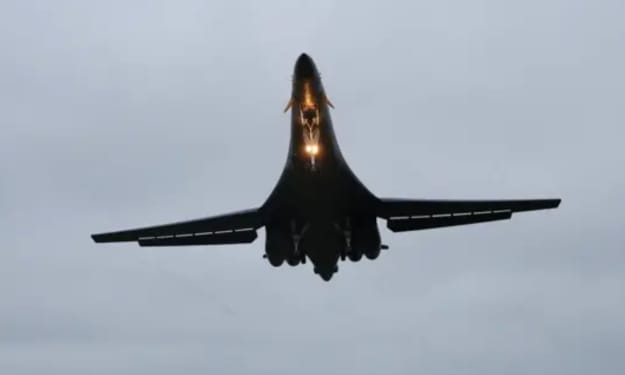
The Bone: Why is the American bomber arriving in the UK for a possible major attack on Iran considered so dangerous?
The Bone: Why is the American bomber arriving in the UK for a possible major attack on Iran considered so dangerous? A large U.S. Air Force bomber aircraft capable of carrying 24 cruise missiles has landed on British soil. The 146-foot-long B-1 Lancer arrived on Friday at Royal Air Force Fairford airbase in Gloucestershire, United Kingdom. Nicknamed “The Bone,” the aircraft is equipped with advanced radar and GPS systems that help accurately strike targets. For protection against enemies, it also carries electronic jammers, radar warning systems, and a specialized deception system designed to confuse enemy defenses. This development comes after British Prime Minister Keir Starmer allowed the United States to use British military bases. However, the UK says this permission is only for defensive strikes on Iranian missile facilities. Earlier this week, officials had said Britain was ready to allow these warplanes to use its airbases and expected their arrival within a few days. Specifications of “The Bone” The aircraft operates with a four-member crew. Its wingspan is 137 feet and it weighs 86 tons. According to Boeing, it is the fastest bomber in the U.S. Air Force, capable of flying at speeds of more than 900 miles per hour. U.S. Secretary of Defense Pete Hegseth indicated in a statement that attacks on Iran may increase soon. He said that larger fleets of fighter jets will be involved, defensive capabilities will be strengthened, and bomber flights will also increase. RAF Fairford RAF Fairford, located on the border of Gloucestershire and Wiltshire, has previously been used by the United States for long-range heavy bombing missions. It should be noted that Britain has allowed the U.S. to use its military bases for defensive strikes, but has announced that it will not directly participate in combat operations. Earlier on Friday, the Prime Minister’s spokesperson told journalists: “We have already made it clear that our response has been to allow the United States limited, specific, and defensive use of our military bases to protect British lives, British interests, and our allies in the region.” The spokesperson added that the British military is focusing on shooting down drones in the air, while the United States is targeting missile launch sites in Iran. He said: “We have consistently stated that we will take necessary steps to prevent future attacks. For that purpose, we have allowed the United States to target these missiles at their source, while we ourselves are focusing on defending the airspace.” Iranian Revolutionary Guard Claim Meanwhile, the Islamic Revolutionary Guard Corps (IRGC) has claimed that it carried out large-scale missile and drone attacks on U.S. installations in the United Arab Emirates and Kuwait. In a statement released on Saturday, it said that the latest phase of the operation used a new generation of missiles and drones. According to Iranian media, the main target was the Al Dhafra Air Base in the UAE, where precision-guided missiles and drones reportedly destroyed advanced radar systems, MQ-9 drone hangars, and facilities related to U.S. U-2 reconnaissance aircraft. The IRGC also stated that Ali Al Salem Air Base in Kuwait was heavily attacked with cruise and ballistic missiles, damaging radar systems, fuel storage facilities, and two runways used by U.S. aircraft. Israeli Airstrikes in Iran
By Real content8 months ago in Chapters
Iran vs Israel War: What Options Does Iran Have After US-Israeli Airstrikes Weaken Its Military?
what options does Iran have in this war, and what strategy is it pursuing? Depleting Resources Dr. H.A. Hellyer, a Middle East security expert at the Royal United Services Institute (RUSI) in the United Kingdom, says Iran’s current military approach is not to defeat the United States or Israel in a conventional war, but to make any conflict long, region-wide, and economically costly. He says: “Iran cannot win conventionally, but its strategy is to make victory expensive and uncertain for others.” Nicole Grajewski, Assistant Professor at the Center for International Studies at Sciences Po in France, agrees. She describes Iran’s strategy as a “war of attrition” — a type of war in which the goal is not to deliver a decisive defeat but to gradually weaken the opponent through continuous attacks and losses until their resources and ability to fight are affected. This strategy also has a psychological dimension. According to Grajewski: “During last year’s 12-day war with Israel, Iran directed many of its attacks toward civilian areas. The purpose was less about precision and more about creating fear and psychological shock among the population.” Missiles and Drones Missiles and drones are generally considered the backbone of Iran’s defense doctrine. Grajewski says Iran’s ballistic missile stockpile reportedly suffered significant damage during the 12-day war, but the exact numbers are uncertain because the missiles are stored underground and production continues. According to Israeli estimates, by February 2026 Iran had about 2,500 missiles, including: Short-range missiles (up to 1,000 km) Medium-range missiles (1,000–3,000 km) Iranian officials say they have used systems like Sejjil, which reportedly has a range of about 2,000 km. They also say they used Fattah, which Tehran describes as a hypersonic missile, meaning it travels much faster than the speed of sound. Missile Cities Iranian media and officials often mention underground missile facilities known as “missile cities,” although their size and stockpiles have not been independently verified. According to senior U.S. commander General Dan Caine, Iran’s ballistic missile attacks have decreased by 86% since the first day of fighting, Saturday, February 28. The U.S. Central Command (CENTCOM) says there was a further 23% drop by Tuesday, March 4. Despite this, Hellyer says Iran still has the ability to effectively target Israeli infrastructure, U.S. regional bases, and Gulf allies, while also threatening the global energy flow through the Strait of Hormuz. He says: “Even a small disruption in the Strait of Hormuz could have severe consequences for the global economy.” About 20% of the world’s oil passes through this narrow waterway, and Iran has now effectively closed it, warning that any ship attempting to pass through will be targeted. Drone Capability Although Iran may face shortages of advanced missiles and solid fuel, Grajewski says its drone capability remains significant. It is believed that before the war Iran had produced tens of thousands of ‘Shahed’ one-way attack drones. This design has been exported to Russia, and even the United States has reportedly studied aspects of the technology. These drones are not just for direct damage but also serve a strategic purpose: They force opponents to use expensive interceptor missiles, gradually weakening air defense systems. Grajewski says: “Part of the strategy is to exhaust interceptor capabilities. Iran is doing this with UAVs and drones. It’s similar to what the Russians did in Ukraine.” However, the United States says Iran’s drone attacks have fallen by 73% compared to the first day of the conflict. According to the Institute for National Security Studies in Tel Aviv: The U.S. and Israel have launched over 2,000 weapons of different types. Iran has fired 571 missiles and 1,391 drones, many of which were intercepted. Experts say that as the war continues, it will become harder for both sides to maintain this pace. A Long Conflict
By Real content8 months ago in Chapters
If the Strait of Hormuz is closed for a long time, it will benefit Russia.
A war involving the United States and Israel with Iran carries the risk that the Strait of Hormuz could remain closed for a prolonged period. This is a crucial route in the global economy through which 20% of the world’s oil and liquefied natural gas is supplied from the countries of the Persian Gulf. Any disruption in this route would create problems for Europe, the United States, and even Donald Trump himself. However, it would also benefit Russia, because it would give the Kremlin an opportunity to increase oil exports and earn billions of dollars to finance the war against Ukraine. Iran controls the northern coast of the narrow Strait of Hormuz. It has repeatedly threatened to close the strait in response to what it calls American and Israeli “aggression,” but even after the deaths of senior leaders and days of bombardment, it has not acted on this threat. However, shipping has almost stopped because shipping companies are unwilling to take the risk and insurance costs have skyrocketed. “The Strait of Hormuz is technically open, but in practice it has been closed to shipping,” say analysts at Kpler, which monitors tanker traffic. “This is not just an abstract geopolitical risk; it is a real disruption to supply.” How the war helps the Kremlin According to Kpler analysts, “This conflict will significantly strengthen Russia’s position in the global oil market.” Disruptions in Middle Eastern oil supply would increase India and China’s dependence on Russian oil. In recent months, these two major buyers of Russian oil have reduced their imports under Western pressure, forcing Russia to cut prices further and reduce exports. But even these steps have not fully sold the sanctioned oil, and millions of barrels remain at sea in shadow-fleet tankers waiting for buyers. If the Strait of Hormuz is closed, the world will not only lose official Middle Eastern oil from Saudi Arabia, the United Arab Emirates, Kuwait, and Iraq, but also be cut off from the supply chain of smuggled and sanctioned Iranian oil. With Venezuela under U.S. blockade, Russia would effectively become the only country able to sell cheap oil through the shadow fleet. With global prices inevitably rising, it will become easier for Moscow to sell cargo that is currently stranded at sea. Bloomberg energy expert Javier Blas says: “This war will benefit Vladimir Putin because oil prices will rise and demand for sanctioned Russian crude will increase. If the White House ignores it, India could become a buyer of that oil.” Mr. Trump has demanded that India stop importing Russian oil. However, with congressional elections approaching in November, keeping gasoline prices low in the United States may become a higher priority for him. Blas writes that although this option may not be easy for those trying to counter Putin’s aggressive policy, it could partially offset the oil shortage caused by disruptions in the Strait of Hormuz. Analysts say that even if Trump remains dissatisfied, India is likely to resume buying Russian oil. S&P Global Ratings has also stated that India’s strategic oil reserves are currently below the level set by the International Energy Agency. In contrast, China has actively increased its reserves in recent months, but Kpler analysts say that if the Strait of Hormuz is blocked, Beijing will also be prepared to increase maritime oil imports from Russia. “In the short term, disruptions will most likely put pressure on India, which will probably immediately turn to Russian oil due to its availability and well-established logistics mechanisms,” analysts say. China, which has recently reduced imports of Russian oil, may also abandon this caution if the conflict continues for weeks. But Russia’s interests are not limited to this Shipping disruptions have given the Kremlin hope that it can maintain pipeline exports to Europe. However, there are two obstacles. First, the European Union is preparing a full-scale oil embargo against Russia, and its details were expected to be announced in mid-April. An oil crisis would not be the right time to announce such a decision. Second, key European buyers of Russian oil and Kremlin allies Hungary and Slovakia have not received oil via the “Druzhba” pipeline for more than a month because it was damaged in Ukraine due to Russian bombing. As a result, both countries have vetoed new sanctions against the Kremlin and European loans to Ukraine. The European Union proposed that the two countries obtain oil through a pipeline connected to Croatia’s maritime terminal instead of Russian oil. But if maritime oil supplies decrease due to problems in the Strait of Hormuz, this option will become practically ineffective, and the EU may be forced to pressure Ukraine to repair the pipeline more quickly. How the West is affected
By Real content8 months ago in Chapters
Pakistani Man Asif Merchant on Trial in New York Over Alleged Trump Assassination Plot Linked to Iran’s IRGC
A Pakistani citizen, Asif Merchant, who was arrested on charges of planning the assassination of former U.S. President Donald Trump, has appeared in court in New York as the trial against him begins. During the proceedings, he told the court that he had been working A Pakistani citizen, Asif Merchant, who was arrested on charges of planning the assassination of former U.S. President Donald Trump, has appeared in court in New York as the trial against him begins. During the proceedings, he told the court that he had been working with Iran’s Islamic Revolutionary Guard Corps (IRGC) and that the plan involved recruiting hired assassins. On Wednesday, Asif Merchant told the court that he was not acting of his own free will in the alleged conspiracy to carry out assassinations in cooperation with the IRGC. The U.S. Department of Justice alleges that Asif Merchant was attempting to find hired killers in the United States. The plan was allegedly to target Trump and other American politicians in retaliation for the killing of IRGC commander Qassem Soleimani. It should be recalled that General Qassem Soleimani, head of Iran’s overseas operations and a commander in the IRGC, was killed in a U.S. drone strike in Baghdad in January 2020. Iranian officials have repeatedly vowed to avenge his death. Asif Merchant is accused of meeting a hitman in June 2024 and paying $5,000 as an advance for carrying out a killing. However, the person he believed to be a hired assassin was actually an undercover FBI agent. According to court documents, Merchant allegedly planned to leave the United States before the plot could be carried out and had booked a flight for July 12, 2024. However, U.S. authorities arrested him on the same day before he could leave the country.
By Real content8 months ago in Chapters
Pakistan's defense agreement with Saudi Arabia, will Pakistan remain neutral in a war between Iran and Saudi Arabia?
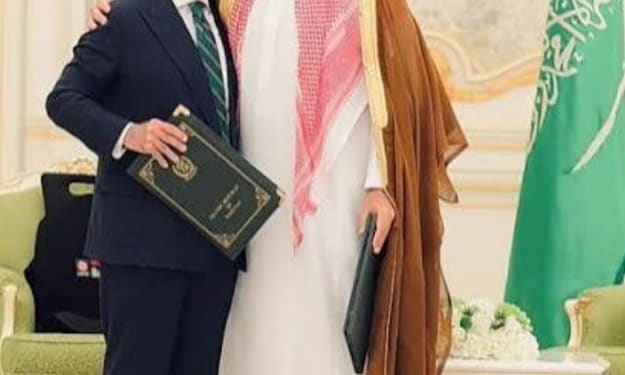
The scope of attacks that began on February 28, 2026, between the United States, Israel, and Iran has expanded into a regional war, raising questions about Pakistan’s foreign policy as well as its defense agreement with Saudi Arabia. On Saturday morning, after the United States and Israel launched attacks on Iran, Tehran retaliated by firing missiles at targets in Saudi Arabia, Kuwait, Bahrain, Qatar, and the United Arab Emirates. The primary targets of Iran’s retaliatory strikes are U.S. military bases located in Gulf countries, including Saudi Arabia. Since the conflict began, Iran has launched hundreds of missiles and drones toward its Arab neighbors. Qatar’s Foreign Ministry spokesperson Majed Al-Ansari said during a press briefing on Tuesday that “all red lines have already been crossed. Under the current circumstances, Pakistan faces significant challenges. On one side is its neighboring Muslim country Iran, while on the other side are Saudi Arabia and other Gulf states such as Qatar, with which Pakistan maintains defense agreements and strong relations. These are also the countries that have supported Pakistan during its fragile economic situation. While Pakistan strongly condemned Israel’s attack on Iran, after Iran targeted U.S. bases in Saudi Arabia, Pakistan’s Prime Minister Shehbaz Sharif also assured Saudi Arabia that Pakistan will stand with the Kingdom at all times and in every difficult moment. Pakistan’s balanced policy statements are being criticized by some as “riding two boats at once.” Questions are also being raised about what problems Pakistan could face if its defense agreement with Saudi Arabia forces it to take up arms against Iran. Ishaq Dar’s Policy Statement After the war between Iran, the United States, and Israel and the retaliatory strikes across different countries, Pakistan’s Foreign Minister Ishaq Dar issued a policy statement. He said Iran had agreed not to develop nuclear weapons, and despite positive progress in nuclear negotiations, Iran was still attacked. He stated: “When Iran was attacked, Pakistan openly condemned it.” He added that Pakistan had also secured assurances that Saudi territory would not be used for attacks against Iran, and that misrepresenting Pakistan’s sincere diplomatic efforts domestically is inappropriate. Speaking in the National Assembly, Ishaq Dar said: “You have seen that the reaction against Saudi Arabia and Oman has been relatively limited.” He added: “The government has made every effort to promote negotiations. We are fully on board. I am in direct contact with Iranian Foreign Minister Abbas Araghchi; we don’t need the Foreign Office to communicate.” He further said: “We supported the resolution in the UN Security Council that called for lifting sanctions on Iran. Pakistan was thanked in Iran’s parliament. On February 28, we called for an emergency meeting of the Security Council and condemned the attack on Iran there, expressing solidarity with Iran alongside Arab countries.” In another statement, Ishaq Dar said: “It was claimed that Iran’s attacks on Gulf countries targeted U.S. bases, but according to details, airports and infrastructure were also targeted, and a Pakistani citizen was killed. If Iran had not done this, we could have formed a stronger joint voice with these countries.” It should be noted that after reports that U.S. military bases were targeted in Iran’s retaliatory attacks, Prime Minister Shehbaz Sharif spoke with Saudi Crown Prince Mohammed bin Salman by phone and strongly condemned both Israel’s attack on Iran and the subsequent attacks on some Gulf countries. Pakistan’s Energy Security Could Be Affected Experts say that if this war continues for a long time, Pakistan may eventually have to take a clearer position, which will not be easy. How Could This Situation Create Problems for Pakistan? International affairs analyst Dr. Qamar Cheema said: “Pakistan’s energy security could be at stake in this situation. Many of our energy needs are fulfilled by Iran, while others are met by Saudi Arabia. This is a major challenge.” He added: “Our military is already busy dealing with terrorism related to Afghanistan. At the same time, we have a defense agreement with Saudi Arabia and are also engaged in peace initiatives. Managing attention on multiple fronts could create additional challenges for Pakistan.” Journalist and anchor Asma Shirazi said: “So far, Pakistan has maintained its position as a neutral state, which has been a successful policy.” She added: “Whether it was the attack on the UAE or on Iran, Pakistan condemned both. So far, Pakistan’s foreign policy appears balanced, but challenges lie ahead.” According to her: “It is like a bridge that Pakistan must cross. In other words, Pakistan is walking on a very thin line with a deep abyss on both sides.” Pakistan’s Economy Could Force It to Lean Toward One Side Former ambassador Aizaz Chaudhry said Pakistan has close relations with Saudi Arabia, while Iran is a neighboring country with deep cultural ties. As indicated in statements by Pakistan’s Deputy Prime Minister and Foreign Minister, Pakistan is also trying to facilitate peace between the two countries. He said: “Pakistan is telling Iran not to attack Saudi Arabia and is obtaining assurances from Saudi Arabia that its land will not be used for attacks against Iran. This is a commendable role because Pakistan is a friend of both countries. That is what friendly countries do.” So what could force Pakistan to lean toward one side? According to Asma Shirazi, Pakistan’s economic condition may play a decisive role. “Our economy has been under continuous pressure, and economic realities are defining our defense requirements. Ideally Pakistan should maintain a balanced policy, but it may become difficult if Iranian attacks on the UAE continue.” She added: “Only Pakistan’s economy could force it to lean toward one side, though it should not happen. Both Saudi Arabia and Iran are important for Pakistan, especially for internal stability and to avoid sectarian tensions within the country.” She said it appears that Pakistan does not want to anger either Iran or Saudi Arabia. She also noted: “Saudi Arabia is fully aware of Israel’s objectives, and it seems unlikely that Saudi Arabia would take any extreme step knowing this.” Pakistan Will Stand With Saudi Arabia at All Costs Pakistan also has an important defense agreement with Saudi Arabia. In this situation, what options does Pakistan have? Analyst Qamar Cheema says Pakistan’s position is very clear. He disagrees with the idea that Pakistan is trying to balance two opposing sides. “Pakistan will not lean toward one side. If Pakistan takes a position, it will be based on international law or existing agreements, which is what we are seeing now.” He added: “Pakistan maintained friendship with Iran, but when it comes to Saudi Arabia, we have a defense agreement. Pakistan will stand with Saudi Arabia at all costs.” He said: “So far the attacks on Saudi Arabia have been in the context of U.S. bases. But if Saudi territory, infrastructure, or government assets are attacked and Saudi Arabia asks for support, Pakistan will not step back from its agreement.” According to him: “Iran and the rest of the world know that Pakistan has a defense agreement with Saudi Arabia. That is why Iran carried out very limited attacks on bases in Saudi Arabia, because Iran had already been warned that harming Saudi Arabia could force Pakistan to join the war under the agreement.” Responding to the same question, Asma Shirazi said: “The defense agreement between Saudi Arabia and Pakistan means that if at any moment Saudi Arabia asks for support, Pakistan has the option to respond.” Iran Is Not Saudi Arabia’s Enemy Former ambassador Asif Durrani said the Iran-U.S.-Israel war is not only challenging for Pakistan but is affecting Gulf countries, the Middle East, Central Asia, and South Asia. According to him: “In the context of Iran, realistic thinking is needed regarding the agreement between Pakistan and Saudi Arabia. We stand with Saudi Arabia, but Iran is not Saudi Arabia’s enemy.” It should be remembered that in March 2023, Iran and Saudi Arabia restored diplomatic relations through Chinese mediation. After the restoration of ties, delegations from both countries continued dialogue. In May, Saudi Arabia openly condemned Israeli and U.S. attacks on Iran’s nuclear facilities. According to Asif Durrani: “The real issue is the United States and its military bases being used, while Israel is exploiting the situation. It would not be surprising if attempts were made to provoke conflicts between Iran and Saudi Arabia or Iran and the UAE or Oman, possibly through incidents like pipeline or hotel attacks.” He said Pakistan has also raised the issue at the UN Security Council, expressing concern and warning against imposing unacceptable conditions. He added: “We already have a defense agreement with Saudi Arabia. Interestingly, the agreement came shortly after Israel’s attack on Doha. Before that, Iran and Saudi Arabia had improved relations through Chinese mediation.” He said the Saudi reaction shows that Iran’s argument about targeting U.S. bases is considered significant in that context. Pakistan and Saudi Arabia’s “Mutual Strategic Defense Agreement” In September last year, Pakistan and Saudi Arabia signed a Joint Strategic Defense Agreement to enhance defense cooperation and security. Under the agreement, any external aggression against one country will be considered aggression against both. The agreement was signed in Riyadh by Saudi Crown Prince Mohammed bin Salman and Pakistan’s Prime Minister Shehbaz Sharif. The purpose of the agreement is to strengthen defense cooperation between the two countries and enhance joint protection against any aggression, treating an attack on one country as an attack on both.
By Real content8 months ago in Chapters
The Life and Leadership of Ayatollah Ali Khamenei
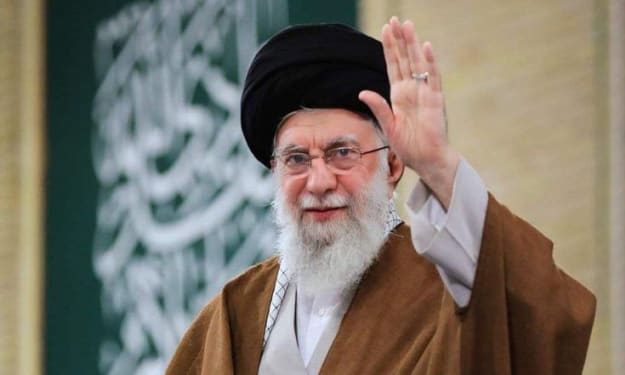
Ayatollah Seyyed Ali Hosseini Khamenei’s story begins in Mashhad, one of Iran’s holiest cities, where he was born on July 17, 1939 into a deeply religious family. His father, Ayatollah Seyyed Javad Khamenei, was a respected cleric of Azerbaijani origin, known for his strict scholarship and modest lifestyle. His mother, a devout woman from a clerical family, raised her children in an environment where faith, discipline, and humility were woven into daily life. Growing up in a small home with limited means, young Ali spent his childhood surrounded by religious texts, sermons, and the rhythms of Islamic scholarship. His father insisted on a traditional religious education, and by his teenage years, Ali was already immersed in the study of Quranic interpretation, jurisprudence, and philosophy. Early Education and the Seeds of Rebellion In the 1950s, Khamenei continued his studies in the seminaries of Mashhad and later Najaf, one of the most important centers of Shia learning. But his education was not limited to theology. He was drawn to political writings, anti-imperialist ideas, and the growing movement against the Shah of Iran. By the early 1960s, he had become a follower of Ayatollah Ruhollah Khomeini, whose fiery opposition to the Shah inspired a generation of young clerics. Khamenei began giving speeches, distributing pamphlets, and organizing underground networks. His activism led to multiple arrests, interrogations, and periods of exile under the Shah’s regime. These years hardened him. They shaped his belief that political power and religious authority were inseparable—and that Iran needed a system where clerics guided the nation. The 1979 Revolution and the Rise of a New Leader When the Iranian Revolution erupted in 1979, Khamenei was no longer a young student—he was a seasoned activist. After the Shah fell and the Islamic Republic was established, he quickly rose through the ranks: - Member of the Assembly of Experts - Tehran’s Friday Prayer Leader - Deputy Minister of Defense - A key figure in the Islamic Revolutionary Guard Corps (IRGC) In 1981, after the assassination of President Mohammad-Ali Rajai, Khamenei became the President of Iran, serving two terms until 1989. He was known for his calm demeanor, loyalty to Khomeini, and ability to navigate political factions during the turbulent years of the Iran–Iraq War. Supreme Leader: An Unexpected Successor When Ayatollah Khomeini died in 1989, Iran needed a new Supreme Leader. Many clerics doubted Khamenei—he was younger, less senior in religious rank, and not considered a grand ayatollah. But he was trusted, politically experienced, and deeply loyal to the revolution. The Assembly of Experts elected him as the Second Supreme Leader of Iran, a position he would hold for 36 years, making him one of the longest-ruling leaders in the modern Middle East. A Rule Defined by Power, Conflict, and Control Khamenei’s leadership reshaped Iran’s political landscape. Under his rule: - The IRGC became the most powerful military and economic force in Iran. - Iran expanded its influence across the Middle East through proxy groups. - Domestic dissent was tightly controlled. - The nuclear program became a central pillar of Iran’s strategy. Supporters saw him as a guardian of Iran’s independence and Islamic identity. Critics saw him as an authoritarian figure who consolidated power and suppressed opposition. His leadership style was marked by caution, ideological rigidity, and a belief that Iran must resist Western influence at all costs. The Final Chapter In February 2026, Ayatollah Ali Khamenei was killed at age 86 during U.S.–Israeli airstrikes targeting his compound in Tehran, marking the end of an era that had defined Iran for nearly four decades. His death was confirmed by Iranian state media and global news outlets. His passing left Iran at a crossroads, with an interim leadership council stepping in as the nation faced uncertainty about its future. Legacy of a Controversial Figure Ayatollah Ali Khamenei leaves behind a legacy that is complex and deeply debated: - To some, he was a defender of Iran’s sovereignty and Islamic values. - To others, he was a symbol of repression and authoritarian rule. - To historians, he was one of the most influential—and polarizing—leaders of the 21st century. But beyond politics, his story is also the story of a boy from Mashhad, raised by a humble cleric father, shaped by faith, revolution, and the belief that he was destined to guide his nation.
By Haroon Pasha8 months ago in Chapters
How has the Israel-US war with Iran affected air travel?
On February 28, Israel and the United States launched a coordinated military operation against Iran, killing Supreme Leader Ali Khamenei. Since then, the conflict has rapidly expanded and affected multiple countries. Dubai Airport, the world’s busiest airport for international travel, was struck by drone debris during a retaliatory attack and was closed for three days, leaving millions of passengers stranded. A projectile also hit Dubai’s luxury Fairmont The Palm hotel, causing a fire that was widely shared on social media. John Rose, Senior Risk Advisor at corporate travel management firm Altour, said: “Retaliation specifically against regions like the UAE was surprising to me and many others.” He added that although some countries such as Israel were expected to face retaliatory attacks, the United Arab Emirates has so far been one of the safest travel destinations in the region, with Dubai alone attracting nearly 20 million travelers in 2025. U.S. President Donald Trump said he expects the attacks to continue for several weeks. As the situation continues to change rapidly, many travelers are wondering whether and when it will be safe to travel to the region again. Countries around the world have quickly tightened their travel advisories. The U.S. State Department, in a social media post, ordered American citizens to leave at least 14 countries in the Middle East immediately, including Egypt, which has not been directly affected by the attacks. Each country’s situation is complex and changing rapidly, sometimes within hours. Because of this, travelers should consider their risk tolerance and the reasons for their travel. At the time of writing, the status of the affected countries is as follows: Iran All civilian travel to and from Iran has been suspended. The country’s airspace was closed immediately after the attacks began and remains closed. The United States, United Kingdom, Canada, and Australia have issued their highest-level travel advisories for Iran. Canada stated that its ability to assist citizens in the country is “severely limited.” Land routes to Armenia remain open for those trying to leave Iran, while reports indicate movement restrictions at the Iran–Turkey border. United Arab Emirates Despite Iranian attacks on Dubai International Airport and Zayed International Airport in Abu Dhabi, both airports are gradually resuming operations. Etihad Airways has resumed its first flights from Abu Dhabi. Emirates has restarted its first flights from Dubai. Airlines are offering free ticket changes, and the UAE government has announced it will cover food and accommodation expenses for 20,200 stranded passengers in the country. Currently, the U.S., U.K., Canada, and Australia advise their citizens to avoid non-essential travel to the UAE. However, John Rose believes the situation could change quickly since the UAE is one of the world’s most important economic and trade hubs, and conditions may stabilize by the weekend. Qatar Qatar’s Ministry of Foreign Affairs said it intercepted several Iranian attacks targeting civilians, including an attempt targeting Hamad International Airport in Doha. The airport remains closed due to the closure of Qatar’s airspace. The U.S. and U.K. have advised citizens to stay indoors since March 2. Australia and Canada have issued “Do Not Travel” warnings. Oman According to John Rose, many travelers from the UAE have gone to Oman, where flights are still operating and the risk of attacks is considered lower than in other regional countries. However, the commercial port of Duqm in Oman was targeted by a drone strike, which surprised many because Oman had been mediating peace talks between the U.S. and Iran. Travel advisories for Oman are somewhat softer compared to other regional countries: The U.K. urged its citizens in Duqm or within a 100 km radius to leave the country via commercial routes. Canada advised against all non-essential travel. Australia urged travelers to reconsider travel. The U.S. State Department urged citizens to leave Oman immediately. Israel Israel continues to exchange fire with Iran and Hezbollah in Lebanon. Air-raid sirens have sounded repeatedly across Israel, including Tel Aviv. Ben Gurion Airport, Israel’s main international airport near Tel Aviv, was closed due to the closure of Israeli airspace, but it is expected to reopen soon with limited flights from Israeli airlines. The U.S., U.K., Canada, and Australia have issued their highest-level travel warnings for Israel. Lebanon Lebanon was already under the highest level U.S. travel warning before the recent escalation. Days before the attacks began, the U.S. ordered non-essential embassy staff to leave due to threats from Hezbollah. Hezbollah leaders had previously said they would not remain neutral if the U.S. attacked Iran. The U.S. Embassy has now urged all American citizens to leave the country while commercial flights are available. Australia and Canada issued “Do Not Travel” warnings. The U.K. advises avoiding all travel to some areas and all but essential travel to others. John Rose said he does not expect travel warnings to be lifted anytime soon. The U.S. State Department has also urged its citizens to leave Lebanon immediately. Kuwait and Bahrain Both countries have closed their airspace after being targeted by Iranian attacks. The U.K. urged citizens in both countries to stay safe and avoid unnecessary travel. Canada and Australia advised against all travel. The U.S. State Department urged citizens to leave Kuwait and Bahrain immediately. Saudi Arabia Saudi Arabia has also been targeted by attacks, including two drone strikes on the U.S. Embassy in Riyadh. The U.S. has urged all citizens to stay indoors and incoming travelers to leave the country immediately. King Khalid International Airport in Riyadh is one of the few airports in the region still operating, and some travelers stranded in other Gulf countries have recently traveled there. Australia warned travelers to reconsider their travel plans. Canada advised against non-essential travel. The U.K. urged citizens to stay indoors due to the risk of missile and drone attacks. Jordan Jordan temporarily closed its airspace for several hours. Australia issued a “reconsider travel” warning. Canada and the U.K. advised against all non-essential travel. The U.S. State Department urged citizens and other travelers to leave Jordan immediately. Iraq Iraq’s airspace is closed. The U.S. has issued a Level 4 “Do Not Travel” warning and had already ordered the evacuation of non-essential embassy staff before the recent attacks. The U.K., Canada, and Australia advise against all travel to Iraq. The U.S. has urged its citizens to leave the country immediately. Cyprus On the morning of March 2, a drone targeted the British Royal Air Force base at Akrotiri in Cyprus. The attack caused minor damage but no casualties, marking the first sign that the conflict was spreading into Europe. Paphos International Airport, used for both civilian and military purposes, was evacuated after a suspicious object appeared on radar, and about 60 flights were canceled. EasyJet has also suspended flights between the U.K. and Cyprus until March 5. However, the U.K. has not yet issued an official travel warning for Cyprus, though British citizens near the military base have been advised to follow local guidance. Egypt Egypt has not been directly targeted by retaliatory attacks, but the U.S. State Department included it in a list on social media urging its citizens to leave the country immediately via commercial routes. Australia and Canada advise travelers to exercise extreme caution. The U.K. has issued regional travel advisories.
By Real content8 months ago in Chapters