Horror
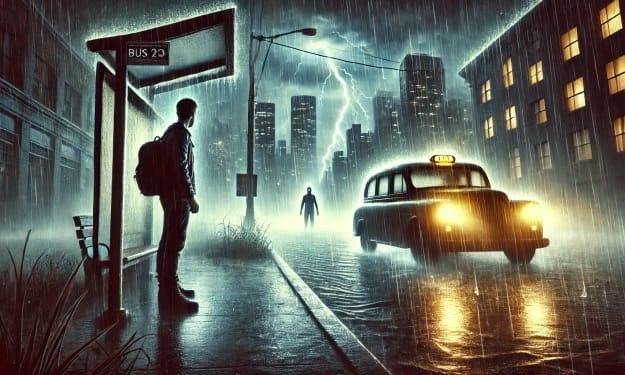
The Mysterious Day
After an extra class last Friday, I was on my way home. I glanced at my watch—it was 6:40 PM. Darkness had already blanketed the city, and heavy clouds loomed ominously overhead. There was no electricity, and the flicker of lightning lit up the sky as thunder growled in the distance. It was about to rain. I decided to run as fast as I could to the bus stop.
By Chamuditha Appuhamy2 years ago in Chapters
Murders in Crescent Valley
‘’Ok.’’ ‘’You’ve got real talent son.’’ Danny smiled. ‘’Really dad,’’ ‘’Really, son,’’ Marshal stood up and le4 his son alone in his study. Danny sat down in his dad’s chair and found the website his dad spoke about. He found a horror magazine’s website called Fearsome Creatures. He submitted the story in an email and went outside to play. Two weeks later Danny received a letter in the mail. The envelope read ‘’To Danny Howard.’’ It was postmarked from Fearsome Creatures Magazine New York, New York. Danny rushed the letter up to his bedroom and shut the door. He sat down on the edge of his bed and tore open the envelope holding his future. Danny pulled out the letter and voraciously read it. The leer read. ‘’Dear Danny, Congratulations the editors here at Creatures Magazine have decided to publish your short story ‘’Nightmare Horror.’’ Sincerely, Rod Von Finger Blaster, Danny pumped his fist in the air. He felt a strange ela%on $ll his stomach. His cheeks felt hot. Danny raced to his dad. He saw the door to his father’s study was closed. A do not disturb sign hung from the doorknob. Danny knocked on the door and waited for his father to reply. ‘’Come in.’’ Marshal sang out.
By DJ Robbins2 years ago in Chapters
Murders in Crescent Valley
The next day Rachel visited her friend Margo Sullivan. Margo had kinky, frizzy, black hair and almond shaped eyes. Her skin was light brown. Her mother was black and her father was white. Last year her father had and her mother got a divorce. After the divorce Margo’s father had moved to Seatle and, Margo nor her mother had seen him ever since that %me. Margo sat on the edge of her bed. Her stereo was seated on the dresser. Jimi Hendrix music blasted out of the speakers. Rachel was seated Indian style on the 8oor in Margo’s bedroom. Margo noticed the puzzled expression res%ng on her friend’s face and decided to ask her what was wrong. ‘’What’s wrong, Rachel,’’ ‘’I’m just upset.’’ ‘’About what,’’ ‘’I’m just awestruck by the fact that Briany is so blasé about Tony’s death.’’ ‘’He broke her heart last night; she’s still hurtng.’’
By DJ Robbins2 years ago in Chapters
Murders in Crescent Valley
‘’Tell me about it; I just don’t feel sympathy for Ton right now. I know that sounds awful but Tony really broke my heart tonight and I guess I’m a lile messed up about it.’’ ‘’Well Emma Jean Watkins is missing.’’ ‘’I see.’’ ‘’I suppose you don’t care about her either huh?’’ ‘’Not really,’’ ‘’You sound like a total psycho; you realize this don’t you?’’ ‘’ I guess so.’’ Briany laughed. ‘’I’m just a little messed up tonight I think a4er a good night’s sleep I’ll be able to grieve more properly.’’ ‘’I see well goodnight psycho.’’ ‘’Goodnight and Happy Birthday swee%e,’’ ‘’Thanks, later,’’ ‘’Later,’’ That night the youngest member of the Howard family dreamt horrible dreams. His name was Danny Howard and he was the youngest son of Margaret and Marshal Howard. In his dream Danny found himself walking through the gates of a carnival. Eerie, metallic carnival music blared out of the loud speaker. A clown approached the boy and handed him an orange balloon.
By DJ Robbins2 years ago in Chapters
Murders in Crescent Valley
Emma Jean stripped naked and folded the clothes at her feet. ‘’Now rest your chest across this hickory stump and arch your buocks high into the air. A whore like you doesn’t deserve to die with dignity.’’ Emma Jean reluctantly did as she was told. She cried and whimpered. ‘’Please God save me; I’m a wretched sinner.’’ The clown grabbed the girl by the back of the neck and stabbed her hard, repeatedly eighteen %mes in the face with the blade of the knife. Soon the dead girl’s face looked like ham covered in chocolate syrup. The blood dripped profusely out of the massive hole in the dead girl’s face. The maniac climbed back into the stolen truck and sped o1. The killer turned up the Radio and blasted dark, modern heavy metal music. His dirty, shaggy, brown hair hung down slightly past his slender shoulders. His feet were bare. He played over the murders he had just commied in his mind over and over again. First he pictured Tony gazing dumbly at him through the windshield of Tony’s own truck before ge>ng killed. He could s%ll hear the snapping of Tony’s bones as the truck squashed him. He could s%ll feel the skull give way when Tony stabbed Emma Jean hard through the face repeatedly. In his own mind the killer had done well. He felt he was purging the world of evil.
By DJ Robbins2 years ago in Chapters
Stand Against Injustice and Remain Just: A Call for Humanity
Stand Against Injustice and Remain Just: A Call for Humanity In a world filled with complexities and inequalities, standing up against injustice is one of the most powerful actions we can take. The notion of “do not tolerate injustice and do not do injustice to anyone” is a moral directive that challenges us to lead lives rooted in fairness, compassion, and responsibility. When we stand against unfairness, not only do we protect others, but we also preserve our own integrity. This article explores why opposing injustice is crucial, how it shapes our society, and how small, compassionate acts of justice create ripples that inspire and transform lives. The Impact of Injustice: Lessons from History Throughout history, societies that tolerated or engaged in injustice have seen division, suffering, and eventual downfall. The examples of civil rights leaders like Mahatma Gandhi and Martin Luther King Jr. stand as a testament to the power of resisting oppression peacefully. Gandhi, in his struggle for India's freedom, demonstrated that one need not resort to violence to oppose injustice. He faced imprisonment, discrimination, and physical threats but remained steadfast in his resolve for a free and fair India. His resistance was not just for his benefit but for the freedom and dignity of millions. Dr. King, inspired by Gandhi, took a similar stance against racial discrimination in America. His non-violent protests, courage, and resilience inspired countless others to fight for equal rights, sparking a movement that transformed American society. Both leaders exemplified the value of standing against injustice, teaching us that even in the face of severe adversity, one should never remain passive or indifferent. By following their example, we recognize that true strength lies in upholding justice without imposing harm on others. Everyday Injustice: Turning a Blind Eye or Taking a Stand? Injustices happen daily, not only in grand political or historical contexts but also in everyday situations. Consider the small yet significant acts of injustice we might witness—bullying at school, mistreatment in the workplace, or discrimination based on someone’s appearance, background, or abilities. Each time we see someone being marginalized or wronged, we face a choice: to ignore it or to take a stand. Standing up doesn’t always mean confronting an oppressor directly. Sometimes, it’s about offering a supportive hand, a listening ear, or simply standing beside someone who is struggling. An inspiring example is a story from an ordinary workplace: a new employee, often ridiculed for their slow learning pace, felt isolated and discouraged. One colleague noticed this treatment and decided to reach out, helping the new employee learn the tasks with patience and encouragement. This act not only helped the newcomer succeed but also changed the office culture, encouraging others to be more compassionate. The Courage to Act: Why It's Easier Said Than Done Taking a stand against injustice often comes with personal challenges. It might mean going against a popular opinion, risking your own comfort, or even jeopardizing relationships. In some cases, it can bring threats or retaliation. Despite these challenges, those who choose to speak up often discover a deep sense of purpose and fulfillment. Imagine a young student who decides to report a case of bullying, risking social exclusion to protect a fellow student. This act might isolate them temporarily, but it also sets an example that encourages others to act with kindness and courage. Over time, such choices shape the moral fabric of our communities. A society becomes stronger when individuals choose to do the right thing, even when it’s difficult. Stories of Compassion and Justice: Small Actions, Big Changes Examples of small actions that resist injustice remind us that everyone has the potential to make a difference. Consider the story of a woman who, upon noticing the discrimination faced by street vendors in her city, decided to use her voice. She started a social media campaign sharing the stories of these vendors, highlighting their struggles and contributions. As her campaign gained support, it brought awareness to the unfair treatment they faced, prompting local authorities to create a fairer environment for these vendors. Similarly, there are countless stories of individuals standing up to social stereotypes, challenging discrimination against people with disabilities, different races, or gender identities. Each act, however small, contributes to a ripple effect that impacts society. This commitment to fairness fosters empathy and respect, essential qualities that a compassionate society needs. Balancing Justice with Compassion While it’s vital to stand against injustice, it’s equally important to approach it with compassion. Fighting injustice doesn’t mean confronting every instance with anger or retaliation. Instead, it involves a balanced response that seeks to correct wrongs while understanding the complexities of each situation. Many times, those committing injustices are products of ignorance, bias, or societal conditioning. Approaching them with patience and empathy can lead to more lasting change than aggressive confrontation. For instance, if someone harbors prejudices against a particular group, a calm conversation might open their eyes in ways that hostility cannot. When we address injustice with an open mind and a genuine desire to understand, we create the opportunity for education and growth, both for ourselves and others. The Strength of Unity in Justice Taking a stand against injustice is most effective when done collectively. Communities that uphold values of fairness and respect can create a supportive network where individuals feel safe to raise their voices. By supporting each other in this way, we cultivate a culture of mutual trust and accountability. A beautiful example of collective justice is when neighborhoods come together to support marginalized individuals, like families affected by poverty, or children who cannot access quality education. People unite to offer resources, mentorship, or financial assistance, building a system where everyone has a fair chance at success. Such communities become a beacon of hope, showing that when people act together, they can overcome the harshest inequalities. Creating a Legacy of Justice Imagine a world where children grow up in an environment that teaches them to stand up for what's right, to treat others with fairness, and to lend a hand to those in need. The values we instill in the next generation will shape the society of tomorrow. By setting examples of justice and kindness today, we create a legacy of compassion that will guide future generations. When we choose to oppose injustice—no matter how insignificant it may seem—we send a message to those around us. Our actions tell our friends, family, and colleagues that fairness is non-negotiable, that respect is essential, and that kindness is strength. By fostering these qualities in our homes, schools, and workplaces, we create a ripple effect that extends beyond our immediate lives. Conclusion: Our Collective Responsibility To live by the principle of not tolerating injustice and not doing injustice to anyone is to commit ourselves to a life of integrity and empathy. It is a pledge to act in ways that protect the rights, dignity, and well-being of all. While the journey may not always be easy, it’s one worth taking because it builds a world we all want to live in—a world where everyone feels valued and respected. Whether it’s helping a bullied child, defending a marginalized colleague, or challenging social prejudices, each act of justice is a powerful statement. Together, these actions can build a society where no one is subject to injustice, and everyone is inspired to be just. In the end, we find that when we give justice to others, we receive peace and purpose in return—a reward that cannot be measured but one that changes lives.
By Dipak Pawar2 years ago in Chapters
The Impact of Artificial Intelligence in the Media Industry. Content Warning. AI-Generated.
In the modern era, the evolution of cutting-edge technology has revolutionized the way information is disseminated across various platforms and channels. The integration of artificial intelligence in media industry has transformed the landscape of content creation and distribution in the realm of mass communication.
By Kearny Jesus2 years ago in Chapters
The Unsolved Mystery of Elisa Lam: A Real-Life Horror Story
One of the most terrifying real-life horror stories is the case of **Elisa Lam**. In 2013, Elisa, a 21-year-old college student from Canada, checked into the Cecil Hotel in Los Angeles. The hotel, notorious for its dark history of violence and strange occurrences, became the last place Elisa was seen alive.
By Tasnuba Humayra2 years ago in Chapters