History
Jeffrey Dahmer: The Milwaukee Cannibal – A Full History of a Serial Killer
Jeffrey Dahmer is one of the most infamous serial killers in American history—his name synonymous with horror, depravity, and the darkest corners of the human psyche. Nicknamed "The Milwaukee Cannibal," his crimes shocked the world not only for their brutality but also for their disturbing psychological undertones. Between 1978 and 1991, Dahmer murdered 17 young men and boys, committing acts of necrophilia, dismemberment, and cannibalism.
By Shahadat Hossain2 years ago in Chapters
Jack the Ripper: The Serial Killer Who Gutted a City
In the grim autumn of 1888, a shadow loomed over the gas-lit alleys of London’s East End. The White chapel district, already plagued by poverty, crime, and disease, found itself paralyzed by fear. Women were dying—savagely, brutally, and methodically. They weren’t just murdered. They were heartbroken. Additionally, their assailant signed his reign of terror with the name Jack the Ripper, a moniker that still haunts the pages of criminal history. To this day, his identity remains a mystery. However, his gruesome method of evisceration, his signature, left more than just corpses behind. It ripped through Victorian London's psyche and changed the way the world saw crime, the media, and the human capacity for horror forever. The Anatomy of Terror
By Shahadat Hossain2 years ago in Chapters
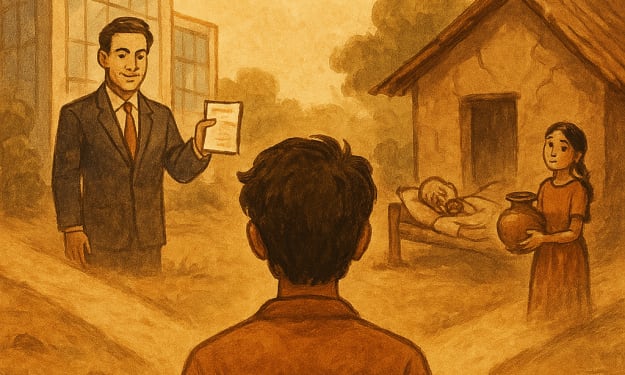
The Deal
Ravi sat on the old wooden bench near the village tea shop. The sun was high in the sky, and sweat ran down his face. His shirt stuck to his back. It was summer, and the heat was worse than usual. But it was not just the weather that made Ravi uncomfortable — he had a big decision to make, and it was troubling his heart.
By Tahir khan2 years ago in Chapters
Imran Ahmed Khan Niazi’s Government: A Distinct Chapter in Pakistan’s 74-Year Political History
Introduction Since gaining independence in 1947, Pakistan has witnessed a variety of leadership styles, political ideologies, and governance structures. Among the many political leaders who held the office of Prime Minister, Imran Ahmed Khan Niazi stands out not only for his cricketing fame but also for his ambitious and reformist approach to governance. Leading the Pakistan Tehreek-e-Insaf (PTI), Imran Khan assumed office on August 18, 2018, and served until April 10, 2022 — a period of approximately 3 years and 8 months. His tenure, though short of the full five-year term, left a significant impact on Pakistan’s political, economic, and social landscape. This article explores the beginning of his government, the challenges he faced, the initiatives he introduced for the welfare of the common man, and how his overall performance compares to the governance of Pakistan over the past 74 years and 9 months. --- The Beginning of Imran Khan’s Government Imran Khan’s political journey began in 1996 with the formation of PTI. For over a decade, the party remained on the fringes of Pakistani politics. However, Khan’s charismatic leadership, persistent campaigning against corruption, and the promise of a "Naya Pakistan" gradually gained public attention. By the 2018 general elections, PTI had become a formidable political force, securing enough seats to form a government at the federal level. His election victory was seen as a reflection of public frustration with traditional political parties like the Pakistan Muslim League-Nawaz (PML-N) and Pakistan Peoples Party (PPP), both of which had been marred by allegations of corruption, nepotism, and inefficiency. Imran Khan promised to bring accountability, transparency, and a new era of justice and welfare-oriented governance. --- Challenges Faced by His Government Imran Khan inherited a country riddled with deep-rooted economic, political, and administrative issues. From day one, his government had to deal with: 1. Economic Crisis: Pakistan was facing a severe balance-of-payments crisis with depleting foreign reserves. The government had to seek a bailout from the International Monetary Fund (IMF) to stabilize the economy, which brought its own set of conditions and austerity measures. 2. High Debt and Deficit: Khan’s government had to deal with a massive debt burden and a persistent fiscal deficit. Managing public finances without curtailing development or social programs was a major hurdle. 3. Opposition Pressure: Unlike some past governments, Imran Khan faced strong opposition from day one. Multiple parties joined forces against him, accusing him of being brought into power by the military establishment. 4. COVID-19 Pandemic: The global pandemic hit during his tenure, forcing a delicate balancing act between saving lives and saving livelihoods. Pakistan’s healthcare infrastructure was under immense pressure. 5. Civil-Military Relations: Though initially considered close to the military, cracks began to appear towards the end of his tenure, ultimately contributing to his removal through a vote of no-confidence. --- Welfare and Thoughtfulness for the Poor Despite economic and political challenges, Imran Khan’s government undertook several significant initiatives for the welfare of the underprivileged: 1. Ehsaas Program: Launched in 2019, it became Pakistan’s largest-ever social safety net. It included cash transfers, nutrition programs, interest-free loans, scholarships, and shelter homes for the homeless. During COVID-19, the Ehsaas Emergency Cash Program was internationally praised for delivering aid to over 15 million families. 2. Panagahs (Shelter Homes): To provide dignity and shelter to the homeless and daily wage laborers, panagahs were established in major cities where people could sleep safely and get free meals. 3. Sehat Sahulat Card: A landmark health insurance initiative that allowed citizens to avail free medical treatment at both public and private hospitals. It was initially introduced in KP and later expanded to Punjab and other regions. 4. Low-Cost Housing: Under the Naya Pakistan Housing Program, the government aimed to provide affordable housing to low and middle-income families. 5. Kamyab Jawan Program: Aimed at empowering youth through skills development and small business loans. 6. Digital Pakistan Initiative: To modernize Pakistan’s digital infrastructure and promote innovation among youth and entrepreneurs. --- Comparative Analysis: Imran Khan vs. 74 Years of Governance To fairly compare Imran Khan’s government to the rest of Pakistan’s 74 years and 9 months of governance, we can analyze across a few key dimensions: 1. Anti-Corruption Narrative Unlike many past leaders, Imran Khan consistently maintained a hardline stance against corruption. He established the Asset Recovery Unit, supported NAB’s actions (though critics claimed it was politically motivated), and highlighted money laundering and offshore accounts. In contrast, past governments often protected corrupt elements within their parties and failed to institute strong accountability mechanisms. 2. Focus on Welfare State While welfare programs have existed before (like Benazir Income Support Program), Imran Khan’s Ehsaas was more extensive in scope and implementation. He emphasized the Islamic concept of Riyasat-e-Madina, drawing inspiration from the early welfare state model of Prophet Muhammad (PBUH). 3. Economic Management This is a mixed bag. Under Khan, inflation remained high, especially in food prices, and the Pakistani Rupee depreciated significantly. Critics argue this hurt the middle and lower classes. However, structural reforms, current account improvements, and the rise in exports and remittances were notable achievements. Earlier governments often relied heavily on unsustainable debt and subsidies to mask economic problems. 4. Foreign Policy Khan adopted an independent foreign policy posture. He spoke against Islamophobia at the UN, maintained neutrality in Middle East tensions, and prioritized relations with China, Turkey, and Malaysia. His stance on India, especially after the revocation of Article 370 in Kashmir, was firm and vocal. In contrast, previous governments often adopted a more cautious, traditional diplomatic approach. 5. Media and Free Speech Imran Khan's government was criticized for curbing media freedom and using state machinery to suppress dissent. Journalists faced pressure, and digital censorship increased — a trend that unfortunately has existed under previous governments too. --- Legacy and Public Perception Imran Khan's removal from office through a no-confidence vote was a dramatic end to a polarizing tenure. However, his popularity among the masses, especially the youth, remains high. His messaging of sovereignty, anti-elitism, and public empowerment continues to resonate. His supporters see him as an honest leader who tried to change a corrupt system but was obstructed by the "status quo" forces. His critics argue he lacked experience and team strength to deliver on his promises. --- Conclusion Imran Ahmed Khan Niazi’s time in office may have been short compared to Pakistan’s long and complex political history, but it was certainly impactful. His focus on public welfare, digital transformation, and international standing marked a shift in governance. Despite economic challenges and political instability, his tenure introduced initiatives and debates that continue to shape the national discourse. In a country where leadership is often measured in missed opportunities, Imran Khan’s government represents both the promise of reform and the reality of entrenched resistance. When viewed against the backdrop of Pakistan’s 74 years and 9 months of governance, his chapter stands as a bold — albeit incomplete — attempt at redefining the country's future. The end……….
By Umair Ali Shah 2 years ago in Chapters
Demon Slayer: The Flame That Ignited a Phenomenon – A Complete Season 1 Breakdown
Demon Slayer: Kimet No Yaiba - Season 1 Deep Diving in as Demon Slayer: Yaiba was first broadcast in 2019. The series was produced by ufotable and is based on the comics of Koyo Hargotouji, and exploded thanks to its emotional story, with visually breathtaking animations and cast of deep human characters playing in a supernatural world.
By Atikur Rahman2 years ago in Chapters
Heartfelt Love and Trust Messages for Long-Distance Relationships
Once upon a time, in two different parts of the world, lived a boy named Daniel and a girl named Maya. They met during a summer camp in Italy. Daniel was from Canada, and Maya lived in India. Their meeting was short, just two weeks, but it changed their lives forever.
By Tahir khan2 years ago in Chapters
Whispers of the Heart
It all began with a message. Just one. Sent on a rainy evening, when the sky cried quietly and the world felt still. Jay had always been quiet, a man of few words. But when it came to her—Aisha—his heart was loud. He loved her in silence for years, carrying his feelings like secret letters in an invisible envelope. They had been friends since college, always close but never crossing the line. Until that one rainy evening.
By Tahir khan2 years ago in Chapters
Lessons I’ve Learned From Rock Bottom
There was a time when I thought I had everything figured out. A decent job, a predictable routine, and a handful of people I thought I could rely on. But life has a funny way of teaching lessons — often in the most brutal, unexpected ways.
By Mysterious/Cool Style2 years ago in Chapters
Top Iranian officials told Khamenei to allow US nuke talks or risk fall of regime – NYT
Introduction Top Iranian Officials Warned Khamenei: Allow U.S. Nuclear Talks or Risk Regime Collapse – NYT A recent report by The New York Times has revealed a startling internal divide within Iran’s leadership over the country’s nuclear program and its relations with the West. According to the report, senior Iranian officials, including those in the country’s security and political establishment, privately urged Supreme Leader Ayatollah Ali Khamenei to return to negotiations with the United States over Iran’s nuclear program—warning that failure to do so could lead to the collapse of the Islamic Republic.
By Md polash Ali2 years ago in Chapters
What is a Saving Account?
A Saving Account is a type of bank account primarily designed to encourage individuals to save money. It is one of the most basic and commonly used financial tools offered by banks and financial institutions. This account allows people to deposit their surplus money, keep it safe, and earn interest on it over time. Unlike fixed deposits or investment accounts, a saving account provides flexibility in terms of deposits and withdrawals. It is best suited for individuals who want a secure place to keep their money while still being able to access it when needed for everyday expenses.
By Akshay Lingwal2 years ago in Chapters