History
The Clock That Stopped Time . Content Warning.
Ali never liked the attic in his grandfather’s old house. It smelled of dust and memories, filled with boxes of faded photos, yellowed letters, and creaking floorboards that groaned under every step. But one rainy afternoon, while hiding from his little sister who wanted him to play tea party for the third time that day, Ali found a small wooden box under a pile of blankets.
By Samer Khamabout a year ago in Chapters
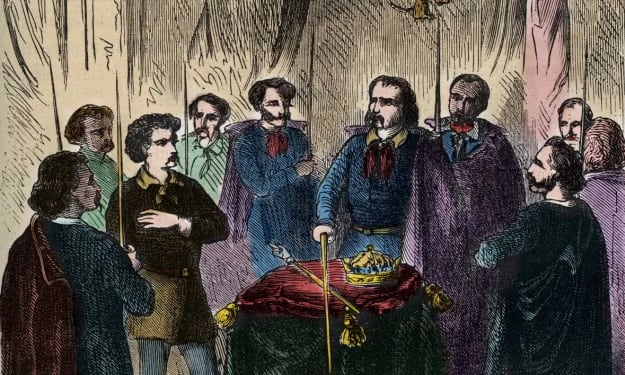
The Illuminati
Few organizations have captured the public imagination as persistently as the Illuminati. Often depicted as a shadowy cabal pulling the strings behind world events, the real history of the Illuminati is both more prosaic and more intriguing than the legends that surround it.
By Gus Woltmannabout a year ago in Chapters
The Knights Teutonic
The history of the Teutonic Knights is a tale of military conquest, religious zeal, and political power. Founded during the tumultuous times of the Crusades, the Teutonic Order grew to become a formidable military and political force in medieval Europe, particularly in the Baltic region. Their legacy, marked by both glory and controversy, remains a significant chapter in the history of the Middle Ages.
By Gustavo Woltmannabout a year ago in Chapters
“Big, Beautiful Bill” Passed by Congress: What’s Really in It?
Former U.S. President Donald Trump often used dramatic language to describe his legislative efforts. One of the most famous examples was his reference to a “big, beautiful bill” — a phrase he used for several pieces of legislation he advocated while in office (2017–2021). This article dives into the key components of what Trump called his “big, beautiful bill,” why it mattered, what it included, and how it impacted America. For searchability, we focus on keywords like Trump tax cuts, Tax Cuts and Jobs Act, Trump legislation, big beautiful bill meaning, Trump economic policy, 2017 tax reform, and more. Although he sometimes used this phrase loosely, the most notable “big, beautiful bill” that actually passed Congress was the Tax Cuts and Jobs Act (TCJA) of 2017. Let’s break it down step by step. What Was Trump’s “Big, Beautiful Bill”? When Donald Trump became president in January 2017, he promised to deliver the largest tax reform in U.S. history. He repeatedly called his tax proposal “a big, beautiful tax cut for the American people.” By December 2017, the Republican-controlled Congress passed the Tax Cuts and Jobs Act, which Trump signed into law on December 22, 2017. This was the biggest overhaul of the U.S. tax code since 1986. Why Did Trump Want This Bill? Trump campaigned on the promise of boosting the economy, creating jobs, and lowering taxes for the middle class and businesses. Here are the goals his administration outlined for the bill: ✅ Stimulate economic growth by cutting corporate taxes. ✅ Increase take-home pay for workers by lowering individual tax rates. ✅ Encourage U.S. companies to bring jobs and profits back from overseas. ✅ Simplify the tax code by reducing deductions and loopholes. ✅ Attract foreign investment into the U.S. This bill became a signature achievement of his presidency. Key Features of the Tax Cuts and Jobs Act (TCJA) Let’s explore what was actually inside the “big, beautiful bill,” explained simply. 1. Lower Corporate Tax Rate Keyword: corporate tax cut One of the biggest changes was the reduction of the corporate income tax rate from 35% to 21%, starting in 2018. Why? Trump argued that U.S. corporations were moving jobs and profits overseas because America had one of the highest corporate tax rates among developed countries. Lowering it, he claimed, would make U.S. companies more competitive globally. 2. Lower Individual Income Tax Rates Keyword: individual tax cuts, middle-class tax relief The bill lowered tax rates for most individual income brackets. For example: The top tax rate dropped from 39.6% to 37%. The 15% bracket dropped to 12%. The standard deduction almost doubled (from $6,350 to $12,000 for individuals). The child tax credit increased from $1,000 to $2,000 per child. However, these individual tax cuts are set to expire after 2025, unless Congress renews them. 3. Eliminated the Obamacare Individual Mandate Keyword: repeal of Obamacare penalty The bill removed the penalty for not having health insurance, effectively gutting the individual mandate under the Affordable Care Act (ACA). Trump celebrated this as ending a key part of “Obamacare,” although the rest of the ACA remained intact. 4. Pass-Through Business Deduction Keyword: small business tax deduction For small businesses and partnerships (like LLCs and S-corporations), the bill created a 20% deduction on “pass-through” income. This aimed to help small business owners keep more of their earnings. 5. Repatriation of Overseas Profits Keyword: bringing money back to America, repatriation tax American companies holding trillions of dollars overseas were allowed to bring that money back to the U.S. at a reduced tax rate — 15.5% on cash and 8% on non-cash assets. The idea was to incentivize companies to invest that money at home. 6. Limitations on State and Local Tax (SALT) Deduction Keyword: SALT cap The bill capped the deduction for state and local taxes at $10,000. This mainly affected high-tax states like New York, California, and New Jersey. 7. Estate Tax (Death Tax) Changes Keyword: estate tax exemption The estate tax exemption (amount of inheritance free from tax) doubled — from about $5.5 million to over $11 million per person. 8. Bonus Depreciation Keyword: immediate expensing, business investment Businesses were allowed to immediately deduct 100% of the cost of certain investments (like equipment and machinery) rather than spreading the deduction over several years. This was meant to spur investment. Who Benefited Most From the “Big, Beautiful Bill”? Critics and supporters had very different views about who gained from the TCJA. ✅ Corporations saw huge tax savings thanks to the 21% rate. ✅ Wealthy individuals benefited from the lowered top rate and estate tax relief. ✅ Many middle-class families saw modest tax cuts — but temporary. ✅ Small businesses got the 20% pass-through deduction. However, the benefits were uneven, and the Congressional Budget Office (CBO) projected it would add about $1.9 trillion to the federal deficit over 10 years. Economic Impact of the TCJA Short-term Boost In 2018, GDP growth accelerated to around 2.9%, and unemployment dropped to a historic low of 3.5%. Many companies announced bonuses, wage hikes, and new investments. Stock Market Gains The stock market surged after the bill passed, reflecting investor optimism about lower taxes and higher profits. Long-term Concerns Economists warned that much of the growth was temporary and fueled by government borrowing. Federal deficits widened, and wealth inequality increased. Criticism of the “Big, Beautiful Bill” Although Trump celebrated the bill as a “Christmas gift to the American people,” it faced heavy criticism from Democrats and even some conservatives. 🚩 Critics argued it favored the wealthy and corporations over working-class families. 🚩 Some complained it worsened the federal debt and deficit. 🚩 The SALT deduction cap angered taxpayers in blue states. 🚩 Many of the middle-class cuts were temporary, expiring in 2025. Trump’s Other “Big, Beautiful” Proposals While the TCJA was the major law Trump labeled as his “big, beautiful bill,” he also used similar language for other initiatives — though not all passed: Border Security and Wall Funding: He described a proposed immigration bill funding his border wall as “big and beautiful,” but it failed in Congress. Healthcare Reform: He also promised a “big, beautiful healthcare plan” to replace Obamacare, but no such comprehensive bill passed. How Does This Bill Affect You Today? If you’re a U.S. taxpayer, you may still feel the impact of the TCJA: Lower corporate tax rates remain in place. Individual tax cuts are still active (until 2025). The SALT cap and estate tax changes are still in effect. Businesses can still claim immediate depreciation for investments. However, unless Congress acts, many of the individual benefits will expire after 2025. Key Takeaways Here’s a summary of what was in Trump’s “big, beautiful bill” — the Tax Cuts and Jobs Act of 2017: Feature What It Did Who Benefited Lower corporate tax 35% → 21% Corporations Lower individual tax New brackets, higher standard deduction Middle & upper class Repealed ACA mandate No penalty for no insurance All taxpayers Pass-through deduction 20% for small businesses Entrepreneurs Repatriation tax Lower rate on foreign profits Multinational corporations SALT cap Max $10k deduction None (many in blue states lost) Estate tax Higher exemption Wealthy families Bonus depreciation Immediate investment write-off Businesses Final Thoughts: Was It Really “Big” and “Beautiful”? Whether you agree with Trump’s description of the TCJA as “big and beautiful” depends on your perspective. Supporters argue it spurred the economy, created jobs, and simplified taxes. Critics argue it favored the wealthy, increased inequality, and ballooned the deficit. But what is certain is that this law remains a landmark in U.S. tax policy — and one of Trump’s defining accomplishments in office. Related Search Keywords: Trump tax cuts explained Tax Cuts and Jobs Act details What was Trump’s big beautiful bill? How did Trump change taxes? Trump tax reform impact TCJA 2017 summary Corporate tax rate under Trump Middle class tax relief Trump SALT cap explained Trump economic policies By understanding the key elements and consequences of the TCJA, you can better evaluate its impact on the economy, your taxes, and the political debate about fairness and fiscal responsibility.
By Dipayan Biswasabout a year ago in Chapters
Michael Madsen: Remembering the Iconic Actor from Reservoir Dogs and Kill Bill
Michael Madsen, the legendary Hollywood actor best known for Reservoir Dogs and Kill Bill, has died at 67. His rugged screen presence, unforgettable characters, and real-life struggles made him one of cinema’s most compelling antiheroes. This tribute explores his life, career, and legacy—honoring an actor who truly embodied the outlaw spirit on and off screen.
By Najeeb khanabout a year ago in Chapters
The House That Still Waits for Her
It’s been eight years since she walked out of that door, and still, the house waits. People say it’s silly—assigning memory to wood and stone—but I know better. I’ve lived here long enough to hear the echoes. To see the signs. Some places hold on to people. They keep the shape of their presence like breath lingering on glass. This house? It remembers her.
By Jawad Khanabout a year ago in Chapters
The Order of the Holy Sepulchre
In the rich tapestry of medieval Christian chivalric orders, the Equestrian Order of the Holy Sepulchre of Jerusalem holds a unique place. With its roots deeply intertwined with the history of the Crusades, this venerable order has evolved over centuries, preserving its spiritual mission and dedication to the Holy Land.
By Gustavo Woltmannabout a year ago in Chapters
The Rise and Fall of the Knights Templar
In the annals of medieval history, few organizations captivate the imagination quite like the Knights Templar. From their humble beginnings to their dramatic downfall, the story of the Templars is a tale of piety, power, and persecution.
By Gus Woltmannabout a year ago in Chapters
The Lion and the Mouse
In the heart of a lush, green forest, where the trees reached high into the sky and the sunlight filtered softly through the leaves, lived many animals of all kinds. Among them was a mighty lion, the king of the forest. His deep roar echoed through the jungle, and all the animals respected—and sometimes feared—him.
By Najeebullahabout a year ago in Chapters