History
New Year Countdown: Meaning, Traditions, and Why It Matters
New Year Countdown: Meaning, Traditions, and Why It Matters The New Year countdown is one of the most widely shared and emotionally powerful moments celebrated across the world. As the final seconds of the old year tick away, millions of people gather in homes, public squares, and online streams to count down together, welcoming a fresh start. This simple act of counting numbers has grown into a global tradition filled with excitement, hope, reflection, and unity. Understanding the New Year countdown helps explain why it remains such an important part of modern culture. At its core, the New Year countdown is the act of counting the final seconds before midnight on December 31, marking the beginning of a new calendar year. The countdown usually starts from ten seconds and ends exactly at midnight, when people cheer, celebrate, and exchange greetings. Fireworks, music, hugs, and celebrations often follow immediately. While it may seem like a small ritual, it carries deep emotional and symbolic meaning. One of the most common questions people ask is why the New Year countdown is so important. The answer lies in human psychology and tradition. The countdown represents closure and renewal at the same time. As the numbers decrease, people mentally let go of the past year, including its challenges, mistakes, and memories. When the clock strikes midnight, it symbolizes a clean slate and a chance to begin again. This feeling of renewal is why so many people feel emotional during the countdown, even if they are celebrating in simple ways. Another popular question is where the New Year countdown tradition began. While ancient civilizations celebrated the start of new years in different ways, the modern countdown is closely tied to the use of mechanical clocks and public timekeeping. As clocks became more common, people began gathering to mark the exact moment of the new year. Over time, cities turned the countdown into large public events, using music, lights, and visual displays to bring people together. Many people also search for information about famous New Year countdown celebrations. One of the most well known takes place in New York City, where a large illuminated ball drops as the countdown reaches zero. Similar events happen in cities around the world, each adding its own cultural style. Some places focus on fireworks, others on music concerts, and some emphasize traditional rituals or prayers. Despite these differences, the countdown itself remains the shared moment that unites everyone. Another common question is what people usually do during the New Year countdown. Traditions vary widely, but there are some shared behaviors. Many people watch the countdown on television or online, especially if they cannot attend a public event. Others host parties, prepare special meals, or gather with family and friends. Kissing at midnight is a popular custom in many cultures, symbolizing love and good luck for the year ahead. Making noise with cheers, horns, or music is also common, as it represents joy and celebration. People also frequently ask about New Year resolutions and how they relate to the countdown. The countdown often acts as the emotional trigger for setting goals and intentions. As midnight approaches, many individuals reflect on the past year and think about what they want to change or improve. The moment the new year begins feels like the perfect time to commit to healthier habits, personal growth, or new ambitions. This connection between the countdown and resolutions strengthens the idea of a fresh beginning. Another important question is why people feel hopeful during the New Year countdown. Hope comes from the belief that time itself offers a new opportunity. Even though life does not magically change at midnight, the shared belief in a new beginning creates motivation and optimism. Celebrating the countdown with others also reinforces a sense of belonging and shared experience, which can be emotionally uplifting. In recent years, many people have asked whether the New Year countdown has changed because of technology. The answer is yes. Live broadcasts, social media, and global streaming have transformed the countdown into a worldwide event. People can now watch celebrations from different countries and time zones, making the experience more connected than ever. Online countdowns and virtual gatherings have also become popular, especially for those who cannot celebrate in person. In conclusion, the New Year countdown is much more than counting numbers before midnight. It is a powerful ritual that represents endings, beginnings, hope, and unity. By bringing people together at the same moment, it creates a shared sense of time and purpose. Whether celebrated in a crowded city square or quietly at home, the New Year countdown continues to be a meaningful tradition that helps people close one chapter of their lives and open another with optimism and anticipation.
By America today 10 months ago in Chapters
Chapter 9: The Final Sermon (Farewell Hajj)
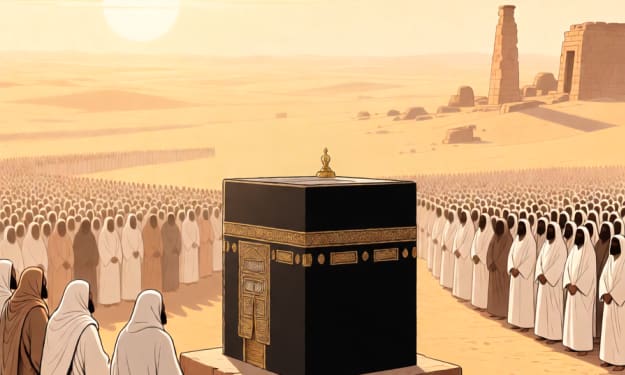
The Final Sermon (Farewell Hajj) In the year 632 CE, Prophet Muhammad ﷺ knew that his mission was coming to its completion. After more than twenty years of struggle, patience, guidance, and sacrifice, Islam had spread across Arabia. Tribes that once fought endlessly were now united by faith. Justice had replaced chaos, and mercy had replaced revenge.
By Wings of Time 10 months ago in Chapters
Chapter 8: The Peaceful Conquest of Makkah (630 CE)
The Peaceful Conquest of Makkah (630 CE) For nearly twenty years, the city of Makkah had been a place of pain for the early Muslims. It was where they were mocked, tortured, boycotted, and forced to leave their homes. Families were divided, livelihoods were destroyed, and many suffered simply for believing in one God. Even after migration to Madinah, the threat from Makkah never fully disappeared.
By Wings of Time 10 months ago in Chapters
Chapter 7: The Treaty of Hudaybiyyah
Chapter 7: The Treaty of Hudaybiyyah Several years after migrating to Madinah, the Prophet Muhammad ﷺ and his followers still longed for Makkah. It was their birthplace, the city of the Ka‘bah, and the center of their faith. Though they had been forced to leave, their love for Makkah never faded. In the sixth year after Hijrah, the Prophet ﷺ had a dream that Muslims would enter Makkah peacefully to perform Umrah, the lesser pilgrimage.
By Wings of Time 10 months ago in Chapters
Chapter 6: The Early Battles and Self-Defense
The Early Battles and Self-Defense After migrating to Madinah, the Muslim community finally found safety—but peace did not come immediately. The Quraysh of Makkah were furious. They had lost control over the Prophet Muhammad ﷺ and his followers, and they feared that Islam would grow stronger outside their reach. Even though the Muslims had left their homes, property, and wealth behind, the hostility did not end.
By Wings of Time 10 months ago in Chapters
Chapter 5: Building the First Islamic Society in Madinah
Building the First Islamic Society in Madinah After the migration (Hijrah), Prophet Muhammad ﷺ and the early Muslims arrived in Madinah, a city very different from Makkah. Unlike Makkah, Madinah had many tribes, different religions, and long-standing conflicts. The city needed peace, order, and unity. What happened next was not only the beginning of an Islamic state, but also one of the most important social transformations in history.
By Wings of Time 10 months ago in Chapters
Chapter 4: Migration to Madinah (Hijrah)
Migration to Madinah (Hijrah) The situation in Makkah became extremely difficult for Prophet Muhammad (peace be upon him) and his followers. The Quraysh leaders had failed to stop the spread of Islam through threats, insults, and punishment. Islam continued to grow quietly, but the anger of the Quraysh also increased. Muslims were mocked, beaten, and socially rejected. Some were tied under the hot sun, others were starved, and many lost their families and homes. Life in Makkah was no longer safe for those who believed in one God.
By Wings of Time 10 months ago in Chapters
Chapter 3: Early Persecution in Makkah
Early Persecution in Makkah In the early years after the birth of Islam, Makkah was a city deeply rooted in tradition, power, and pride. The Quraysh tribe controlled trade, religion, and social order. The Ka‘bah stood at the heart of the city, filled with idols that represented not only religious beliefs but also economic power. Pilgrims from across Arabia came to worship these idols, bringing wealth and status to the Quraysh. When Prophet Muhammad ﷺ began preaching the message of one God, it was not seen as just a religious idea—it was viewed as a direct threat to the entire system of Makkah.
By Wings of Time 10 months ago in Chapters
Chapter 2: The Birth of Islam (610 CE)
The Birth of Islam (610 CE) In the year 610 CE, the land of Arabia stood at a turning point in human history. The tribal society described in the previous chapter—marked by injustice, violence, and moral confusion—was about to encounter a message that would transform not only Arabia, but the entire world.
By Wings of Time 10 months ago in Chapters
Chapter 1: Arabia Before Islam (Before 610 CE)
Arabia Before Islam (Before 610 CE) Before the rise of Islam in the early 7th century, the Arabian Peninsula was a land without a unified system of law or governance. Society was organized almost entirely around tribes, and a person’s identity, safety, and honor depended on the strength of their tribal connections. There was no central authority to enforce justice, no common legal code, and no concept of equal rights across tribes. This environment shaped daily life and laid the foundation for the dramatic transformation that Islam would later bring.
By Wings of Time 10 months ago in Chapters
World War 3: Fear, Power, and the Dangerous Language of Our Time
World War 3: Fear, Power, and the Dangerous Language of Our Time The phrase “World War 3” has become one of the most searched and shared terms in recent years. It appears in headlines, political speeches, social media posts, and everyday conversations. Some people treat it as an inevitable future, while others dismiss it as fear-mongering. The truth, however, lies in a more complex and serious space—one that demands caution, context, and responsibility.
By Wings of Time 10 months ago in Chapters
Are We Standing at the Edge of World War Three?
Are We Standing at the Edge of World War Three In recent months, the phrase “World War Three” has returned to public conversations with an unsettling force. It appears in news headlines, political speeches, social media debates, and late-night discussions among ordinary people who feel the weight of uncertainty growing heavier each day. While no official declaration of a global war exists, the fear itself has become real—and fear, history teaches us, is often the first step toward catastrophe.
By Wings of Time 10 months ago in Chapters