Historical Fiction
The Copenhagen Accord
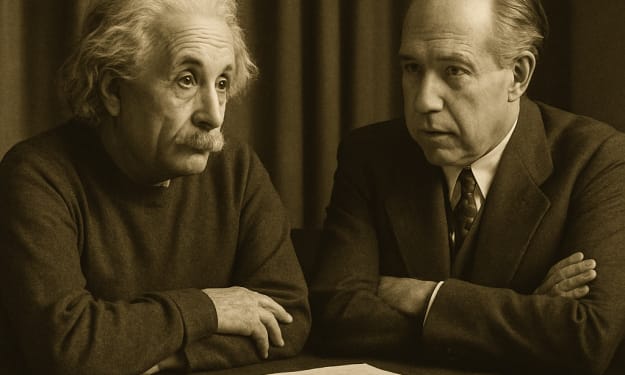
May 2, 1936 – Copenhagen The morning sky over Copenhagen was washed in grey. Einstein sat in the small breakfast room of Niels Bohr’s modest home, stirring his tea with the absentmindedness of a man whose thoughts danced between atoms and the future of civilization.
By Alain SUPPINIabout a year ago in Chapters
The Zurich Cipher
May 1937 – Warsaw The Polish air was crisp, bitter even in May, as Albert Einstein stepped off the overnight train from Prague. He wore the same worn wool coat, the same leather satchel heavy with annotated drafts and diagrams — though now its contents were more dangerous than ever: not formulas, but agreements, whispers, and warnings. Warsaw was no longer just a city on the map of occupied minds — it had become a strategic battleground in the clandestine war of ideas.
By Alain SUPPINIabout a year ago in Chapters
Einstein Remains in Europe
May 22, 1942 Prague The weight of war settled heavily upon the continent, and yet, from within the embers of ruin, a new kind of light flickered. Einstein had not merely survived in Europe—he had become a guiding constellation in a night otherwise starless.
By Alain SUPPINIabout a year ago in Chapters
Einstein’s Choice
May 18, 1935 Prague I arrived in Prague under a veil of unease. The city, a cradle of intellect and resistance, shimmered beneath gray spring clouds, its spires rising like quills of memory against the troubled European sky. I had been invited to address the philosophical faculty at Charles University, ostensibly to discuss the intersection of physics and ethics — but all of us knew there was something deeper at stake.
By Alain SUPPINIabout a year ago in Chapters
Michelin Guide names 4 new budget-friendly gems in Da Nang..
A Culinary Journey Through Vietnam's Hidden Delights: A Culinary Journey Through Vietnam's Hidden Delights The coastal city of Da Nang is the focus of the Michelin Guide's latest spotlight on Vietnam's vibrant and varied culinary scene. Da Nang has long been a favorite among travelers seeking authentic Vietnamese flavors due to its stunning beaches, rich history, and dynamic food culture. Four new budget-friendly restaurants have been identified by Michelin in its most recent update, demonstrating that exceptional dining does not always require a high price tag. These four establishments showcase the best of Da Nang's affordable yet high-quality cuisine, including steaming bowls of ma Quang and succulent seafood grilled to perfection. Whether you're a local foodie or a traveler on a budget, these Michelin-approved spots are a must-visit for an unforgettable gastronomic experience.
By parves mosharafabout a year ago in Chapters
Bucket List Seaplane Journeys Around The World
Seaplane Trips on Your Bucket List: 800 Words of Aerial Adventure Seaplanes are undeniably magical because of the way they effortlessly transition from the water to the air, providing breathtaking views and access to remote locations that traditional aircraft are unable to reach. For aviation enthusiasts and travel lovers alike, seaplane journeys represent the pinnacle of adventure, combining luxury, exclusivity, and awe-inspiring scenery.
By parves mosharafabout a year ago in Chapters
Einstein in Europa
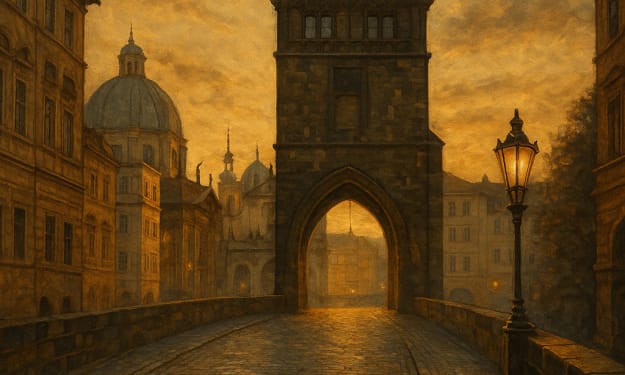
May 12, 1935 Prague, Czechoslovakia I arrived in Prague just before dusk, the air thick with lilac and the memory of rain. The Vltava flowed like molten silver beneath the bridges, and the rooftops, slick from earlier showers, glistened under a hazy sun. Prague has always felt like a city suspended between times—Gothic spires reaching for the heavens and Kafkaesque alleyways pulling you inward, toward thought, toward unease. It felt fitting that such a place would become the cradle of a quiet resistance.
By Alain SUPPINIabout a year ago in Chapters
Every Day Is Theirs: A Heart’s Tribute to Our Parents Beyond One Day
✍️ By: Umair Ali Shah Yousafzai --- 🌸 Introduction: The Problem with “One Day” In an age where love has been reduced to emojis and celebrations are confined to trending hashtags, it’s become common to see people dedicate just one day a year to their parents — usually in the form of a well-edited photo, a generic social media caption, or a short video clip. "Happy Parents’ Day!" they declare, and with that, consider their duty fulfilled. But can one day capture the essence of lifelong sacrifice? Can a Facebook status outweigh a mother’s sleepless nights? Can an Instagram reel compensate for a father’s decades of toil? The answer — spoken by the heart — is a resounding no. Parents are not a seasonal celebration. They are the soul of our lives. They do not deserve a day; they deserve our every day, our every breath, our every success, our every prayer. --- 🕊️ A Love Beyond Comprehension Parental love is not poetic — it is prophetic. The mother’s womb becomes a sanctuary before we even open our eyes. Her body breaks to give us life. Her nights shatter so our dreams can form. Her meals go cold so ours stay warm. She becomes our shadow, our comfort, our shield. And the father? He becomes the silent mountain who absorbs the storm before it reaches us. He ages behind the curtain so we can grow on stage. His shoes wear thin so ours stay new. His pockets empty so our dreams can fill. His hands become rough while ours remain soft. Such love cannot be compared. It cannot be counted, priced, or postponed. It is as eternal as the sky — silent but all-encompassing. --- 🏠 From Cradle to Grave: They Gave Us Everything The truth is simple and painful: the very people who gave us everything, we give them the least. They carried us when we were weak. They taught us to walk, to speak, to eat. They encouraged our smallest achievements and bore our greatest failures. They forgave our rebellion, our rudeness, our rejection. They kept loving even when we didn’t love back. And what did they ask for in return? Nothing — except a little time. A little respect. A little remembrance. And yet, many of us fail even in that. --- 📅 One Day is Not Enough — It’s Almost Insulting Designating one day for parents is, in many ways, an insult wrapped in sentimentality. It suggests that gratitude can be scheduled, that love can be timed, that sacrifice can be acknowledged only when it's convenient. Do parents love only once a year? Do they support us only on Sundays? Do they pray for us only during exam season? No. Their love is relentless, their loyalty unconditional, their prayers eternal. Then how dare we give them just a day? --- 🕯️ Real-Life Reflections: Forgotten Candles of Our Lives Visit an old age home and you will see forgotten candles flickering dimly, waiting for someone to relight their flames. Mothers who once carried their children now carry loneliness. Fathers who once stood tall now sit silently by windows, hoping someone might knock on the door. "I gave him everything," says one mother, staring into her fading memories. "And now he sends money, but not himself." What do we owe them? Not riches. Not luxury. We owe them presence. We owe them honor. We owe them time. And if we fail to pay that debt in life, we will spend the rest of our lives repaying it in guilt. --- 🌙 The Islamic Perspective: A Duty, Not a Favor In Islam, honoring one's parents is not optional. It is second only to worshipping Allah. The Qur’an places “being good to parents” immediately after “worship none but Allah” (Surah Al-Isra, 17:23). > “And lower to them the wing of humility out of mercy and say: ‘My Lord, have mercy upon them as they brought me up [when I was] small.’” — (Qur’an 17:24) The Prophet Muhammad ﷺ said: > “Paradise lies beneath the feet of your mother.” “The pleasure of Allah is in the pleasure of the father.” In a world that celebrates freedom, Islam reminds us: you are never free from the duty of loving and serving your parents. --- 💔 The Western Dilemma: Celebration Without Connection In many modern societies, holidays like "Mother's Day" and "Father's Day" are celebrated with great pomp. But beneath the flowers and fancy cards lies a bitter reality — many parents live alone, neglected. The market profits from emotional neglect. Capitalism sells love, but doesn't practice it. You buy a card, send flowers, click "like" on a photo — and you're done. But love is not a transaction. True love is in changing your schedule to be with your aging parents. True respect is in asking about their health — not for politeness, but from the heart. True honor is in making them feel needed, not obsolete. --- 📖 Stories That Break the Heart A man once left his father at a senior facility, promising to return in two weeks. The weeks turned into months. The father finally said, “I don’t need your money. I need the child who once clung to my finger.” Another story tells of a woman whose son lives abroad. He sends money monthly, but hasn’t visited in five years. She keeps his childhood toys clean, thinking he may come home any day. The question isn’t whether these parents are physically alone. The question is: Why are their children emotionally absent? --- 💡 What Can We Do, Starting Today? Let’s stop thinking in hashtags and start living in actions. Here are real, practical ways to honor your parents — not just once a year, but daily: 1. Call them. Not just when you're free — call them often. 2. Visit them. Your presence matters more than gifts. 3. Sit in silence. Let them feel your calm. 4. Ask their opinions. Make them feel heard, respected, and needed. 5. Pray for them. Every prayer, every day. 6. Serve them. Bring water, massage their feet, feed them with your hands. 7. Share your life. Tell them about your joys and struggles. Let them be part of your world. --- 🌹 To the Fortunate Ones: Don’t Wait Until It’s Too Late If your parents are still alive, know this: you are living in a blessed time. You still have the opportunity to make them smile, to ease their aches, to sit beside them and just… be. Don’t wait for their graves to remember their value. Don’t take their presence for granted. If you must celebrate something, celebrate their hands that held you. Celebrate their words that guided you. Celebrate their love that never expired. 🌿 Closing Prayers: Words from the Heart to the Heavens As we close this column, we do not end with logic or poetry — we end with prayer, because only prayer carries the weight of what parents deserve. > Allah! Bless my mother with health, happiness, and peace. Forgive her mistakes and elevate her status. Place light in her grave, if she is gone, and joy in her heart, if she is alive. > Allah! Grant my father strength and serenity. Forgive him, reward him, and make his sacrifices a means of his success in both worlds. > Allah of the worlds! If I have ever disobeyed or hurt them, forgive me. And if I have ever pleased them, accept it as a seed of paradise. > The Most Merciful Allah! Keep my parents close to me in this life — and reunite me with them under Your shade in the next. Ameen. 🖋️ Final Word: Love is Measured in Time, Not Days Remember: You don’t need a “Parents’ Day” to honor your parents. You need a sincere heart, an open schedule, a little humility — and consistent action. Let us reclaim the lost beauty of honoring parents not with once-a-year posts, but with daily devotion. Let us teach the world that love is not in celebrating one day, but in cherishing every moment. Because in truth — Every day is their day. Every moment is a chance to love. And every breath we take… is because of them.
By Umair Ali Shah about a year ago in Chapters
The Equations of Fate
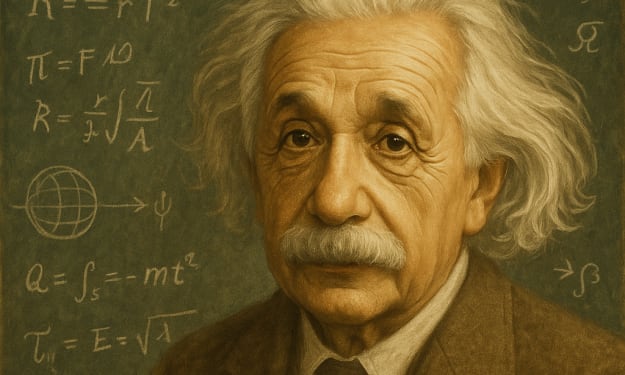
March 1934. The chill of late winter lingered in the air as Albert Einstein arrived in Prague, his steps slow but determined. This time, he was not just a physicist or a philosopher of peace—he was an emissary between old and new worlds. The cafés still bore the scent of roasted coffee and aged wood, but the conversations had changed. Scientists, students, refugees—everyone whispered about the shifting tides in Europe.
By Alain SUPPINIabout a year ago in Chapters
Beneath the Silent Ice
"Beneath the Silent Ice" In the waning days of the Arctic summer, when the sun hung low in the sky and the ice began to whisper its return, a team of scientists landed on Ellesmere Island for what was supposed to be a routine glaciological study. The lead researcher, Dr. Elara Mendez, had studied ancient ice cores for over a decade, trying to reconstruct the climate of Earth’s distant past. But this mission would mark something far more profound than she—or anyone—had expected. Their camp stood on the edge of the Murchison Glacier, a place seldom disturbed by human presence. It was Elara’s fifth expedition to the High Arctic, but she had never felt the air so tense with something intangible, like the land itself was holding a breath. "Check the seismic feed," she told her assistant, Malik, as they huddled in the operations tent. The data was strange. Over the past few days, small tremors had been picked up beneath the ice—unusual for a place with no tectonic activity. “Maybe just subglacial water movement?” Malik offered, though his voice lacked conviction. “Maybe,” Elara replied, frowning. “But that wouldn’t explain the harmonics. These vibrations are rhythmic.” That night, as wind howled across the ice fields and auroras danced in silent brilliance above, Elara couldn’t sleep. She kept thinking about those seismic patterns—too regular, too deliberate. At first light, she made a decision. “We’re drilling.” “But we haven’t done a ground-penetrating radar sweep yet—” “We don’t need to. I want to go where the tremors are strongest.” By noon, the team’s mobile rig was in place, auger blades chewing into the glacier with mechanical indifference. The ice core that emerged shimmered with millennia of frozen time, but at 30 meters down, the drill struck something unexpected: not rock, not ice—something metallic. Elara stared at the monitor in disbelief. “Stop the drill. Get the sonar drone.” The drone was lowered into the borehole, its tiny lights illuminating the walls as it descended. At 36 meters, it revealed a flat, curving surface embedded in the ice. Beneath that, darkness yawned like a secret waiting to be remembered. “It’s a structure,” Malik whispered. “That’s not natural.” The next 48 hours were a whirlwind of activity. With heated probes and careful excavation, the team carved a narrow passage to the object. It took two days to clear a section large enough for a person to enter. Elara insisted on going first. She descended alone, body wrapped in thermal gear, helmet cam streaming live to the team above. The chamber she stepped into was vast and silent, encased in smooth metal that gleamed beneath the frost. Strange markings covered the walls—geometric patterns that hinted at language, or at least intention. “No tool marks,” she muttered. “No welds. This wasn’t built… it was grown.” Her breath echoed in the emptiness. Then her flashlight caught something in the distance: a raised dais, and on it, a sphere about the size of a human head. She approached slowly, heart pounding. The sphere pulsed faintly with light—soft blues and greens that shimmered like bioluminescent algae. “Malik, are you getting this?” “Crystal clear. Elara, do not touch—” But curiosity had already overridden caution. She reached out. The moment her fingers brushed the sphere, the entire chamber pulsed. Lights flared, the floor trembled, and a low hum began—deep and harmonious, like the sound of a choir from the bones of the Earth. “Elara? Elara, respond!” But she wasn’t listening. Images flooded her mind—stars wheeling through unfamiliar skies, oceans boiling beneath twin suns, a civilization of luminous beings who moved through thought more than touch. She saw them fleeing something, a darkness devouring constellations. They had come here, to this blue world, not as conquerors but as archivists. This place, buried in ice, was a memory vault. She collapsed, overwhelmed. When she awoke hours later, she was back in the tent. Malik was pacing, the team silent. “You stopped responding. We pulled you out,” he said. Elara sat up slowly, eyes wide. “I saw them. They weren’t human. They were... older. Vast. They encoded everything into that sphere—their history, their knowledge, their warning.” Malik stared at her, stunned. “A warning?” Elara nodded. “The darkness they fled... it wasn’t natural. It was something born of their own brilliance, a technology they couldn't control.” The team wanted to call in the discovery, but Elara hesitated. She had seen enough government silence and corporate greed to know what could happen. “We don’t own this,” she said. “It doesn’t belong to us. But the knowledge might help us avoid their fate.” In the end, she transmitted only a fraction of the findings—enough to confirm a significant archeological discovery, but not enough to reveal its full import. The rest, she stored in encrypted files and began writing a paper disguised as speculative fiction. Months later, as snow reclaimed the borehole and ice stitched shut the scar in the glacier, Elara stood in a university auditorium, reading the opening line of her story: "We found them beneath the ice, not as gods, not as monsters—but as a mirror. And in that mirror, we saw our future, waiting to be chosen." The audience applauded, entertained. Only a few wondered if she had told the truth. And the sphere? It remained with her, locked in a lab behind meters of shielding. Sometimes it still pulsed, like a heartbeat—silent and eternal—reminding her that the greatest discoveries are not just about what we find, but what we choose to become because of them.
By Akhtar Ali about a year ago in Chapters
Einstein's Europe
In the spring of 1934, Einstein had settled into a rhythm in Zürich, teaching occasionally at the ETH (Eidgenössische Technische Hochschule) and frequenting a modest café tucked along the Limmat River. Its interior was perpetually smoky, the tables often cluttered with books, pipes, and the impassioned hands of those arguing ideas. It was there, in the Café Morgenstern, that a new kind of resistance began to form—not one of arms, but of thought.
By Alain SUPPINIabout a year ago in Chapters
Einstein in the Shadow of War
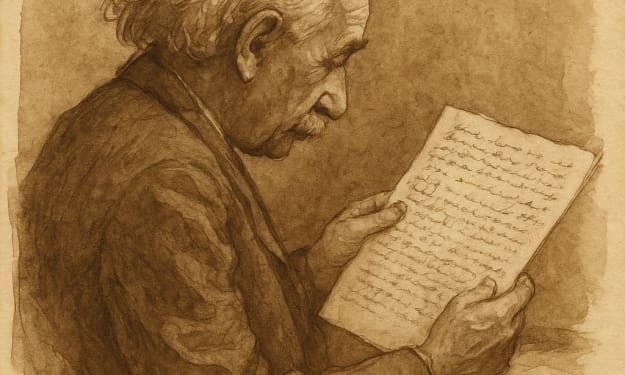
Zurich, Switzerland — October 1939 The autumn air in Zurich carried a sharpness that matched the tension humming beneath the surface of Europe. In a modest study filled with the scent of pipe smoke and old paper, Albert Einstein stared at the unfinished letter before him. Its edges curled slightly from the weight of his indecision. Meant for President Roosevelt, the letter warned of the possibility of Nazi Germany developing a nuclear bomb. It was a letter that, in another timeline, would change the world. But here, Einstein had not signed it.
By Alain SUPPINIabout a year ago in Chapters