Cliffhanger
Songs of the Silver Wizard
COMPENDIUM "And what did we learn?” “That you can’t cast a fireball in a wooden hut.” “No, that's what happened. What did you learn?” Headmaster Sefodarus sighed when Thaddeus greeted his follow up question with a blank stare. “Thaddeus, you must learn that you cannot go about destroying timbers and expect the house to remain upright. At some point, you must build.”
By Matthew J. Fromm7 months ago in Chapters
War in Iran: A Dangerous Turning Point
War in Iran: A Dangerous Turning Point The conflict in Iran has entered one of its most dangerous phases today. What began as targeted military strikes has now transformed into a broader regional crisis, raising fears of prolonged war, economic instability, and global security threats. Governments around the world are watching closely as tensions escalate, missiles continue to fly, and diplomatic efforts struggle to keep pace with fast-moving events.
By Wings of Time 7 months ago in Chapters
Karoline Leavitt
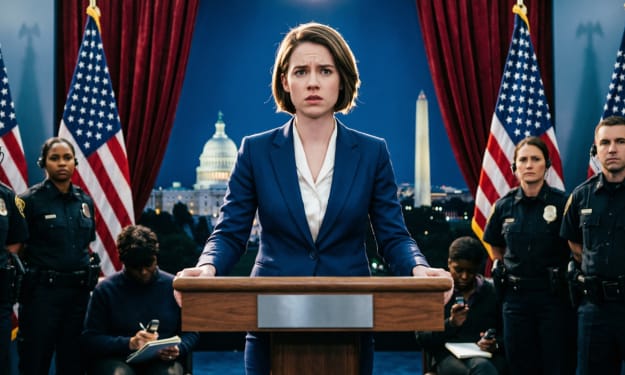
Karoline Leavitt: The White House Voice Behind Power, Passion, and Pressure Washington D.C. was never a place for the faint-hearted. Power moved quietly through its marble halls, and every word spoken behind the podium could shift global politics. But when Karoline Leavitt stepped into the role of U.S. Press Secretary, she brought something unexpected — youth, confidence, and a quiet fire that nobody saw coming.
By Wings of Time 7 months ago in Chapters
Glass Winter | Chapter XVI
Within those feverish dreams Mal lived for a thousand nights, only to awaken mere hours after he had fallen asleep. Revelation phased in and out, clear as ice but forgotten in moments. He tried to grab hold of its essence, just strong enough to hold on. Any weaker and it would float away, any stronger and it would dissolve in his hands. In his dream he never saw his hands.
By Andrei Babanin7 months ago in Chapters
VENGEANCE BOUND . Content Warning.
Book 2 THE FIRST WRONG MOVE Nyx didn’t go back to the apartment. She didn’t go back to the house either. Both were compromised in different ways, and right now, she wasn’t interested in revisiting spaces that someone else had already touched, studied, or mapped. She needed neutral ground. Not safe. Safe didn’t exist anymore. Just… neutral. She drove without rushing, but there was intention in every turn now. Not evasive like before. Not testing for tails. This time, she was choosing direction based on something else—memory. Not the kind that lingered. The kind that stayed buried until it was useful. Atlas shifted in the backseat, watching the passing streets through the window, body still but alert. Nyra had her head low, eyes up, tracking movement, reading energy in a way that didn’t need explanation. They felt it too. The shift. This wasn’t reaction anymore. This was engagement. Nyx turned off the main road and pulled into an underground parking structure that hadn’t been maintained in years. Half the lights were out. The ones that still worked flickered just enough to be irritating. Good. Imperfect environments made people sloppy. She parked near a concrete pillar, cutting the engine but not moving right away. Silence filled the car. Not empty. Just waiting. Nyx glanced into the rearview mirror, out of habit more than necessity. Nothing behind her. No headlights pulling in. No delayed movement. No pattern. Still— she didn’t assume. She stepped out first. Nyra followed immediately. Atlas came out slower, heavier, positioning himself slightly ahead of her this time, not behind. He felt something. Nyx closed the car door quietly and scanned the structure once, slow and deliberate. There. Second level ramp. A shadow where there shouldn’t have been one. Not obvious. But wrong. Nyx didn’t react. Didn’t reach for a weapon. Didn’t change pace. She walked. Straight toward it. Nyra stayed low. Atlas adjusted his angle. And the closer they got— the more it confirmed itself. Presence. Still. Waiting. Not hiding well enough. That was the first mistake. Nyx stopped about ten feet short. Silence stretched. Then— “Come out.” Her voice was calm. Flat. Not loud. But it carried. For a second— nothing happened. Then— movement. A man stepped out from behind the pillar. Late thirties. Maybe early forties. Average build. Not military. Not polished. But not completely untrained either. He held his hands slightly away from his sides. Not surrendering. Not threatening. Trying to look neutral. He failed. Nyx’s eyes moved over him once. Clothes. Shoes. Posture. Breathing. All of it told her the same thing. He didn’t belong here. Not like this. “You’ve been following me,” she said. It wasn’t a question. The man shook his head quickly. “No—no, I haven’t. I was told to wait.” Nyx tilted her head slightly. “Told by who?” He hesitated. Too long. Second mistake. Nyra’s low growl filled the space instantly. The man flinched. There it was. Fear. Real this time. Not controlled. Not trained. Raw. Nyx stepped closer. One step. Then another. Not aggressive. But not giving him space either. “You don’t wait in places like this unless you were sent,” she said. “So I’ll ask you one more time.” She stopped a few feet in front of him. “Who sent you?” The man swallowed hard. His eyes flicked to the dogs. Then back to her. “I don’t have a name,” he said. “I just got instructions.” Nyx didn’t blink. “What instructions?” Another hesitation. Third mistake. Atlas took one slow step forward. Not fast. Not loud. Just enough to shift the air. The man stumbled back slightly. “They said you’d come here,” he said quickly. “They told me to wait and give you something.” Nyx’s gaze sharpened instantly. “Where is it?” The man reached slowly into his jacket. Nyra’s growl deepened. Atlas didn’t move. Nyx didn’t either. “Slow,” she said. He nodded quickly, pulling out a small envelope. Plain. Unmarked. He held it out. But didn’t step forward. Didn’t close the distance. Smart. Too late. Nyx reached out and took it. Her fingers brushed the edge. No wires. No weight difference. No obvious tampering. Still— she didn’t open it. Not yet. “Then what?” she asked. The man blinked. “What?” “What happens after you give this to me?” “I… I don’t know.” Nyx studied him. Really studied him. And this time— she believed him. That was the problem. Because if he didn’t know— then he wasn’t important. And if he wasn’t important— he was expendable. Nyx’s eyes shifted slightly. Scanning. Listening. Feeling. And then— she heard it. Faint. But there. A click. Not from him. From somewhere else. Higher. Above. Her head tilted just slightly. Fourth mistake. Not his. Theirs. Nyx moved. Fast. Not toward the man. Away from him. She grabbed his jacket and yanked him forward, pulling him off balance just as— a shot rang out. Loud. Sharp. Concrete behind where he had been standing chipped instantly. The man hit the ground hard, scrambling, panic fully taking over now. Nyra lunged forward, positioning herself between Nyx and the direction of the shot. Atlas turned instantly, locking onto the source. Nyx didn’t hesitate. She moved toward the ramp. Toward the higher level. Toward the shooter. Another shot. Closer this time. She shifted left just enough to avoid the line. Not running. Advancing. Controlled. Because whoever was up there— expected chaos. Expected panic. Expected reaction. She gave them none of it. Nyx reached the edge of the ramp and moved up fast, low, precise. Her breathing stayed even. Her movement stayed clean. And when she reached the top— there was no one there. Empty. Clear. Gone. She scanned once. Twice. Nothing. But the position? That told her everything. They weren’t trying to hit her. They were forcing movement. Creating pressure. Controlling space. Nyx exhaled slowly. Then turned back. Walking down the ramp again, just as calm as she went up. The man was still on the ground. Shaking now. Real fear. Uncontrolled. Nyra stood over him. Atlas watching the perimeter. Nyx approached slowly. Stopped in front of him. “You weren’t the message,” she said. The man nodded quickly. “I told you—I don’t know anything else—” Nyx held up the envelope. “This is.” She looked down at it for a second. Then back at him. “They knew I’d take it from you.” “I swear, I don’t—” “I know,” she cut him off. And she did. That was the part that mattered. Because this? This wasn’t about him. It was about timing. Position. Sequence. Nyx crouched slightly. Close enough that he had to look at her. Really look at her. “If you were told anything else,” she said quietly, “anything at all—you remember it now.” The man’s breathing was uneven. His thoughts scrambling. Trying to find something. Anything. Then— “They said…” he hesitated, thinking hard, “they said you’d know where to go next.” Nyx stared at him. Expression unreadable. But inside— everything clicked. Of course they did. Because this whole thing— was built on that assumption. That she would understand the pattern. That she would follow the path. That she would keep moving forward. Nyx stood up slowly. Looked down at the envelope again. Then— she smiled. Just slightly. Cold. Sharp. Certain. “They finally made a mistake,” she said. The man blinked, confused. “What?” Nyx didn’t answer him. She turned. Walking back toward the car. Nyra followed immediately. Atlas stayed a second longer. Watching the man. Then turned and followed too. The man stayed on the ground. Not moving. Not understanding. Not part of it anymore. And Nyx? She didn’t look back. Because whatever was inside that envelope— wasn’t the next step. It was the confirmation. That they thought they were still in control. And that— was their first real mistake.
By Dakota Denise 7 months ago in Chapters
Breach Protocol . Content Warning.
Chapter 3 – Post-Mission Debrief The lights in the debrief room buzzed low, harsh fluorescent cutting across the table where Rhea sat at the head, arms folded, watching the others filter in. The air smelled faintly of coffee, sweat, and the remnants of adrenaline. It wasn’t just a room—it was a crucible, a place where decisions, mistakes, and survival hung in the balance. Keisha slid into the chair closest to the door, dropping her bag with a thud. Maya and Dani were next, moving with that careful, alert rhythm that said they had been in the field long enough to know the drill and long enough to know that every detail mattered. Alina and Sloane arrived silently, almost as if the shadows themselves had carried them in. Harper was last, setting her tablet and notes neatly in front of her, eyes scanning the room like she was already three steps ahead. Rhea’s gaze swept over them, each woman a study in focus, tension, and raw capability. She didn’t smile. She didn’t offer reassurance. That wasn’t her role. "Sit. All of you," she said, voice even, measured. It wasn’t a request. Once everyone had their seats, Rhea leaned forward slightly, hands pressing onto the table. "Five days. One mission. High stakes. And here we are." The room remained quiet. Taut. Waiting. Rhea nodded toward the board where surveillance photos and maps were projected. "I want a full rundown from each of you. What went right, what went wrong, and what you saw. No fluff. No excuses." Keisha leaned back, cracking her knuckles. "Entry went smooth. Timing was tight. I hit the door at zero-five, cleared the room in twenty seconds. Hostage was responsive, compliant. Shooter surrendered quicker than expected. But there’s a margin in there I don’t like. He hesitated too long on the third move. Almost caught him off guard, and he would have panicked." Rhea nodded. "Good. That’s the detail. That hesitation—the micro-moment—that’s what keeps people alive or gets them killed." Alina adjusted her notebook, voice calm. "Negotiation was straightforward, but the subject’s emotional volatility was underestimated. His responses were inconsistent, fluctuating between compliance and aggression rapidly. He needed to be held in conversation without feeling threatened. I guided him, but the shift happened faster than predicted. He almost snapped when he saw Keisha in the doorway." Maya spoke next, voice clipped, precise. "Intel feed was solid. No blind spots from the exterior cams, but comm interference in the second-floor corridor delayed updates by three seconds. I flagged it immediately, but that three seconds could have been critical. Target behavior was predictable if monitored correctly, but chaos factors—noise, movement, visual triggers—weren’t fully accounted for." Dani leaned forward, fingers tapping lightly on the table. "Field support went according to plan. Exit routes secured, evac points prepped. I monitored perimeter and potential hostiles outside. Could have had more overlap on the east side if the building had multiple access points. Timing was tight; synchronization between entry and overwatch was nearly perfect, but it relied on constant comm integrity." Sloane’s voice, low and deliberate, cut through the tension. "Sniper position was effective. No shots fired. Target was contained visually until surrender. Secondary threats neutralized before they could act. Quiet. Efficient. Perfect execution on that front." Harper, ever the strategist, finally spoke. "Mission planning held up, but field improvisation highlighted gaps in our assumptions. Scenario modeling did not account for his micro-adjustments. Data interpretation worked, but real-time application needs refinement. We operated on patterns, but anomalies were subtle and required immediate recognition. Communication protocol worked, but we can streamline handoffs further." Rhea let each word sink in, her eyes scanning the group, noting tension, pride, anxiety, and relief in equal measure. "This is the kind of analysis that keeps us alive. Every micro-decision, every hesitation, every small win counts. You’ve learned in five days what some never see in five years. That’s what this is about." Keisha smirked faintly, exhaling slowly. "So, we’re glowing, right?" Rhea didn’t answer with flattery. She shook her head once. "We’re alive. That’s the metric. Everything else is adjustable." Alina raised an eyebrow. "Adjustable doesn’t feel like a strong enough word for what we just experienced. He could have ended it at any moment." Rhea’s gaze hardened slightly. "And that’s why you’ll do this over and over until instinct overrides panic. Until every hesitation is preempted by calculation. We control the variables, not just react to chaos." Maya leaned back, fingers brushing her chin thoughtfully. "Control is a spectrum. You can never fully account for irrationality. You can only prepare, predict, and respond." Dani nodded. "Which is why we rehearse these scenarios until they’re muscle memory. Until the micro-second counts for survival." Sloane finally shifted, expression unchanging. "And that’s why we were successful today. Every single one of us adapted in real-time. One missed beat and it goes south." Harper pulled up a map on her tablet, highlighting key points. "Micro-decisions made in the field must reflect macro-planning in real-time. The thread between strategy and execution must be seamless. Otherwise, outcomes become luck. We don’t rely on luck." The room fell silent, each woman absorbing the weight of her words. Rhea’s presence was steady, unyielding, grounding. She let the silence stretch, letting them reflect. Then, finally: "You all did well," she said, voice softening slightly. "But well isn’t enough. It’s never enough. We’re here to be precise, lethal if needed, and adaptable at every turn. One misstep, one hesitation—and it’s not well anymore." Keisha shifted in her chair. "Got it. Precision. Lethal. Adaptable." Alina scribbled notes in her notebook, muttering under her breath about emotional triggers. Sloane adjusted her rifle case slightly, eyes on the map. Harper tapped through multiple simulations, already tweaking parameters. Maya scrolled through comm logs and camera angles, noting timing discrepancies. Dani leaned back, a quiet readiness in her eyes, absorbing the post-mission pulse. Rhea stood, stretching her shoulders slightly. "Tomorrow we run another drill. Scenario altered. Emotional volatility increased. Exit points modified. Timing shortened. No repetition. We adapt every mission, every day. This isn’t about proving you can survive. It’s about ensuring you always can." They all nodded, the tension in the room shifting subtly from post-mission adrenaline to the weight of purpose. Each knew the stakes. Each knew the margin for error had shrunk. Rhea’s gaze fell on them individually, lingering briefly on each face. "We operate together. Trust in execution. Trust in each other. And above all, trust that the smallest detail can save a life." Keisha exhaled slowly. "Sounds like a long week." Rhea’s lips pressed into a thin line. "It’s the first of many. Welcome to the unit." The room remained quiet as the women gathered their materials and prepared to leave. Each step carried the weight of their training, their preparation, and the reality of what awaited them next. Outside, the city never paused. Sirens wailed, lights flashed, people moved unaware of the silent war waged in rooms like this. And within these walls, the women of the unit knew the only sound that mattered was their own measured breathing, their own calculated steps, and the shared understanding that failure was not an option. As they filed out, Rhea stayed seated for a moment longer, reviewing each replayed moment from the operation in her mind. Each movement, each command, each hesitation had a ripple effect. And she noted it all, committed it to memory, plotting how they would be sharper, faster, better, next time. She exhaled, slow, controlled. The mission was over, but the work had only just begun. And in that room, under the harsh fluorescent lights, the women of the unit began to bond in silence, their shared understanding forged not in words but in experience. The clock was ticking, the city waiting, and the unit preparing to step forward together, refined by the first fire, ready for whatever came next. The room emptied slowly, each woman leaving with the weight of the mission still pressing against their shoulders. Rhea remained seated for a long moment, letting the silence settle. The hum of fluorescent lights was nearly deafening in contrast to the chaos of the field. Then her phone buzzed—low, discreet. She didn’t glance at it until the last chair scraped against the floor. Briggs. She picked it up, voice clipped and calm. “Yes.” “Rhea,” Briggs said, voice carrying that edge that made it impossible to lie. “Report. Mission recap—don’t sugarcoat it.” She exhaled slowly, leaning back in her chair, folding her arms. “Done. The women held the line. Micro-moments controlled, every variable managed as best as possible. The target surrendered without a single shot fired. No casualties beyond the expected stress response. Timing was tight, but manageable.” Briggs paused, listening. She could hear the faint click of his pen against the desk on the other end. “No surprises?” “None fatal. But micro-delays, three seconds here and there, Intel feed interruptions—enough to remind me that we can’t get complacent.” “Good. I don’t want complacency. Ever.” His tone shifted slightly, more pointed. “You said ‘micro-delays.’ Expand. I want it detailed.” Rhea straightened. “Entry was clean, hostage compliant. Shooter paused slightly on the third move—enough to cause a ripple if the timing had been off. Alina managed the negotiation, kept him talking, kept him from panicking—but the emotional spikes happened faster than anticipated. Maya flagged the comm interference in the corridor immediately, but that delay could have escalated if overlooked. Dani monitored external access points, all secured, but east-side overlap was minimal. Sloane had eyes on him the entire time, silent and contained. Harper identified all anomalies in real-time, recalibrating the plan on the fly. Everything worked, but every success hinged on split-second reactions.” Briggs let out a low whistle. “I like your detail. It’s clinical, precise. Exactly what I expect from this unit. And from you.” Rhea tilted her head slightly. “It’s not about me. It’s about control. One misstep, one hesitation—people die. That’s the reality. Not theory, not drills, not strategy boards. Reality.” “Reality,” Briggs repeated, almost contemplative. “I get that. I also get that your women performed beyond what I expected. That hesitation you mentioned—the third move—that’s where they lived or died. They lived. Clean.” Rhea let the pause hang, letting the weight of his words settle. “Clean, yes. But it could have gone the other way. That’s what I take from it. Every success today is a reminder that precision isn’t optional. It’s mandatory.” “Mandatory,” Briggs echoed, low and even. “I want the full after-action report on my desk by tomorrow morning. I want your observations, your notes, every flagged micro-delay. I want it exhaustive. I want to see exactly how you’re training them to shrink those windows. And Rhea—don’t hold back. Don’t gloss over.” Rhea’s jaw tightened. “I never gloss over. Ever.” He chuckled softly, but it didn’t reach his eyes. “Good. You know what I expect. I trust your assessment, but I also expect accountability. Micro-moments are where leaders are tested. You understand?” “Completely,” she said, letting her fingers tap lightly against the table. “They understand. We all understand. No one moves without calculating every variable. That’s the only way we operate.” “Then keep it that way,” Briggs said. “And Rhea—watch yourself. I’ve seen leaders burn out chasing perfection. You’re not just building a unit. You’re building your own survival.” Rhea allowed herself a small, dry smile. “I’m aware. But perfection isn’t the goal. Control is. Survival is a byproduct.” A long pause, then he said, “Alright. Keep me updated. And Rhea?” “Yes.” “Don’t let anyone get sloppy. Not for five days, not for fifty years. Not ever.” “I won’t.” The line went silent, and Rhea set the phone down slowly. Her eyes drifted toward the empty chairs where her team had just been. She could see every movement, every hesitation, every decision they had made. And she knew that the work wasn’t done. Not by a long shot. This conversation with Briggs wasn’t just a check-in. It was a reminder. The stakes weren’t abstract—they were real. Every micro-second, every breath, every choice mattered. And Rhea Vaughn would make sure that her team was ready for the next one.
By Dakota Denise 7 months ago in Chapters
Breach Protocol. Content Warning.
Breach Protocol – Part 2: First Mission The city never sleeps. It doesn’t pause for the sound of sirens or the flash of emergency lights. It hums, vibrates, and breathes in uneven rhythms: car horns, distant shouts, the low groan of trains under the streets. A million lives moving simultaneously, none of them stopping for anyone—not for police, not for SWAT, not for those who risk themselves to keep it from spinning out entirely. Captain Rhea Vaughn stood at the head of the armored vehicle, her hands tucked into the pockets of her tactical vest. Seven women, seven skill sets, seven minds—seven possibilities—sat lined up behind her. Each of them silent, contained, waiting. The night air was sharp with the faint smell of asphalt and exhaust, the way the city always smelled just before dawn. A prelude. Keisha Owens was the first to shift, cracking her knuckles as though she could measure the night by the sound. K.O.’s frame was solid, muscle coiled and ready, her eyes scanning the dark street beyond the windshield like she could see the hostage and the man holding her through walls and doors. Sloane Mercer didn’t shift at all. She never did. Her rifle rested on her lap like it weighed nothing, her eyes hidden behind the glint of her scope’s lens cap. Even when she blinked, it was precise, measured. Alina Cruz leaned slightly forward, studying the floor plans projected on the inside of the van. Her soft voice, barely audible over the hum of the engine, broke the silence. “Unstable subject,” she murmured. “Single hostage. Third-floor apartment. Access via fire escape or stairwell. No back exits.” Rhea nodded once, confirming what they already knew. “No deviations. Stick to your lane. Eyes and ears on me unless I tell you otherwise.” Harper Wells, fingers tapping lightly against the tablet in her lap, interjected, voice clipped but calm. “The stairwell’s interior is narrow. Only one person can ascend or descend at a time. If the subject decides to move the hostage, we lose positional advantage.” Maya Lin, headphones in, fingers flying across the keyboard on her laptop like a pianist rehearsing, added, “Cameras in the building are offline, but we’ve got comms tapped. No external network, no internal surveillance feed. I can see movement through the heat signatures, but there’s lag—so plan for two seconds of delay.” Daniyah Cole, quiet as always, nodded. “We’ve got the building covered. Perimeter secure. Entry and exit mapped.” Rhea studied them all. Each of them ready, each of them capable—but readiness didn’t mean they could predict the chaos inside that apartment. That was why she was here. That was why she was the one who had called them together. “Five minutes,” she said. The van stopped silently in the shadow of the building. Streetlights flickered overhead, giving a pulse to the concrete jungle. Rhea opened her door first. No one moved until she had. Leadership, in moments like this, was not about shouting. It was about presence. K.O. followed next, boots silent but heavy, body moving with the lethal precision of someone who had been first through every door she’d ever fought behind. Alina was next, soft but aware, eyes darting, taking note of sounds, textures, energy in the building. She could hear fear. She could feel panic. Sloane, Harper, Maya, Dani—they followed methodically, trained reflexes guiding them into position. No words. No mistakes. They split at the base of the building. Harper and Rhea took the stairwell, mapping every step mentally. K.O. took the front approach, ready to breach. Sloane set her scope on the street across, eyes on the balcony. Maya fed live heat maps to the group via comms. Daniyah covered their rear, ensuring no surprises from the street. Alina kept her voice calm through the earpiece, a lifeline to both the hostage and the team. The apartment door was visible through the cracked window at the top of the stairs. The man paced inside, sweat glistening on his forehead, shaking in nervous fury. “Subject aware,” Alina whispered. “Heartbeat elevated. Hands gripping weapon. Voice—he’s muttering. Not coherent.” Rhea’s hand rose slightly. Stop. Wait. The team froze as instructed. Not because of fear—but because waiting was control. “Rhea,” K.O. whispered. “We can move now.” “Not yet,” Rhea said. Seconds stretched. She watched the man pace. He was becoming aware, alert, reactive. But not calm. Not dangerous in the tactical sense yet. Dangerous in the emotional sense—the kind that no amount of firepower could solve. Finally, she spoke through the comms. Calm. Measured. Human. “This is your last chance,” she said. “I don’t want anyone hurt. Let her go. Put the weapon down. We can talk.” The man froze. He swiveled slightly, confused, hearing the human voice outside the tactical shouting and chaos he had probably anticipated. “Don’t come near me,” he shouted back. Voice cracking. “Or she—she dies!” Alina’s voice, soft, threading through his panic, floated into his awareness. “I’m not here to hurt you. You don’t want this to end badly,” she said, tone even, measured, empathetic. “I can help you. You can put the gun down. You and she both walk out. I promise you that.” He trembled. Gun still raised. “You don’t have to do this,” Rhea added. “No one has to get hurt tonight. You’re not alone. You can choose to end this safely.” The man shook his head violently. “I… I… I can’t—” “You can,” Alina said softly. “I know you can. Take one step. Lower the weapon. Breathe. Let’s start with that.” K.O. shifted slightly behind him, just enough to signal readiness—but not to intimidate. Sloane’s scope kept its cold gaze across the street. Harper traced movements on the floor plan. Maya’s eyes flicked across the heat map, calculating escape routes if needed. Daniyah tightened her grip on the rear, ready for any sudden movement. The man’s hands shook, sweat dripped down his arms. His breathing ragged. “I… I can’t,” he whispered, voice raw, fear breaking through. “You can,” Alina said again, steady, patient. “I know you can. Trust me. One step at a time. Put it down. I’ll walk with you through it. Just one step.” And then, just a flicker—a fraction of a motion—and the gun began to lower. Rhea exhaled slowly. Wait. Not relief. Wait. The man’s eyes darted around. Doubt. Panic. Uncertainty. “You’re doing the right thing,” Alina reassured him. “Keep going. You’re okay. Just keep going. You’re not alone.” Every movement measured. Every second stretched into eternity. K.O. readied for the door to open. Sloane’s gaze locked. Harper’s hands mapped. Maya’s screens tracked. Daniyah’s shadow covered the stairwell exit. And then it happened. The weapon lowered fully. The hostage stepped back, shaking but unharmed. Rhea moved. “Step outside. Keep your hands visible. One step at a time.” He obeyed. Slowly. Trembling. Afraid—but alive. Alina walked beside him, voice calm, guiding, human. “You’re doing this. You’re okay. Keep moving.” The team entered. K.O. first, clearing the room. Sloane covered the perimeter. Harper and Daniyah flanked the subject. Maya monitored, feeding updates to command. Inside, the man’s fear broke into relief, then comprehension. He had made the right choice. They all had. Rhea let the tension dissipate just enough before speaking. “You’re safe now. No one gets hurt when the right decisions are made.” Alina’s eyes met Rhea’s. Small nod. Job done—but the lesson stretched deeper than the extraction. The city still never slept, but for those five minutes, for that one apartment, control had been restored—not with dominance, but with awareness, strategy, and patience.
By Dakota Denise 7 months ago in Chapters
Breach Protocol . Content Warning.
Breach Protocol – Part 1: Formation They didn’t announce the program. No press conference. No internal memo blasted across departments. No polished language about innovation, progress, or inclusion. Because if it failed—and most of them expected it would—there would be no paper trail tying anyone important to it. Captain Rhea Vaughn preferred it that way. Less noise. Less politics. More control. She stood alone in Observation Room 3B, the lights dimmed low enough to make the footage on screen feel sharper than it really was. The glow from the monitor painted her face in pale blues and hard shadows, catching the stillness in her eyes. Timestamp: 02:14. The moment everything shifted. A man paced across a cluttered living room, barefoot, shirt damp with sweat. His grip on the gun wasn’t steady—it trembled just enough to matter. Not trained. Not disciplined. Emotional. Dangerous in a different way. Behind him, a woman sat on the floor, wrists bound, tears streaking down her face. She wasn’t screaming anymore. That was the detail that mattered. People stopped screaming when they lost hope. Rhea leaned forward slightly, elbows resting on her knees. Outside the apartment door, the entry team stacked up. Heavy boots. Thick vests. Weapons ready. One of them raised a fist. “Three… two—” Rhea paused the footage. There. Every time, it was there. The decision. The assumption. The mistake. They had already decided how it would end. She rewound it. Played it again. “Three… two—” Pause. Again. The man’s pacing changed just slightly before the countdown ended. His shoulders tightened. His breathing hitched. Something in him shifted—but the team never saw it. They weren’t looking. They were executing. And execution without awareness? That’s how people died. Rhea exhaled slowly, leaning back in her chair. Seven times she’d watched it. Seven times it ended the same way. Gunfire. Screaming. Blood. Wrong. “You planning to fix it, or just study it to death?” The voice came from behind her, casual but edged with something sharper. Rhea didn’t turn. She already knew who it was. Deputy Chief Malcolm Briggs. He walked into the room like he owned every inch of it, hands tucked into his coat pockets, gaze flicking from the paused screen to her without much interest. He wasn’t here for the footage. He was here for results. “Fix it,” Rhea said evenly. Briggs let out a quiet breath through his nose, unimpressed. “That’s what they all say.” She finally turned her head, just enough to meet his eyes. “With a team that doesn’t make that mistake twice.” That got his attention. Not much—but enough. He stepped closer, folding his arms as he looked at the screen again. “You’re telling me the issue isn’t training.” “I’m telling you the issue isn’t force.” A beat. “They’re trained to dominate,” Rhea continued. “Every scenario. Every variable. They go in assuming control solves everything.” Briggs raised a brow. “And it doesn’t?” “It escalates emotional subjects.” She nodded toward the frozen image of the man on screen. “That’s not a terrorist. That’s not a trained shooter. That’s someone unstable, overwhelmed, and reactive. You hit him with noise, pressure, aggression—he responds with chaos.” “And your solution?” Rhea didn’t hesitate. “A team that knows when not to push.” Briggs gave a short, humorless laugh. “You want softer operators?” “No,” she said calmly. “I want smarter ones.” Silence settled between them. Measured. Evaluating. Briggs studied her for a long moment, like he was trying to decide whether this was brilliance or a liability. “Alright,” he said finally. “Let’s say I entertain this.” Rhea stood, straightening to her full height. She didn’t rush. Didn’t fill the silence. She let him come to her. “You get one shot,” he continued. “Off the books. Limited oversight. You build your team, you run your op, and if it goes sideways—” “It won’t.” Briggs smirked slightly. “Confidence is expensive, Vaughn.” “So is failure.” Another beat. Then he nodded once. Decision made. “Pick your people,” he said. “But understand something—this isn’t a statement. This isn’t a movement.” His tone hardened. “This is a test.” Rhea held his gaze. “I don’t build tests,” she said quietly. “I build outcomes.” The first call didn’t go well. It wasn’t supposed to. Rhea stood in the doorway of a private boxing gym, arms crossed as she watched Keisha Owens dismantle a heavy bag like it had personally offended her. The sound echoed through the space—thud, crack, thud—each hit controlled but violent. Precision inside aggression. Good. K.O. moved like someone who understood impact. Not just how to deliver it—but when. Rhea waited until the round ended. Keisha ripped off her gloves, tossing them aside before grabbing a towel. She caught sight of Rhea in the mirror. Didn’t turn around. “Gym’s closed,” she said, voice steady but edged. “I’m not here to work out.” Keisha smirked faintly, still facing the mirror. “Then you’re definitely in the wrong place.” Rhea stepped further in. “Keisha Owens.” That got her. She turned slowly, eyes scanning Rhea up and down. Assessing. Measuring. “You got a badge or just a file?” she asked. “Both.” “Then you already know I don’t take meetings like this.” Rhea didn’t move. “You also don’t walk away from something that matters.” A flicker. Small. Fast. But there. Keisha grabbed a water bottle, taking a long drink before responding. “Let me guess,” she said. “Special unit. High-risk ops. You need muscle.” “I don’t need muscle,” Rhea said calmly. “I need control under pressure.” Keisha scoffed. “Same thing in your world.” “No,” Rhea replied. “In my world, the difference decides who walks out alive.” Silence. Tension shifted. Keisha stepped closer now, not aggressive—but not welcoming either. “What’s the angle?” she asked. “Because this already sounds like politics.” “It’s not.” “It always is.” Rhea met her gaze. Didn’t flinch. “It’s a new unit,” she said. “Built differently. Operates differently.” Keisha crossed her arms. “Different how?” Rhea held the pause just long enough. “Every member is a woman.” That landed. Not shock. Not surprise. Something more complicated. Keisha let out a quiet breath, shaking her head slightly. “Yeah,” she said. “That’s politics.” “No,” Rhea said again. “That’s strategy.” Keisha studied her for a long moment. Then— “You really believe that?” she asked. Rhea didn’t hesitate. “Yes.” Another beat. Then Keisha grabbed her gloves again. “Good luck with that,” she said, turning away. “You’re gonna need it.” Rejection. Expected. Rhea didn’t push. She simply said, “First operation runs in five days.” Keisha paused mid-step. Rhea continued. “Hostage situation. High emotional volatility. If you change your mind…” She turned toward the door. “I’ll be there whether you show up or not.” And just like that— she left. Dr. Alina Cruz didn’t bother pretending to be impressed. “You’re asking me to leave a stable position,” she said, flipping through the file Rhea had handed her, “for a unit that doesn’t officially exist.” Her office was clean. Minimal. Controlled. Just like her. Rhea sat across from her, posture relaxed but deliberate. “I’m asking you to be part of something that fixes what your current system can’t.” Alina’s eyes lifted briefly. Sharp. “You don’t know what my system can do.” “I know what it hasn’t done,” Rhea replied. A flicker of irritation crossed Alina’s face. Good. Emotion meant engagement. “You’ve lost three negotiations in the last eighteen months,” Rhea continued. “All high-risk. All emotionally unstable subjects.” Alina closed the file slowly. “That information is sealed.” “Not entirely.” Silence. Heavy now. Personal. Alina leaned back slightly, studying her. “You’re either very confident,” she said, “or very reckless.” “Neither.” “Then what?” Rhea met her gaze. “Precise.” A long pause. Then Alina exhaled softly, tapping the file against her palm. “And what makes your team different?” she asked. “They listen.” Alina’s brow furrowed slightly. “Everyone says that.” “They don’t do it,” Rhea replied. Another beat. Then— “You would’ve handled those negotiations differently,” Rhea added. That hit. Alina’s expression didn’t change—but something behind her eyes did. “You don’t know that.” “I do,” Rhea said quietly. “Because you already do.” Silence stretched between them. Then Alina leaned forward slightly. “Five days?” she asked. Rhea nodded. Alina considered it. Then— “I’ll observe,” she said. “Nothing more.” Rhea stood. “That’s all I need.” Sloane Mercer didn’t answer the door. Which meant Rhea had to let herself in. The place was quiet. Sparse. Intentional. A rifle case sat open on the table. Of course it did. “I don’t like uninvited guests.” The voice came from behind her. Rhea didn’t turn immediately. “I knocked,” she said. “And I ignored it.” Now she turned. Sloane leaned against the doorway, arms crossed, expression unreadable. “You should’ve taken the hint.” Rhea stepped away from the table. “You left the service without filing a formal discharge explanation.” Sloane smirked faintly. “You break into people’s homes often, or am I special?” “You followed an order you knew was wrong.” That wiped the smirk clean. Silence. Cold now. Measured. “You don’t know what I knew,” Sloane said. “I know what you did after,” Rhea replied. “You stopped trusting command.” A beat. Then— “I’m not offering you command,” Rhea added. “I’m offering you clarity.” Sloane studied her. Longer this time. “Why me?” she asked. “Because you see what others miss.” Another pause. Then Sloane glanced toward the rifle case. “Five days,” Rhea said. “If you’re interested.” She turned to leave. “Don’t get killed before then,” Sloane muttered. Rhea allowed herself the smallest hint of a smile. “Not planning to.” Harper Wells didn’t like surprises. Which made the email sitting in her inbox particularly offensive. Subject: Meeting Request – Immediate From: R. Vaughn No context. No briefing packet. No attachments. Just a time and a location. Harper stared at it for a full thirty seconds before opening it again—like more information might magically appear if she looked hard enough. It didn’t. Of course it didn’t. She exhaled slowly, already irritated. Unstructured requests meant unstructured people. And unstructured people got others hurt. Rhea found her in a city planning office three floors above street level, surrounded by maps, monitors, and enough data to build a small war. Harper didn’t stand when she walked in. Didn’t offer a handshake. Didn’t pretend to be impressed. “You’re missing half the information,” Harper said immediately, eyes still on her screen. Rhea stepped closer. “About what?” Harper finally turned, expression sharp. “Whatever this is,” she said, gesturing vaguely. “You don’t request a strategist without providing a framework.” Rhea studied her. Detail-oriented. Controlled. Already thinking three steps ahead. Good. “I’m building a unit,” Rhea said. Harper’s eyes narrowed slightly. “Based on what model?” “No model.” That was the wrong answer. Harper leaned back in her chair, crossing her arms. “Then it’s not a unit,” she said. “It’s a liability.” Rhea didn’t react. “It won’t be,” she said calmly. Harper shook her head once. “That’s not how this works. You don’t build operations on belief—you build them on structure.” “You build them on people,” Rhea replied. That pause? Small—but real. Harper studied her now. “You don’t even have a plan yet,” she said. “I have the right variables.” “That’s not enough.” “It is if you know how to use them.” Silence stretched between them. Measured. Evaluating. Harper turned back to her screen, pulling up a city grid map. “Hypothetical,” she said. “Hostage situation. Third-floor apartment. Limited entry points. Unstable subject.” Rhea didn’t answer. Harper glanced at her. “Go ahead,” she said. “What’s your move?” Rhea took one step closer. “I wait.” Harper frowned. “For what?” “For the moment he gives me an advantage.” “That’s unpredictable.” “No,” Rhea said. “That’s observant.” Another pause. Then Harper leaned back slightly. Interested now. Not convinced—but not dismissing it either. “You’re asking me to plan for uncertainty,” she said. “I’m asking you to control it.” Harper tapped her fingers once against the desk. Thinking. Calculating. Then— “If I do this,” she said, “I don’t work blind.” “You won’t,” Rhea replied. “And I don’t adjust to bad decisions.” “You won’t have to.” That one almost sounded like a promise. Harper held her gaze a second longer. Then nodded once. “Send me what you have,” she said. Rhea turned to leave. “Five days,” she added. Harper frowned slightly. “For what?” Rhea glanced back. “You’ll see.” The next stop was quieter. Too quiet for the type of mind she was recruiting. Maya Lin’s apartment was minimalist, almost sterile, every surface clear, every light source deliberate. Multiple monitors lined the walls, code scrolling silently across each one. Maya was hunched over a laptop, headphones on, fingers flying. She didn’t notice Rhea until the chair scraped back. “I assume this isn’t a social call,” Maya said, voice flat but sharp. Rhea pulled up a chair. “You’re not here for socializing, either,” she said. Maya smirked faintly. “Then why are you here?” “Because you see patterns others don’t,” Rhea replied. Maya laughed softly, a sound that didn’t reach her eyes. “Everyone says that.” “Not everyone can act on them,” Rhea said. Maya raised an eyebrow. “Action over words,” she said. “That’s the pitch?” “Control under pressure,” Rhea corrected. “Observation turned into decisions that save lives.” Maya leaned back, crossing her arms. “Five days?” “Yes. Hostage scenario. High emotional volatility. You in or not?” Another pause. Maya’s smirk became a small, calculating smile. “Alright. I’ll watch… and hack.” “Good,” Rhea said. “That’s all I need for now.” The final recruit was quiet in a different way. Grounded. Solid. Daniyah Cole’s garage had vehicles lined up, maintenance tools scattered, tactical maps pinned to the walls. She was polishing the barrel of a rifle when Rhea stepped in. “You’re out of uniform,” Daniyah said, not looking up. “I don’t need to be in uniform to see talent,” Rhea replied. Daniyah finally looked at her. Eyes calm, unflinching. “You’re assembling a unit.” “Yes. And you’re the support,” Rhea said. “Weapons, mobility, tactics in the field.” Daniyah nodded slowly. “Five days,” Rhea continued. “Hostage. High stress. Emotional volatility. If you show, we start.” Daniyah set the rifle down. “I’ll be there. Doesn’t mean I like it,” she said. “Good enough,” Rhea replied. By the time Rhea returned to headquarters, the team wasn’t a team yet. It was a collection of maybes. Possibilities. Resistance. Exactly what she expected. She stepped into the empty operations room, setting her files down on the table. Seven seats. All seven women. Not perfect. Not aligned. Not even close. But present. And that was where it started. She stepped forward, hands resting lightly on the table. “Good,” she said. Her voice steady. Grounded.
By Dakota Denise 7 months ago in Chapters
Ice Vs. Slavery
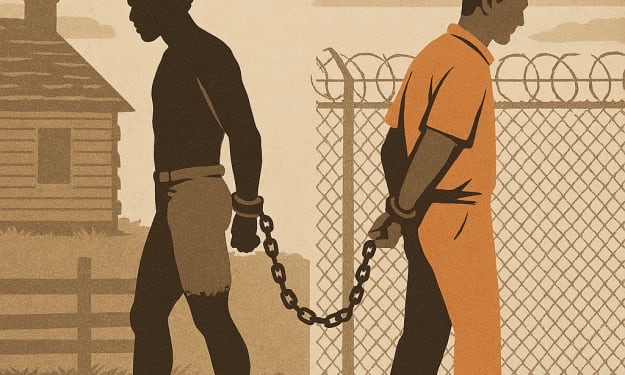
Comparing historical slavery in the United States with contemporary ICE (Immigration and Customs Enforcement) detention requires a careful, principle-based approach. While these phenomena occur in different historical, legal, and social contexts, certain analytical dimensions allow structured comparison.
By Press Release 8 months ago in Chapters