Children's Fiction
David Crockett, Scout AUDIO BOOK CHAPTER 1–5
David “Davy” Crockett (1786–1836) is one of the most famous folk heroes in American history. Often remembered by the nickname “King of the Wild Frontier,” Crockett’s life combined fact and legend. He was a skilled scout, soldier, and frontiersman whose adventurous spirit captured the imagination of his contemporaries and later generations. From his early life on the Tennessee frontier to his dramatic death at the Alamo, Crockett became a symbol of rugged independence and American courage.
By History Seekerabout a year ago in Chapters
5 Powerful Lessons I Learned from Failure (That Changed My Life)
5 Powerful Lessons I Learned from Failure (That Changed My Life) Failure. Just the sound of the word can make our hearts beat faster. Nobody likes it, and yet every one of us faces it. At some point in life, we fall short of our own expectations, of others’ trust, or of the plans we carefully made. I’ve been there too—standing in the middle of a collapsing dream, asking myself whether it was even worth trying again.
By Wings of Time about a year ago in Chapters
Healing from Within: Homeopathic Treatment for Psoriasis
Healing from Within: Homeopathic Treatment for Psoriasis Psoriasis is a chronic autoimmune disorder that affects millions worldwide, causing inflamed, scaly patches on the skin. It is not contagious, but it is often misunderstood. Conventional medicine can manage symptoms with creams, light therapy, and systemic drugs, but many patients seek gentler, long-term alternatives. Among these, homeopathy has gained popularity for offering a natural, individualized approach to psoriasis management.
By Wings of Time about a year ago in Chapters
World War 3: The Day the World Stood Still
“What if World War 3 began tonight? This chilling scenario walks you through the first 48 hours — from cyberattacks and blackouts to nuclear warnings — and reveals how quickly the world could come to a standstill.
By Wings of Time about a year ago in Chapters
The Bridge at Midnight
M Mehran Chapter One: The Crossing Sami had always taken the long way home. Not because he liked it, but because it let him avoid the old bridge at the edge of town. Locals called it cursed—too many accidents, too many stories whispered in the dark. But one night, pressed for time and weighed down by thoughts he couldn’t escape, he chose the shortcut. The moon hung low, the air heavy, and the bridge stretched before him like a dare. --- Chapter Two: The Stranger Halfway across, Sami noticed someone standing by the railing. A man in a dark coat, still as stone, staring into the water below. “Are you okay?” Sami asked cautiously. The man turned, his face tired but kind. “Funny question,” he replied. “Most people don’t stop to ask. They just walk faster.” Sami shifted uneasily. “It’s late. Dangerous to stand here.” The man smiled faintly. “Dangerous places reveal honest conversations.” --- Chapter Three: The Burden They leaned against the railing, silence stretching. Finally, the man spoke. “What are you carrying?” Sami frowned. “What do you mean?” “Everyone who walks this bridge carries something heavy. Otherwise, they wouldn’t be here at midnight.” Sami wanted to deny it, but the truth pressed too hard. His failed business, his fractured friendships, the feeling that he had run out of chances—all of it clung to him like chains. “I’m… tired,” Sami admitted. “Tired of starting over, tired of pretending I’m fine.” The man nodded knowingly, as if he’d heard the same confession countless times. --- Chapter Four: The Story of the Bridge The man gestured to the wooden planks beneath them. “This bridge isn’t cursed. It’s a place where people decide. Some choose to keep carrying their burdens. Others… let them go.” Sami’s chest tightened. “Let them go how?” The man tapped his chest. “Not by jumping. By choosing. By saying, This is not the end of me.” --- Chapter Five: The Question The wind picked up, rattling the beams. The man’s eyes held Sami’s like a mirror. “Do you want to cross this bridge,” he asked, “or stay stuck halfway for the rest of your life?” The question sliced through him. Sami realized he had been living in halves—half-dreams, half-tries, half-courage. Always pausing, never arriving. He swallowed hard. “I want to cross.” --- Chapter Six: The Step The man smiled, stepping back. “Then walk.” Sami’s legs felt heavy, but he moved forward. Each step sounded louder than the last, like the bridge itself was urging him on. By the time he reached the other side, the weight on his shoulders felt… lighter. Not gone, but bearable. When he turned to thank the man, the bridge was empty. --- Chapter Seven: The Morning The next morning, Sami woke with an unfamiliar clarity. His problems hadn’t vanished, but the fear of trying again had loosened its grip. He called an old friend he hadn’t spoken to in years. He reopened his laptop, sketching plans for a project he had abandoned. Small steps, fragile but real. The memory of the man’s words echoed: Not the end. Just a crossing. --- Epilogue: The Other Side Sami often walked past the bridge in daylight. It looked ordinary—just wood, nails, and ropes. Yet, every time he glanced at it, he felt gratitude. Because somewhere between one side and the other, he had decided not to give up. And that was the real magic of the bridge at midnight.
By Muhammad Mehranabout a year ago in Chapters
The Café of Second Chances
M Mehran Chapter One: The Rainy Evening Arman never liked rain. It made the city streets smell of damp concrete and regret. But that evening, caught without an umbrella, he ducked into a small café he had never noticed before. Its wooden sign read simply: Second Chances. Inside, the air was warm, filled with the aroma of cinnamon and coffee. Only a few tables were occupied, and behind the counter stood a woman with kind eyes. “First time here?” she asked. He nodded, dripping water onto the floor. “Then your first cup is on the house,” she smiled. --- Chapter Two: The Menu The menu wasn’t like any Arman had seen. Instead of drinks, it listed choices: The Call You Never Made. The Dream You Buried. The Love You Left Behind. He blinked. “What is this?” The woman leaned closer. “Every cup here comes with a memory you’ve forgotten—or a chance you didn’t take. You can drink one, but only one.” Arman laughed nervously, convinced it was a gimmick. Yet, something about the way the café hummed made him curious. --- Chapter Three: The Cup of Memory He chose The Dream You Buried. A steaming mug arrived, simple and unremarkable. But the moment he took a sip, his chest tightened. Suddenly, he was sixteen again, standing on a stage with a guitar, playing the song he wrote for a school competition. He remembered the applause, the spark in his chest, the certainty that music was his calling. Then the vision shifted—to his father’s stern words: Music won’t feed you. Be practical. And just like that, the guitar had been packed away forever. Arman set the cup down, his hands trembling. --- Chapter Four: The Conversation “You buried music,” the woman said gently. “Why?” “Because dreams don’t pay rent,” he muttered. She tilted her head. “Or maybe because you were too afraid to try.” The words hit him harder than he expected. He had built a life around safety—steady job, steady paycheck, steady loneliness. Music had been the only thing that ever made him feel alive. --- Chapter Five: The Decision The woman wiped down the counter. “The café doesn’t let you change the past, but it shows you what still lives inside you. The question is—what will you do with it now?” Arman glanced at the guitar case hanging on the café’s wall. It looked worn, but waiting. His heart ached in recognition. “Can I play it?” he asked. She smiled. “That’s what it’s there for.” --- Chapter Six: The Song His fingers were stiff, clumsy at first, but as he strummed, something unlocked. The melody was imperfect, but honest. The few customers in the café turned to listen, and one of them even clapped softly. Tears pricked his eyes. He hadn’t felt this alive in twenty years. When the song ended, the woman whispered, “Second chances don’t come from us. They come from you.” --- Chapter Seven: The Morning After The next morning, Arman woke up with sore fingers and a restless heart. He dug into his closet, pulling out the dusty guitar he hadn’t touched in decades. That evening, he recorded a short clip and uploaded it online. He expected nothing. But slowly, likes and comments trickled in. “This is beautiful.” “Do more.” “Where can I hear the full song?” For the first time in years, his routine cracked open. The café hadn’t just given him a drink. It had given him permission. --- Epilogue: The Ongoing Music Arman never found the café again. He searched for it on rainy evenings, wandering the streets, but the sign of Second Chances was nowhere. Maybe it had never been real. Or maybe it appeared only when someone was ready to stop surviving and start living. But every time Arman picked up his guitar, he tasted cinnamon in the air, and he knew the café hadn’t disappeared at all. It lived in every note he dared to play.
By Muhammad Mehranabout a year ago in Chapters
Victoria Beckham vs. Meghan Markle: Netflix’s Surprising Choice That Sparked Buzz
In the world of celebrity streaming wars, Netflix has become the stage where reputations rise or collapse. The latest buzz? A rumor that Netflix decided to reallocate the budget for Meghan Markle’s planned Christmas special to Victoria Beckham’s upcoming documentary series. Whether the rumor is fully true or slightly exaggerated, the symbolism of this decision has set social media on fire. On one side, you have Meghan Markle—Duchess, former actress, and global headline magnet. On the other, Victoria Beckham—once “Posh Spice,” now a respected fashion mogul and cultural icon. The contrast between the two women highlights something bigger than gossip: the growing divide between manufactured perfection and authentic vulnerability in entertainment. Meghan Markle’s Struggle for Relatability Meghan entered the Netflix world with a bang. Her joint projects with Prince Harry were initially billed as groundbreaking and eye-opening. But over time, audiences began noticing a pattern. Much of her content leaned heavily on themes of grievance and carefully curated vulnerability. From polished monologues about compassion to picture-perfect settings that felt almost staged, Meghan seemed more focused on controlling the narrative than connecting with viewers. For example, when she appeared to share intimate details about her struggles, critics argued it felt rehearsed, almost like a TED Talk on empathy rather than a genuine confession. Viewers picked up on the sense that even her “imperfections”—cookie crumbs on a counter, messy kitchen shots—were too strategically placed to be real. In today’s entertainment landscape, audiences are hungry for something rawer, less polished, and more human. And that’s where Victoria Beckham enters the frame. Victoria Beckham’s Unexpected Transformation Victoria’s story arc is very different. For years, she was labeled as the pop star who never smiled, the aloof Spice Girl. Yet, in her documentary, she reportedly flips that narrative on its head. She speaks openly about her insecurities, the pressure to succeed, and her desire for approval. Instead of hiding behind jargon or vague philosophies, she simply admits: “Yes, I wanted people to like me. Yes, I felt insecure.” That kind of honesty resonates. It’s not glamorous, but it’s deeply relatable. People see themselves in her story—struggling to balance ambition with self-doubt, working hard to prove themselves, and trying to protect their family’s future. And then there’s her dynamic with David Beckham and their children. Viewers get banter, humor, and glimpses of real family life. It’s authentic, entertaining, and, most importantly, believable. Why Netflix Allegedly Chose Victoria Over Meghan If the rumor is true that Netflix diverted Meghan’s Christmas show budget into Victoria’s documentary, the reasoning makes sense from a business perspective. Audiences want compelling stories told by people who have earned their credibility. Victoria has lived multiple lives: global pop star, fashion designer, mother, wife, and cultural icon. She’s reinvented herself, failed publicly, and risen again. That journey gives her narrative weight. Meghan, in comparison, is often seen as stuck in a loop—revisiting royal grievances and offering little in terms of fresh reinvention. Netflix likely looked at two options: Victoria Beckham: authenticity, reinvention, relatability, humor. Meghan Markle: polished perfection, royal drama, controlled narratives. The choice, at least from a storytelling standpoint, seems obvious. The Public Reaction The rumor itself has created waves. Meghan’s critics see it as a moment of karma, while her supporters argue it’s unfair targeting. Some even believe the “budget shift” story was planted to undermine her. But beyond the gossip, the conversation reflects a bigger cultural shift. Audiences no longer reward celebrities who simply present themselves as special. They want grit, honesty, and the ability to laugh at oneself. Victoria, surprisingly, has delivered all of that. Meghan, despite her potential, hasn’t cracked that formula yet. Relatability vs. Royalty Perhaps the most striking difference is this: Victoria Beckham built her career on talent, reinvention, and hard work in cutthroat industries—music and fashion. Meghan’s fame, by contrast, is tethered to her royal marriage and subsequent conflicts. Victoria shares insecurities about her career. Meghan shares grievances about her family. One invites empathy. The other risks alienating audiences. The Bigger Picture Whether Meghan’s Christmas project was truly canceled or simply “redirected” is almost irrelevant. The narrative is already cemented: Netflix chose Posh Spice over the Duchess. And in that choice, audiences see a metaphor for authenticity winning over performance. Victoria Beckham is living proof that reinvention is possible, that vulnerability can be powerful, and that credibility is earned, not demanded. Meghan Markle, meanwhile, faces the challenge of evolving her storytelling beyond grievances and into something more universal. Until she does, the comparison will alwa
By Behind the Curtainabout a year ago in Chapters
How to Reclaim Your Life in the Age of Endless Notifications
In today’s world, almost everyone is living two lives at the same time: one in reality and one online. We wake up to the sound of alarms on our phones, scroll through social media before even brushing our teeth, and fall asleep while our screens are still glowing. This constant connection to the digital world has made life easier in many ways, but it has also trapped us in cycles of stress, distraction, and shallow connections. But here’s the big question: Are we living our lives, or are we letting our devices live them for us? --- The Rise of the Digital Lifestyle In the last decade, technology has taken over almost every part of our daily routine. We work online, we learn online, and we even socialize online. Platforms like TikTok, Instagram, and Facebook have millions of daily users who spend hours scrolling. According to studies, the average person now spends more than 7 hours a day looking at screens. That’s almost half of our waking hours! While technology offers countless benefits—faster communication, global information access, and entertainment—it also creates invisible chains. Notifications, likes, and messages keep pulling our attention away from what truly matters: real conversations, family moments, and personal growth. --- The Illusion of Connection Social media was designed to connect us. And in some ways, it truly does. We can talk to relatives across the world, share our happiest memories instantly, and find communities that match our interests. However, this “connection” often comes with a hidden cost. Many people feel lonelier now than ever before. Why? Because online connections sometimes replace real ones. Instead of spending time with friends in person, we settle for likes on a photo. Instead of asking someone how they truly feel, we reply with emojis. This illusion of closeness tricks us into believing we are socially fulfilled—while, in reality, we are missing genuine human interaction. --- Mental Health and the Digital Overload Psychologists are now warning about the side effects of excessive digital consumption. Too much screen time can lead to: Anxiety and stress – constant notifications keep the brain in a state of alert. Sleep problems – blue light from screens tricks the brain into thinking it’s still daytime. Short attention span – scrolling from one short video to another trains our minds to seek instant gratification. Comparison and self-doubt – seeing “perfect lives” online makes many people feel unworthy. The sad truth is that many people are more worried about how their life looks online than how it feels in reality. --- Reclaiming Your Life: Practical Steps The good news? You don’t have to throw away your phone or delete all your social media accounts. The goal is not to escape technology but to use it wisely. Here are some steps to take back control: 1. Set Boundaries with Notifications Turn off unnecessary alerts. Do you really need to know when someone likes your photo? 2. Digital Detox Hours Decide on specific times in your day when you won’t use any screens. For example, no phone during meals or before bed. 3. Choose Quality over Quantity Instead of following hundreds of people online, focus on a smaller circle who bring real value to your life. 4. Reconnect with Nature Go outside, breathe fresh air, and spend time in real environments instead of virtual ones. 5. Face-to-Face Conversations Call a friend for coffee instead of sending endless text messages. --- Building a Healthier Relationship with Technology Balance is the keyword. Technology is not the enemy—it’s how we use it that matters. When we take control of our screen time, we start noticing little joys again: laughter with family, silence in nature, and focus in our work. These are the things that build meaningful lives, not just digital profiles. The future will only bring more technology, more devices, and more distractions. If we don’t set limits today, we may lose the ability to fully live tomorrow. --- Final Thoughts We live in a digital age, but we don’t have to be digital slaves. Every notification doesn’t deserve your attention. Every like doesn’t define your value. Your real life—the one filled with people you love, experiences you enjoy, and goals you achieve—is far more important than your online presence. So, the next time your phone buzzes, ask yourself: Do I want to react to this, or do I want to live this moment? Because in the end, life is not measured by how many followers you have, but by how deeply you live.
By Omar Khostai about a year ago in Chapters
The House at the Edge of the Orchard
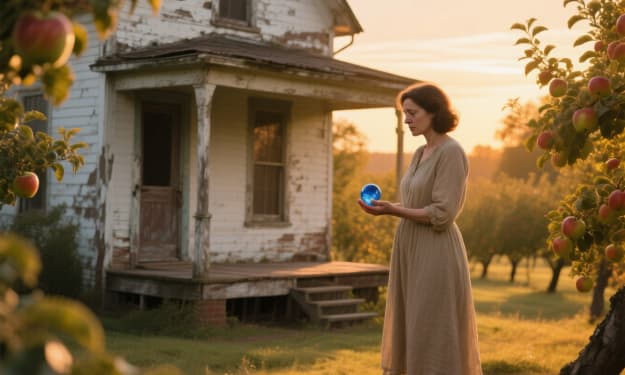
The House at the Edge of the Orchard Clara parked her car at the foot of the dirt lane and sat for a moment, watching the house appear through the thinning mist. It stood at the edge of the orchard like a sentinel, weathered but proud, its white paint now chipped to gray. The apple trees behind it swayed gently, their branches heavy with fruit, just as they had been when she was a girl.
By Wings of Time about a year ago in Chapters