Biography
The Hidden Costs of DIY Disasters: When Saving a Little Costs a Lot More
Joseph Henschel is a skilled handyman with nearly 20 years of experience in construction. Based in Richmond, Virginia, Joe has seen firsthand how DIY projects can go wrong. What starts as a plan to save money can often lead to costly mistakes. In this article, we’ll explore the hidden costs of DIY disasters and why, sometimes, it's better to call in the professionals.
By Joseph Henschel2 years ago in Chapters
Rebalancing Your Home with the Right Foundation Repair Approach
Your home’s foundation is something you might not think about every day, but it’s vital to the stability and safety of your property. Over time, various factors such as soil movement, water damage, or poor construction can cause your foundation to shift, crack, or settle. These foundation problems can manifest in different ways, such as sloping floors, cracking walls, or windows and doors that don’t close properly.
By FnF Foundation2 years ago in Chapters
How Accurate Mental Health Coding and CPT Codes for Psychotherapy Affect Professional Credential Services
In the behavioral healthcare arena, documentation is essential—not only for billing but for professional growth. One oft-neglected element that can make a major difference in a provider's career is precise mental health coding, particularly the proper application of CPT codes for psychotherapy. These codes are not only crucial for claims reimbursement but also for professional credential services to confirm a provider's credentials and scope of practice.
By Precision Hub2 years ago in Chapters
The Security Dilemma: Challenges in Khyber Pakhtunkhwa
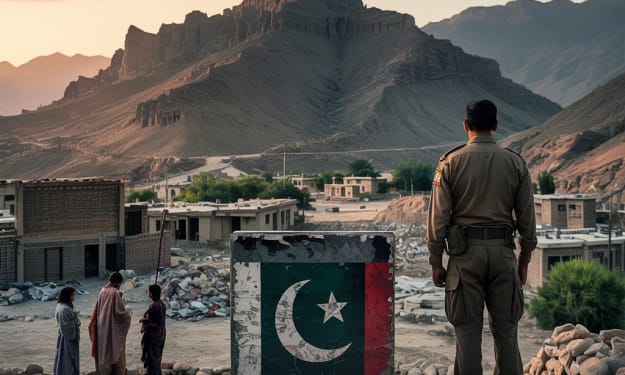
Khyber Pakhtunkhwa (KP), once known as the frontier province, has been at the epicenter of Pakistan's battle with militancy, extremism, and insurgency. The region’s security challenges are not just a matter of political discourse but have profound implications for the future of Pakistan itself. With its proximity to Afghanistan, the porous border, and a long history of regional and ethnic complexities, Khyber Pakhtunkhwa’s security dilemma is a microcosm of the larger global struggle against terrorism and extremism. In the face of rising threats, the province's security apparatus and governmental response have been tested time and again, grappling with shifting alliances, militant groups, and an ever-evolving security landscape. This article delves into the ongoing security challenges of Khyber Pakhtunkhwa, exploring the root causes, the multifaceted nature of the threat, and the responses from both state and society. As Pakistan seeks stability and peace in its troubled regions, KP’s trajectory will play a crucial role in determining the nation’s future. Historical Context and Emergence of the Security Crisis To understand the present security challenges of Khyber Pakhtunkhwa, one must look at its history—a history intertwined with tribal traditions, insurgency, and external geopolitical influences. Located in the north-western corner of Pakistan, KP has long been a site of regional instability. Its proximity to Afghanistan has exposed the province to the ripple effects of the Afghan conflict, the Soviet invasion, and the subsequent rise of the Taliban regime in the 1990s. During the War on Terror, Pakistan became a key ally of the United States, which further intensified the security situation in KP. The influx of refugees from Afghanistan, along with the influx of militant groups operating on both sides of the border, turned Khyber Pakhtunkhwa into a volatile region, fraught with militancy. The Pakistani Taliban (TTP), Al-Qaeda, and various other extremist groups used the province as a launching pad for their operations, creating a devastating ripple effect on the lives of the local population. The years 2007–2014 saw a dramatic rise in violence in the province, with bombings, suicide attacks, and targeted killings becoming a regular occurrence. The security forces, though increasingly well-equipped, faced enormous challenges in controlling these insurgencies. The military’s response, though effective in certain instances, failed to completely restore peace due to the asymmetric nature of the conflict. The Nature of Threats Facing Khyber Pakhtunkhwa The security threats in Khyber Pakhtunkhwa are not monolithic but rather multi-dimensional, encompassing a range of issues that complicate the state's ability to effectively address them. The first, and perhaps most pressing, is the ongoing insurgency by the Tehrik-i-Taliban Pakistan (TTP) and its splinter factions. These groups have long operated out of the rugged terrain of the province’s tribal areas, where the state’s writ has been historically weak. The porous border with Afghanistan remains a significant challenge, providing militants with safe havens to regroup, reorganize, and strike deep inside Pakistani territory. Despite various efforts to strengthen border security, the region’s mountainous terrain and the inability to fully seal off the border have allowed insurgents to maintain a continuous presence. The second major threat comes from the rise of local militias and sectarian violence. KP’s diverse ethnic and religious makeup has often been a source of tension, and the rise of sectarian violence between Sunni and Shia groups, alongside ethnic clashes between Pashtuns, Hindko-speaking people, and others, has added a complex layer to the province’s security crisis. The State’s Response: A Shifting Approach The response of the Pakistani state to these threats has evolved over time. Initially, the state’s approach to militancy in Khyber Pakhtunkhwa and its tribal areas was somewhat fragmented and reactionary. The military-led operations, while crucial in dismantling militant strongholds, have often been criticized for their lack of focus on long-term peace-building measures. Operations such as Zarb-e-Azb (2014) and Radd-ul-Fasaad (2017) were instrumental in breaking the back of the insurgency in many areas. However, these military campaigns were primarily aimed at defeating the physical infrastructure of militancy, leaving behind the broader issue of governance and societal integration. Since then, the approach has been one of engagement and reform, with a focus on increasing civilian control and development in previously neglected areas. The merger of the Federally Administered Tribal Areas (FATA) with Khyber Pakhtunkhwa in 2018 was a landmark move, designed to bring these tribal areas into the mainstream of Pakistan’s legal and political system. The hope was that improved governance, infrastructure development, and education would provide an antidote to militancy, but these efforts are still in their early stages and face considerable obstacles. Moreover, Khyber Pakhtunkhwa’s provincial government, under leaders like Imran Khan, has focused on rebuilding the region’s institutions, addressing corruption, and improving the security apparatus. However, the state’s inability to fully control the region’s numerous factions, coupled with ongoing foreign influence and the region’s economic struggles, continues to undermine these efforts. The Role of Local Communities and Civil Society While the state plays a critical role in addressing security challenges, the resilience of Khyber Pakhtunkhwa’s local communities is equally crucial. The Pashtun population in the region has endured decades of conflict and displacement, and despite the adversity, it has remained an essential partner in the fight against extremism. Local communities, traditional elders, and civil society organizations in Khyber Pakhtunkhwa have been at the forefront of advocating for peace. The role of Pashtun social movements, such as the Pashtun Tahafuz Movement (PTM), has brought global attention to the region’s security situation, calling for an end to the militarization of Pashtun areas and for the rehabilitation of those affected by the conflict. These grassroots efforts, combined with the state’s initiatives, could offer a more holistic solution to the region’s problems. However, their success hinges on overcoming the deep-rooted mistrust between the local population and the state, particularly in areas like North Waziristan and South Waziristan, where memories of military operations still loom large. Economic and Humanitarian Impact The security crisis in Khyber Pakhtunkhwa has had a devastating effect on the province’s economy. Years of militancy, military operations, and displacement have led to widespread poverty, unemployment, and a lack of basic services such as healthcare and education. The population in many areas of the province remains vulnerable to extremism, as the lack of economic opportunities leaves them susceptible to recruitment by militant groups. Humanitarian challenges continue to mount, with millions of people displaced by violence. The refugee crisis has created additional burdens on the province’s already strained infrastructure, and the continued conflict has made it difficult to rebuild communities or attract investment. A Path to Peace: What Lies Ahead? The road to peace in Khyber Pakhtunkhwa is fraught with challenges, but it is not insurmountable. The provincial government, in collaboration with the federal government, must continue its efforts to rebuild the region’s infrastructure, improve education and healthcare, and provide economic opportunities for its people. On the security front, the state must adopt a more comprehensive approach, integrating military action with political solutions. Negotiations with local insurgents, along with a stronger focus on de-radicalization programs, may offer a way forward. Furthermore, cross-border cooperation with Afghanistan, especially in controlling the movement of militants, is essential. In conclusion, Khyber Pakhtunkhwa’s security challenges are a reflection of both local and global dynamics. The province’s future hinges on the ability of its people, its leaders, and its security forces to work together to confront the multifaceted threats that have plagued it for decades. While the path to peace may be long and fraught with setbacks, the hope remains that Khyber Pakhtunkhwa will emerge from the shadows of conflict to reclaim its rightful place as a peaceful, prosperous region of Pakistan. Thanks for reading 🙏
By Umair Ali Shah 2 years ago in Chapters
Israel Proposes Gaza Ceasefire Deal to Release 10 Hostages for Hundreds of Palestinians, Hamas Says
Israel Proposes Gaza Ceasefire Deal to Release 10 Hostages for Hundreds of Palestinians, Hamas Says In a significant development in the ongoing Gaza conflict, Hamas has claimed that Israel has proposed a ceasefire agreement that includes the release of 10 Israeli hostages in exchange for hundreds of Palestinian prisoners. The international pressure to end the months-long war that has displaced a significant portion of the population of Gaza and killed thousands of people is growing, and the potential deal comes amid this. According to senior Hamas officials, the proposal outlines a temporary cessation of hostilities during which the exchange would take place. The deal reportedly includes provisions for humanitarian aid to be delivered to Gaza and limited returns of displaced Palestinians to their homes in the north of the enclave, in addition to the hostage-for-prisoner swap. Hamas stated that the offer was under review, but emphasized that any agreement must include a permanent ceasefire and the complete withdrawal of Israeli forces from Gaza. Israel, however, has maintained that it will not end the war until Hamas is dismantled and all hostages are freed.
By MD ROFIKUL ISLAM2 years ago in Chapters
Together We Live. AI-Generated.
The world had never felt smaller, yet more connected, than it did in the small, tucked-away town of Ansel’s Grove. It wasn’t a place most people had ever heard of. A quiet, almost forgotten part of the world, it was tucked between a range of towering hills and endless stretches of forest, the kind that seemed to swallow up any sound or sign of life. The town’s population hovered around three thousand, a place where everyone knew everyone, and life moved at a pace that allowed you to breathe, to think, to really live.
By Muhammad Asad2 years ago in Chapters
A Silent Province, A Wounded Heart: The Crisis of Balochistan and the State's Responsibility
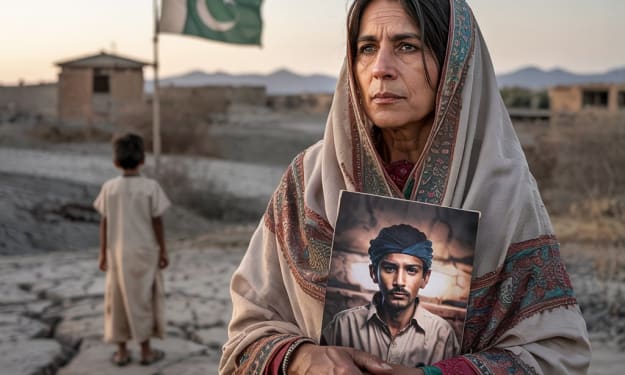
Introduction In the southwest corner of Pakistan lies Balochistan, the largest yet most neglected province of the country. Spread over nearly 44% of the national territory, its deserts, mountains, and coastlines hold not just natural resources but stories of pain, deprivation, resistance, and resilience. From Quetta to Gwadar, from Khuzdar to Turbat, the air is thick with silent screams — of mothers who have lost sons, of families without water and electricity, and of soldiers fighting in the shadows of a long-festering conflict. While the rest of the country debates politics and progress, Balochistan remains caught in a cycle of conflict, underdevelopment, and mistrust. This article is an attempt to explore the reality on the ground — the people’s suffering, the state’s failures, the burden on security institutions, and the lingering hope for a better tomorrow. --- The People’s Pain: Life Without Basics For most Balochistanis, life is a daily struggle — not just against poverty, but against being forgotten. Access to clean drinking water is a luxury in many districts. Cities like Gwadar, despite international attention under the China-Pakistan Economic Corridor (CPEC), face severe water shortages. Hospitals are few and far between. In rural areas, people often travel hours — even days — to reach a medical facility, only to find no doctors, no medicine, and no electricity. Education, a fundamental right, is out of reach for a majority. According to reports, nearly 70% of children in Balochistan are out of school. The literacy rate remains the lowest among all provinces. Roads are broken or non-existent, and where infrastructure does exist, it often serves the needs of the powerful — not the people. Electricity is another ghost that occasionally flickers in and out. Entire villages live in darkness for 18 to 20 hours a day. Small businesses suffer, students can’t study, and hospitals can't function. The people of Balochistan are not just poor — they are deprived, systemically and historically. --- The Psychological Toll: Alienation and Anger Neglect breeds anger, and anger left unheard festers into alienation. For decades, the people of Balochistan have felt abandoned by the central government. They see their resources — gas, copper, gold, and now the deep sea port of Gwadar — being extracted and exported, while their own children die of curable diseases. They ask: "What has Pakistan given us in return?" This sense of marginalization has created space for separatist ideologies and armed movements. While the majority of Baloch still believe in peaceful resistance and dialogue, others have picked up arms, seeing no other way to be heard. The result is a province caught in a low-intensity war that rarely makes it to national headlines but leaves a heavy toll on lives and trust. --- Security Forces: Frontline Without Applause It is impossible to speak about Balochistan without acknowledging the sacrifices of Pakistan’s security forces. FC, Army, and police personnel are deployed in some of the harshest and most dangerous terrains in the country. They are often the first to respond to terror attacks, ambushes, and bomb blasts. Every month, soldiers die in remote mountain passes. Every year, families of uniformed men bury their loved ones, often in silence. The burden on these institutions is immense — to maintain peace, protect CPEC routes, guard international borders with Iran and Afghanistan, and prevent smuggling and terrorism — all with limited resources and constant criticism. Yet, their presence is often viewed with suspicion by the local population. Checkposts, raids, and counter-terror operations have, at times, alienated civilians. There’s a need for empathy on both sides — for people to recognize the sacrifices of these forces, and for the forces to approach the population not just as potential threats, but as fellow citizens. --- The Missing Persons Tragedy One of the most haunting aspects of the Balochistan crisis is the issue of missing persons. Thousands of families claim that their loved ones have been taken without due process — often suspected of links to separatist groups. Their cries have echoed in Quetta's press clubs and Islamabad's D-Chowk. Each name is a story; each face, a universe of grief. While the state argues that many of these individuals are involved in armed militancy, the absence of legal proceedings fuels distrust. Forced disappearances are not just a human rights violation — they are a political wound that bleeds into the next generation. The road to peace cannot be paved with silence and shadows. --- The Political Class: Between Power and Paralysis Balochistan’s political leadership has often been accused of being more loyal to Islamabad’s power corridors than to their own constituencies. Corruption, mismanagement, and opportunism have plagued governance for decades. Even when funds are allocated, they are rarely used for public welfare. Development budgets vanish into ghost projects or sit unused. Chief ministers come and go — often after deals made in drawing rooms rather than through democratic demand. This instability weakens provincial institutions and leaves the bureaucracy directionless. Without genuine, empowered, and accountable leadership, no province can thrive — and Balochistan is no exception. --- CPEC and Gwadar: Promise or Paradox? CPEC was hailed as a game-changer for Pakistan, and Gwadar was to be its crown jewel. Billions were invested in roads, pipelines, and a deep-sea port. Yet, for the average Gwadari, life has changed very little. Protests erupt over water scarcity, unemployment, and fishing rights. The Haq Do Tehreek (Give Us Our Rights Movement) is a manifestation of this local frustration — peaceful, persistent, and deeply telling. The question many ask is: Who benefits from CPEC? If the people of Gwadar are not employed, not empowered, and not consulted, then what development are we talking about? Real progress is not in concrete and cranes, but in classrooms, clinics, and clean water. --- Natural Resources: Rich Land, Poor People Balochistan is home to vast reserves of natural gas, gold (Reko Diq), and copper. For decades, the rest of Pakistan has lit stoves with gas extracted from Sui, yet Sui itself remains in darkness. This paradox — of wealth underground and poverty above — defines the Baloch experience. Reko Diq, one of the world's largest untapped gold and copper reserves, is now back in the spotlight with new agreements being signed. But locals fear that once again, they will see the dust of trucks, not the color of prosperity. Unless resource extraction directly benefits local communities — with jobs, royalties, and environmental protections — it will only deepen resentment. --- Women and Children: The Silent Victims In conflict zones, it is often women and children who suffer the most. In Balochistan, maternal mortality is among the highest in the country. Basic gynecological care is unavailable in many districts. Women walk miles for water, carry the burden of family survival, and endure the pain of loss in silence. Children grow up in fear and hunger. Malnutrition rates are alarming. In some areas, young boys are recruited — willingly or through pressure — into armed groups. Girls drop out of school due to cultural constraints, insecurity, or simple lack of access. The next generation is growing up angry, anxious, and uncertain. --- The Media Blackout and National Apathy One of the greatest tragedies of Balochistan is how little the rest of Pakistan knows or cares. Media coverage is sporadic and often censored. Journalists are threatened, attacked, or restricted. Stories from Kech, Awaran, or Panjgur rarely make it to primetime. This information blackout allows myths to grow, pain to deepen, and solutions to remain distant. A democratic society must hear all its voices — especially the ones that are crying out. The silence around Balochistan is not just dangerous — it is criminal. --- What Must Be Done: Toward Healing and Hope Healing Balochistan is not impossible. But it requires courage — political, moral, and institutional. The state must: Acknowledge past mistakes honestly and publicly. End enforced disappearances and ensure justice for all — including militants and security personnel. Prioritize development that benefits locals — not just investors. Empower Balochistan’s youth through education, skill-building, and representation. Reform the political structure to reward competence, not compliance. Strengthen civilian institutions to reduce overreliance on security solutions. Dialogue is not weakness — it is the only way forward. Development is not a favor — it is a right. Justice is not optional — it is foundational. --- Conclusion: Listening to the Wounded Heart Balochistan is not a colony; it is Pakistan. Its people are not enemies; they are citizens. Its resources are not just assets; they are responsibilities. Every drop of water denied, every school left unopened, every body buried in silence — all of it shapes the nation’s future. The wounds of Balochistan are deep, but not incurable. They require more than words — they require will. Pakistan must choose: continue the cycle of silence and suffering, or finally embrace the courage to listen, to heal, and to act. Thanks for reading 📖 ---
By Umair Ali Shah 2 years ago in Chapters
The Deal
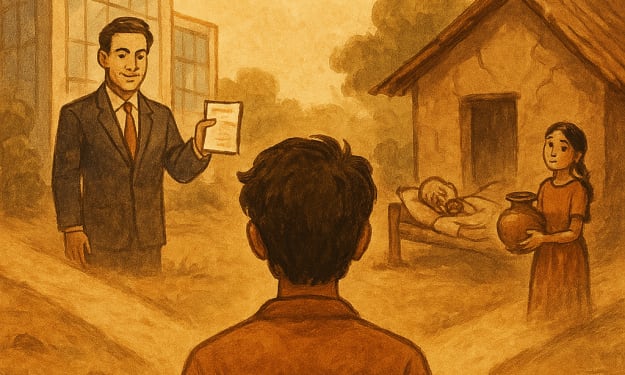
Ravi sat on the old wooden bench near the village tea shop. The sun was high in the sky, and sweat ran down his face. His shirt stuck to his back. It was summer, and the heat was worse than usual. But it was not just the weather that made Ravi uncomfortable — he had a big decision to make, and it was troubling his heart.
By Tahir khan2 years ago in Chapters
Imran Ahmed Khan Niazi’s Government: A Distinct Chapter in Pakistan’s 74-Year Political History
Introduction Since gaining independence in 1947, Pakistan has witnessed a variety of leadership styles, political ideologies, and governance structures. Among the many political leaders who held the office of Prime Minister, Imran Ahmed Khan Niazi stands out not only for his cricketing fame but also for his ambitious and reformist approach to governance. Leading the Pakistan Tehreek-e-Insaf (PTI), Imran Khan assumed office on August 18, 2018, and served until April 10, 2022 — a period of approximately 3 years and 8 months. His tenure, though short of the full five-year term, left a significant impact on Pakistan’s political, economic, and social landscape. This article explores the beginning of his government, the challenges he faced, the initiatives he introduced for the welfare of the common man, and how his overall performance compares to the governance of Pakistan over the past 74 years and 9 months. --- The Beginning of Imran Khan’s Government Imran Khan’s political journey began in 1996 with the formation of PTI. For over a decade, the party remained on the fringes of Pakistani politics. However, Khan’s charismatic leadership, persistent campaigning against corruption, and the promise of a "Naya Pakistan" gradually gained public attention. By the 2018 general elections, PTI had become a formidable political force, securing enough seats to form a government at the federal level. His election victory was seen as a reflection of public frustration with traditional political parties like the Pakistan Muslim League-Nawaz (PML-N) and Pakistan Peoples Party (PPP), both of which had been marred by allegations of corruption, nepotism, and inefficiency. Imran Khan promised to bring accountability, transparency, and a new era of justice and welfare-oriented governance. --- Challenges Faced by His Government Imran Khan inherited a country riddled with deep-rooted economic, political, and administrative issues. From day one, his government had to deal with: 1. Economic Crisis: Pakistan was facing a severe balance-of-payments crisis with depleting foreign reserves. The government had to seek a bailout from the International Monetary Fund (IMF) to stabilize the economy, which brought its own set of conditions and austerity measures. 2. High Debt and Deficit: Khan’s government had to deal with a massive debt burden and a persistent fiscal deficit. Managing public finances without curtailing development or social programs was a major hurdle. 3. Opposition Pressure: Unlike some past governments, Imran Khan faced strong opposition from day one. Multiple parties joined forces against him, accusing him of being brought into power by the military establishment. 4. COVID-19 Pandemic: The global pandemic hit during his tenure, forcing a delicate balancing act between saving lives and saving livelihoods. Pakistan’s healthcare infrastructure was under immense pressure. 5. Civil-Military Relations: Though initially considered close to the military, cracks began to appear towards the end of his tenure, ultimately contributing to his removal through a vote of no-confidence. --- Welfare and Thoughtfulness for the Poor Despite economic and political challenges, Imran Khan’s government undertook several significant initiatives for the welfare of the underprivileged: 1. Ehsaas Program: Launched in 2019, it became Pakistan’s largest-ever social safety net. It included cash transfers, nutrition programs, interest-free loans, scholarships, and shelter homes for the homeless. During COVID-19, the Ehsaas Emergency Cash Program was internationally praised for delivering aid to over 15 million families. 2. Panagahs (Shelter Homes): To provide dignity and shelter to the homeless and daily wage laborers, panagahs were established in major cities where people could sleep safely and get free meals. 3. Sehat Sahulat Card: A landmark health insurance initiative that allowed citizens to avail free medical treatment at both public and private hospitals. It was initially introduced in KP and later expanded to Punjab and other regions. 4. Low-Cost Housing: Under the Naya Pakistan Housing Program, the government aimed to provide affordable housing to low and middle-income families. 5. Kamyab Jawan Program: Aimed at empowering youth through skills development and small business loans. 6. Digital Pakistan Initiative: To modernize Pakistan’s digital infrastructure and promote innovation among youth and entrepreneurs. --- Comparative Analysis: Imran Khan vs. 74 Years of Governance To fairly compare Imran Khan’s government to the rest of Pakistan’s 74 years and 9 months of governance, we can analyze across a few key dimensions: 1. Anti-Corruption Narrative Unlike many past leaders, Imran Khan consistently maintained a hardline stance against corruption. He established the Asset Recovery Unit, supported NAB’s actions (though critics claimed it was politically motivated), and highlighted money laundering and offshore accounts. In contrast, past governments often protected corrupt elements within their parties and failed to institute strong accountability mechanisms. 2. Focus on Welfare State While welfare programs have existed before (like Benazir Income Support Program), Imran Khan’s Ehsaas was more extensive in scope and implementation. He emphasized the Islamic concept of Riyasat-e-Madina, drawing inspiration from the early welfare state model of Prophet Muhammad (PBUH). 3. Economic Management This is a mixed bag. Under Khan, inflation remained high, especially in food prices, and the Pakistani Rupee depreciated significantly. Critics argue this hurt the middle and lower classes. However, structural reforms, current account improvements, and the rise in exports and remittances were notable achievements. Earlier governments often relied heavily on unsustainable debt and subsidies to mask economic problems. 4. Foreign Policy Khan adopted an independent foreign policy posture. He spoke against Islamophobia at the UN, maintained neutrality in Middle East tensions, and prioritized relations with China, Turkey, and Malaysia. His stance on India, especially after the revocation of Article 370 in Kashmir, was firm and vocal. In contrast, previous governments often adopted a more cautious, traditional diplomatic approach. 5. Media and Free Speech Imran Khan's government was criticized for curbing media freedom and using state machinery to suppress dissent. Journalists faced pressure, and digital censorship increased — a trend that unfortunately has existed under previous governments too. --- Legacy and Public Perception Imran Khan's removal from office through a no-confidence vote was a dramatic end to a polarizing tenure. However, his popularity among the masses, especially the youth, remains high. His messaging of sovereignty, anti-elitism, and public empowerment continues to resonate. His supporters see him as an honest leader who tried to change a corrupt system but was obstructed by the "status quo" forces. His critics argue he lacked experience and team strength to deliver on his promises. --- Conclusion Imran Ahmed Khan Niazi’s time in office may have been short compared to Pakistan’s long and complex political history, but it was certainly impactful. His focus on public welfare, digital transformation, and international standing marked a shift in governance. Despite economic challenges and political instability, his tenure introduced initiatives and debates that continue to shape the national discourse. In a country where leadership is often measured in missed opportunities, Imran Khan’s government represents both the promise of reform and the reality of entrenched resistance. When viewed against the backdrop of Pakistan’s 74 years and 9 months of governance, his chapter stands as a bold — albeit incomplete — attempt at redefining the country's future. The end……….
By Umair Ali Shah 2 years ago in Chapters
Heartfelt Love and Trust Messages for Long-Distance Relationships
Once upon a time, in two different parts of the world, lived a boy named Daniel and a girl named Maya. They met during a summer camp in Italy. Daniel was from Canada, and Maya lived in India. Their meeting was short, just two weeks, but it changed their lives forever.
By Tahir khan2 years ago in Chapters
Whispers of the Heart
It all began with a message. Just one. Sent on a rainy evening, when the sky cried quietly and the world felt still. Jay had always been quiet, a man of few words. But when it came to her—Aisha—his heart was loud. He loved her in silence for years, carrying his feelings like secret letters in an invisible envelope. They had been friends since college, always close but never crossing the line. Until that one rainy evening.
By Tahir khan2 years ago in Chapters