Autobiography
Whispers Beneath the Willow
Elara stepped out of the old pickup truck and stared at the village of Elderglen, a forgotten place nestled between forested hills and fog-covered valleys. Her father had driven them here in silence, the same silence that had swallowed their home since her mother disappeared three months ago.
By Qaisar Jan2 years ago in Chapters
Life Lessons From A PlayBoy
The Beginning: The narrative may appear unusual, correct? What could a young boy's journey possibly teach us? Still, let's get into the story because his actions had me more than his name. His transformational adolescence marked the beginning of everything. He gradually began to feel drawn toward someone of a different gender as his physical and emotional state changed. As a result, his youthful desires began to grow. After his sixth-grade final exams, he went to visit his grandparents' house, and everything looked good until then. He met a girl there. Their casual conversations quickly developed into an attraction. The boy made his feelings known to the girl during one of their conversations, and she accepted his proposal. They would talk frequently because she lived next door to his grandparents, and their young romance flourished. She was the first girl he ever got close to, but he didn't necessarily love her first; his affection was more age-based. When he got back to his house just fifteen days later, their communication abruptly stopped due to the distance and lack of proper means of keeping in touch. They were both quite young when the year 2016 arrived. His first loss of love came at this time. Why bring it up? because, in his heart, despite the passing of time, he still considered her to be his first love. He returned to his grandparents' house six months later, hopeful and emotional. However, the actual story began at that point. He learned that the girl's family was already looking for a man to marry her and that she appeared to be ready for marriage. His heart broke for the first time. Although he didn't say anything to her, the pain was real. He carried that sadness with him when he returned home. His friends, school, studies, and sports took over his life over time. He decided one day that he wanted to learn how to ride a bike. In just a week, he mastered riding his grandfather's motorcycle through practice. He was a student in class 7 at the time. There was a school in his neighborhood where a lot of girls went to school. He tried to show off a little by riding the bike to that school after classes ended one day. A girl noticed him, so it worked. Another chapter in his life thus began. He had never lived in a city before and had only recently relocated to a village because of family problems. As a result, he was unfamiliar with this setting and emotionally sensitive. He was happy when the girl started talking to him. This was the beginning of a classic love story between two students at school. They would talk every day after school. They eventually started dating, but the boy was still unsure of what true love was because it was more about emotion and excitement. From morning conversations to afternoon meetings, their relationship developed. They would talk when the girl would come out onto the street in front of her house. Part 2 Coming Soon.....Stay Tuned With Me And Leave A Comment. Your Comments Will Boost Me To Write Another Parts Of This Guy Life story.
By Riazul Islam2 years ago in Chapters
"Whispers of the Wind: A Journey Through the Hills" Part- 01
Whispers of the Hills (Part- 01) The road to the hills was winding, narrow, and flanked by tall pine trees that reached for the sky like ancient sentinels. I had been planning this solo trip for months, craving an escape from the noise of city life. The moment my car began its slow climb into the hills of Himachal Pradesh, I could feel the tension leave my shoulders, replaced by a growing sense of calm and curiosity.
By abu kwsher sikder2 years ago in Chapters
How a B2B Digital Marketing Consultant Can Drive Startup Success
The startup ecosystem is fast-paced, competitive, and full of opportunities. However, the journey from a budding idea to a thriving business is often riddled with challenges, especially when it comes to scaling and building a strong presence in the digital space. For startups operating in the B2B sector, this challenge is even more pronounced. Selling to other businesses requires precise strategies, expert execution, and a deep understanding of the target audience.
By john marker2 years ago in Chapters
A Silent Province, A Wounded Heart: The Crisis of Balochistan and the State's Responsibility
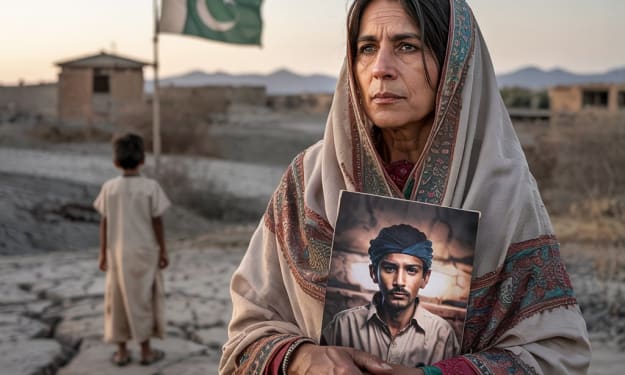
Introduction In the southwest corner of Pakistan lies Balochistan, the largest yet most neglected province of the country. Spread over nearly 44% of the national territory, its deserts, mountains, and coastlines hold not just natural resources but stories of pain, deprivation, resistance, and resilience. From Quetta to Gwadar, from Khuzdar to Turbat, the air is thick with silent screams — of mothers who have lost sons, of families without water and electricity, and of soldiers fighting in the shadows of a long-festering conflict. While the rest of the country debates politics and progress, Balochistan remains caught in a cycle of conflict, underdevelopment, and mistrust. This article is an attempt to explore the reality on the ground — the people’s suffering, the state’s failures, the burden on security institutions, and the lingering hope for a better tomorrow. --- The People’s Pain: Life Without Basics For most Balochistanis, life is a daily struggle — not just against poverty, but against being forgotten. Access to clean drinking water is a luxury in many districts. Cities like Gwadar, despite international attention under the China-Pakistan Economic Corridor (CPEC), face severe water shortages. Hospitals are few and far between. In rural areas, people often travel hours — even days — to reach a medical facility, only to find no doctors, no medicine, and no electricity. Education, a fundamental right, is out of reach for a majority. According to reports, nearly 70% of children in Balochistan are out of school. The literacy rate remains the lowest among all provinces. Roads are broken or non-existent, and where infrastructure does exist, it often serves the needs of the powerful — not the people. Electricity is another ghost that occasionally flickers in and out. Entire villages live in darkness for 18 to 20 hours a day. Small businesses suffer, students can’t study, and hospitals can't function. The people of Balochistan are not just poor — they are deprived, systemically and historically. --- The Psychological Toll: Alienation and Anger Neglect breeds anger, and anger left unheard festers into alienation. For decades, the people of Balochistan have felt abandoned by the central government. They see their resources — gas, copper, gold, and now the deep sea port of Gwadar — being extracted and exported, while their own children die of curable diseases. They ask: "What has Pakistan given us in return?" This sense of marginalization has created space for separatist ideologies and armed movements. While the majority of Baloch still believe in peaceful resistance and dialogue, others have picked up arms, seeing no other way to be heard. The result is a province caught in a low-intensity war that rarely makes it to national headlines but leaves a heavy toll on lives and trust. --- Security Forces: Frontline Without Applause It is impossible to speak about Balochistan without acknowledging the sacrifices of Pakistan’s security forces. FC, Army, and police personnel are deployed in some of the harshest and most dangerous terrains in the country. They are often the first to respond to terror attacks, ambushes, and bomb blasts. Every month, soldiers die in remote mountain passes. Every year, families of uniformed men bury their loved ones, often in silence. The burden on these institutions is immense — to maintain peace, protect CPEC routes, guard international borders with Iran and Afghanistan, and prevent smuggling and terrorism — all with limited resources and constant criticism. Yet, their presence is often viewed with suspicion by the local population. Checkposts, raids, and counter-terror operations have, at times, alienated civilians. There’s a need for empathy on both sides — for people to recognize the sacrifices of these forces, and for the forces to approach the population not just as potential threats, but as fellow citizens. --- The Missing Persons Tragedy One of the most haunting aspects of the Balochistan crisis is the issue of missing persons. Thousands of families claim that their loved ones have been taken without due process — often suspected of links to separatist groups. Their cries have echoed in Quetta's press clubs and Islamabad's D-Chowk. Each name is a story; each face, a universe of grief. While the state argues that many of these individuals are involved in armed militancy, the absence of legal proceedings fuels distrust. Forced disappearances are not just a human rights violation — they are a political wound that bleeds into the next generation. The road to peace cannot be paved with silence and shadows. --- The Political Class: Between Power and Paralysis Balochistan’s political leadership has often been accused of being more loyal to Islamabad’s power corridors than to their own constituencies. Corruption, mismanagement, and opportunism have plagued governance for decades. Even when funds are allocated, they are rarely used for public welfare. Development budgets vanish into ghost projects or sit unused. Chief ministers come and go — often after deals made in drawing rooms rather than through democratic demand. This instability weakens provincial institutions and leaves the bureaucracy directionless. Without genuine, empowered, and accountable leadership, no province can thrive — and Balochistan is no exception. --- CPEC and Gwadar: Promise or Paradox? CPEC was hailed as a game-changer for Pakistan, and Gwadar was to be its crown jewel. Billions were invested in roads, pipelines, and a deep-sea port. Yet, for the average Gwadari, life has changed very little. Protests erupt over water scarcity, unemployment, and fishing rights. The Haq Do Tehreek (Give Us Our Rights Movement) is a manifestation of this local frustration — peaceful, persistent, and deeply telling. The question many ask is: Who benefits from CPEC? If the people of Gwadar are not employed, not empowered, and not consulted, then what development are we talking about? Real progress is not in concrete and cranes, but in classrooms, clinics, and clean water. --- Natural Resources: Rich Land, Poor People Balochistan is home to vast reserves of natural gas, gold (Reko Diq), and copper. For decades, the rest of Pakistan has lit stoves with gas extracted from Sui, yet Sui itself remains in darkness. This paradox — of wealth underground and poverty above — defines the Baloch experience. Reko Diq, one of the world's largest untapped gold and copper reserves, is now back in the spotlight with new agreements being signed. But locals fear that once again, they will see the dust of trucks, not the color of prosperity. Unless resource extraction directly benefits local communities — with jobs, royalties, and environmental protections — it will only deepen resentment. --- Women and Children: The Silent Victims In conflict zones, it is often women and children who suffer the most. In Balochistan, maternal mortality is among the highest in the country. Basic gynecological care is unavailable in many districts. Women walk miles for water, carry the burden of family survival, and endure the pain of loss in silence. Children grow up in fear and hunger. Malnutrition rates are alarming. In some areas, young boys are recruited — willingly or through pressure — into armed groups. Girls drop out of school due to cultural constraints, insecurity, or simple lack of access. The next generation is growing up angry, anxious, and uncertain. --- The Media Blackout and National Apathy One of the greatest tragedies of Balochistan is how little the rest of Pakistan knows or cares. Media coverage is sporadic and often censored. Journalists are threatened, attacked, or restricted. Stories from Kech, Awaran, or Panjgur rarely make it to primetime. This information blackout allows myths to grow, pain to deepen, and solutions to remain distant. A democratic society must hear all its voices — especially the ones that are crying out. The silence around Balochistan is not just dangerous — it is criminal. --- What Must Be Done: Toward Healing and Hope Healing Balochistan is not impossible. But it requires courage — political, moral, and institutional. The state must: Acknowledge past mistakes honestly and publicly. End enforced disappearances and ensure justice for all — including militants and security personnel. Prioritize development that benefits locals — not just investors. Empower Balochistan’s youth through education, skill-building, and representation. Reform the political structure to reward competence, not compliance. Strengthen civilian institutions to reduce overreliance on security solutions. Dialogue is not weakness — it is the only way forward. Development is not a favor — it is a right. Justice is not optional — it is foundational. --- Conclusion: Listening to the Wounded Heart Balochistan is not a colony; it is Pakistan. Its people are not enemies; they are citizens. Its resources are not just assets; they are responsibilities. Every drop of water denied, every school left unopened, every body buried in silence — all of it shapes the nation’s future. The wounds of Balochistan are deep, but not incurable. They require more than words — they require will. Pakistan must choose: continue the cycle of silence and suffering, or finally embrace the courage to listen, to heal, and to act. Thanks for reading 📖 ---
By Umair Ali Shah 2 years ago in Chapters
The Deal
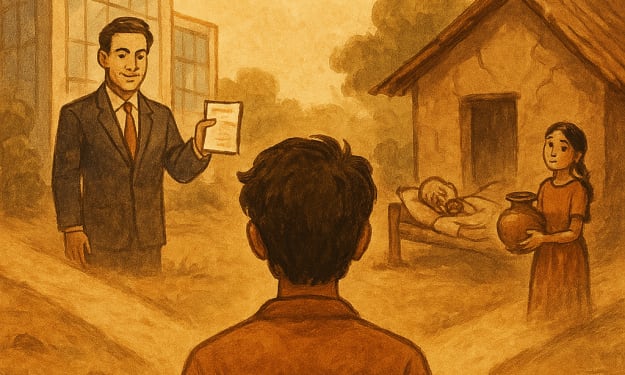
Ravi sat on the old wooden bench near the village tea shop. The sun was high in the sky, and sweat ran down his face. His shirt stuck to his back. It was summer, and the heat was worse than usual. But it was not just the weather that made Ravi uncomfortable — he had a big decision to make, and it was troubling his heart.
By Tahir khan2 years ago in Chapters
Imran Ahmed Khan Niazi’s Government: A Distinct Chapter in Pakistan’s 74-Year Political History
Introduction Since gaining independence in 1947, Pakistan has witnessed a variety of leadership styles, political ideologies, and governance structures. Among the many political leaders who held the office of Prime Minister, Imran Ahmed Khan Niazi stands out not only for his cricketing fame but also for his ambitious and reformist approach to governance. Leading the Pakistan Tehreek-e-Insaf (PTI), Imran Khan assumed office on August 18, 2018, and served until April 10, 2022 — a period of approximately 3 years and 8 months. His tenure, though short of the full five-year term, left a significant impact on Pakistan’s political, economic, and social landscape. This article explores the beginning of his government, the challenges he faced, the initiatives he introduced for the welfare of the common man, and how his overall performance compares to the governance of Pakistan over the past 74 years and 9 months. --- The Beginning of Imran Khan’s Government Imran Khan’s political journey began in 1996 with the formation of PTI. For over a decade, the party remained on the fringes of Pakistani politics. However, Khan’s charismatic leadership, persistent campaigning against corruption, and the promise of a "Naya Pakistan" gradually gained public attention. By the 2018 general elections, PTI had become a formidable political force, securing enough seats to form a government at the federal level. His election victory was seen as a reflection of public frustration with traditional political parties like the Pakistan Muslim League-Nawaz (PML-N) and Pakistan Peoples Party (PPP), both of which had been marred by allegations of corruption, nepotism, and inefficiency. Imran Khan promised to bring accountability, transparency, and a new era of justice and welfare-oriented governance. --- Challenges Faced by His Government Imran Khan inherited a country riddled with deep-rooted economic, political, and administrative issues. From day one, his government had to deal with: 1. Economic Crisis: Pakistan was facing a severe balance-of-payments crisis with depleting foreign reserves. The government had to seek a bailout from the International Monetary Fund (IMF) to stabilize the economy, which brought its own set of conditions and austerity measures. 2. High Debt and Deficit: Khan’s government had to deal with a massive debt burden and a persistent fiscal deficit. Managing public finances without curtailing development or social programs was a major hurdle. 3. Opposition Pressure: Unlike some past governments, Imran Khan faced strong opposition from day one. Multiple parties joined forces against him, accusing him of being brought into power by the military establishment. 4. COVID-19 Pandemic: The global pandemic hit during his tenure, forcing a delicate balancing act between saving lives and saving livelihoods. Pakistan’s healthcare infrastructure was under immense pressure. 5. Civil-Military Relations: Though initially considered close to the military, cracks began to appear towards the end of his tenure, ultimately contributing to his removal through a vote of no-confidence. --- Welfare and Thoughtfulness for the Poor Despite economic and political challenges, Imran Khan’s government undertook several significant initiatives for the welfare of the underprivileged: 1. Ehsaas Program: Launched in 2019, it became Pakistan’s largest-ever social safety net. It included cash transfers, nutrition programs, interest-free loans, scholarships, and shelter homes for the homeless. During COVID-19, the Ehsaas Emergency Cash Program was internationally praised for delivering aid to over 15 million families. 2. Panagahs (Shelter Homes): To provide dignity and shelter to the homeless and daily wage laborers, panagahs were established in major cities where people could sleep safely and get free meals. 3. Sehat Sahulat Card: A landmark health insurance initiative that allowed citizens to avail free medical treatment at both public and private hospitals. It was initially introduced in KP and later expanded to Punjab and other regions. 4. Low-Cost Housing: Under the Naya Pakistan Housing Program, the government aimed to provide affordable housing to low and middle-income families. 5. Kamyab Jawan Program: Aimed at empowering youth through skills development and small business loans. 6. Digital Pakistan Initiative: To modernize Pakistan’s digital infrastructure and promote innovation among youth and entrepreneurs. --- Comparative Analysis: Imran Khan vs. 74 Years of Governance To fairly compare Imran Khan’s government to the rest of Pakistan’s 74 years and 9 months of governance, we can analyze across a few key dimensions: 1. Anti-Corruption Narrative Unlike many past leaders, Imran Khan consistently maintained a hardline stance against corruption. He established the Asset Recovery Unit, supported NAB’s actions (though critics claimed it was politically motivated), and highlighted money laundering and offshore accounts. In contrast, past governments often protected corrupt elements within their parties and failed to institute strong accountability mechanisms. 2. Focus on Welfare State While welfare programs have existed before (like Benazir Income Support Program), Imran Khan’s Ehsaas was more extensive in scope and implementation. He emphasized the Islamic concept of Riyasat-e-Madina, drawing inspiration from the early welfare state model of Prophet Muhammad (PBUH). 3. Economic Management This is a mixed bag. Under Khan, inflation remained high, especially in food prices, and the Pakistani Rupee depreciated significantly. Critics argue this hurt the middle and lower classes. However, structural reforms, current account improvements, and the rise in exports and remittances were notable achievements. Earlier governments often relied heavily on unsustainable debt and subsidies to mask economic problems. 4. Foreign Policy Khan adopted an independent foreign policy posture. He spoke against Islamophobia at the UN, maintained neutrality in Middle East tensions, and prioritized relations with China, Turkey, and Malaysia. His stance on India, especially after the revocation of Article 370 in Kashmir, was firm and vocal. In contrast, previous governments often adopted a more cautious, traditional diplomatic approach. 5. Media and Free Speech Imran Khan's government was criticized for curbing media freedom and using state machinery to suppress dissent. Journalists faced pressure, and digital censorship increased — a trend that unfortunately has existed under previous governments too. --- Legacy and Public Perception Imran Khan's removal from office through a no-confidence vote was a dramatic end to a polarizing tenure. However, his popularity among the masses, especially the youth, remains high. His messaging of sovereignty, anti-elitism, and public empowerment continues to resonate. His supporters see him as an honest leader who tried to change a corrupt system but was obstructed by the "status quo" forces. His critics argue he lacked experience and team strength to deliver on his promises. --- Conclusion Imran Ahmed Khan Niazi’s time in office may have been short compared to Pakistan’s long and complex political history, but it was certainly impactful. His focus on public welfare, digital transformation, and international standing marked a shift in governance. Despite economic challenges and political instability, his tenure introduced initiatives and debates that continue to shape the national discourse. In a country where leadership is often measured in missed opportunities, Imran Khan’s government represents both the promise of reform and the reality of entrenched resistance. When viewed against the backdrop of Pakistan’s 74 years and 9 months of governance, his chapter stands as a bold — albeit incomplete — attempt at redefining the country's future. The end……….
By Umair Ali Shah 2 years ago in Chapters
Russia ballistic missile strike kills dozens in Ukraine's Sumy, officials say
A Russian ballistic missile strike on the northeastern Ukrainian city of Sumy has killed dozens of people, local officials reported, marking one of the deadliest attacks in the region in recent months. The assault, which targeted residential areas and critical infrastructure, has drawn widespread condemnation from Ukrainian authorities and international leaders as the war enters its third year with no signs of abating.
By Md polash Ali2 years ago in Chapters