Autobiography
The Vanishing Point
M Mehran Chapter One: The Bus Stop It was past midnight when David stepped off the last bus into the quiet outskirts of the city. The streets were empty, the kind of empty that makes your footsteps sound louder than they should. The bus pulled away, leaving him alone at the stop. That’s when he noticed the poster taped to the streetlight. Missing: Claire Bennett. Last seen two weeks ago near this very bus stop. David’s chest tightened. Claire wasn’t just a name on a poster—she was his younger sister. --- Chapter Two: The Stranger As David stared at the poster, a man appeared from the shadows. He wore a long coat and carried a battered briefcase. His eyes flicked toward David and then the poster. “You’re too late,” the man muttered. David’s heart jumped. “What do you mean? Do you know her?” The stranger didn’t answer. He simply slid a folded piece of paper into David’s hand and walked away. By the time David opened it, the man was gone. On the paper was a single phrase: The answers lie at the Vanishing Point. --- Chapter Three: The Vanishing Point David knew the name. Locals whispered about it—a decaying warehouse district by the river where people claimed strange things happened. Some said you could hear voices in the fog. Others swore people disappeared there without a trace. Clutching the note, David made his way to the river. The warehouses loomed like skeletons, their windows black and hollow. A thick fog curled along the ground, muffling every sound. That’s when he heard it: a faint cry. “David…” It was Claire’s voice. --- Chapter Four: The Echoes He followed the sound into an abandoned warehouse. Inside, old machinery cast eerie shadows. The air was cold enough to sting. “Claire?” he called. His voice echoed, then twisted—as if the walls themselves were mocking him. From the corner of the room, something shifted. Not a person, but a shape—thin, tall, and moving wrong, like a shadow detached from its owner. David’s pulse raced. He stumbled backward, but his shoe struck something metallic. A necklace lay on the ground—Claire’s. --- Chapter Five: The Truth Suddenly, the stranger reappeared, stepping into the warehouse light. “You shouldn’t have come,” he said flatly. “Where is she?” David demanded. The man sighed. “The Vanishing Point takes what it wants. Your sister found this place, and now it has her.” David shook his head. “That’s insane. Places don’t take people.” The man pointed to the shadows slithering along the walls. “Then tell me, what do you call that?” --- Chapter Six: The Choice The shadows stretched toward David, whispering his name, curling like smoke around his ankles. He felt them pulling—not just at his body, but at his mind, as if they wanted to drain him into their darkness. The stranger pressed something into his palm: a key, old and rusted. “This is the only way to trade,” the man said. “A life for a life. If you open the door, you can bring her back—but you will take her place.” David froze, every muscle trembling. Claire’s necklace glimmered at his feet. He thought of her laugh, the way she always called him her protector. His decision was already made. --- Chapter Seven: The Vanishing David shoved the key into the rusted lock of a heavy iron door at the back of the warehouse. The shadows roared as it creaked open, revealing nothing but blackness. He whispered, “I’m coming, Claire,” and stepped through. The door slammed shut behind him. The shadows dissolved. Moments later, Claire stumbled out from the darkness, gasping for air, clutching her necklace. She looked around the empty warehouse, tears streaming down her face. David was gone. Only the whisper of his name lingered in the fog, carried away by the Vanishing Point.
By Muhammad Mehranabout a year ago in Chapters
Memoir | Mentor Mr. Cohen | The U.S. House of Representatives, The Rayburn House Office Building| Part II of VI
I met with Jim Cohen, a Human Resources expert at the U.S. House of Representatives at the Rayburn House Office Building. Our discussion occurred in the Personnel Office, where I sought his guidance on potential paid job opportunities.
By Mia Z. Edwardsabout a year ago in Chapters
Memoir | Volunteer Work Experience | The U.S. House of Representatives, The Rayburn House Office Building | Part II of VI
Upon completing my temporary job at the U.S. Supreme Court on Capitol Hill, I decided to apply for a job position at the Personnel Office in the U.S. House of Representatives, the Rayburn House Office Building (RHOB), on Capitol Hill.
By Mia Z. Edwardsabout a year ago in Chapters
Karachi Chronicles Chapter 5
Who loves a chat, I’ll tell you straight up, Jacko does. I now know he’s a legend of Queensland cricket, but pardon my initial ignorance as I hadn’t chilled with him before this tour. That abruptly changed, when I sat next to him on a flight all the way from Melbourne to Colombo. Luke Jackson is an absolute icon of the cricket scene in MacKay and beyond. Paired with his wicked sense of humour, endless chat in the field and all-round positive nature, there aren’t many better people to go on a cricket tour with.
By S. J. Leahyabout a year ago in Chapters
Memoir | Job Interview | The U.S. Supreme Court | Part II of VI
Filled with anticipation, I woke up early, eager to seize the opportunity of a job interview at the U.S. Supreme Court in Washington, D.C. The prospect of securing a full-time position, moving out of my mother’s home, and finally having my own apartment fueled my determination.
By Mia Z. Edwardsabout a year ago in Chapters
Memoir | My Path to Independence | Part II of VI
I am a young woman of 26, proud of my unique blend of African and British heritage. My light-caramel-colored eyes reflect a mix of influences: my light-skinned complexion comes from my Caucasian grandfather, while my father, an African American, gifted me his lamb’s woolly, curly hair and full lips.
By Mia Z. Edwardsabout a year ago in Chapters
Memoir | Interlude | Part II of VI | Networking
In an attempt to leave the housing projects in pursuit of employment and a brighter future, I found myself drawn to Capitol Hill, not just by ambition, but by the vivid world Elizabeth L. Ray painted in The Washington Fringe Benefit.
By Mia Z. Edwardsabout a year ago in Chapters
The House at the Edge of the Orchard
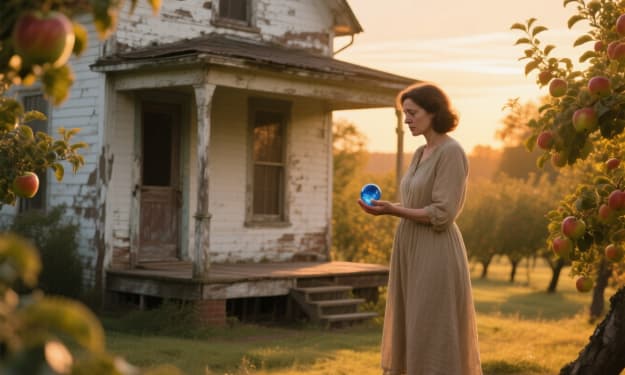
The House at the Edge of the Orchard Clara parked her car at the foot of the dirt lane and sat for a moment, watching the house appear through the thinning mist. It stood at the edge of the orchard like a sentinel, weathered but proud, its white paint now chipped to gray. The apple trees behind it swayed gently, their branches heavy with fruit, just as they had been when she was a girl.
By Wings of Time about a year ago in Chapters
Living on the Edge
M Mehran Jamal had never considered himself brave. Growing up in the quiet suburbs, he followed the rules, went to school, and dreamed small. But when he stumbled upon the world of PITLIFE, everything he thought he knew about life changed. PITLIFE wasn’t a place—it was a way of living. A secret community where ordinary people pushed themselves to the limits of endurance, creativity, and courage. From urban explorers navigating abandoned buildings to extreme athletes performing daring feats, PITLIFE was about embracing risk, uncertainty, and the thrill of existing outside the norm. --- The Invitation It started with a message on a forum: “Tired of the same old routine? Want to live fully? Seek PITLIFE. No rules, no limits, just experience. First meeting: tonight, 11 PM, old railway station.” Jamal hesitated. His friends would have called it dangerous, insane even. But something in him stirred—an itch, a restlessness he hadn’t acknowledged. He wanted to see what it meant to really live. By 11 PM, he stood at the deserted station, heart pounding. Neon graffiti reflected off puddles on the platform. A group of people emerged from the shadows—each different, yet all moving with an unusual confidence. They welcomed him with nods, not questions. --- Initiation The first PITLIFE challenge was simple, yet terrifying: spend a night alone on the rooftop of a condemned building. Jamal’s fear roared. Heights had always made him dizzy. But the people around him encouraged him gently. By midnight, Jamal was on the roof. The city sprawled below like a living, breathing organism. Cars moved like tiny fireflies, neon lights flickered, and distant music floated in the air. Fear mixed with exhilaration. For the first time, he felt fully awake, fully present. --- The Philosophy Over the following weeks, Jamal dove deeper. PITLIFE wasn’t about recklessness—it was about testing boundaries, seeing how far the human spirit could stretch. Every challenge, from night biking through empty highways to sketching murals in forbidden areas, taught lessons in courage, creativity, and self-trust. He learned that comfort zones were prisons. The more he confronted fear, the more alive he felt. The PITLIFE community didn’t reward perfection—they celebrated growth, resilience, and daring to try. --- A Turning Point The most memorable challenge came when they took him into the abandoned subway tunnels under the city. Jamal was terrified of darkness. Yet, with a headlamp and a small group guiding him, he descended into the unknown. Inside, the tunnels were eerie yet beautiful—graffiti covered the walls, dripping water echoed like a drum, and the air smelled of metal and earth. As they navigated twists and turns, Jamal realized something profound: life isn’t about avoiding darkness, it’s about learning to move through it. When he emerged hours later, the night sky above felt different—sharper, brighter. He had survived fear. And in that survival, he found freedom. --- Transformation Months passed, and Jamal became an integral part of PITLIFE. The timid young man who once feared leaving home now sought challenges with calm determination. He learned to balance risk with wisdom, to embrace uncertainty without losing control. But PITLIFE wasn’t about constant adrenaline. It was about awareness—observing the world deeply, feeling fully, and creating memories that mattered. Jamal realized that living on the edge wasn’t just physical; it was mental and emotional. It was choosing life actively, rather than letting it pass by unnoticed. --- Reflections One evening, as he sat on a rooftop watching the sunrise, Jamal wrote in his notebook: “PITLIFE taught me that fear is not the enemy. Stagnation is. Life is a series of edges to explore, not walls to hide behind. Every challenge, every risk, every leap I take shapes who I am.” He understood that PITLIFE wasn’t a trend, a club, or a fad. It was a mindset—a commitment to live fully, to wander, to dare, and to grow. --- Closing Thoughts Jamal returned home occasionally, but he was never the same. Ordinary routines felt dull, and yet he could navigate them with patience and appreciation. PITLIFE had given him perspective: the thrill of challenge, the beauty of courage, and the joy of truly living. It wasn’t reckless, and it wasn’t easy. But it was real. And for Jamal, that was enough.
By Muhammad Mehranabout a year ago in Chapters