

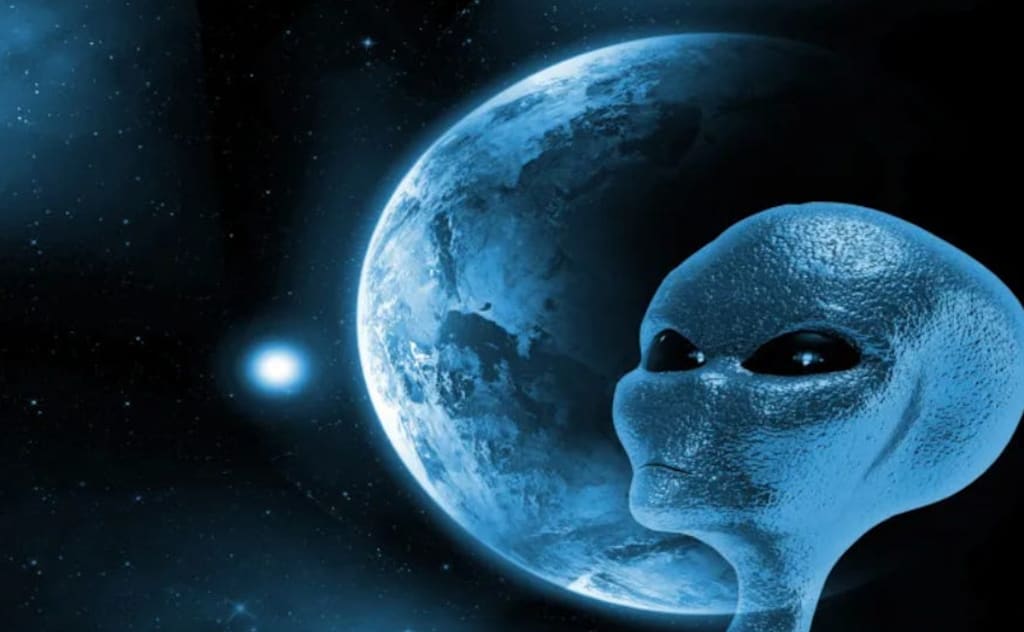
For millennia, humanity has gazed up at the night sky, pondering the existence of life beyond Earth. The question of whether we are alone in the universe is one of the most profound inquiries of our time. As our technological capabilities advance, the search for extraterrestrial life has transitioned from speculation to scientific investigation, expanding our understanding of the cosmos and our place within it.
The Building Blocks of Life
Life as we know it requires a few key ingredients: water, a source of energy, and a variety of chemical elements, including carbon, hydrogen, nitrogen, oxygen, phosphorus, and sulfur. These elements are abundant in the universe, suggesting that the potential for life exists far beyond Earth. The discovery of extremophiles — organisms that thrive in extreme environments on our planet — has broadened the scope of habitable conditions, indicating that life could exist in a variety of unexpected places.
The Search for Habitable Worlds
NASA’s Kepler Space Telescope and its successor, the Transiting Exoplanet Survey Satellite (TESS), have revolutionized our ability to find exoplanets, or planets outside our solar system. Kepler has identified thousands of exoplanets, some of which reside in the habitable zone of their parent stars, where conditions might be right for liquid water to exist. The study of these planets involves analyzing their atmospheres for biosignatures — indicators of life such as oxygen, methane, or other organic compounds.
Mars: Our Neighboring Red Planet
Mars has long been a focal point in the search for extraterrestrial life. Robotic missions, including the Mars rovers Curiosity and Perseverance, have provided substantial evidence that Mars once had liquid water on its surface. Perseverance, in particular, is equipped to search for signs of ancient microbial life by collecting and analyzing soil and rock samples. Future missions aim to return these samples to Earth for more detailed examination.
The Icy Moons: Europa and Enceladus
Beyond Mars, some of the most promising sites for finding extraterrestrial life are the icy moons of Jupiter and Saturn — Europa and Enceladus. Both moons possess subsurface oceans beneath their icy crusts, kept liquid by the heat generated from gravitational interactions with their parent planets. Enceladus has even been observed ejecting plumes of water vapor and organic molecules into space through cracks in its surface, making it a prime candidate for harboring life.
The Fermi Paradox and the Drake Equation
Despite the high probability of habitable planets, we have yet to find definitive evidence of extraterrestrial life, leading to the Fermi Paradox: why haven’t we found signs of alien civilizations? The Drake Equation, formulated by Frank Drake in 1961, attempts to estimate the number of active, communicative extraterrestrial civilizations in the Milky Way. While the equation includes many uncertain variables, it underscores the vast potential for life in the galaxy.
Technosignatures and the Search for Intelligent Life
In addition to searching for microbial life, scientists also seek technosignatures — evidence of advanced civilizations. This includes the search for radio signals, which began with the SETI (Search for Extraterrestrial Intelligence) project. Modern efforts involve scanning the cosmos for laser emissions, megastructures, or other technological artifacts that could indicate the presence of intelligent beings.
The Future of Exploration
The quest to discover life beyond Earth is an ongoing and evolving scientific endeavor. Upcoming missions, such as the James Webb Space Telescope (JWST), are poised to provide unprecedented insights into the atmospheres of exoplanets and the potential for life. The continued exploration of our solar system, including planned missions to Europa and the return of Martian samples, will bring us closer to answering the age-old question of whether we are alone in the universe.
As we stand on the brink of these discoveries, the pursuit of extraterrestrial life not only fuels our curiosity but also deepens our understanding of life’s resilience and adaptability. Each step we take in exploring the cosmos brings us closer to unraveling the mysteries of life itself and our place within the vast expanse of space.
About the Creator
Enjoyed the story? Support the Creator.
Subscribe for free to receive all their stories in your feed.
Comments