


The question of whether life exists elsewhere in the universe has fascinated humanity for centuries. As we look up at the stars and ponder our place in the cosmos, the possibility of life beyond Earth becomes one of the most profound mysteries we face. Life, as we know it, emerged on Earth under seemingly rare conditions, but the universe is vast, filled with billions of galaxies, each containing billions of stars and even more planets. The sheer numbers alone suggest that the cosmos may be teeming with life in forms we have yet to discover.
The Origins of Life on Earth
Understanding the possibility of life elsewhere begins with understanding how life began on Earth. Approximately 3.8 billion years ago, in the early oceans of our planet, simple organic molecules formed, eventually leading to more complex structures like RNA and DNA. This molecular complexity, combined with the right environmental conditions, allowed the first living organisms — simple, single-celled life forms — to emerge.
Life on Earth evolved under a delicate balance of conditions, often referred to as the “Goldilocks Zone” or the habitable zone. Our planet’s distance from the Sun, its atmosphere, magnetic field, and the presence of liquid water were critical factors that allowed life to not only arise but thrive. These requirements guide our search for life elsewhere in the universe.
The Habitable Zone: A Universal Requirement?
One of the primary factors scientists consider when searching for extraterrestrial life is whether a planet or moon exists in the habitable zone of its star. This is the region around a star where temperatures are just right for liquid water to exist. Water is crucial because it serves as a solvent for the complex chemical reactions necessary for life as we know it.
However, the habitable zone is not the only consideration. Life on Earth has been found in some of the most extreme environments, from deep-sea hydrothermal vents to acidic hot springs and frozen polar regions. This discovery of “extremophiles” has expanded the range of environments where we might find life, suggesting that extraterrestrial life could exist in places previously thought inhospitable.
Life Beyond Earth: The Search for Exoplanets
In recent years, advances in astronomy have led to the discovery of thousands of exoplanets — planets orbiting stars beyond our solar system. Many of these exoplanets lie within their star’s habitable zone, making them prime candidates in the search for life. NASA’s Kepler and TESS missions, along with ground-based telescopes, have detected potentially habitable exoplanets, some of which may have conditions similar to Earth’s.
One of the most intriguing exoplanet discoveries is the TRAPPIST-1 system, which contains seven Earth-sized planets, three of which are within the star’s habitable zone. The search for biosignatures, such as specific atmospheric gases like oxygen or methane, is one of the key methods used to identify whether life might exist on these distant worlds.
The Moons of Our Solar System: Potential Cradles of Life
Closer to home, the moons of our own solar system offer tantalizing possibilities for life. Europa, one of Jupiter’s moons, is covered in a thick layer of ice but is believed to have a vast subsurface ocean beneath its frozen crust. The tidal forces generated by Jupiter’s gravity may provide the necessary heat to keep this ocean liquid, creating conditions that could support life.
Similarly, Saturn’s moon Enceladus has geysers that spew water vapor and organic compounds into space, suggesting the presence of a subsurface ocean. Scientists have detected complex organic molecules in these plumes, raising the possibility that microbial life could exist in the moon’s hidden seas.
Titan, Saturn’s largest moon, presents another intriguing case. It has lakes and rivers made of liquid methane and ethane, creating an environment vastly different from Earth’s but potentially suitable for life forms that use methane instead of water.
Intelligent Life: The Search for Extraterrestrial Civilizations
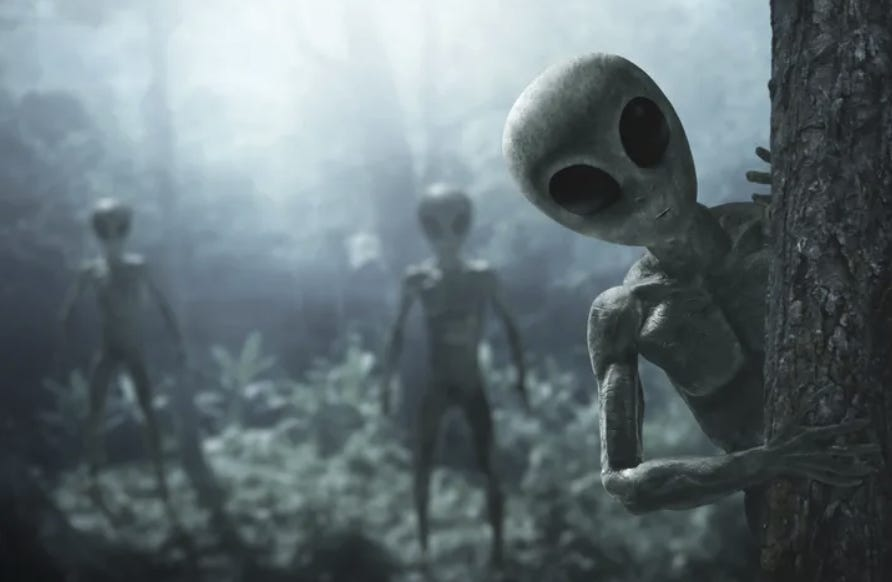
While the discovery of microbial life elsewhere would be groundbreaking, the search for intelligent extraterrestrial civilizations captures the imagination like no other scientific pursuit. The Search for Extraterrestrial Intelligence (SETI) uses radio telescopes to scan the skies for signals that may indicate the presence of advanced civilizations. So far, no definitive signals have been detected, but the search continues.
The Fermi Paradox, named after physicist Enrico Fermi, encapsulates the puzzling contradiction: if intelligent life is common in the universe, why haven’t we found evidence of it? Some suggest that intelligent civilizations may be exceedingly rare, or perhaps they don’t use technology in ways we can detect. Others propose that civilizations may self-destruct before they can spread across the galaxy.
Panspermia: Life’s Journey Across the Stars
One intriguing hypothesis for the origin of life is panspermia — the idea that life did not originate on Earth but was instead brought here from elsewhere in the universe, possibly via comets, asteroids, or other celestial bodies. If true, this theory implies that life could be widespread throughout the cosmos, having spread from one world to another through interplanetary or interstellar travel.
The discovery of microbial life surviving in extreme conditions, including the vacuum of space, supports the plausibility of panspermia. If life can survive the harsh conditions of space, it may have traveled vast distances and seeded planets across the galaxy.
The Possibility of Life Beyond Carbon
Our search for life in the universe is currently based on the assumption that it would be carbon-based, like life on Earth. Carbon’s ability to form complex molecules makes it ideal for life as we know it. However, some scientists speculate that alternative forms of life could exist based on other elements, such as silicon, or in environments completely different from Earth’s.
Such life forms may be difficult to detect using our current methods, which are geared toward finding Earth-like organisms. Expanding our understanding of what constitutes life will be crucial as we continue our search.
Conclusion: A Universe of Possibilities
The search for life in the universe is one of the most exciting scientific endeavors of our time. Whether microbial organisms beneath the icy crust of Europa, complex life forms on a distant exoplanet, or advanced civilizations sending signals through the stars, the possibilities are vast. Each new discovery, whether of an exoplanet in the habitable zone or a new form of extremophile on Earth, brings us closer to answering the age-old question: Are we alone in the universe?
The answer could reshape our understanding of life, not just on our planet but across the cosmos. Until then, the quest for life beyond Earth continues, driven by curiosity, wonder, and the hope of discovering our cosmic companions.
About the Creator
Enjoyed the story? Support the Creator.
Subscribe for free to receive all their stories in your feed.
Comments
There are no comments for this story
Be the first to respond and start the conversation.