
Fifty Years for Fifty Cents
The auction ended. The welcome never did

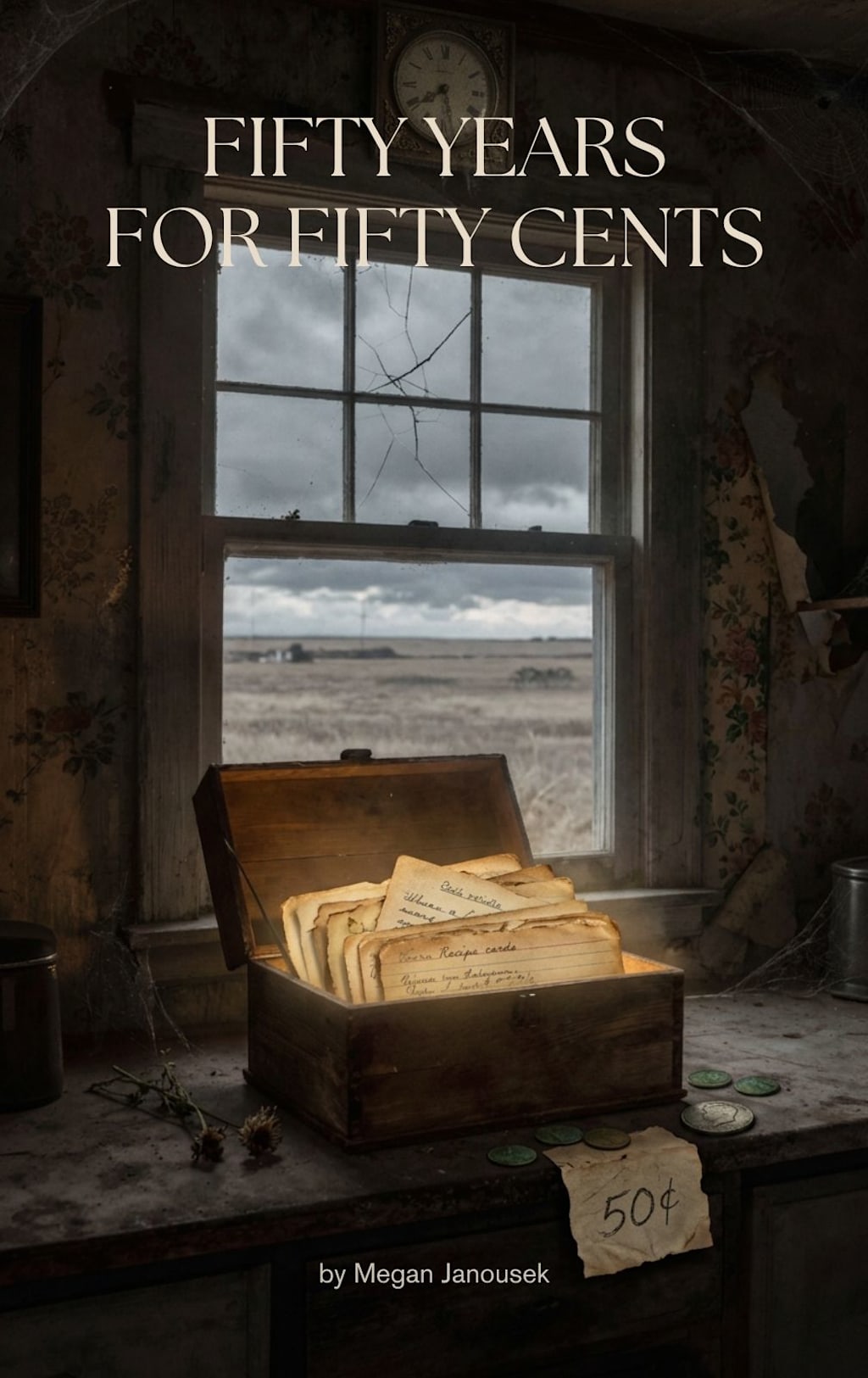
I have a bad habit of bringing forgotten things home.
It started years ago with an old church pew someone had abandoned beside a county road. Then came a quilt stitched from faded feed sacks, a cracked blue Mason jar rescued from a smokehouse that was about to be torn down, and enough family photographs of complete strangers to fill three albums in my spare bedroom. My friends always teased me that one day I was going to end up on one of those hoarding television shows, but I never saw those things as junk. Every one of them had belonged to somebody. They had been held, loved, repaired, packed away, and eventually forgotten. Somewhere along the way, I realized I wasn't collecting antiques at all. I was collecting pieces of people's lives.
That's exactly what brought me to the Holloway estate auction.
The auction had already been going for most of the morning by the time I pulled onto the gravel driveway in my beat up old Toyota 4Runner. Pickup trucks lined both sides of the road, and little groups of neighbors stood around drinking coffee while waiting for the tractors and machinery to come up for sale. The auctioneer's voice echoed across the yard, rattling off numbers so quickly I couldn't understand half of what he was saying, but it didn't seem to matter. The farmers knew exactly when to nod, when to raise a hand, and when to step back. It was almost like watching a language I'd never learned.
I wasn't there for the combines or the pickup trucks. Truth be told, I wandered away from the crowd almost as soon as I got there. Old houses have always pulled me in, especially farmhouses. You can tell more about a family by walking through their kitchen than you ever could by reading an obituary. I don't know why they tell the truth better. Maybe it's because nobody bothers to hide life there. The chipped coffee mug with a broken handle still sitting beside the sink. Pencil marks inside the pantry door where someone measured growing kids every birthday. A calendar still hanging on the wall, frozen on a month from ten years earlier because no one was left to turn the page. Living rooms are where people entertain company. Kitchens are where they become themselves.
The Holloway kitchen felt like someone had simply stepped outside for a minute.
A faded apron still hung from a hook beside the pantry. A wooden rolling pin rested on the counter next to a chipped crock that still held three wooden spoons. Dust covered everything, but somehow the room didn't feel abandoned. It felt... paused. Like whoever had been standing at the counter fully intended to come back and finish what they'd started. Maybe they had stepped outside to gather eggs. Maybe they were checking the garden before pulling an apple pie from the oven. Either way, the kitchen never quite got the message that they weren't coming back.
I was halfway across the room when I noticed the little blue recipe box sitting beneath the kitchen window, burlap curtains barely grazing the top.
It wasn't anything special to look at. The robin's-egg paint had chipped away over the years, exposing dull gray metal underneath, and someone had painted the word RECIPES across the front in careful black letters decades earlier. It probably wouldn't have caught anyone else's eye.
Mine, though, went straight to it.
I reached for it almost without thinking. The metal felt cool in my hands despite the August heat pouring through the kitchen windows. It wasn't especially heavy, but it had a weight to it that I can't really explain. Not physical weight. More like the feeling you get when you pick up an old family Bible or a box of letters you know you probably shouldn't read. A small dent marred one corner of the lid, as though somewhere along the way it had been dropped against something hard.
I've always believed people leave a little of themselves behind in the things they use every day. To me, the recipe box was just another ordinary object from an ordinary life. I didn't know then that some things refuse to be forgotten.
About that time the auctioneer stepped into the kitchen with half a dozen people trailing behind him. The flour sifter sold first, then an old enamel mixing bowl, followed by a cookie jar with a broken lid that somehow brought three dollars. The old white Chambers stove brought the biggest bid in the kitchen. Two collectors went back and forth until it sold for more money than I paid for my first car. Finally he reached for the recipe box.
"Who'll give me a dollar?"
Nobody answered.
He looked around the room again.
"Fifty cents?"
I raised my bidder card before I had time to think about it.
"I've got fifty."
The auctioneer waited another few seconds, hoping somebody would bump the price up to a dollar. A man leaning against the doorway laughed and said, "Recipes are free on the internet."
A couple people chuckled.
The auctioneer shrugged.
"Sold."
Fifty cents.
At the time, it felt like the smallest purchase I'd ever made.
Looking back now, it was probably the most expensive.
I tucked the recipe box beneath my arm while the auctioneer moved on to the next item. Fifty cents wasn't much to spend on something that had probably sat beneath that kitchen window for decades. Truth be told, I figured I'd thumb through the recipes, maybe find one or two worth trying, then put the box on a shelf with everything else I'd rescued over the years.
Looking back, I smile at how wrong I was.
By the time I made it home that afternoon, the August sun had turned my little house into an oven. I kicked off my boots by the back door, poured myself a glass of sweet tea, and carried the recipe box to the kitchen table. It sat there for a few minutes while I unloaded the rest of the odds and ends I'd picked up at the auction, but I kept catching myself looking back at it.
Eventually curiosity won.
I sat down at the kitchen table and folded my right leg underneath me, just as I always did. The recipe box rested in front of me while the ice in my sweet tea clinked softly against the glass. For a few minutes, I simply looked at it. I traced the chipped robin's-egg paint with my finger, wondering how many times someone else's hands had done the very same thing. Maybe Eleanor reached for it every Sunday morning before church. Maybe she kept it beside the stove while supper simmered on the back burner. Maybe she had opened it so many times she no longer had to think about where her favorite recipes were.
The lid gave a soft metallic creak as I lifted it open. Inside were dozens of recipe cards separated by handwritten tabs: Breads. Cakes. Pies. Holiday. Canning. The handwriting was beautiful, the kind you don't see much anymore, neat enough that it almost looked printed. Every divider had been cut from the same cream-colored cardstock, their corners rounded smooth from years of being thumbed through. Some of the recipe cards were spotted with vanilla stains, others dusted with flour that had settled into the ink decades ago. One carried the faint brown ring of what I guessed had once been a coffee cup.
It made me smile. Someone hadn't just cooked from these recipes. They had lived with them.
The first card I pulled out was for cinnamon rolls. There wasn't anything unusual about the recipe. Flour, yeast, butter, cinnamon, and enough sugar to make a dentist cringe. It was the sort of recipe thousands of farm wives probably kept tucked away in their kitchens. But beneath the directions, written in smaller cursive near the bottom of the card, was a single sentence.
Tom says harvest doesn't count unless the house smells like cinnamon.
I smiled.
It wasn't much, but somehow that one sentence told me more about Tom than an entire obituary ever could. I could picture him coming through the back door covered in dust, pulling off his work gloves before stealing one of the warm rolls while Eleanor pretended not to notice.
The next card was for chicken and homemade noodles.
Evelyn finally rolled these thin enough this year. She still leaves flour all over my kitchen.
Then came apple butter.
Traded two jars for a pair of school shoes. Worth every stir.
I don't know how many cards I read that first evening. Time slipped away the way it always does when you lose yourself in someone else's life. Every recipe had another little note tucked beneath it. Some were funny. Some were ordinary. Some made me laugh out loud.
One simply read:
Tom tried making supper while I was sick. Lord help us.
Another:
The boys ate the whole pie before it cooled. Pretended not to know where it went.
The more I read, the more Eleanor Holloway stopped feeling like a stranger.
She became someone I would've liked.
Someone practical. Someone who measured flour by handfuls instead of cups because she'd made the recipe so many times she no longer needed to look. Someone who found little bits of humor in hard years and wrote them down, not because she expected anyone else to read them someday, but because they mattered to her in that moment.
Then I came to a card that made me stop.
It was a recipe for plain white bread.
There wasn't anything remarkable about the recipe itself, but the note at the bottom had been written more slowly than the others, the handwriting uneven, as though Eleanor had paused between every few words.
Made enough for five.
The next line had been crossed out.
Beneath it she had written only four words.
Forgot there's only four.
I stared at the card for a long time. There wasn't a date. There wasn't an explanation. Just those four words. I carefully slid the recipe back into the box and let my eyes drift to the kitchen window, where the sinking sun painted everything outside in shades of August gold.
For the first time that afternoon, I forgot all about the recipes.
Who had she lost? Tom? One of the children?
I found myself wondering what had gone through Eleanor's mind when she reached for that recipe card. Did she stand at the kitchen counter with tears in her eyes before scratching out that tiny little number? Or did she simply stare at it for a while, knowing there was no sense pretending she still needed enough bread for five?
Four words.
That was all it took to tell me someone had been missing from that table for a very long time. I suddenly realized I wasn't wondering about the recipes anymore. I was wondering about Eleanor. Near the very bottom of the box, tucked beneath the last divider, I found a yellowed newspaper clipping folded into quarters.
I unfolded it carefully, afraid the brittle paper might crumble in my hands.
The headline read:
HOLLOWAY FARM TO BE LISTED FOLLOWING ESTATE AUCTION
Beneath the headline was a photograph of the same limestone farmhouse I'd wandered through only a few hours earlier. According to the article, the remaining property would officially go on the market the following week after the family finished cleaning out the house.
I set the clipping beside the recipe box and leaned back in my chair. It felt strange. I'd spent less than an hour inside that old farmhouse, yet I couldn't shake the feeling that I'd left before hearing the end of the story.
Maybe it was the notes. Maybe it was Eleanor. Or maybe I just wanted to know what happened to the family whose lives I'd spent the last two hours piecing together one recipe at a time.
Either way, by the time I climbed into bed that night, I'd already decided I was going back.
Part II coming soon.
If you can't wait till the next part ..... Subscribe to be the first to know when it's ready!
SubscribeAbout the Creator
Megan Janousek
Writer and history lover rooted in western Kansas. Writing about forgotten places, complicated people, history, home and what it means to be human.
Enjoyed the story? Support the Creator.
Subscribe for free to receive all their stories in your feed.
Comments
There are no comments for this story
Be the first to respond and start the conversation.