
Brands Built for the World’s Stage — Chapter 2
A Study of Global Identity, Culture, and Influence

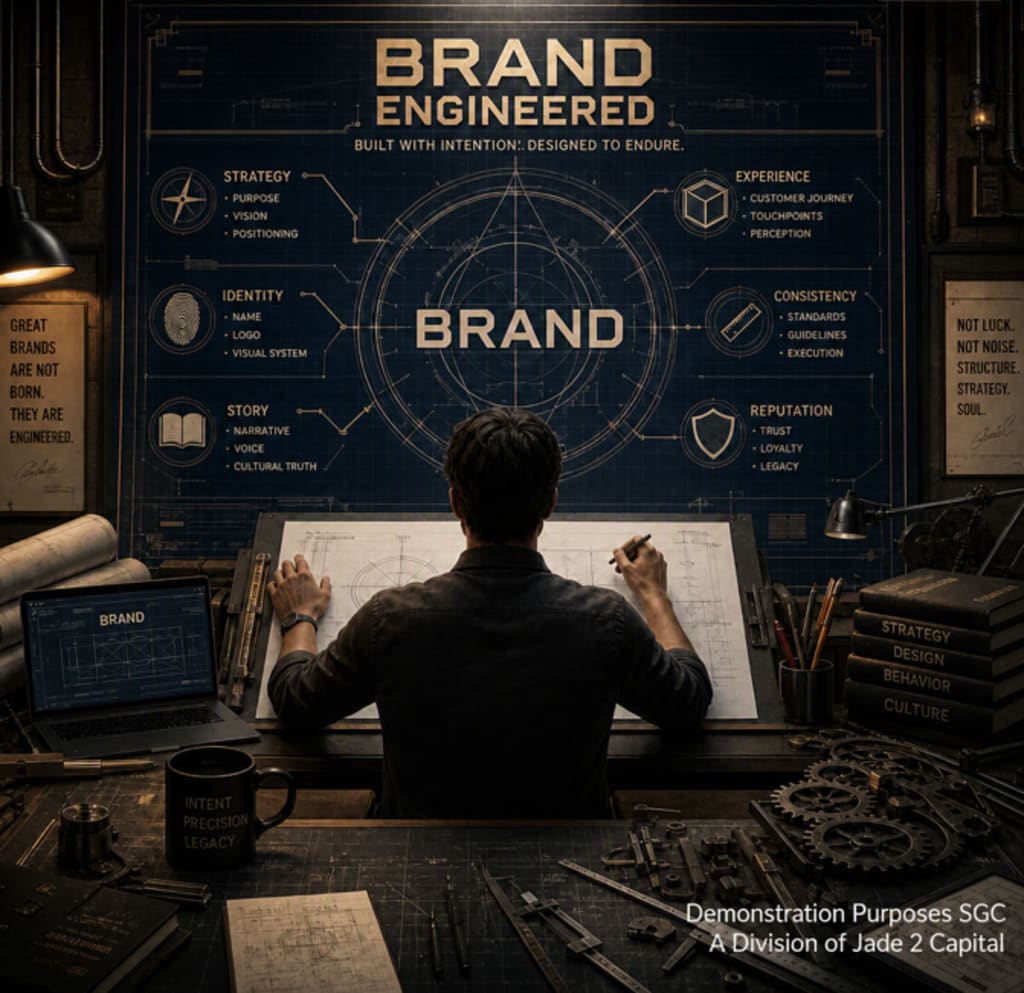
Great Brands Are Engineered
Great brands outlive their creators. They carve out a place in the world that cannot be unseated, not because of luck, but because of architecture. When examining the making of a historic European heritage brand — the precision, the craft, the intentionality — it becomes clear why certain organizations evolve into more than products. Before a single interaction occurs, the identity communicates what it is: engineered origin, cultural clarity, and a story that cannot be duplicated without losing its soul.
Founded in the mid‑19th century by Louis Moritz and revived generations later, the brand stands as a living case study in cultural continuity. Its restored headquarters, redesigned by a world‑renowned architect, operates as a cultural landmark. Its identity system preserves the founder’s original vision while adapting it for a modern audience. Everything is intentional. Everything is engineered.
This matters because when people face similar options, they rarely choose based on function alone. They choose based on meaning. They choose based on the feeling of continuity, the sense that something has been built with care and purpose. The strongest identities make that choice for them. They do this not through noise, but through structure — the kind of structure that becomes visible once you study how enduring institutions are built.
One of the most important truths about long‑standing identities is that they speak clearly. They do not wait for interpretation. They express themselves with discipline and pride, shaping the narrative instead of surrendering it. When an identity knows what it stands for, confusion disappears. What remains is a cultural artifact — something that carries significance beyond its practical use. Story becomes direction. It becomes the compass that guides decisions, from design to communication to evolution. When the story is clear, the world does not need to guess.
Another truth is that enduring identities remain steady. They do not chase trends or bend themselves to match the lowest common denominator. They hold their value by holding their truth. Consistency communicates confidence. It signals that the identity knows what it is and does not need to compete through imitation or desperation. Stability becomes part of the architecture — a structural element that reinforces the foundation.
Enduring identities also grow at the speed of their truth. Expansion is not a race; it is a reflection of readiness. When organizations stretch themselves too quickly, they distort their center. They weaken the cultural core that made them meaningful in the first place. But when growth happens organically — when it follows the rhythm of the story it creates mythology. It becomes part of the legend rather than a forced attempt at relevance. The identities that last are the ones that expand only when their structure is strong enough to withstand translation.
Most importantly, enduring identities never abandon their origin. A founder’s vision is not a relic; it is a gravitational center. When an identity honors its origin, it remains stable even when the world shifts. Architecture, cultural cues, and visual systems become extensions of that origin. They reinforce the truth that built the identity. When organizations forget where they come from, they lose their soul. When they amplify their origin, they become timeless.
These principles reveal a deeper truth: culture is not aesthetic; culture is structure. It is the architecture that holds an identity together when everything else is shaking. Organizations fracture when they try to be everything to everyone. They endure when they remain true to the origin that built them.
History offers proof. Institutions that lack cultural alignment fracture under competing identities, creating silos, tension, and eventual failure. When identity fractures, the entire structure fractures with it. But the organizations that last the ones remembered across generations — reinforce their culture, refuse to compromise their origin, and build systems that remain intact even when the world changes around them.
Culture is not what is written. Culture is what is reinforced. It is what remains when the cycle turns against them. The world does not remember the identities that moved fast. It remembers the ones that moved true.
About the Creator
Jadrian Laflure
Contributor — SGC Division A Jade 2 Capital Company I write as Jadrian Laflure about identity, atmosphere, precision, and the architecture behind creative systems. This Vocal page serves as part of the SGC ecosystem within Jade 2 Capital.
Enjoyed the story? Support the Creator.
Subscribe for free to receive all their stories in your feed.
Comments
There are no comments for this story
Be the first to respond and start the conversation.