
Why the World Is Better Than You Think
The book challenges the negative worldview we carry

I came to know about Hans Rosling in 2009 when I watched his TEDxStockholm talk, ‘The world over time — in data’.
His way of presenting global data was remarkable. His lectures are always effective and easy to understand, and many of his influential talks are now widely available on YouTube.
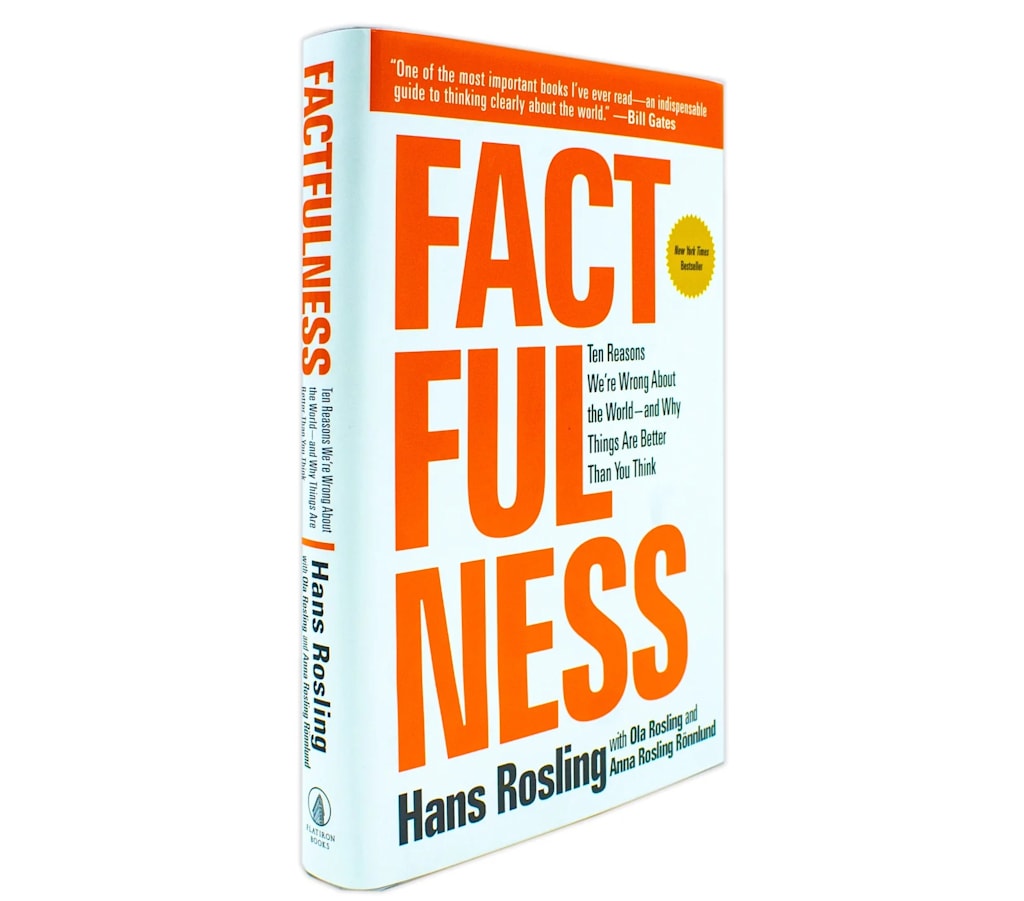
He is no longer with us today, but he has left behind a remarkable legacy, including the book Factfulness, which he co-wrote with Ola and Anna Rosling.
In this book, he uses data, simple explanations and engaging stories to show that the world is improving in many ways — less poverty, better health, longer lives, and rising education levels.
The book highlights ten common misconceptions that often push people toward misguided conclusions.
In most of the cases, our perceptions are simply wrong — we believe one thing, while data proves the opposite.
Such misconceptions distort our understanding of the world.
According to the book, we are often guided by instinctive biases such as fear, generalisation and a sense of urgency, which always mislead us and make the world seem worse than its reality.
Factfulness emphasises the importance of critical thinking and a balanced, fact-based mindset.
Overall, the book is an eye-opening, optimistic and inspiring read that provides easy guidelines to help us understand the world more clearly, and reminds us that the world is progressing slowly and steadily.
It is one of the must-read books for those who have an interest in global development, critical thinking, and a more hopeful view of humanity.
Further, the book challenges the negative worldview we carry with us.
There are many books (Sapiens; Why Nations Fail; Guns, Germs and Steel; Enlightenment Now, and so on) that are often recommended for understanding the world and the history of human civilisation, but Factfulness stands out.
Let me highlight a few key take-home messages from the book:
1. Poverty, child mortality, and illiteracy have all decreased significantly over the past decades. This shows that the world is improving slowly and steadily.
2. Most people perceive the world as negative. This is because of the instinctive biases they hold, not because the world is actually getting worse.
3. We should rely on data and evidence because our “fear instinct” often causes us to exaggerate threats. By examining facts and comparing trends over time, we can gain a more balanced perspective on risks and avoid making decisions driven by fear rather than reality.
4. The majority of countries are in the middle of development, not extremely rich or extremely poor.
5. We should not rely on a single example or event to judge an entire country, culture, or trend. Instead, we should examine reliable data and look at broader patterns over time. This helps us avoid stereotypes and develop a more accurate understanding of the world.
6. Daily news often focuses on crises, conflicts, and disasters, which can make the world seem increasingly chaotic. However, if you examine graphs showing long-term trends, you may discover a different picture, one of progress rather than chaos.
7. Things rise and fall; change does not always follow a straight line. Not everything grows indefinitely or declines forever. Instead, things fluctuate, or eventually reach a limit. For example, economic growth can slow down after a period of expansion. Similarly, a country's population may grow rapidly before stabilizing as birth rates decline.
8. We should always look for multiple factors rather than one villain, one hero, or one reason, because the world is too complex. Single-cause explanations are unacceptable.
9. We need to take time before taking action to achieve better and more accurate results. The urgency instinct, or the tendency to rush into action without carefully examining the facts, can lead to poor decisions and unnecessary mistakes. By gathering reliable information, considering different perspectives, and evaluating possible consequences, we can respond more effectively.
10. A fact-based worldview is essential for understanding real global progress. When we recognise this progress, we automatically become less anxious and more constructive.
(This story was originally published on Medium.com)
About the Creator
Krishna Babu Shrestha
Ecologist by training, nature lover by instinct. Trying—always—to live with empathy and ethics.
I write about personal growth, happiness, and human potential, as well as the environment and ecology.
Enjoyed the story? Support the Creator.
Subscribe for free to receive all their stories in your feed.
Comments
There are no comments for this story
Be the first to respond and start the conversation.