
What I Have Learned from 1984 by George Orwell
What I Have Learned from 1984 by George Orwell

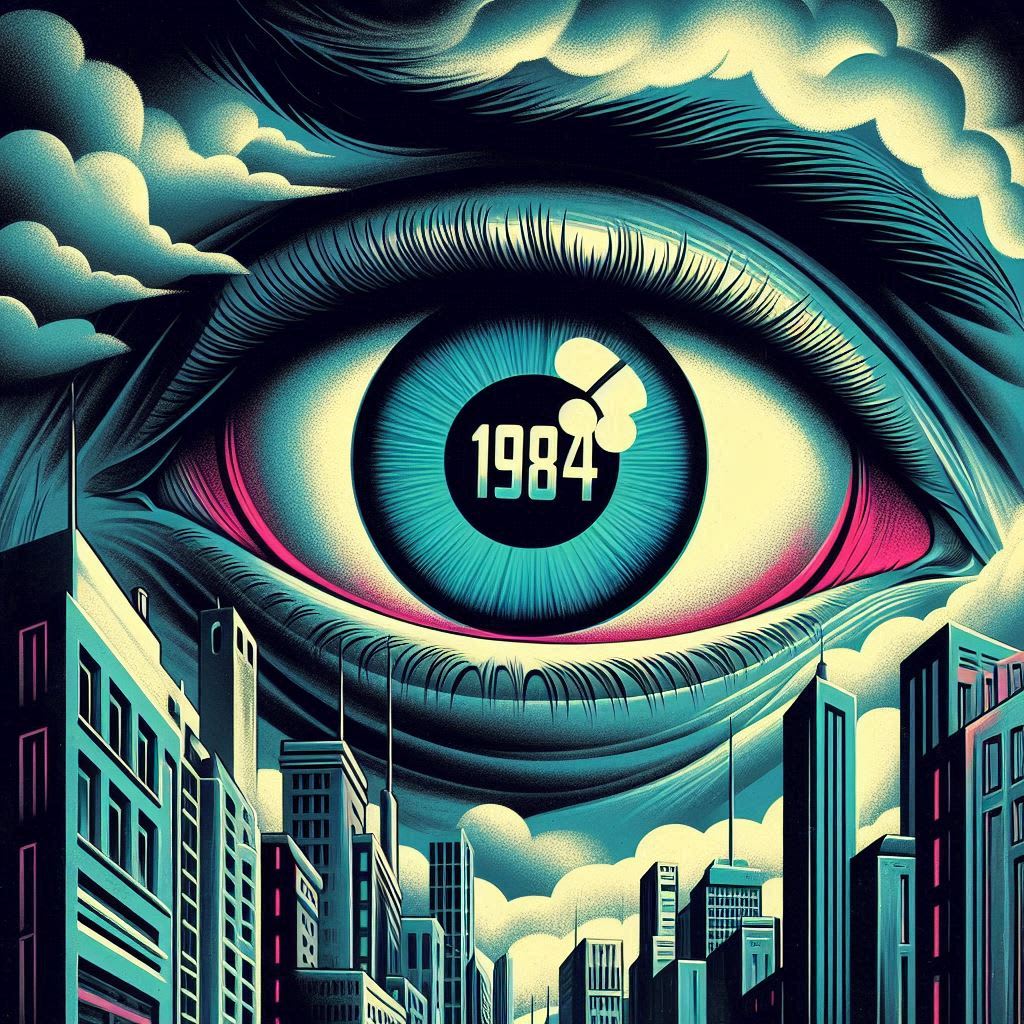
George Orwell’s 1984 is not just a novel—it’s a chilling prophecy, a political manifesto, and a philosophical reflection on human nature. Its insights into power, control, and freedom have made it one of the most influential works of the 20th century. Here’s a deeper dive into the key lessons from the book:
1. The Dangers of Totalitarianism
At its core, 1984 serves as a warning against totalitarian regimes. The Party’s complete control over society shows the extent to which a government can dominate lives when it seeks unchecked power. Orwell illustrates how authoritarianism isn’t just about political dominance—it’s about owning people's thoughts, emotions, and even memories. By highlighting the horror of such a system, 1984 urges us to remain vigilant against governments or institutions that seek to suppress freedom under the guise of security or stability.
"Power is not a means; it is an end."
This line from O’Brien encapsulates the heart of the Party’s motives—control for control's sake. It’s a haunting reminder of how power can become self-perpetuating and corrosive.
2. The Fragility of Truth in the Age of Propaganda
One of Orwell’s most enduring ideas is the manipulation of truth. The Party rewrites history daily to ensure that it’s always "correct." The Ministry of Truth erases inconvenient facts, leaving citizens unable to distinguish reality from fiction. Orwell’s concept of "doublethink"—the ability to hold two contradictory beliefs at the same time—is especially relevant today, in an age of misinformation, "fake news," and echo chambers.
"Who controls the past controls the future: who controls the present controls the past."
The control of truth is one of the most powerful tools of oppression. When people lose their ability to trust information, they also lose their ability to think critically or resist.
3. The Loss of Privacy in a Surveillance State
The phrase "Big Brother is watching you" has become synonymous with constant surveillance. In Orwell’s dystopia, the Party monitors its citizens through telescreens, microphones, and informants, leaving no room for privacy. This omnipresent surveillance doesn’t just enforce obedience; it also instills paranoia and fear, making people police themselves.
In today’s world of digital surveillance, Orwell’s warnings feel eerily prescient. Smartphones, social media, and surveillance cameras have made privacy a luxury rather than a right, raising questions about how much freedom we trade for convenience or safety.
4. Language as a Tool for Thought Control
Orwell’s invention of Newspeak—a language designed to eliminate unorthodox thoughts—shows how language shapes thought. By reducing the complexity of language and removing words that could express dissent, the Party effectively limits people’s ability to conceive rebellion.
"The whole aim of Newspeak is to narrow the range of thought."
This idea resonates in modern discussions about political correctness, propaganda, and censorship. Orwell reminds us that controlling language is one of the most effective ways to control minds.
5. Fear as a Tool of Power
The Party maintains its grip on power through fear—fear of surveillance, fear of punishment, and fear of the unknown. Even the ever-present war (whether real or fabricated) keeps citizens in a constant state of anxiety, distracting them from questioning their rulers.
"War is peace. Freedom is slavery. Ignorance is strength."
These paradoxical slogans demonstrate how fear can be manipulated to invert logic and force people to accept the unacceptable.
6. The Psychology of Oppression
Orwell delves into the psychological mechanisms of control. Through O’Brien’s brutal "re-education" of Winston, we see how the Party doesn’t just seek obedience; it seeks to destroy individuality and autonomy. The ultimate betrayal is not just of others but of oneself—being forced to renounce your deepest convictions.
This raises unsettling questions: How far can psychological manipulation go? Are we truly free if our thoughts can be shaped by external forces?
7. The Role of the Masses
Winston places his hope in the "proles," the working-class majority who are largely ignored by the Party. He believes they hold the key to rebellion because they remain untouched by the Party’s most invasive controls. Yet, Orwell portrays the proles as apathetic, consumed by trivial pursuits like gambling and entertainment.
"If there is hope, it lies in the proles."
This reflects a sobering reality: mass apathy and ignorance can enable tyranny. The failure of the proles to recognize their power underscores how complacency and distraction can undermine meaningful change.
8. Love, Connection, and Betrayal
Winston and Julia’s relationship is a small act of rebellion—a way to reclaim their humanity in a dehumanized world. Their love represents a fragile hope, but it’s ultimately crushed by the Party’s ruthless tactics. Their betrayal of each other under torture is one of the novel’s most heartbreaking moments, revealing the depths to which oppression can corrupt even our most sacred bonds.
Orwell seems to ask: What happens to love and trust when survival is at stake?
9. Hope and Its Subversion
Initially, Winston’s hope for a better future drives his resistance. He dreams of overthrowing the Party, believing that truth and freedom will ultimately prevail. Yet, Orwell shatters this hope by showing how systems of power can crush rebellion with overwhelming force and manipulation.
The book’s bleak ending leaves us with a haunting question: Is hope enough to overcome oppression, or does true resistance require something more?
10. The Human Spirit Under Siege
Perhaps the most profound lesson of 1984 is its exploration of the human spirit. Winston’s journey—from quiet rebellion to total submission—shows the resilience and vulnerability of the human mind. Even in his defeat, his initial defiance reminds us that the desire for freedom and truth is deeply ingrained in us, no matter how much it is suppressed.
Why 1984 Endures Orwell’s 1984 remains relevant because it speaks to universal truths about power, control, and human nature. It warns us of the dangers of apathy, complacency, and blind trust in authority. It also challenges us to reflect on the world around us: Are we surrendering too much privacy? Are we vigilant against propaganda? Are we willing to question systems of power?
Above all, 1984 reminds us that freedom is fragile, truth is precious, and both must be defended—no matter the cost.
What lessons from 1984 resonate most with you? Have you noticed parallels between the novel and real-life events or systems in the modern world?
About the Creator
Fred Bradford
Philosophy, for me, is not just an intellectual pursuit but a way to continuously grow, question, and connect with others on a deeper level. By reflecting on ideas we challenge how we see the world and our place in it.
Enjoyed the story? Support the Creator.
Subscribe for free to receive all their stories in your feed.
Comments
There are no comments for this story
Be the first to respond and start the conversation.