
We Who Will Die Review: A Solid Story That Feels Too Familiar
A solid fantasy with strong ideas, We Who Will Die struggles to stand out in an oversaturated genre but shows promise for future installments.

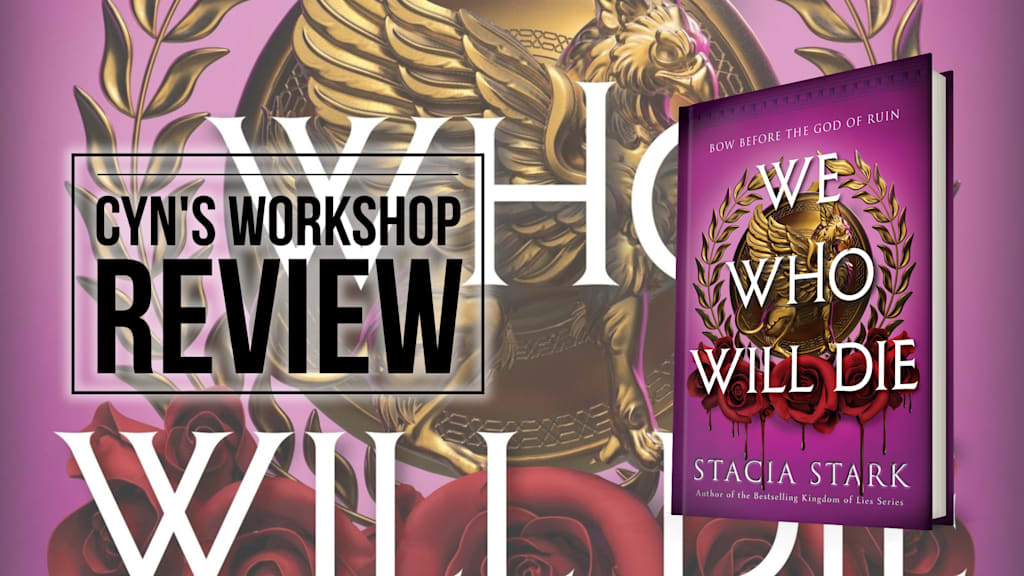
A solid fantasy with strong ideas, We Who Will Die struggles to stand out in an oversaturated genre but shows promise for future installments.
Today we’re talking about We Who Will Die by Stacia Stark—and this is one of those books where I walked away feeling underwhelmed, but not entirely sure why at first.
After sitting with it for a bit, though, it started to click.
The Disconnect Is Real
This was actually a shared experience for me and my best friend Gina. We both had ARCs, and we both hit the exact same wall at about a quarter of the way through. We couldn’t focus on the book, which is always a red flag.
We both ended up switching to the audiobook at the same point, and that’s when it became clear—it wasn’t just us. There’s a noticeable disconnect when physically reading it, even though the story itself isn’t bad.
The audiobook definitely helped smooth things out and made the experience more engaging, but that initial struggle is hard to ignore.
Not Bad… Just Not Fresh
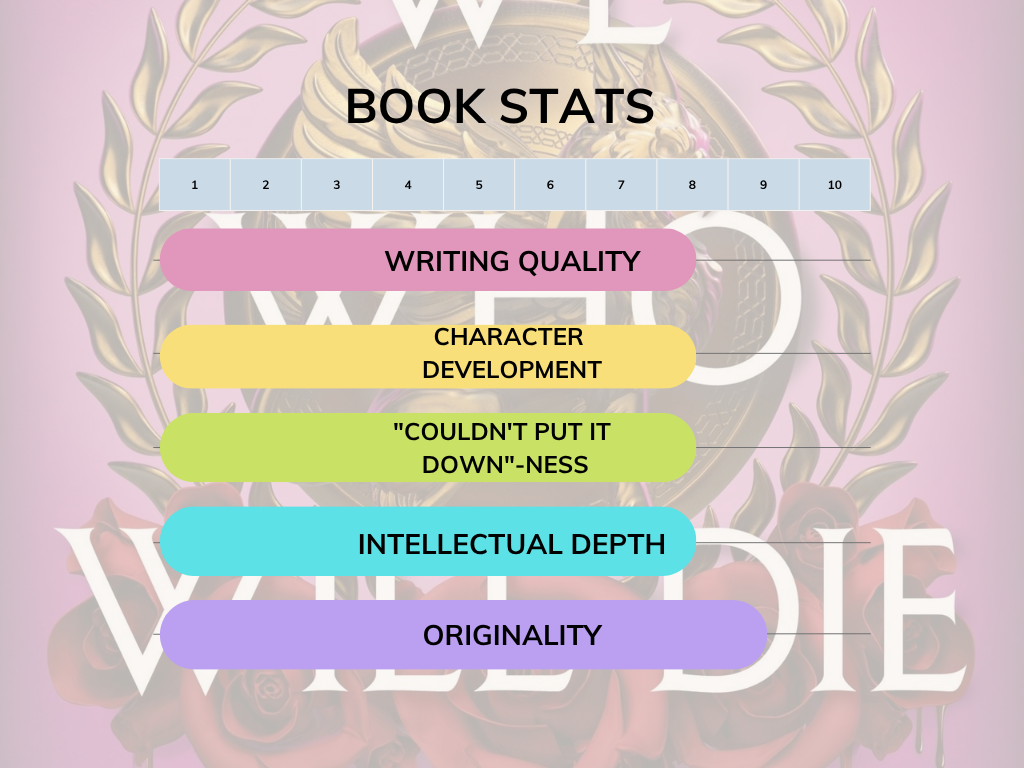
Let me be clear: this is not a poorly written book. The writing is solid, the characters are well-developed, and the premise has a lot going for it.
The issue is that it feels too familiar.
Right now, the fantasy market is heavily saturated with stories centered on strong female protagonists fighting to survive, often within deadly trials or training systems, paired with intense enemies-to-lovers dynamics. While those tropes can absolutely work, We Who Will Die doesn’t do enough to distinguish itself from the rest.
It starts to feel like a story you’ve already read before, just with slightly different details.
A Strong Premise That Needed More Depth
There are elements in this book that are genuinely interesting. The sigil system, where everyone is born with a mark that evolves alongside their magic, stands out as memorable. The blend of vampires with a more traditional fantasy framework is also a fun concept.
The main character’s ability to siphon magic from those she kills is another highlight. It’s a concept with a lot of potential, especially for future development.
The premise itself is compelling. She infiltrates a deadly system, essentially a survival-based training ground, with the goal of assassinating the emperor. Layered on top of that are the emotional stakes tied to her family and her need to protect them.
But while the foundation is strong, the execution doesn’t fully elevate these ideas into something that feels new or particularly impactful.
Romance That Doesn’t Quite Hit
The romantic dynamic has all the right ingredients, but it never fully pulls you in.
There’s tension, shared history, and emotional conflict, but it doesn’t quite reach that level where you’re completely invested in the relationship. It feels like it’s following expected trope beats rather than building something that feels unique or deeply emotional.
Interestingly, another character—someone she clashes with far more intensely—comes across as more layered and compelling. That dynamic has more tension, more complexity, and more potential for growth.
If the series shifts in that direction, it could add a lot more depth to the story moving forward.
Where the Book Falls Short
At its core, the issue comes down to engagement.
The book isn’t bad, but it doesn’t feel exciting either. It doesn’t feel fresh, and it doesn’t fully capture that sense of urgency or uniqueness that similar stories have managed to achieve.
There’s also a sense that the character development hasn’t fully landed yet. The groundwork is there, but the emotional arcs feel a bit underdeveloped, which makes it harder to fully connect with the story.
Why I’m Still Interested in Book Two
Despite my issues with this first installment, I’m not writing off the series.
Now that the world-building is established, there’s a lot of potential for the next book to expand on what’s already been set up. There’s room to deepen the character relationships, explore the magic system further, and push the story into something more distinct.
There’s a strong foundation here—it just needs to evolve.
Final Thoughts
We Who Will Die is a solid fantasy read with interesting ideas and good writing, but it struggles to stand out in an oversaturated genre.
It’s not a bad book. It’s just one that feels too similar to others that are already doing the same thing—and, in some cases, doing it more effectively.
That said, there’s enough potential here to keep me curious about what comes next.
About the Creator
Enjoyed the story? Support the Creator.
Subscribe for free to receive all their stories in your feed.
Comments
There are no comments for this story
Be the first to respond and start the conversation.