
The Outlander effect.
Thirty-five years. More than 50 million copies sold worldwide. 1.5 million visitors per year solemnly for this particular book.

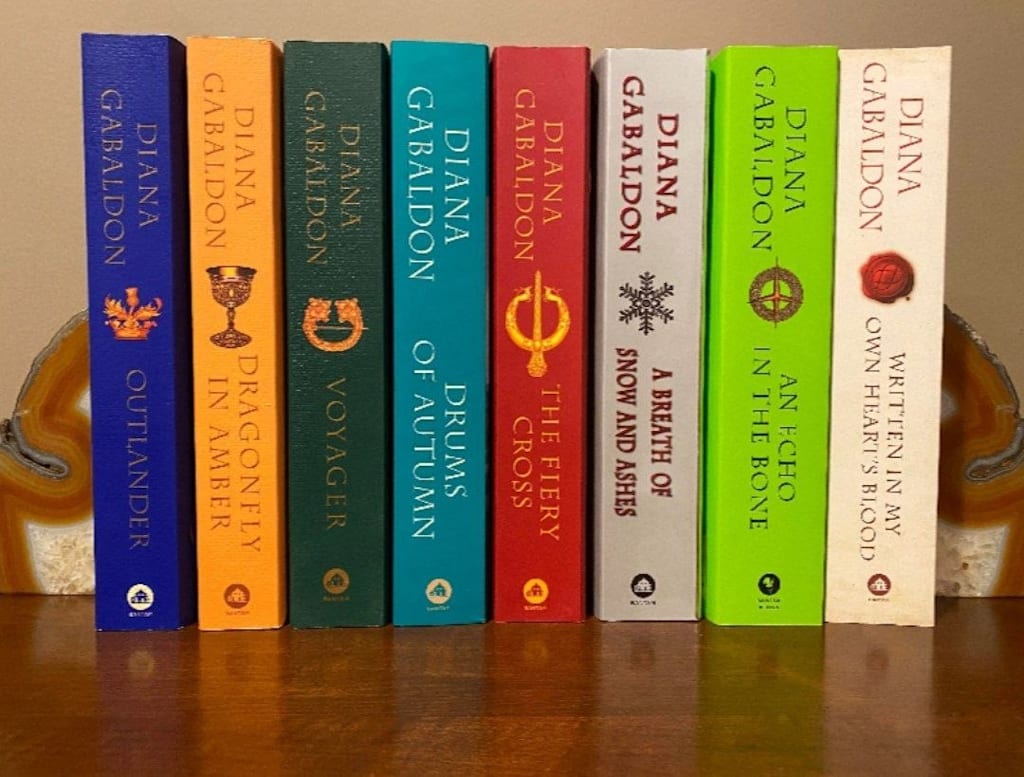
On the 1st of June 1991, the first book of Outlander by Diana Gabaldon was published. The novel started an unexpected journey throughout ages. The phenomenon built a strong community of Outlander (and Scottish) fans around the world. It raised interest in Scottish history and tourism, which only doubled when the TV show premiered in 2014.
I discovered the Outlander world much later, almost two years ago.
Above all else, I became obsessed with all things Scottish. Don't get me wrong, I knew quite a lot about Scotland, but it still was a part of the United Kingdom and Harry Potter in my head. Now I quite literally try to read all the possible historical facts and books and hope soon to see Lallybroch, Culloden battlefield, and Inverness.
So, let’s talk about the Outlander effect. As a little treat in the end, you’ll find a reading list with the scenarios that take place in Scotland.
Let's briefly talk about the plot in case you have never heard about it before.
Outlander (with the initial title as Cross Stitch) is a story about Claire Randall, who was a combat nurse in the Second World War, and after it ended travels with her husband Frank to Scotland in order to reconnect after so many years apart.
As the couple travels in Scotland, they discover more about Scottish culture and superstitions. Just like that, after some time, Claire, walking around mysterious standing stones, falls through time. Next thing Claire knows, she's no longer in the 20th century but rather in the 18th.
From that moment on, her life changed forever, as in the past she found her future. Unfortunately, it can be all stripped away as the second Jacobite rising is approaching, battle that ended traditional Scottish life forever.
In the following books, we'll see Claire in different stages of her life.
There are 9 books at the moment, not to count the additional stories and novellas. Plus, we will soon (hopefully) see the 10th and final book in the series.
Since the very beginning, publishers had a hard time deciding on what shelf they should put the book: historical fiction, fantasy, or romance? It is all these little pieces in one. Diana Gabaldon truly broke all the genre walls and changed the genre approach to books. I'm convinced that this is one of the reasons so many folks fell in love with the story.
It is so funny to know that all this started as a desire to write a story about a man in the kilt.
Interesting fact: last year the first student in history earned her PhD for a thesis based on Outlander. Now Dr. Alexandra Dold is widely known as Doctor of Outlander.
Outlander in the society and contribution to Scotland.
· Every year 1.5 million of travelers go to Scotland solemnly for Outlander spots.
· Read fiction and non-fiction books about Scotland.
· Buy souvenir plots in Scotland, therefore preserving Scottish nature.
· Investing and reconstructing real castles.
· Study Gaelic language (me too).
· Show interest in kilts and bagpipes.
· Study Scottish folklore and culture (in case we need it when we travel back in time. hehe)
· Show interest in genealogy. Most of the time trying to find their Scottish roots.
And so many other things that make Scottish culture bloom.
Now I’m not saying that Scotland wasn’t known or interesting before; it is just that there are even more to discover for a bigger number of people around the world and different generations.
Relationships.
Diana Gabaldon told a very important thing about building the relationship between the main couple in the book: "There are many books that describe how two people meet, fall in love, and in the end they marry, have kids, and live happily ever after. But I want to show the readers what it takes to stay married through time and different stages of your life."
It makes the novel even more unique. The dating stage is beautiful, but what does it take to keep the spark when life is hard, when you're forced to leave your loved ones behind, when you’re sick, going through pregnancy, war, loss, emigration, and so many other things that real people are forced to face?
The book is the answer to so many questions.
The professional competition.
Claire was a combat nurse, as I mentioned before. She continued her medical career in the 18th century. Shall I mention how complicated it was? Claire was forced to prove over and over again her abilities. Had to stay strong against “it is not a woman’s job” and do her best. Claire is a professional, coldhearted when it’s needed, and, at the same time, a loving wife and the heart of the home. If it is not the greatest representation of true femininity, I don’t know what it is.
I’m sure everyone has their personal story connected to Outlander. It is a bit of mine and some interesting facts that surround the Outlander effect.
Now, as promised, some book recommendations if you love stories that are set in Scotland.
Contemporary romance books:
1. “Nightshade” by Autumn Woods.
A story about the girl that seeks revenge in the university hidden in the Scottish Highlands.
P.S. She might fall for the enemy.
2.“Keep Me” by Sara Cate.
An arranged marriage romance between a broody highlander and an American girl. A story of family drama, opposite attractions, and beautiful Scottish latitudes.
3.“Love’s a Witch” by Tricia O’Malley.
A very autumn-ish story about a witch that’s coming back home in a small town in the Scottish Highlands to break a centuries-long curse that follows women in her generation.
4.“Problematic. Summer. Romance” by Ali Hazelwood (partly set in Edinburgh).
A story about a woman who fell in love with a man once in Edinburgh. It didn’t go well. Now they are forced to be in each other’s space for a week during a wedding. Oh, and this man is her brother’s best friend.
Historical fiction:
1.”The Last Witch of Scotland” by Philip Paris.
The novel is based on a true story about the last woman in Scotland who was burned for witchcraft.
2.”Queen Macbeth” by Val MacDermid.
A novella that uncovers the possible truth behind the Macbeth family.
Happy reading, dear reader.
About the Creator
Millie's Stories
I'm ranting about books here. All sorts of fantasy , romance, historical fiction.
In the spare time I love to discover storybook-like places around the world.
Let's go to a journey together ✨
Enjoyed the story? Support the Creator.
Subscribe for free to receive all their stories in your feed. You could also become a paid subscriber, letting them know you appreciate their work.
Comments
There are no comments for this story
Be the first to respond and start the conversation.