Review
8 Books To Understand Everything. AI-Generated.
In a world overflowing with information, discovering the right sources of knowledge is essential for truly understanding the world around us. Some books rise above the rest—works that don’t just inform but transform the way we think, live, and perceive reality. Below is a list of 8 books that not only offer invaluable insights but also empower you to understand complex concepts across a wide array of disciplines.
By Diana Merescabout a year ago in BookClub
10 Books That You Will Love Forever. AI-Generated.
Some books don't just tell stories - over time, they become part of us. These are the books that linger long after the last page, offering wisdom, comfort, inspiration, and unforgettable characters. Below is a list of 10 books that you will love forever, each one a profound journey that continues to captivate hearts across generations.
By Diana Merescabout a year ago in BookClub
10 Books With The Best Bantering. AI-Generated.
In the world of literature, the art of banter is one that has captivated readers for generations. Banter, that witty, quick-paced exchange of remarks, often laden with humor and intelligence, has the power to bring characters to life and create an enjoyable, immersive reading experience. Whether it's playful teasing or biting sarcasm, the way characters interact through banter can define a relationship, a moment in the plot, or even an entire novel. Below is a list of 10 books that stand out for their exceptional use of banter, showcasing how this dynamic literary device can elevate storytelling.
By Diana Merescabout a year ago in BookClub
8 Classic Books For Anyone. AI-Generated.
These works are not only literary masterpieces but also profound reflections of their time—captivating generations of readers with their eternal themes, unforgettable characters, and masterful prose. Below is a list of 8 classic books for anyone.
By Diana Merescabout a year ago in BookClub
Story Of My Life Review
The kettle starts screeching just as the smoke alarm kicks in—a chaotic duet—while I’m trying to balance a dripping paint roller in one hand and a freshly unwrapped novel in the other. Story of My Life is teetering on the edge of the paint tray, its glossy cover flashing like it knows I’m about to regret all my life choices.
By Francisco Navarroabout a year ago in BookClub
Common Myths
Common Myths About Mental Health Debunked Mental health has become an increasingly important topic in recent years, as awareness continues to grow and conversations around emotional well-being become more mainstream. Despite the progress, there are still numerous myths and misconceptions surrounding mental health that prevent people from seeking the help they need or supporting others effectively. These myths not only contribute to the stigma surrounding mental health but also create misunderstandings about mental illnesses and those who live with them.
By Gabriela Toneabout a year ago in BookClub
Sunrise on the Reaping by Suzanne Collins
Suzanne Collins—my goodness. Never stop wielding that pen, my glorious queen. You have done it again. This may or may not be coming from a place of recency bias, but Sunrise on the Reaping might be the best book in the Hunger Games series for me, which I was absolutely not expecting going into it.
By angela hepworthabout a year ago in BookClub
Bangla Story
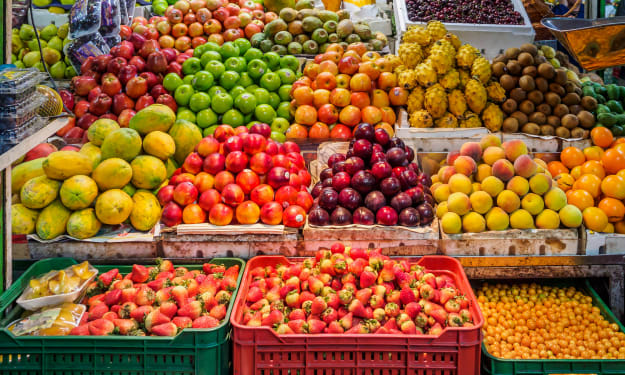
The Fruit Seller When I think of my childhood, I remember many things: the smell of wet earth after the rain, the slow hum of ceiling fans on hot summer afternoons, and the soft rustle of leaves by my window. But one memory shines brighter than the rest—the memory of the fruit seller. I must have been around seven years old then. We lived in a quiet lane in old Kolkata, a place where every passerby seemed familiar, and even the stray dogs had their own routine. Our house was old, with wide wooden windows and high ceilings, and my favorite spot was the window seat in the front room. From there, I could see the world go by. Or at least, my little corner of it. One of the most intriguing figures who passed through our lane was the fruit seller. He was not like the other hawkers who called out for fish, vegetables, or old utensils. He had a voice that sounded like a distant drumbeat, deep and rhythmic. Every morning, his call echoed through the alley, "Fruit! Fresh fruit!" He was tall and broad-shouldered, wrapped in a long robe that fluttered slightly as he walked. A turban sat firmly on his head, and a thick black beard covered most of his face. On his head, he balanced a large wicker basket, brimming with fruits—glossy grapes, yellow bananas, red apples, and, sometimes, the deep red of ripe pomegranates. But what truly set him apart was his eyes. They were kind, almost fatherly, and held stories of distant mountains and old villages. He was a Kabuliwala, an Afghan who had come to Bengal to sell fruit and, perhaps, find a second home. At first, I was a little scared of him. His large frame and strange appearance made me uncomfortable. I used to hide behind the curtain whenever I heard his voice. But I was fascinated. Day after day, I waited by the window, watching him pass, watching how the neighborhood children gathered around him. One day, my mother handed me a coin and said, “Go buy some grapes from the fruit seller.” I hesitated. She smiled and said, “He’s kind. He won’t bite.” With shaky steps, I stepped outside, the coin sweaty in my fist. He saw me and stopped. “Fruit, babu?” he asked, his accent thick but gentle. I nodded. “Grapes,” I whispered. He bent down, lifted the cover of his basket, and picked out a small bunch. I handed him the coin, but he shook his head. “For you, gift,” he said. I blinked. “But—why?” He just smiled. “You are little. Like my daughter.” From that day on, everything changed. I stopped hiding behind the curtains. Every morning, I waited for him. Sometimes, he brought me a guava, other days an orange. He never took money from me. And slowly, he began to talk—to really talk. He told me about his home in Kabul, where the mountains touched the sky and the air smelled of pine. He spoke of his daughter, who was about my age, with big eyes and a stubborn laugh. He said she liked to draw pictures in the sand and play with wooden toys. "She is brave like you," he said once, touching his heart. One morning, I asked him, “Do you miss your home?” He looked at the sky for a moment, then nodded. “Yes, every day. But I come here to earn, to send money back for her books and clothes. Maybe one day, I’ll bring her here.” I thought about his daughter a lot after that. I imagined what she looked like, what games she played, whether she too sat by a window like me, waiting to hear about a faraway place called India. We spoke about many things after that—about mangoes and monkeys, about trains and snowfall. I would tell him what I learned in school, and he would tell me stories of deserts and caravans. He would sometimes teach me Afghan words, and I would teach him Bengali ones. We laughed a lot, and sometimes we sat in silence. But the silence was never awkward. It was like sitting with a friend who didn’t need words. One morning, he looked at me and asked, “Do you have a sister?” “Yes,” I replied. “She’s very little.” He smiled. “I knew it. Your eyes... they have love.” I didn’t fully understand what he meant back then, but those words stayed with me.
By Nabir Mondolabout a year ago in BookClub
10 Deep Philosophical Books That Will Expand Your Mind. AI-Generated.
Philosophy is not merely a pursuit of the abstract—it is a profound journey inward and outward, a way to interrogate our beliefs, expand our intellectual horizons, and fundamentally shift how we perceive the world. Below is a list of 10 deep philosophical books that will expand your mind, each offering a unique lens on existence, ethics, consciousness, and the nature of reality.
By Diana Merescabout a year ago in BookClub
Book Review: “A Little Life” - Hanya Yanagihara
I came to this book via a recommendation. Although hesitantly, the million copies sold and its hype among the youth pushed me to it. Granted, reading under such motives is no outstanding advice. Regardless, if a book is a bestseller and a sensation, there must be something of value in it.
By Carlos M. Suárez Tavernierabout a year ago in BookClub