Recommendation
You Can Kill a Man, But Not His Ideas – The Story of Che Guevara
"You can kill me, but you can never kill my ideas." With these final words, Che Guevara looked death in the eye. Even in his last moments, he screamed out what he believed in—that revolutions don’t die with people. They live on through their ideas. At just 40 years old, Che left behind not just a legacy, but a fire. A fire that continued to burn for decades after his death. Che wasn't always a revolutionary. He was born as Ernesto Rafael Guevara on June 14, 1928, in Rosario, Argentina, to a middle-class family. He was the eldest of five children and never had to worry about money. His family had a huge library with over 3,000 books—and Che read almost all of them. As a child, Che suffered from severe asthma. But that never stopped him. He grew up to be an athlete, a chess player, a swimmer, and even a rugby player. He also had a deep interest in poetry, science, and politics. By the time he entered medical school at the University of Buenos Aires in 1948, Che was already deeply curious about the world. During his studies, he went on two long journeys across Latin America—first on a bicycle, then on a motorcycle. These trips would change his life forever. He saw poverty up close. Families sleeping on roads, children crying from hunger, and workers breaking their backs for pennies. He wrote about these experiences in a diary, which later became the bestselling book The Motorcycle Diaries—and a popular film as well. These trips woke something inside him. He realized that medicine wasn’t enough. He didn’t want to treat the poor—he wanted to change the system that made them poor in the first place. So, Che joined revolutionary movements. His first attempt was in Guatemala, where he witnessed a CIA-backed coup that removed a democratically elected socialist president. This opened Che’s eyes to how America used its power to suppress leftist governments around the world. Soon after, Che moved to Mexico, where fate brought him face-to-face with Fidel Castro and his brother Raúl. They were planning a revolution in Cuba to overthrow the U.S.-backed dictator Fulgencio Batista. Che joined their cause. In 1956, Che and 81 other revolutionaries set sail to Cuba. Most of them were killed in battle. Che survived and hid in the Sierra Maestra mountains with a handful of fighters. There, he trained local peasants, built schools, opened clinics, and taught literacy. He also became a military leader, expert in guerrilla warfare. After two years of fighting, Che and Castro finally overthrew Batista. In 1959, Castro became the leader of Cuba—and Che became his right-hand man. But the story didn’t end there. Che was now in power. And power tested him. He was made head of the National Bank of Cuba and later the Minister of Industries. He nationalized American businesses, redistributed land, and pushed hard for education and equality. But Che believed in absolute discipline. He executed those he suspected of betraying the revolution—often without trial. He didn’t tolerate disobedience. To him, Communism wasn’t just an ideology—it was the only way to live. In time, Che began clashing with the Soviet Union as well. He didn’t like their growing bureaucracy and soft approach toward America. And he worried that Cuba was becoming too dependent on Soviet support. So, once again, Che left everything behind. This time, he went to Congo, and later to Bolivia, to spread revolution. But things didn’t go as planned. His forces were weak, untrained, and lacked local support. And this time, the CIA was watching. On October 8, 1967, Che was captured in Bolivia. He was wounded and taken to a schoolhouse. The next morning, he was executed by Bolivian soldiers trained by the CIA. His last words to the executioner were: "Shoot, coward. You are only going to kill a man." They cut off his hands to prove his identity. But what they couldn't cut off—were his ideas. Che Guevara was many things: a doctor, a poet, a soldier, a leader, and a revolutionary. Some call him a hero, others call him a terrorist. But one thing is certain—he changed history. Even today, 50+ years after his death, his image remains a symbol of rebellion, resistance, and revolution. His life is a reminder that one man, armed not with weapons but with fierce conviction, can shake the world.
By Yasir Hamid about a year ago in BookClub
Book review: The Secret Garden by Frances Hodgson Burnett
There are books that warm you gradually, like tea cooling in your hands, and The Secret Garden by Frances Hodgson Burnett is one of those. When I first approached it, I expected a gentle children's tale, a nostalgic window into Edwardian storytelling. What I found was something far deeper: a novel of psychological transformation, the redemptive power of nature, and the often-forgotten potential of lonely or wounded children to blossom.
By Caleb Fosterabout a year ago in BookClub
Book review: The Picture of Dorian Gray by Oscar Wilde
Reading The Picture of Dorian Gray was like stepping into a rich tapestry of decadence, morality, beauty, and horror. I went in expecting a classic Gothic novel and came out with a profound reflection on the human condition, the corrupting power of vanity, and the struggle between outward appearance and inner truth. Oscar Wilde’s only novel is more than a haunting tale; it is a philosophical exploration of art, youth, and conscience—woven together with dazzling prose and biting wit.
By Caleb Fosterabout a year ago in BookClub
7 Great Books You'll Want to Recommend to Everyone. AI-Generated.
Reading is one of the most personal, powerful, and transformative experiences we can share. A truly unforgettable book doesn’t just live on your shelf—it lives in your thoughts, influences your conversations, and gets passed along again and again. Below you will find a list of 7 great books you'll want to recommend to everyone.
By Diana Merescabout a year ago in BookClub
7 Books That Will Surprise You In The Best Way. AI-Generated.
When it comes to reading, some books have the rare power to astonish—not with plot twists alone, but with depth, originality, and the unexpected emotional resonance they evoke. Below is a list of 7 books that will surprise you in the best way. These titles are not only intellectually engaging but also emotionally gripping, making them the perfect picks for readers who crave literature that breaks the mold.
By Diana Merescabout a year ago in BookClub
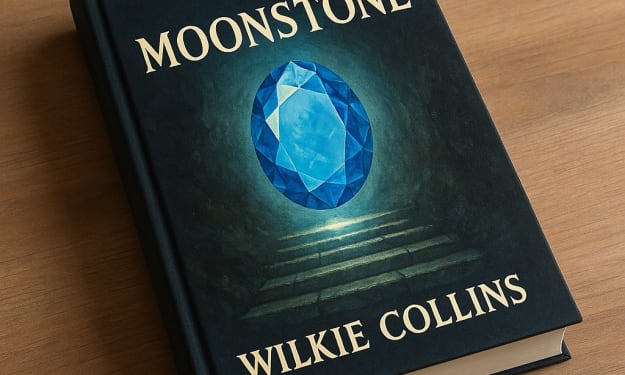
Book review: The Moonstone by Wilkie Collins
When I first picked up The Moonstone by Wilkie Collins, I expected a solid Victorian mystery, but what I discovered was something far more complex and rewarding. This novel, often hailed as the first full-length detective novel in the English language, proved to be a rich, layered narrative that blends suspense, psychological insight, and social commentary into a remarkably sophisticated whole.
By Caleb Fosterabout a year ago in BookClub
Book review: The Million Pound Bank Note by Mark Twain
I always find it fascinating when a short literary work manages to deliver as much wit, social critique, and narrative charm as a full-length novel, and The Million Pound Bank Note by Mark Twain is a prime example of such brilliance in brevity. With his trademark humor and astute observation of human nature, Twain crafts a satirical story that remains surprisingly relevant despite having been written more than a century ago.
By Caleb Fosterabout a year ago in BookClub
9 Books That Will Make You Wish You Read Them Sooner. AI-Generated.
In the vast ocean of literature, certain books stand out not just for their storytelling but for the profound impact they leave on readers. These are the kinds of works that you find yourself recommending repeatedly, wondering why you didn’t pick them up earlier. Below is a list of 9 books that will make you wish you read them sooner.
By Diana Merescabout a year ago in BookClub
8 Books That Will Inspire Your Next Great Conversation. AI-Generated.
In an era where small talk often overshadows meaningful dialogue, finding sources that spark intellectual, thoughtful, and provocative conversations is essential. Whether at dinner parties, networking events, or casual coffee chats, the right book can act as a powerful catalyst for connection. Below is a list of 8 books that will inspire your next great conversation.
By Diana Merescabout a year ago in BookClub
8 Books That Make You Feel Like You're Not Alone. AI-Generated.
Feeling isolated is a universal human experience, and in those quiet, heavy moments, a book can become more than just a story — it becomes a companion. Below is a list of 8 books that make you feel like you're not alone. Whether you're struggling with anxiety, heartbreak, or simply feeling adrift, these books remind us of our shared humanity.
By Diana Merescabout a year ago in BookClub
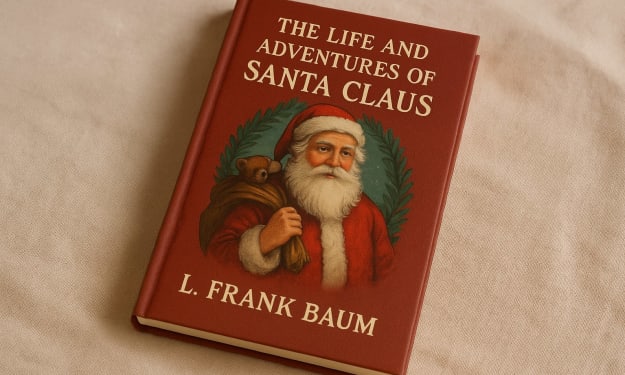
Book review: The Life and Adventures of Santa Claus by L. Frank Baum
Reading The Life and Adventures of Santa Claus by L. Frank Baum felt like stepping into a tenderly imagined mythological world that seeks to explain one of the most beloved figures in global folklore. As someone who has always been fascinated by origin stories, I approached this book with curiosity and was surprised by how earnestly and inventively Baum crafted a full-fledged life for a character we usually associate with mystery and timelessness.
By Caleb Fosterabout a year ago in BookClub