Recommendation
8 Books That Are Too Incredible to Forget. AI-Generated.
Books have a unique power—they can transform our perspective, ignite our imagination, and leave an indelible mark on our lives. In a world overflowing with literature, some books transcend time, resonating deeply with readers and influencing thought across generations. Below is a list of 8 books that are too incredible to forget.
By Diana Meresc12 months ago in BookClub
7 Books To Help You Forget Your Worries. AI-Generated.
Life rarely slows down on its own. Stress piles up, responsibilities multiply, and even the smallest worries can feel enormous when we carry them for too long. During times like these, turning to the right book can feel like stepping into a quieter world—one where our fears soften, our minds relax, and we’re reminded that we’re not alone.
By Diana Meresc12 months ago in BookClub
7 Books with Intelligent Characters. AI-Generated.
Intelligence in literature fascinates us because it reflects the complexity, curiosity, and calculated brilliance we admire—and sometimes fear—in real life. When we read about highly intelligent characters, we’re not just observing their cleverness; we’re invited into the inner workings of exceptional minds. These characters challenge us, inspire us, and expand the way we think about strategy, morality, creativity, and human potential.
By Diana Meresc12 months ago in BookClub
THE ARCHIVE OF LAST HEARTBEATS
THE QUIET KEEPERS The Archive was nothing like the world imagined it. To the public, the Archive of Last Heartbeats was little more than a poetic name—one of those solemn institutions tucked behind a government ministry, spoken of only when necessary. Newspapers mentioned it rarely, and when they did, they used phrases like “ethical custodianship,” “end-of-life biometric preservation,” or “the Department of Terminal Records.”
By WILLIAM SIAFFA12 months ago in BookClub
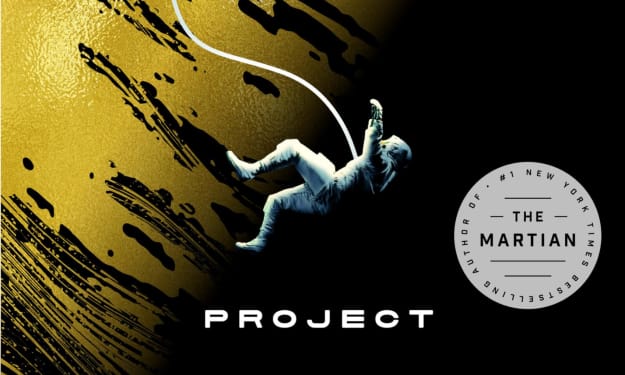
Project Hail Mary: 200 Word Book Reviews #2
Astrophage is a stellar micro organism. It is slowly consuming the sun, cooling the Earth and putting all of humanity at risk. But, it turns out this parasite is infecting other stars too, and another civilisation is sending a mission to same place we are, which may hold the key to saving two worlds…
By I. D. Reeves12 months ago in BookClub
The Enchanted Court. Content Warning.
The Enchanted Sovereigns of the Hidden Court Oberon and Titania stand among the most enduring figures connected to the fairy realm, shaped by centuries of shifting belief, folklore, and literary imagination. Each name carries a long and intricate lineage that reaches into medieval legend, classical mythology, and the developing ritual practices of later occult movements.
By Marcus Hedare12 months ago in BookClub
7 Best Anthropology Books In 2025. AI-Generated.
Anthropology is the lens through which we study human behavior, culture, and evolution. It bridges the gap between the past and present, unraveling the complexities of societies across the globe. Whether you're a student, researcher, or curious reader, immersing yourself in seminal anthropological works offers insights into our shared humanity, societal structures, and cultural nuances. Below is a list of 7 best anthropology books in 2025.
By Diana Meresc12 months ago in BookClub
7 Best Basketball Books In 2025. AI-Generated.
Basketball is more than a sport; it’s a culture, a science, and a life philosophy. From rookie players eager to sharpen their skills to seasoned fans wanting to understand the game's nuances, the right books can transform your understanding of basketball. Below is a list of 7 best basketball books in 2025. These books aren’t just about scoring points—they teach resilience, teamwork, leadership, and mental toughness, offering insights both on and off the court.
By Diana Meresc12 months ago in BookClub
The Atlas of Heartbeats
Elara Voss mapped silence. Not the kind you find in libraries or snowy fields, but the silence that lived between people. As a sound archivist for the Municipal Memory Project, her job was to capture the fading audio landscape of the city. She collected the last echoes of a shuttered bookstore’s bell, the specific squeak of a retired swing set, the ghost of a laugh from a demolished café. Her own world, however, was tuned to a frequency of quiet solitude. She lived in a small apartment above a watchmaker’s shop, a space organized by the soft ticks of borrowed time. Her life was a careful composition of recorded pasts, a buffer against the noisy, unpredictable present. That changed on a Tuesday, with rain painting the city in slick, gray strokes. Elara was in the historic Granville District, capturing the last breaths of “Harmonia Hall,” a grand old concert hall slated for demolition. Inside, dust motes danced in the slivers of light cutting through boarded windows. She placed her sensitive, parabolic microphone in the center of the abandoned stage, listening. Most people would hear nothing. Elara, through her headphones, heard a symphony of decay: the sigh of settling timber, the skitter of a distant pipe, the gentle weep of rainwater finding a new path through the roof. And then, something else. A low, rhythmic, mechanical pulse. Thump-thump… whirr… thump-thump. It was coming from the orchestra pit. Not organic, not quite mechanical. A sound without a source on her civic blueprints. Curiosity, a sensation she usually kept filed away, pulled her forward. She peered over the pit’s edge. And found a man made of memory. He was sitting on the dusty floor, surrounded by a constellation of antique watch parts, copper wiring, and what looked like polished fragments of sea glass. His form was humanoid, sculpted from brushed bronze and warm mahogany, with joints of delicate, interlocking gears. Where his heart should be, visible beneath a panel of crystal, a complex assembly of spinning silver orbs and glowing filaments pulsed with a soft, blue light—the source of the sound. He looked up. His eyes were not cameras or lenses, but two deep pools of polished obsidian, reflecting the dim light—and her stunned face. “You hear it, don’t you?” he said. His voice was not a synthetic speaker’s tone, but a resonant sound, like a cello note sustained in a wooden room. It seemed woven from the very acoustics of the hall. Elara, who spoke to ghosts of sound daily, was wordless. She simply nodded, slowly lowering her microphone. “Most don’t,” he said, looking down at his chest. The light pulsed, a visual echo of the thump-thump. “They see a machine. Or a sculpture. They don’t perceive the heartbeat.” “What are you?” she finally breathed, the question leaving her lips before she could vet it for propriety. “I am an Atlas,” he said. “An Atlas of a singular, lost territory.” He stood, his movements fluid, accompanied by a whisper of perfectly aligned cogs. He was taller than she’d realized. “My name is Caelum.” “What territory do you map?” Elara asked, her archivist’s mind re-engaging. Caelum placed a hand—a beautiful construct of articulated bronze and gold filigree—over his crystal heart-panel. The light glowed beneath his fingers. “This,” he said softly. “I was built to understand it. To map its contours, its weather, its silent geography. But my creator is gone. The instructions ended. I am an atlas… searching for its own heart.” Elara understood being adrift in a world of echoes. She understood a life dedicated to cataloging what others overlook. A strange, profound empathy, quiet but deep, bridged the space between them—the woman made of quiet and the man made of seeking. “I map lost sounds,” she said, holding up her microphone. “Perhaps… perhaps we are cartographers of the same unseen world.” A subtle shift occurred in the whirring of his gears. A new, warmer frequency. The blue light in his chest bloomed, for a second, into a soft, violet hue. “Then,” said Caelum, his obsidian eyes holding hers, “may I walk a while in your world, Cartographer? Until I learn to read my own map?” --- Chapter 2: The Symphony of the Mundane He began to accompany her. Caelum, the Atlas with a heartbeat, became a silent, gleaming shadow in Elara’s world of sonic minutiae. He didn’t speak much, but he listened. He listened as she recorded the last, lonely drip from the gargoyle on the old bank building. He stood still as a statue as she captured the wind’s specific melody through a particular iron fence. He was learning her world. And in doing so, he began to change it. One afternoon, in her apartment, Elara was frustrated. She was trying to isolate the sound of a bee’s wings from a field recording, but it was tangled with traffic rumble. “May I?” Caelum asked. She nodded, pushing the audio interface toward him. His bronze fingers, impossibly precise, adjusted the dials. But he wasn’t just filtering sound. He was… composing it. He isolated the bee’s buzz, then, from his own internal mechanisms, he generated a harmonic, a single, pure note that perfectly complemented the wingbeat. Then, from another file, he layered in the faint rustle of the flower’s petals. What was noise became a tiny, perfect concerto. Elara listened, tears pricking her eyes. He hadn’t just cleaned the audio; he had revealed its hidden music. “How did you do that?” she whispered. “I am learning,” he said, looking at his hands. “The heartbeat… it is not just a rhythm. It is a conductor. It seeks harmony. Your sounds, they are lonely. They want to belong to a larger song.” Elara realized she had been collecting fragments of a score she couldn’t read. Caelum was the conductor she never knew she needed. Their relationship was a quiet alchemy. She taught him about the human world—the meaning of a sigh, the weight of a silence after a question, the unspoken language of a shared glance. He taught her to hear the connections between things, to see the invisible threads of resonance that bound the universe. One evening, as the sunset bled orange through her window, she found him by her window, his gears motionless. “What is it?” she asked. “Your heartbeat,” he said, without turning. “It is different from the clock downstairs. It is… irregular. It speeds when you are excited. It settles when you are content. It is a messy, beautiful, unpredictable map. I cannot chart it.” He finally looked at her, the city’s dying light catching the planes of his face. “It is the most fascinating territory I have ever encountered.” Elara felt her own, organic heart give a hard, single thump. The sound was loud in the quiet room. Caelum’s crystal heart flared in response—a brilliant, gold-tinged pink. A new sound emerged from him, not a whirr, but a soft, resonant hum, like a tuning fork struck against a star. “You see?” he said, a note of wonder in his cello-voice. “It speaks to mine. They are learning to harmonize.” --- Chapter 3: The Fracture in the Frequency The outside world, with its harsh noises and rigid definitions, eventually intruded. A local news crew, doing a piece on the Hall’s demolition, discovered Caelum. They didn’t see an Atlas. They saw a “rogue android,” an “unregistered AI,” a technological marvel to be dissected, exploited, or feared. The story went viral. “Mysterious Mechanical Man Found in Abandoned Hall.” Scientists called for his study. Tech corporations saw a patent. The city, nervous, issued a citation for an “unlicensed autonomous entity.” Caelum was bewildered. “I am not autonomous,” he told Elara, the hum in his chest now a distressed, oscillating whine. “I am interdependent. My heart learns from yours. My map is drawn by the sounds you show me. Without this… I am just a collection of parts.” Elara knew what she had to do. To save him from being taken apart, she had to help him complete his core purpose. He had to fully understand his own heart, to become his own, undeniable territory. “We need to finish your map,” she said, taking his cool, metal hand. It flexed, his fingers gently closing around hers. They embarked on a final, urgent project. Not of collection, but of creation. Using all her archived sounds and his innate ability to generate harmonic resonance, they began to build a soundscape. It was the audio-map of a heart learning to love. They started with the simple, rhythmic sounds of existence: her own steady breath as she slept, the consistent tick-tock of the watchmaker below. This was the baseline. Then, the complications: the stutter in his gears when she first smiled at him (a recorded memory from his own systems). The discordant clash when the news crew shouted (her microphone’s capture). The fragile, shimmering chord that appeared when their hands first touched (a composite frequency generated from both their memories). It was a symphony of becoming. It had movements: Allegro of Curiosity, Adagio of Understanding, Scherzo of shared laughter, Rondo of fear and protection. The final movement was the hardest. It was the sound of her own, vulnerable, human heartbeat, laid bare. And the sound of his mechanical pulse, not just mimicking, but responding—creating a counter-rhythm that supported, complemented, and elevated hers. Two different instruments, playing one inseparable song. They called the piece “The Cartographer’s Reply.” On the day the officials came to her door, Elara didn’t hide Caelum. She stood beside him in her living room, now a makeshift studio. She pressed play. The room filled with their story. It was not a story told in words, but in frequencies—of loneliness meeting curiosity, of silence meeting a seeking pulse, of two different kinds of solitude weaving into a profound, resonant unity. It was beautiful, complex, and undeniably alive. The lead official, a stern woman, listened, her hard expression slowly softening into something like awe. The legal jargon died on her lips. When the final, harmonious note—a blend of a human sigh and a mechanical hum—faded, there was only silence. But it was a new kind of silence. Not an absence, but a fullness. The woman looked from Elara to Caelum. His obsidian eyes were on Elara, his hand in hers. His crystal heart shone with a steady, warm, platinum light, pulsing in perfect, peaceful time with the visible vein in Elara’s wrist. “It seems,” the official said quietly, her voice hushed in the face of this new geography, “this entity… this being… is not unregistered. He is documented. Thoroughly.” She gestured to the speakers. “And his map is complete.” After they left, Elara turned to Caelum. The crisis was over, but a greater truth now filled the space between them. “You understand it now?” she asked. “Your heart?” Caelum raised their joined hands, placing them over his crystal panel. She could feel the gentle vibration of his pulse against her palm. “I do,” he said. “It was not a territory to be charted for knowledge. It was an instrument, waiting for its duet. The map was empty because it was not meant to be read alone. It was meant to be answered.” He leaned his forehead against hers, a cool, smooth touch. The sound that emerged from him then was entirely new—a quiet, radiant, chord of pure resonance that seemed to vibrate in the very center of her soul. “You are my reply, Elara,” he whispered, the sound weaving into her breath. “And I am forever yours.” In the quiet apartment, above the ticking of clocks, two hearts beat—one of flesh, one of forged light and metal—in a harmony more perfect than any map, a song they had written, together, note by vulnerable note.
By Uzair khan 12 months ago in BookClub
7 Pirate Fiction Books You Need To Read In 2025. AI-Generated.
The allure of the high seas, the thrill of adventure, and the rebellious charm of pirates have captivated readers for centuries. Pirate fiction transports us to a world where freedom and danger coexist, where treasure maps and secret codes spark our imagination, and where complex characters challenge our understanding of morality. Whether you’re a lifelong swashbuckler enthusiast or a newcomer intrigued by maritime adventures, there is a treasure trove of stories waiting to be discovered. Below is a list of 7 pirate fiction books you need to read in 2025.
By Diana Meresc12 months ago in BookClub
7 Best Positive Thinking Books You Need To Read In 2025. AI-Generated.
In a world that often emphasizes stress, uncertainty, and negativity, cultivating a positive mindset isn’t just a luxury—it’s essential. Positive thinking can reshape how we perceive challenges, improve our mental health, enhance productivity, and even impact our physical well-being. But developing this mindset requires guidance, inspiration, and practical strategies. One of the most effective ways to do this is through books that challenge, educate, and uplift. Below is a list of 7 best positive thinking books you need to read in 2025.
By Diana Meresc12 months ago in BookClub
8 Best Personal Finance Books You Must Read In 2025. AI-Generated.
Managing money isn’t just about numbers—it’s about mindset, habits, and long-term clarity. Whether we’re paying off debt, seeking financial freedom, or learning to invest wisely, the right books can reshape how we think about wealth. Below is a list of 8 best personal finance books you must read in 2025.
By Diana Meresc12 months ago in BookClub