Reading List
10 Surprising Benefits of Moringa Tea
Moringa tea, derived from the leaves of the Moringa oleifera tree, is gaining popularity as a superfood with numerous health benefits. This miracle tree, also known as the "drumstick tree" or "tree of life," has been used for centuries in traditional medicine. Let's explore the ten surprising benefits of moringa tea and why you should consider incorporating it into your daily routine.
By Muhammad Ali2 years ago in BookClub
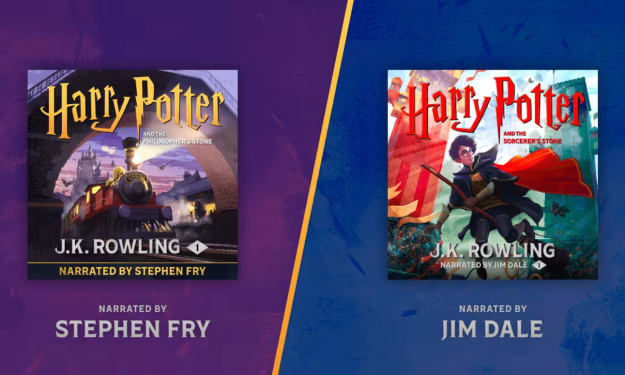
8 Money Makin Audio Books You Have to Read
Building wealth isn’t just about getting a high-paying job—it’s about learning the right strategies, adopting the right mindset, and constantly improving your financial education. Luckily, there are some incredible books out there that can help you on your journey. Here are 10 books that have helped me (and so many others) understand money and wealth-building:
By BookshlefBliss2 years ago in BookClub
Jolabokaflod - a word I never knew I needed
The December nights are long and cold in Iceland. And, with alcohol at prohibitive prices, literature becomes the local solution. Jolabokaflod is the festive tradition of turning up at your mate’s on Christmas Eve with the gift of a book. Volumes exchanged, everybody slumps by the fire in a companionable silence and reads the night away.
By Andy Potts2 years ago in BookClub
10 Best Books for Making Money
Building wealth isn’t just about getting a high-paying job—it’s about learning the right strategies, adopting the right mindset, and constantly improving your financial education. Luckily, there are some incredible books out there that can help you on your journey. Here are 10 books that have helped me (and so many others) understand money and wealth-building:
By BookshlefBliss2 years ago in BookClub
How To Make Learning As Addictive As Social Media
Education in poor counties like Sudan, Afghanistan and many more often creates inequality, as wealthier people can afford a good education, while poorer people struggle to learn basic skills like reading and writing. I was lucky, though, because even though I didn’t grow up wealthy, I pushed myself to the limits and worked harder as I ever could, allowing me to come to the U.S. for college and later earn a PhD in computer science. About 10 years ago, some people were deciding on how to work on making education accessible to everyone, including myself. At the time, I was a professor at Carnegie Mellon, and I started thinking with my PhD student, Gerrard, about how we could achieve this. We initially considered teaching subjects like math or computer science but eventually decided on foreign languages, especially English. Why? Because about two billion people worldwide are learning a foreign language, and most of them are learning English, which can dramatically increase one’s earning potential. Learning English can be life-changing—unlike math, you don’t need a degree to earn more money by learning a language. A waiter who learns English can get a better-paying job in a hotel. There was a need to make education accessible to everyone, and the need to reach people through smartphones, as building schools worldwide would be too expensive. Most people already have access to smartphones, and that number is growing. So, Duolingo was created, a platform where people can learn languages for free. The app operates on a "freemium" model, meaning it’s free to use but includes ads unless you subscribe to remove them. The majority of Duolingo's revenue comes from subscriptions, mostly paid by people in wealthier countries, which helps subsidize the service for people in poorer countries. This creates a form of wealth redistribution, where rich users essentially fund education for all. However, delivering education through smartphones presents a challenge: smartphones also come with highly addictive apps like TikTok, Facebook, Instagram and Whatsapp. To make learning engaging, there was a need to make it as appealing as those apps. They used techniques from mobile games and social media, like streaks (consecutive days of usage), to keep people coming back every day. In fact, over three million Duolingo users have had streaks lasting over a year. Another interesting feature was the use of notifications to encourage users to return, and even added some passive-aggressive notifications when people stop using the app for a while, which surprisingly brings them back. Despite these efforts, I don’t think it’s realistic to make educational apps as addictive as social media. But the key is that learning something meaningful gives you a sense of achievement, unlike endless scrolling through social media, which often feels like a waste of time. That’s why it’s okay if educational apps aren’t as engaging as TikTok or Instagram—they can still motivate people to use them because the content itself has intrinsic value. In fact, more people are learning languages on Duolingo in the U.S. than in all the U.S. high schools combined. I hope these methods can be applied to other subjects like math and science, turning repetition-based learning into something fun and engaging for millions of users. For subjects that require repetition, like math and reading, it’s possible to gamify the learning process. Learning through repetition can be made engaging in the same way Duolingo does. However, more complex topics that need explanations, like advanced concepts, might require video-based teaching, like what Sal Khan does with Khan Academy. But for subjects based on repetition, the same approach can be used to make learning fun and effective. The ultimate goal is to use smartphones to provide quality education to everyone, regardless of wealth. My final plea to you: please do your language lessons today! Thanks for Reading
By Sharif Muideen 2 years ago in BookClub
A Personal, Informative Look at the Ultimate Wellness Playbook; A Review of "The TB12 Method" by: Tom Brady
Tom Brady, the NFL legend widely regarded as one of the greatest quarterbacks in history, has amassed more than just Super Bowl rings throughout his career—he's also built an empire around his health and wellness philosophy. In his book The TB12 Method, Brady shares the principles that have kept him playing at an elite level well into his 40s, defying the conventional timeline of a professional athlete's career. It's not just about the workout regimen or the diet; it's about a holistic approach to longevity, recovery, and performance. Here's an in-depth review of the book, broken down into six key areas.
By Future of Resilience 2 years ago in BookClub