Nonfiction
30 Deep Emotional Love Quotes to Touch the Heart
Deep Emotional Love Quotes—Words That Speak for the Soul Deep emotional love quotes—when words fail, emotions speak. But sometimes, even emotions need the perfect words. That's why deep emotional love quotes matter so much. Whether you’re falling in love, cherishing a long relationship, or healing a broken heart, these quotes help you say what’s resting deep inside your soul.
By Owais Ahmedabout a year ago in BookClub
What I Learned from The Anxious Generation by Jonathan Haidt
Reading The Anxious Generation was more than just an intellectual exercise — it was a wake-up call. Jonathan Haidt presents a compelling, data-driven account of how a seismic shift in childhood experiences, beginning around 2012, has contributed to the sharp rise in mental health issues among today’s youth. The book not only answered many of the questions I had about growing anxiety and depression in younger generations, but it also challenged me to reconsider the environments we create for children — both online and offline.
By Fred Bradfordabout a year ago in BookClub
Escape Reality: Dive into These Gripping Fiction Audiobooks on Audible. AI-Generated.
Great Big Beautiful Life by Emily Henry Emily Henry has firmly established herself as the queen of contemporary romance, known for creating characters that feel like friends and dialogue that sparkles with wit and authenticity. “Great Big Beautiful Life,” her latest release, continues this winning tradition while pushing into new emotional territory.The story follows Maple Sullivan, who returns to her small coastal hometown after a decade away to help her estranged father sell the family bookstore following a health scare. What she doesn’t expect is to find her former best friend (and secret crush) Lucas Greene managing the store — the same Lucas who stopped speaking to her the day after high school graduation with no explanation. As they reluctantly work together to revitalize the struggling bookshop, long-buried feelings resurface alongside painful secrets.What makes this audiobook exceptional is narrator Julia Whelan’s performance. A celebrated voice actor with numerous awards to her name, Whelan brings distinct personality to each character while
By Nicklaus Hansonabout a year ago in BookClub
The Embodied Manifestor by Elizabeth Wellington: Where Creation Truly Begins
We are taught to chase. Chase the goal, the feeling, the version of ourselves who finally deserves it. We are taught that manifestation is about reaching — stretching farther, thinking bigger, trying harder.
By Clara Wrenfieldabout a year ago in BookClub
Deep Quotes About Sad Love: Heartfelt Words for Broken Hearts
Introduction Love is beautiful, but when it turns painful, the emotions can be overwhelming. Deep quotes about sad love resonate deeply with those who have experienced heartbreak, offering comfort and understanding. Whether you're healing from a breakup or reflecting on lost love, these deep quotes about sad love will speak to your soul.
By Owais Ahmedabout a year ago in BookClub
30 Abroad Husband Missing Quotes That Touch the Heart
Abroad Husband Missing Quotes—Emotional Words from the Heart When you’re away from your life partner, especially your husband who is living abroad, words often become your emotional bridge. #abroadhusbandmissingquotes help express what silence cannot. Whether you miss his presence at the dinner table or long for those comforting conversations, heartfelt quotes can say it all.
By Owais Ahmedabout a year ago in BookClub
30 Heart-Touching Quotes on Love: Expressing Deep Emotions
Understanding the Power of Love Quotes Love is an emotion that transcends words, yet the right quote can encapsulate the depth of our feelings. Heart-touching quotes on love serve as a bridge between our emotions and expressions, allowing us to convey affection, longing, and commitment. These quotes resonate because they reflect universal experiences of love, making them relatable and poignant.
By Owais Ahmedabout a year ago in BookClub
Bangla Story
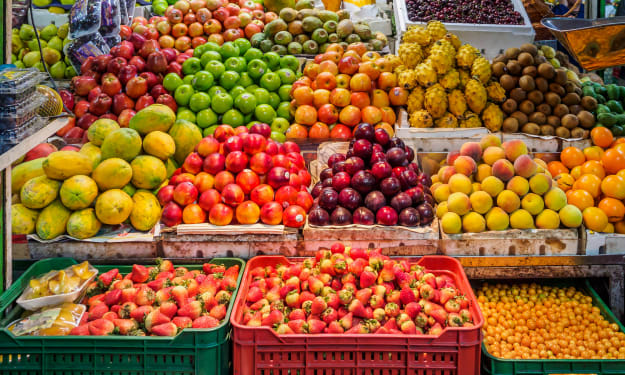
The Fruit Seller When I think of my childhood, I remember many things: the smell of wet earth after the rain, the slow hum of ceiling fans on hot summer afternoons, and the soft rustle of leaves by my window. But one memory shines brighter than the rest—the memory of the fruit seller. I must have been around seven years old then. We lived in a quiet lane in old Kolkata, a place where every passerby seemed familiar, and even the stray dogs had their own routine. Our house was old, with wide wooden windows and high ceilings, and my favorite spot was the window seat in the front room. From there, I could see the world go by. Or at least, my little corner of it. One of the most intriguing figures who passed through our lane was the fruit seller. He was not like the other hawkers who called out for fish, vegetables, or old utensils. He had a voice that sounded like a distant drumbeat, deep and rhythmic. Every morning, his call echoed through the alley, "Fruit! Fresh fruit!" He was tall and broad-shouldered, wrapped in a long robe that fluttered slightly as he walked. A turban sat firmly on his head, and a thick black beard covered most of his face. On his head, he balanced a large wicker basket, brimming with fruits—glossy grapes, yellow bananas, red apples, and, sometimes, the deep red of ripe pomegranates. But what truly set him apart was his eyes. They were kind, almost fatherly, and held stories of distant mountains and old villages. He was a Kabuliwala, an Afghan who had come to Bengal to sell fruit and, perhaps, find a second home. At first, I was a little scared of him. His large frame and strange appearance made me uncomfortable. I used to hide behind the curtain whenever I heard his voice. But I was fascinated. Day after day, I waited by the window, watching him pass, watching how the neighborhood children gathered around him. One day, my mother handed me a coin and said, “Go buy some grapes from the fruit seller.” I hesitated. She smiled and said, “He’s kind. He won’t bite.” With shaky steps, I stepped outside, the coin sweaty in my fist. He saw me and stopped. “Fruit, babu?” he asked, his accent thick but gentle. I nodded. “Grapes,” I whispered. He bent down, lifted the cover of his basket, and picked out a small bunch. I handed him the coin, but he shook his head. “For you, gift,” he said. I blinked. “But—why?” He just smiled. “You are little. Like my daughter.” From that day on, everything changed. I stopped hiding behind the curtains. Every morning, I waited for him. Sometimes, he brought me a guava, other days an orange. He never took money from me. And slowly, he began to talk—to really talk. He told me about his home in Kabul, where the mountains touched the sky and the air smelled of pine. He spoke of his daughter, who was about my age, with big eyes and a stubborn laugh. He said she liked to draw pictures in the sand and play with wooden toys. "She is brave like you," he said once, touching his heart. One morning, I asked him, “Do you miss your home?” He looked at the sky for a moment, then nodded. “Yes, every day. But I come here to earn, to send money back for her books and clothes. Maybe one day, I’ll bring her here.” I thought about his daughter a lot after that. I imagined what she looked like, what games she played, whether she too sat by a window like me, waiting to hear about a faraway place called India. We spoke about many things after that—about mangoes and monkeys, about trains and snowfall. I would tell him what I learned in school, and he would tell me stories of deserts and caravans. He would sometimes teach me Afghan words, and I would teach him Bengali ones. We laughed a lot, and sometimes we sat in silence. But the silence was never awkward. It was like sitting with a friend who didn’t need words. One morning, he looked at me and asked, “Do you have a sister?” “Yes,” I replied. “She’s very little.” He smiled. “I knew it. Your eyes... they have love.” I didn’t fully understand what he meant back then, but those words stayed with me.
By Nabir Mondolabout a year ago in BookClub