Fiction
Sunrise on the Reaping by Suzanne Collins
Suzanne Collins—my goodness. Never stop wielding that pen, my glorious queen. You have done it again. This may or may not be coming from a place of recency bias, but Sunrise on the Reaping might be the best book in the Hunger Games series for me, which I was absolutely not expecting going into it.
By angela hepworthabout a year ago in BookClub
Bangla Story
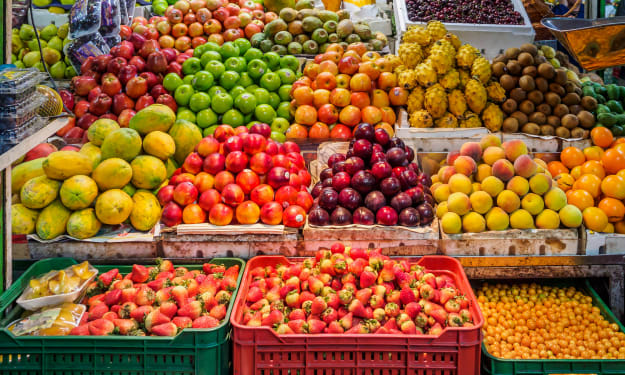
The Fruit Seller When I think of my childhood, I remember many things: the smell of wet earth after the rain, the slow hum of ceiling fans on hot summer afternoons, and the soft rustle of leaves by my window. But one memory shines brighter than the rest—the memory of the fruit seller. I must have been around seven years old then. We lived in a quiet lane in old Kolkata, a place where every passerby seemed familiar, and even the stray dogs had their own routine. Our house was old, with wide wooden windows and high ceilings, and my favorite spot was the window seat in the front room. From there, I could see the world go by. Or at least, my little corner of it. One of the most intriguing figures who passed through our lane was the fruit seller. He was not like the other hawkers who called out for fish, vegetables, or old utensils. He had a voice that sounded like a distant drumbeat, deep and rhythmic. Every morning, his call echoed through the alley, "Fruit! Fresh fruit!" He was tall and broad-shouldered, wrapped in a long robe that fluttered slightly as he walked. A turban sat firmly on his head, and a thick black beard covered most of his face. On his head, he balanced a large wicker basket, brimming with fruits—glossy grapes, yellow bananas, red apples, and, sometimes, the deep red of ripe pomegranates. But what truly set him apart was his eyes. They were kind, almost fatherly, and held stories of distant mountains and old villages. He was a Kabuliwala, an Afghan who had come to Bengal to sell fruit and, perhaps, find a second home. At first, I was a little scared of him. His large frame and strange appearance made me uncomfortable. I used to hide behind the curtain whenever I heard his voice. But I was fascinated. Day after day, I waited by the window, watching him pass, watching how the neighborhood children gathered around him. One day, my mother handed me a coin and said, “Go buy some grapes from the fruit seller.” I hesitated. She smiled and said, “He’s kind. He won’t bite.” With shaky steps, I stepped outside, the coin sweaty in my fist. He saw me and stopped. “Fruit, babu?” he asked, his accent thick but gentle. I nodded. “Grapes,” I whispered. He bent down, lifted the cover of his basket, and picked out a small bunch. I handed him the coin, but he shook his head. “For you, gift,” he said. I blinked. “But—why?” He just smiled. “You are little. Like my daughter.” From that day on, everything changed. I stopped hiding behind the curtains. Every morning, I waited for him. Sometimes, he brought me a guava, other days an orange. He never took money from me. And slowly, he began to talk—to really talk. He told me about his home in Kabul, where the mountains touched the sky and the air smelled of pine. He spoke of his daughter, who was about my age, with big eyes and a stubborn laugh. He said she liked to draw pictures in the sand and play with wooden toys. "She is brave like you," he said once, touching his heart. One morning, I asked him, “Do you miss your home?” He looked at the sky for a moment, then nodded. “Yes, every day. But I come here to earn, to send money back for her books and clothes. Maybe one day, I’ll bring her here.” I thought about his daughter a lot after that. I imagined what she looked like, what games she played, whether she too sat by a window like me, waiting to hear about a faraway place called India. We spoke about many things after that—about mangoes and monkeys, about trains and snowfall. I would tell him what I learned in school, and he would tell me stories of deserts and caravans. He would sometimes teach me Afghan words, and I would teach him Bengali ones. We laughed a lot, and sometimes we sat in silence. But the silence was never awkward. It was like sitting with a friend who didn’t need words. One morning, he looked at me and asked, “Do you have a sister?” “Yes,” I replied. “She’s very little.” He smiled. “I knew it. Your eyes... they have love.” I didn’t fully understand what he meant back then, but those words stayed with me.
By Nabir Mondolabout a year ago in BookClub
30 Abroad Life Sad Quotes: Navigating the Emotions of Living Far from Home
Abroad Life Sad Quotes: Understanding the Emotional Landscape Living abroad is a journey filled with excitement, discovery, and personal growth. However, it also comes with its share of challenges, particularly the emotional toll of being away from familiar surroundings and loved ones. The feelings of homesickness, loneliness, and longing are common among expatriates, making the experience both enriching and emotionally complex.
By Owais Ahmedabout a year ago in BookClub
“I Spoke to Strangers Every Day for a Month—This Is What I Learned”
It started as a dare. Or maybe a breakdown. I’d gone through a rough breakup, moved to a new city, and realized I could go entire days without speaking to another human face-to-face.
By Article Writer Ridoyabout a year ago in BookClub
Timeless Moments
The old clock in the corner of the room ticked steadily, its rhythmic sound almost comforting. It had been with Julia since she was a child—an heirloom passed down through generations. It wasn’t a fancy clock, nothing ornate or impressive, but it had always been a constant presence in her life. As a child, she used to lie on the floor beneath it, staring up at its brass hands as they moved, wondering where they went when they weren’t on the dial. Time had always fascinated her.
By THE STORY ROOMabout a year ago in BookClub
Rachel Reviews: The Eye Opener: Collection of Short Stories II by Indrajit Garai
I mostly really enjoy Indrajit Garai's books and I am a sucker for a short story. In this collection, there are three stories: The Alignment, The Changing Turf and The Eye Opener.
By Rachel Deemingabout a year ago in BookClub