Discussion
Oracle Planning Implementation Professional Exam 2024: Ultimate Preparation Guide
Professionals seeking to demonstrate their ability in implementing Oracle’s planning solutions should take advantage of the Oracle Planning Implementation Professional exam 2024. No matter what level you are at with Oracle Planning Implementation, this guide will offer valuable preparation assistance. This guide will explain the exam parameters of Oracle Planning Implementation Professional together with effective study practices and proven techniques for answering questions correctly.
By Cert Studyabout a year ago in BookClub
Physical Healing
Stages of Physical Healing After Injury Injuries are an inevitable part of life, whether caused by sports, accidents, overuse, or surgery. Understanding the natural healing process is crucial for proper recovery, rehabilitation, and prevention of long-term complications. The body has a remarkable ability to repair itself, and this process can be categorized into distinct stages. Each stage involves complex cellular and biochemical events that work in harmony to restore the body to its pre-injury state—or as close to it as possible.
By Gabriela Toneabout a year ago in BookClub
Coping Mechanisms for Anxiety
Coping Mechanisms for Anxiety That Actually Work A Story of Finding Calm It was a Tuesday afternoon when Sarah realized something wasn’t right. She was sitting at her desk, staring at her computer screen, but the words blurred. Her heart was racing, her palms were sweaty, and a tight knot gripped her stomach. It wasn’t the first time this had happened.
By Gabriela Toneabout a year ago in BookClub
Common Myths
Common Myths About Mental Health Debunked Mental health has become an increasingly important topic in recent years, as awareness continues to grow and conversations around emotional well-being become more mainstream. Despite the progress, there are still numerous myths and misconceptions surrounding mental health that prevent people from seeking the help they need or supporting others effectively. These myths not only contribute to the stigma surrounding mental health but also create misunderstandings about mental illnesses and those who live with them.
By Gabriela Toneabout a year ago in BookClub
Sunrise on the Reaping by Suzanne Collins
Suzanne Collins—my goodness. Never stop wielding that pen, my glorious queen. You have done it again. This may or may not be coming from a place of recency bias, but Sunrise on the Reaping might be the best book in the Hunger Games series for me, which I was absolutely not expecting going into it.
By angela hepworthabout a year ago in BookClub
Bangla Story
The Fruit Seller When I think of my childhood, I remember many things: the smell of wet earth after the rain, the slow hum of ceiling fans on hot summer afternoons, and the soft rustle of leaves by my window. But one memory shines brighter than the rest—the memory of the fruit seller. I must have been around seven years old then. We lived in a quiet lane in old Kolkata, a place where every passerby seemed familiar, and even the stray dogs had their own routine. Our house was old, with wide wooden windows and high ceilings, and my favorite spot was the window seat in the front room. From there, I could see the world go by. Or at least, my little corner of it. One of the most intriguing figures who passed through our lane was the fruit seller. He was not like the other hawkers who called out for fish, vegetables, or old utensils. He had a voice that sounded like a distant drumbeat, deep and rhythmic. Every morning, his call echoed through the alley, "Fruit! Fresh fruit!" He was tall and broad-shouldered, wrapped in a long robe that fluttered slightly as he walked. A turban sat firmly on his head, and a thick black beard covered most of his face. On his head, he balanced a large wicker basket, brimming with fruits—glossy grapes, yellow bananas, red apples, and, sometimes, the deep red of ripe pomegranates. But what truly set him apart was his eyes. They were kind, almost fatherly, and held stories of distant mountains and old villages. He was a Kabuliwala, an Afghan who had come to Bengal to sell fruit and, perhaps, find a second home. At first, I was a little scared of him. His large frame and strange appearance made me uncomfortable. I used to hide behind the curtain whenever I heard his voice. But I was fascinated. Day after day, I waited by the window, watching him pass, watching how the neighborhood children gathered around him. One day, my mother handed me a coin and said, “Go buy some grapes from the fruit seller.” I hesitated. She smiled and said, “He’s kind. He won’t bite.” With shaky steps, I stepped outside, the coin sweaty in my fist. He saw me and stopped. “Fruit, babu?” he asked, his accent thick but gentle. I nodded. “Grapes,” I whispered. He bent down, lifted the cover of his basket, and picked out a small bunch. I handed him the coin, but he shook his head. “For you, gift,” he said. I blinked. “But—why?” He just smiled. “You are little. Like my daughter.” From that day on, everything changed. I stopped hiding behind the curtains. Every morning, I waited for him. Sometimes, he brought me a guava, other days an orange. He never took money from me. And slowly, he began to talk—to really talk. He told me about his home in Kabul, where the mountains touched the sky and the air smelled of pine. He spoke of his daughter, who was about my age, with big eyes and a stubborn laugh. He said she liked to draw pictures in the sand and play with wooden toys. "She is brave like you," he said once, touching his heart. One morning, I asked him, “Do you miss your home?” He looked at the sky for a moment, then nodded. “Yes, every day. But I come here to earn, to send money back for her books and clothes. Maybe one day, I’ll bring her here.” I thought about his daughter a lot after that. I imagined what she looked like, what games she played, whether she too sat by a window like me, waiting to hear about a faraway place called India. We spoke about many things after that—about mangoes and monkeys, about trains and snowfall. I would tell him what I learned in school, and he would tell me stories of deserts and caravans. He would sometimes teach me Afghan words, and I would teach him Bengali ones. We laughed a lot, and sometimes we sat in silence. But the silence was never awkward. It was like sitting with a friend who didn’t need words. One morning, he looked at me and asked, “Do you have a sister?” “Yes,” I replied. “She’s very little.” He smiled. “I knew it. Your eyes... they have love.” I didn’t fully understand what he meant back then, but those words stayed with me.
By Nabir Mondolabout a year ago in BookClub
Book Review: “A Little Life” - Hanya Yanagihara
I came to this book via a recommendation. Although hesitantly, the million copies sold and its hype among the youth pushed me to it. Granted, reading under such motives is no outstanding advice. Regardless, if a book is a bestseller and a sensation, there must be something of value in it.
By Carlos M. Suárez Tavernierabout a year ago in BookClub
30 Abroad Life Sad Quotes: Navigating the Emotions of Living Far from Home
Abroad Life Sad Quotes: Understanding the Emotional Landscape Living abroad is a journey filled with excitement, discovery, and personal growth. However, it also comes with its share of challenges, particularly the emotional toll of being away from familiar surroundings and loved ones. The feelings of homesickness, loneliness, and longing are common among expatriates, making the experience both enriching and emotionally complex.
By Owais Ahmedabout a year ago in BookClub
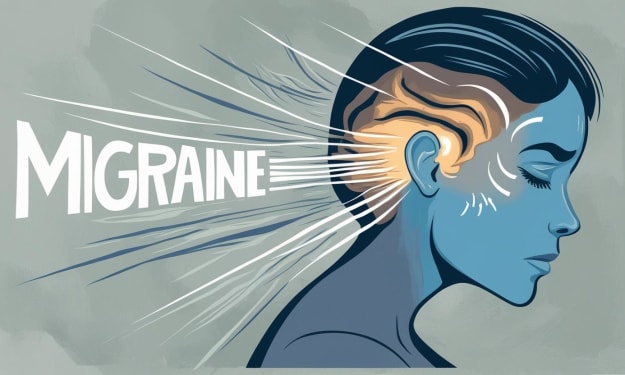
Understanding Migraines
Understanding Migraines: Causes, Symptoms, and Effective Treatments Migraines are more than just headaches. They are a neurological condition that can significantly disrupt a person’s daily life. Affecting more than **1 billion people worldwide**, migraines are the third most prevalent illness globally. They come with intense, throbbing pain, and often bring a host of other symptoms, such as nausea, sensitivity to light and sound, and visual disturbances.
By Gabriela Toneabout a year ago in BookClub
Staying in Your Comfort Zone
The Hidden Dangers of Staying in Your Comfort Zone In the pursuit of happiness and security, many people unknowingly fall into a trap: the comfort zone. It’s a psychological state where one feels safe, at ease, and in control. At first glance, this might sound like a good place to be — who doesn’t want peace of mind and predictability in life? However, staying in your comfort zone for too long can be one of the most dangerous decisions you make for your personal and professional growth.
By Gabriela Toneabout a year ago in BookClub
How is Reading Summaries Helpful for You?
In our schools, we were taught about summary writing, but no one really talked about reading summaries of books or reading summarized books. Many of us are still not clear about the idea of a summarized book and the benefits it has. A summarized book has all the key points, main ideas, and important events of the book compiled together to create a rather shorter version of the original book. The idea of reading summarized books is now widely appreciated, and here are the reasons why
By Book Summary Publishingabout a year ago in BookClub