Discussion
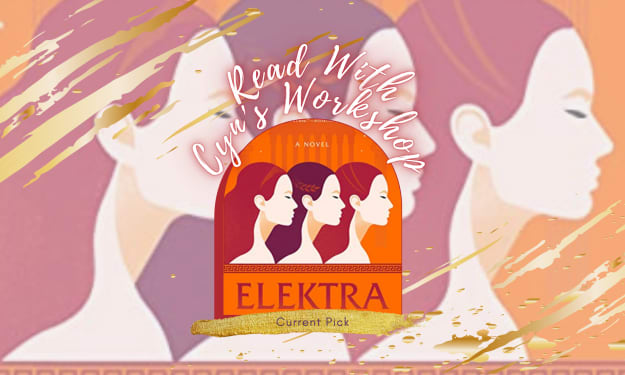
Read with Cyn’s Workshop January Book Club Pick
Hey there, everyone! Welcome to another month of reading! Once again, I’m so happy you all have stuck around and joined me on my reading journey. It’s almost the new year! Woohoo! And I’m so happy you all voted for Elektra by Jennifer Saint as the first book to start another year of Read With Cyn’s Workshop! I am so excited to begin reading this book with you all!
By Cyn's Workshop2 years ago in BookClub
Learning to Love Yourself Before Loving Others
Love is a profound and multifaceted emotion that connects individuals in meaningful ways. However, to truly experience and nurture healthy relationships, it is essential to begin with self-love. Loving yourself is not about vanity or selfishness; it is about building self-worth, recognizing your value, and treating yourself with the kindness and respect you deserve. By establishing a strong foundation of self-worth, you create the capacity to love others in a deeper, more authentic way.
By Ebony Ward2 years ago in BookClub
Jolabokaflod - a word I never knew I needed
The December nights are long and cold in Iceland. And, with alcohol at prohibitive prices, literature becomes the local solution. Jolabokaflod is the festive tradition of turning up at your mate’s on Christmas Eve with the gift of a book. Volumes exchanged, everybody slumps by the fire in a companionable silence and reads the night away.
By Andy Potts2 years ago in BookClub
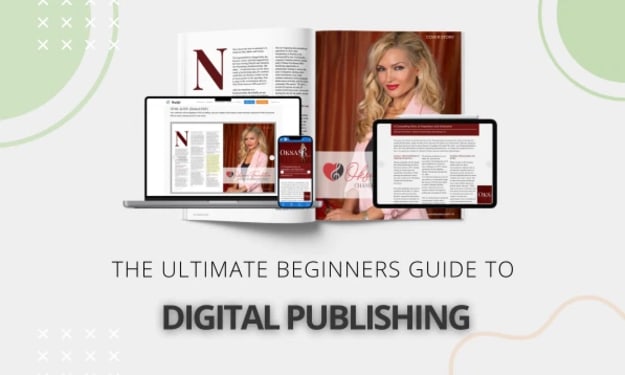
How Can I Successfully Market and Sell My eBook Without a Vast Writing Reputation?
In today’s digital era, publishing an eBook has become more accessible than ever. However, one of the prime concerns for aspiring authors is the challenge of building credibility and reaching an audience, especially if they lack an established reputation as a writer. If you're asking how to sell your eBook without a huge following, you’re not alone. Below are some actionable strategies that can help you not only reach your target audience but also establish a brand for yourself as a writer.
By Hannah miller2 years ago in BookClub
How To Make Learning As Addictive As Social Media
Education in poor counties like Sudan, Afghanistan and many more often creates inequality, as wealthier people can afford a good education, while poorer people struggle to learn basic skills like reading and writing. I was lucky, though, because even though I didn’t grow up wealthy, I pushed myself to the limits and worked harder as I ever could, allowing me to come to the U.S. for college and later earn a PhD in computer science. About 10 years ago, some people were deciding on how to work on making education accessible to everyone, including myself. At the time, I was a professor at Carnegie Mellon, and I started thinking with my PhD student, Gerrard, about how we could achieve this. We initially considered teaching subjects like math or computer science but eventually decided on foreign languages, especially English. Why? Because about two billion people worldwide are learning a foreign language, and most of them are learning English, which can dramatically increase one’s earning potential. Learning English can be life-changing—unlike math, you don’t need a degree to earn more money by learning a language. A waiter who learns English can get a better-paying job in a hotel. There was a need to make education accessible to everyone, and the need to reach people through smartphones, as building schools worldwide would be too expensive. Most people already have access to smartphones, and that number is growing. So, Duolingo was created, a platform where people can learn languages for free. The app operates on a "freemium" model, meaning it’s free to use but includes ads unless you subscribe to remove them. The majority of Duolingo's revenue comes from subscriptions, mostly paid by people in wealthier countries, which helps subsidize the service for people in poorer countries. This creates a form of wealth redistribution, where rich users essentially fund education for all. However, delivering education through smartphones presents a challenge: smartphones also come with highly addictive apps like TikTok, Facebook, Instagram and Whatsapp. To make learning engaging, there was a need to make it as appealing as those apps. They used techniques from mobile games and social media, like streaks (consecutive days of usage), to keep people coming back every day. In fact, over three million Duolingo users have had streaks lasting over a year. Another interesting feature was the use of notifications to encourage users to return, and even added some passive-aggressive notifications when people stop using the app for a while, which surprisingly brings them back. Despite these efforts, I don’t think it’s realistic to make educational apps as addictive as social media. But the key is that learning something meaningful gives you a sense of achievement, unlike endless scrolling through social media, which often feels like a waste of time. That’s why it’s okay if educational apps aren’t as engaging as TikTok or Instagram—they can still motivate people to use them because the content itself has intrinsic value. In fact, more people are learning languages on Duolingo in the U.S. than in all the U.S. high schools combined. I hope these methods can be applied to other subjects like math and science, turning repetition-based learning into something fun and engaging for millions of users. For subjects that require repetition, like math and reading, it’s possible to gamify the learning process. Learning through repetition can be made engaging in the same way Duolingo does. However, more complex topics that need explanations, like advanced concepts, might require video-based teaching, like what Sal Khan does with Khan Academy. But for subjects based on repetition, the same approach can be used to make learning fun and effective. The ultimate goal is to use smartphones to provide quality education to everyone, regardless of wealth. My final plea to you: please do your language lessons today! Thanks for Reading
By Sharif Muideen 2 years ago in BookClub
AUDIOBOOKS WERE MADE FOR BLIND PEOPLE
As a compulsive reader of physical books, I tend to cue up an audiobook not so much as a sonic counterpart to print but as a portable verbal atmosphere to accompany some errand or everyday hustle. I don’t drive and haven’t had a valid driver’s license in twenty years, so I never have the opportunity to tackle, say, all of “Beowulf” or “Don Quixote” during a regular commute. But I’ve taken in “The Waste Land” while waiting in line at the post office, listened to Richard Feynman explain electromagnetism on the 7 train out to Citi Field, heard Marx anatomize the commodity form while walking trails in Van Cortlandt Park, had Iris Murdoch’s swirling sentences in my earbuds while ordering an everything bagel (lightly toasted). Once at a Key Food in Riverdale, I became so entranced by the mellifluous unctuousness of Jeremy Irons reading “Lolita” that, in my fugue state, the names of the different Triscuit varieties on the shelves were mystically annexed to Humbert Humbert’s monologue: “Ladies and gentleman of the jury, fire-roasted tomato, smoked gouda, hint of sea salt, avocado cilantro and lime.”
By Louis Morel2 years ago in BookClub
The AI Revolution: How Artificial Intelligence is Changing Our Daily Lives. Content Warning.
It’s a crisp Monday morning, and your alarm rings at precisely 6:30 AM. But this isn’t just any alarm clock; it’s powered by artificial intelligence. It knows you stayed up late the night before and adjusted your wake-up time for optimal rest. As you roll out of bed, your smart assistant cheerfully informs you of the weather, your schedule, and even suggests an outfit based on the day’s forecast. Welcome to the AI-driven life.
By Chikamso Odionyenfe2 years ago in BookClub
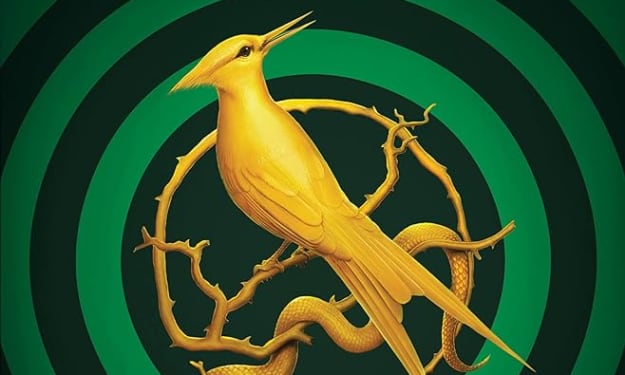
The Ballad of Songbirds and Snakes by Suzanne Collins
I’m a big fan of the Hunger Games series. So of course, I was really looking forward to reading this prequel about Coriolanus Snow’s past, and the book didn’t disappoint. It’s not perfect, by any means, but the interesting concepts, powerful moments, and solid character depictions/developments throughout the novel deeply impressed me and made the book worth reading.
By angela hepworth2 years ago in BookClub
Notes On: Confessions Of A Jane Austen Addict by Laurie Viera Rigler
Of course I had to read this book. I mean look at me. Just look at me. And was I personally attacked and called out by the book? Yes. And did I LOVE the intense addiction the main character, Courtney, had with Jane Austen (and deeply relate to that)? Also yes.
By The Austen Shelf2 years ago in BookClub