Challenge
How Chandrayan Gupta Became a #1 Amazon Bestseller with Two Powerful Strategies
Earlier this year, Chandrayan Gupta made a bold move,he self-published his psychological crime thriller, Reason to Fight. As an Indian author, he decided to partner with Notion Press for the paperback version, a respected name in the local publishing industry. For the ebook, however, he turned to the global giant Amazon’s Kindle Direct Publishing (KDP).
By lamrani farid2 years ago in BookClub
AUDIOBOOKS WERE MADE FOR BLIND PEOPLE
As a compulsive reader of physical books, I tend to cue up an audiobook not so much as a sonic counterpart to print but as a portable verbal atmosphere to accompany some errand or everyday hustle. I don’t drive and haven’t had a valid driver’s license in twenty years, so I never have the opportunity to tackle, say, all of “Beowulf” or “Don Quixote” during a regular commute. But I’ve taken in “The Waste Land” while waiting in line at the post office, listened to Richard Feynman explain electromagnetism on the 7 train out to Citi Field, heard Marx anatomize the commodity form while walking trails in Van Cortlandt Park, had Iris Murdoch’s swirling sentences in my earbuds while ordering an everything bagel (lightly toasted). Once at a Key Food in Riverdale, I became so entranced by the mellifluous unctuousness of Jeremy Irons reading “Lolita” that, in my fugue state, the names of the different Triscuit varieties on the shelves were mystically annexed to Humbert Humbert’s monologue: “Ladies and gentleman of the jury, fire-roasted tomato, smoked gouda, hint of sea salt, avocado cilantro and lime.”
By Louis Morel2 years ago in BookClub
"Inside Elon Musk's Empire: Secrets Behind His Billion-Dollar Ventures!"
Elon musk impire Elon Musk, the enigmatic entrepreneur and visionary, has captured the world's attention with his relentless drive to innovate and push the boundaries of technology. From his humble beginnings in South Africa to founding a series of groundbreaking companies that have revolutionized industries, Musk's impact on the realms of space exploration, transportation, and renewable energy is unparalleled. This article explores the remarkable journey of Elon Musk and delves into the key milestones of his empire, shedding light on his early life, entrepreneurial ventures, futuristic projects, and the challenges he has faced along the way. 1. Early Life and Education of Elon Musk Childhood in South Africa Elon Musk, the tech mogul extraordinaire, had a humble beginning in Pretoria, South Africa. As a child, Musk developed a knack for computers and entrepreneurship, selling his first software at the age of 12. Move to North America and Education Eager to make his mark on the world, Musk moved to North America, first attending Queen's University in Canada and then transferring to the University of Pennsylvania. Musk then pursued a Ph.D. at Stanford but dropped out after just two days to embark on his entrepreneurial journey. 2. Entrepreneurial Ventures and Successes Founding Zip2 and X.com Musk's entrepreneurial spirit led him to co-found Zip2, a software company that provided business directories and maps for newspapers. He then went on to establish X.com, which later evolved into PayPal, revolutionizing online payment systems. Success with PayPal The success of PayPal made Musk a multimillionaire, paving the way for his future ventures in the tech and space industries. 3. Visionary Leadership at SpaceX Founding SpaceX In 2002, Musk founded SpaceX with the goal of reducing space transportation costs and enabling the colonization of Mars. SpaceX has since become a leading force in the aerospace industry, pioneering reusable rocket technology. Technological Advances and Achievements Under Musk's visionary leadership, SpaceX has achieved milestones such as launching the Falcon Heavy rocket and Crew Dragon spacecraft, making commercial space travel a reality. 4. Revolutionizing Transportation with Tesla Founding Tesla Motors Musk disrupted the automotive industry by founding Tesla Motors, a company dedicated to producing electric vehicles that are both sustainable and high-performance. Innovations in Electric Vehicles Tesla's innovative electric vehicles, such as the Model S and Model 3, have redefined the concept of sustainable transport and have set new standards for the automotive industry as a whole. Musk's vision for a greener future continues to drive Tesla's success.# 5. Innovations in Renewable Energy with SolarCity ## Founding SolarCity Elon Musk's venture into renewable energy took a significant leap when he co-founded SolarCity in 2006. The company aimed to make solar energy more accessible and affordable for homeowners and businesses. Musk envisioned a future where sustainable energy sources could power homes and reduce dependence on traditional fossil fuels. ## Advancing Solar Energy Solutions Under Musk's leadership, SolarCity made great strides in advancing solar energy solutions. The company developed innovative solar panel technology and implemented creative financing options to make solar installations more widespread. Musk's vision for a sustainable energy future continues to drive innovation in the renewable energy sector. # 6. Bold Plans for the Future: Neuralink and The Boring Company ## Neuralink: Merging Humans with AI Neuralink, founded by Elon Musk in 2016, aims to merge the human brain with artificial intelligence through advanced brain-computer interface technology. The ambitious goal is to enhance human capabilities and potentially address neurological disorders. Musk's vision for a symbiotic relationship between humans and AI is both groundbreaking and futuristic. ## The Boring Company: Tackling Urban Transportation Challenges In 2016, Musk founded The Boring Company with the mission to revolutionize urban transportation and alleviate traffic congestion. The company focuses on developing underground tunnel systems for high-speed transportation, such as the Hyperloop. Musk's bold approach to tackling urban mobility challenges showcases his innovative spirit and determination to disrupt traditional transportation systems. # 7. Controversies and Challenges Faced by Elon Musk While Elon Musk is celebrated for his visionary ideas and entrepreneurial success, he has also faced controversies and challenges throughout his career. From public disputes on social media to legal battles with regulatory authorities, Musk's bold and sometimes unconventional actions have sparked debate and criticism. Despite facing setbacks and obstacles, Musk continues to forge ahead with his ambitious projects, undeterred by the naysayers.In conclusion, Elon Musk's empire stands as a testament to the power of ambition, innovation, and unwavering determination. His ability to envision and actualize groundbreaking ideas has not only transformed industries but has also inspired a generation of dreamers and doers. As Musk continues to push the boundaries of what is possible, his legacy as a pioneer in technology and sustainable solutions is sure to leave a lasting impact on the world for years to come. FAQs about Elon Musk Empire 1. What are some key companies founded by Elon Musk? 2. How has Elon Musk revolutionized the transportation industry? 3. What are some of the futuristic projects Elon Musk is currently working on? 4. What challenges has Elon Musk faced throughout his career?
By Story silver book 2 years ago in BookClub
7 Techniques to Help You Recall 80% of What You Read
This is very common... You perused a remarkable tome like James Clear's Atomic Habits or Peter Attia's Outlive. You read the book, but then you completely forget what it's about when you try to talk about it with someone.
By Driss Lotfi2 years ago in BookClub
Carrot Juice for Weight Loss
Over time, carrot juice has become more popular among individuals who are looking for a method that is both secure and efficient for reducing those unwanted pounds. Carrot juice is a beneficial addition to diets that are extensively rich in nutrients and reduction since it is not only rich in nutrients but also low in the number of calories it contains.
By Velvet Helth2 years ago in BookClub
“The Dawn of Tomorrow”
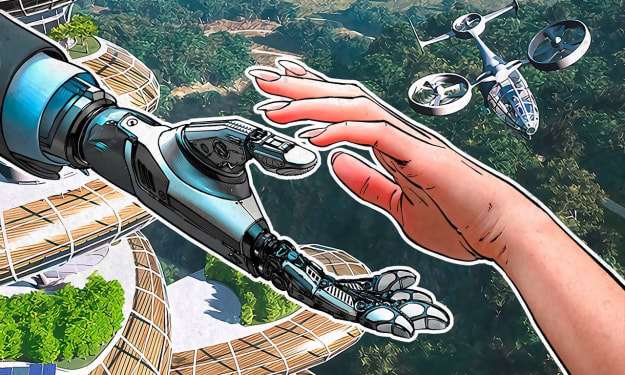
The year is 2050. Earth is a kaleidoscope of contrasts—stunning advancements alongside haunting scars of a troubled past. The cities gleam with bioluminescent architecture, powered by quantum energy grids. The air is clean, the skies azure, and yet the weight of history is etched into every innovation. In this world lived Kiana Reyes, a 27-year-old genetic programmer and bioengineer. Her focus? The future of humanity itself. She worked at Lumina Labs, a pioneering research institute based in New Manila, a city that floated on the Pacific, tethered by self-sustaining eco-pods. Here, nature and technology danced in harmony—coral reefs intertwined with graphene infrastructure, solar petals blossomed at dawn to capture energy, and rainwater ran through purification veins embedded in streets. But not everything was perfect. Kiana’s father, a climate refugee from 2025, always reminded her of the fragility beneath the beauty. “What’s lost, my child, is irreplaceable. What’s built, though, can be improved.” Those words resonated as Kiana worked on Project Aurora, a daring experiment to terraform Mars. A Meeting of Minds One brisk morning, Kiana received an encrypted message: “There is no future without roots. Meet me at the Axis Spire tonight. - L.” Axis Spire was New Manila’s neural hub, a monument to human connection. Inside, people could experience shared memories, learn entire disciplines in hours, or even simulate lifetimes within moments. It was also heavily monitored. Curiosity and caution mingling, Kiana arrived just after dusk. The spire glowed faintly, its facade rippling with projections of historical events—a poignant reminder of humanity’s journey. She saw a shadow emerge from the holographic haze. “Lennox,” she breathed. Lennox, a former AI ethicist turned activist, had vanished three years ago after exposing the dangers of cognitive clouding—a technology that blurred lines between human and artificial consciousness. He was a ghost in the machine, a voice that wouldn’t be silenced. “Kiana,” he greeted, his voice laced with urgency. “Aurora is a trap.” She stared, her mind racing. “A trap? It’s humanity’s hope. Mars is our second chance.” Lennox shook his head. “It’s a diversion. While we focus on a distant planet, Earth’s foundations crumble. The quantum grids are destabilizing. Aurora’s resources are draining the planet dry.” Kiana felt the ground shift beneath her convictions. “But… if we don’t leave, Earth won’t sustain us.” “That’s the narrative they feed you,” Lennox said. “But there’s another way—one they don’t want us to see.” Seeds of Hope Lennox led her to a hidden lab on the outskirts of New Manila. Inside, lush greenery thrived under a canopy of artificial sunlight. Bioluminescent vines coiled around the walls, and a faint hum of energy vibrated in the air. “This is Eden-12,” Lennox explained. “A living system that heals Earth. It doesn’t terraform planets; it terraforms home.” Kiana was awestruck. The technology combined genetic programming with nanotechnology, creating microorganisms that could purify soil, regenerate forests, and even cool the atmosphere. “But why hide this?” she asked, anger rising. “Because Eden-12 doesn’t generate profit. Corporations control Aurora because it guarantees dependency—an endless cycle of investment and exploitation. Eden frees us.” A Choice to Make Days turned into weeks as Kiana dove into the depths of Eden-12. She saw its potential, but she also saw the risk. Releasing the system would disrupt global economies, uproot power structures, and provoke fierce resistance. As Lumina Labs prepared to launch Aurora’s final phase, Kiana faced a dilemma: Should she expose Eden-12, risking chaos but offering a path to salvation, or continue with Aurora, ensuring short-term stability but dooming Earth in the long run? The night of the Aurora launch, Kiana made her decision. The Broadcast In a dramatic turn, Kiana hacked into Axis Spire’s neural network. As millions across the globe tuned in to watch the Aurora launch, their screens flickered, replaced by Kiana’s face. “My name is Kiana Reyes. For years, I believed Aurora was humanity’s hope. But the truth is, our future lies not in the stars, but here, on Earth.” She revealed Eden-12 to the world, detailing its capabilities and the hidden agenda behind Aurora. The broadcast was short-lived—security forces stormed the spire—but the message had been delivered. A New Horizon Kiana disappeared that night, becoming a symbol of resistance. Her actions sparked a global movement. People demanded Eden-12’s release, forcing governments and corporations to adapt. The path was tumultuous, filled with setbacks and sacrifices, but change began. By 2055, Earth was healing. Eden-12 systems spread like veins of hope, restoring balance to the planet. Mars still beckoned, but it was no longer humanity’s escape—it was an option, not a necessity. Kiana’s father’s words echoed through the years: “What’s built can be improved.” The year is 2050. Earth stands as a kaleidoscope of contrasts—stunning advancements shimmering alongside haunting scars from a troubled past. Cities now gleam with bioluminescent architecture powered by quantum energy grids. The air is clean, the skies azure, and yet the weight of humanity's history is etched into every innovation. In this rapidly evolving world lived Kiana Reyes, a 27-year-old genetic programmer and bioengineer. Her focus? The survival of humanity itself. She worked at Lumina Labs, a pioneering research institute nestled in New Manila, a floating city on the Pacific Ocean tethered by self-sustaining eco-pods. Here, nature and technology waltzed in perfect harmony. Coral reefs intertwined with graphene infrastructure, solar petals blossomed at dawn to capture energy, and purified rainwater coursed through street veins lined with nanotech filters. But behind this façade of harmony lay shadows. Kiana’s father, a climate refugee displaced during the Great Climate Collapse of 2025, often reminded her of the fragility beneath this newfound beauty. His words, spoken with quiet conviction, echoed in her mind: “What’s lost, my child, is irreplaceable. What’s built, though, can be improved.” These words fueled her commitment to Project Aurora, a daring initiative to terraform Mars. For Kiana, Mars was humanity’s second chance—a blank slate to rebuild on and escape Earth's inevitable decline. Or so she believed. A Meeting of Minds One brisk morning, Kiana received an encrypted message on her holo-tablet: “There is no future without roots. Meet me at the Axis Spire tonight. - L.” The Axis Spire, New Manila's neural hub, was a marvel of human connection. Here, citizens could share memories, master entire disciplines in hours, and even simulate lifetimes within moments. But it was also heavily monitored—a monument to progress, but with eyes everywhere. Kiana hesitated, yet curiosity overpowered caution. She arrived at the Spire just as the sun dipped below the horizon, casting hues of orange and purple over the floating city. The Spire glowed faintly, its façade rippling with holographic projections of humanity’s history—a poignant reminder of its triumphs and failures. From the haze of holograms, a shadow emerged. Kiana froze as the figure stepped forward. “Lennox,” she whispered, her voice betraying equal parts shock and relief. Lennox, once a celebrated AI ethicist, had vanished three years ago after exposing the dangers of cognitive clouding—a controversial technology that blurred the lines between human and artificial consciousness. Branded a fugitive, he had become a ghost in the machine, a voice of dissent against unchecked progress. “Kiana,” he greeted, his voice heavy with urgency. “Aurora is a trap.” She stared at him, her mind racing. “A trap? No, it’s humanity’s hope. Mars is our second chance!” Lennox shook his head, his expression grave. “It’s a distraction. While we focus on building a distant utopia, Earth’s foundations crumble. The quantum grids are destabilizing, Kiana. And Aurora’s resource demands are draining the planet dry.” His words struck her like a thunderbolt. “But… if we don’t leave, Earth won’t sustain us. We have no choice.” “That’s the narrative they’ve fed you,” Lennox countered. “But there’s another way—one they don’t want you to see.” Seeds of Hope Lennox led Kiana to a hidden lab on the outskirts of New Manila. The place was a stark contrast to the sterile labs of Lumina—alive with lush greenery. Bioluminescent vines spiraled up the walls, and artificial sunlight bathed the room in a golden glow. A soft hum of energy resonated, as if the lab itself were alive. “This is Eden-12,” Lennox explained, gesturing to the vibrant ecosystem around them. “It’s not just a lab. It’s a living system that can heal Earth. We don’t need to terraform other planets—we can terraform home.” Kiana stood in awe, studying the technology. Eden-12 combined genetic programming and nanotechnology to create microorganisms capable of purifying soil, regenerating forests, and even stabilizing atmospheric temperatures. “But why hide this?” she asked, anger rising. “Because it doesn’t generate profit,” Lennox said bluntly. “Aurora guarantees dependency—an endless cycle of investment, exploitation, and control. Eden-12 frees humanity from all that.” A Choice to Make Weeks turned into sleepless nights as Kiana dove into the depths of Eden-12’s research. Every discovery reinforced its potential, but also the risks it posed. Releasing Eden-12 would disrupt global economies, destabilize governments, and threaten the power structures that clung to control. As Lumina Labs prepared for Aurora’s final phase—a global broadcast marking the beginning of Mars colonization—Kiana faced an agonizing dilemma: Should she expose Eden-12, risking chaos but offering salvation? Or stay silent and continue with Aurora, dooming Earth for short-term stability? The Broadcast On the night of Aurora’s launch, Kiana made her choice. As billions tuned in to witness the historic moment, their screens flickered. The triumphant countdown to Aurora’s ignition was abruptly replaced by Kiana’s face. Her voice, steady yet resolute, echoed across the globe. “My name is Kiana Reyes. For years, I believed Aurora was humanity’s hope. But I was wrong. Our future doesn’t lie among the stars—it lies here, on Earth.” She unveiled Eden-12, detailing its transformative capabilities and exposing the hidden agenda behind Aurora. She revealed how corporations had manipulated humanity’s desperation to escape, all while quietly siphoning the planet’s remaining resources. The broadcast was cut short as security forces stormed the Axis Spire. But Kiana’s message had already spread like wildfire. A New Horizon Kiana vanished that night, becoming a symbol of resistance and hope. Her actions sparked a global movement. People demanded the release of Eden-12, forcing governments and corporations to adapt or collapse under mounting public pressure. The path forward was tumultuous. Protests erupted, economies faltered, and those in power fought tooth and nail to suppress the technology. But change, though slow and painful, began to take root. By 2055, Eden-12 systems spread across continents like veins of renewal, healing Earth’s scarred landscapes. Forests regenerated, cities embraced harmony with nature, and the planet began to breathe again. Mars, once seen as humanity’s only salvation, remained an option—but no longer a necessity. Kiana’s father’s words echoed through the years: “What’s built can be improved.” And so it was.
By Deepak Kumar2 years ago in BookClub
Big Lots Stores Closing
Big Lots, a well-known discount retail chain, has recently announced the closure of several of its stores across the United States. This decision has sparked concern among customers and communities that rely on these stores for affordable products. In this article, we will discuss why Big Lots is closing some of its locations, what this means for the company, and how it could impact customers and employees.
By Farhan Sayed2 years ago in BookClub
Most people are unaware of the health benefits of peanuts
A food that many people consider to be a snack might really be so rich in nutrients that they hardly even think about it while they are eating their meals. This is because people tend to link snack foods with meals. Despite their tiny size, these legumes are loaded with nutrients and provide a multitude of advantages that are beneficial to an individual's health.
By Velvet Helth2 years ago in BookClub
Top Technology Trends Paving the Way to Changes in 2024 and Beyond
Staying in touch and integrating technological advancements into day to day life airs on the best approach to living within the modern society. The current generations have been blessed with AI and Blockchain technologies, and these improved technological inventions are still evolving industries at a high rate. I think it will be interesting to examine a number of breakthrough trends that characterize the future, and learn how companies such as Tech Wingle can help individuals stay aware of them.
By Zulqarnain2 years ago in BookClub
4 Simple Tips for Fitness and Health
Obesity in the United States has reached epidemic proportions, and a great number of individuals are having difficulty managing their weight. Regrettably, there are a multitude of pills, powders, and other goods that are provided by pharmaceutical businesses. These products promise fast cures, but they do not assist individuals in maintaining their fat reduction over the long run.
By Velvet Helth2 years ago in BookClub
Can a Stunning Cover Design Really Make Your Book More Marketable?
In the world of publishing, first impressions matter immensely. The adage "don't judge a book by its cover" may hold some truth in life, but in the book market, the cover can be the very factor that attracts readers and boosts sales. This article delves into the critical role that book cover design plays in a book's marketability and explores whether a stunning cover can truly elevate a book’s chances of success.
By Hannah miller2 years ago in BookClub