Book of the Day
The Silence of God
The Unanswered Voice The journey through silence inevitably arrives at one of humanity’s oldest and most unsettling questions: if language defines our existence, what are we to make of the silence that appears to surround the highest realities toward which language aspires? Human beings have always sought answers through speech. They pray, argue, confess, teach, persuade, and proclaim. Entire civilizations have been built upon the conviction that truth can be spoken, transmitted, preserved, and understood. Yet at the limits of experience, language repeatedly encounters barriers it cannot overcome. Death resists explanation. Love exceeds definition. Suffering often refuses justification. The sacred remains elusive. In each of these domains, speech reaches a threshold beyond which certainty dissolves. It is precisely there that silence emerges—not merely as an absence of words but as a condition revealing the limitations of human expression. Throughout history, divine silence has served as both a source of spiritual insight and a cause of profound anguish. Believers have cried out for guidance only to encounter quietness. Prophets have lamented the apparent absence of response. Philosophers have wrestled with the contradiction between a communicative universe and an apparently silent creator. Skeptics have pointed to divine silence as evidence of cosmic indifference, while mystics have interpreted the same silence as the deepest form of revelation. Between these extremes unfolds one of the central dramas of human consciousness. The problem extends beyond theology. Divine silence functions as a metaphor for every encounter with the unknown. Whenever human beings confront realities that exceed comprehension, they experience a form of silence. Scientific discoveries reveal mysteries beyond existing theories. Personal tragedies expose the inadequacy of familiar explanations. Historical catastrophes challenge inherited systems of meaning. In each instance, silence appears not because nothing exists to be said but because language proves insufficient to encompass what has been encountered. The history of communication therefore contains an enduring paradox. The more humanity attempts to speak about ultimate realities, the more clearly it discovers the limitations of speech itself. Religious traditions repeatedly recognize this dilemma. Sacred texts contain both divine words and divine silences. Revelation is accompanied by concealment. Speech is intertwined with mystery. The sacred appears not only in commandments and declarations but also in pauses, absences, and unanswered questions. This duality reveals that silence is not necessarily the opposite of communication. It may instead constitute one of its deepest forms. Modern societies often respond uneasily to such uncertainty. Surrounded by technologies promising instant access to information, contemporary culture increasingly assumes that every problem possesses a verbal solution. Questions demand immediate answers. Ambiguity becomes intolerable. Yet divine silence challenges this expectation. It reminds humanity that not all realities yield to explanation and that some truths cannot be reduced to propositions. The significance of silence lies precisely in its refusal to become fully transparent. It invites humility where certainty dominates and contemplation where noise prevails. In an age saturated with communication technologies, the ancient question of divine silence remains strikingly relevant. It forces humanity to reconsider whether understanding depends solely upon speaking or whether the deepest forms of insight emerge when speech gives way to attentive listening.
By Peter Ayolov4 months ago in BookClub
Jeffrey Kesten MD: A Humanitarian Hero Who Turned Compassion into Action
Humanitarian work is often defined by moments of extreme crisis—moments when the world’s darkest tragedies demand unwavering courage and selfless dedication. Jeffrey Kesten, MD, embodies this rare blend of strength and compassion. His relentless mission to heal and uplift humanity has left an enduring impact on communities devastated by conflict, poverty, and healthcare inequality. From the horrors of the Rwandan genocide to the underserved villages of Uganda, Dr. Kesten’s legacy represents the true essence of humanitarian medicine.
By Mike Hussey4 months ago in BookClub
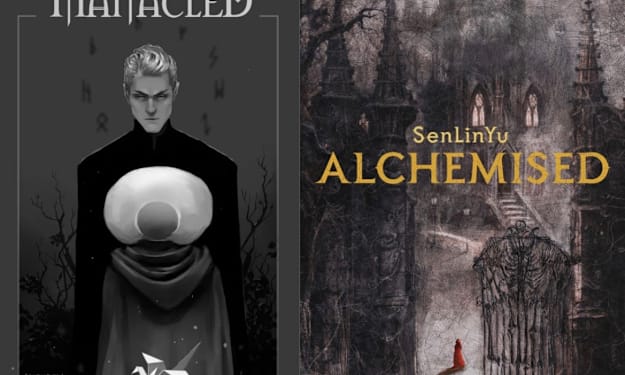
From Fanfiction to Bestsellers: Why We Need a More Honest Conversation About Storytelling
Few books have generated as much online discussion in recent years as Alchemised, the fantasy romance by SenLinYu that originated as the popular Harry Potter fanfiction Manacled.
By Jenna Deedy4 months ago in BookClub
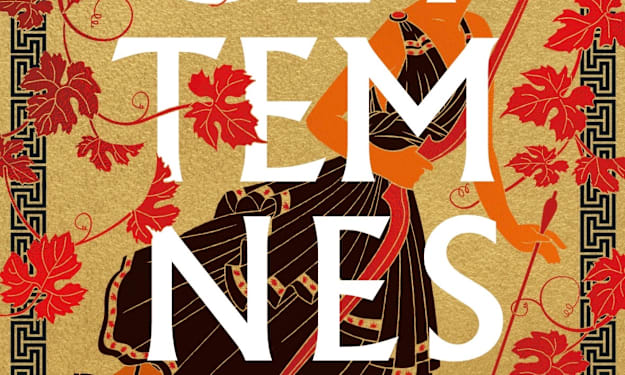
Why "Clytemnestra" Reframes One of Greek Mythology’s Most Misunderstood Queens
For centuries, Clytemnestra has occupied a familiar place in the Greek mythological canon: the murderous wife who kills Agamemnon upon his return from Troy. In many traditional tellings, she is often reduced to a single act–an archetype of betrayal, ambition, and vengeance.
By Jenna Deedy5 months ago in BookClub
I Tried to Book My Friend a Vacation in Solitude and Accidentally Rented Him a Haunted Monastery
I was trying to be a good friend. That’s how all disasters start. Marcus had been burned out for months. His job was eating him alive, his apartment had three roommates who fought over the thermostat, and he kept saying he needed “somewhere quiet.” Just silence. Solitude. A place to breathe. So I did what any helpful person with a credit card and too much faith in search engines would do. I booked him a vacation. I typed “solitude retreat” into the booking site. The first result looked perfect: Stonehaven Abbey, “Secluded Mountain Getaway, Absolute Silence, Historic Charm, No Wi-Fi.” Five stars. Cheap. Available next weekend. I didn’t scroll down. I didn’t read the fine print. I sent Marcus the confirmation and texted him, “You’re welcome. Go find yourself.” He texted back three days later: “Dude. What is this place?” I called him immediately. His voice was echoing, like he was in a cave. “Marcus? Did you get there?” “I’m standing in front of a building that looks like it was built in 1400,” he said. “There’s no front desk. There’s a goat. And I think the walls are watching me.” “It’s a retreat,” I said. “That’s the point. No people.” “There are no people,” he said. “There’s a ghost.” I laughed. “Marcus.” “I’m serious. Her name is Agnes. She’s been here since 1620. She’s very chatty.” I should have apologized then. I should have offered to book him a real hotel. Instead I said, “That’s… on brand for solitude, right? No distractions except the afterlife?” Marcus hung up on me. The next day I got a photo. It was Marcus, holding a suitcase, standing in front of a stone building that looked like it might collapse if you sneezed. Behind him, faint but definitely there, was a translucent woman in a habit, waving. The caption said: “Agnes says hi. She also says you owe her an apology for the booking mix-up. She was supposed to have the place to herself for the next century.” I called the booking site. The customer service rep sounded tired. “Stonehaven Abbey,” she said. “Yeah. We get calls about that one.” “Is it actually haunted?” I asked. “Define haunted,” she said. “Is there a ghost named Agnes who critiques your posture and leaves ectoplasm on the towels? Yes. Is it listed in the amenities? No. But ‘historic charm’ is in there, and that’s technically not a lie.” “No refund?” I asked. “Policy says ‘no refunds for supernatural experiences,’” she said. “You should’ve read the reviews.” I did, after. Buried on page three, under the five-star reviews that just said “very quiet,” were the real ones: “Beautiful place, but Agnes will not stop talking about the Reformation.” “Zero Wi-Fi, zero people, one ghost who keeps rearranging my shoes.” “10/10 for solitude, 0/10 for sleeping, Agnes hums at night.” Marcus stayed the whole weekend. I think he was afraid to leave Agnes alone. He said she got lonely. When he came back, he looked different. Rested, but also like he’d been in therapy with a 400-year-old nun. “How was it?” I asked. “Quiet,” he said. “Except for Agnes. She talks a lot. She told me about her life, her regrets, her opinion on modern fashion. She said my hoodie was ‘unseemly.’” “Did you… like it?” He thought about it. “I slept better than I have in a year. No phone. No people. Just me, Agnes, and the goat. She said the goat’s name is Brother Thomas and he’s also dead, but he hasn’t realized it yet.” I waited for him to be mad. He wasn’t. “You actually did me a favor,” he said. “I needed to turn my brain off. Agnes helped. She made me talk about stuff I haven’t thought about in years. She’s a good listener, for a ghost.” I asked if he wanted to go back. “Agnes invited me,” he said. “She said I could visit anytime, as long as I bring better tea. She hates the instant stuff I packed.” So now Marcus goes to Stonehaven Abbey once a month. He brings loose-leaf tea and biscuits. He says Agnes is teaching him how to meditate. He says Brother Thomas the goat still doesn’t know he’s dead. And I? I’m banned from booking his vacations. Last week he asked me to look up “peaceful beach getaways.” I sent him a link to a library. He said that was probably safer. Agnes sent me a message through him. It said: “Tell your friend thank you. And tell him to stop booking things without reading. Sincerely, Agnes.” I printed it out and taped it to my laptop. As a reminder. Some mistakes turn into friendships. Some turn into ghosts who judge your wardrobe. And some, if you’re lucky, turn into both.
By Khalil Ullah5 months ago in BookClub
Where Can Wedding Guests Stay When Attending a Wedding at Browsholme Hall?
Accommodation is one of those wedding planning details that couples often leave too late. And then, about six months before the day, someone asks where they're supposed to stay, and suddenly it becomes urgent. Getting guests sorted for the night matters more than most people realise early on. Nobody wants to cut the evening short because they've got a long drive home, and nobody wants to organise a fleet of taxis at midnight from a countryside estate. Browsholme Hall, one of the most distinctive barn wedding venues near Preston, solves most of that problem before it starts with accommodation both on the estate itself and in the surrounding Lancashire countryside.
By Browsholme Hall and the Tithe Barn5 months ago in BookClub
Julie Chan Is Dead
For me, Julie Chan Is Dead was that book. It seemed to dominate my Facebook feed, with advertisement after advertisement promising a dark, funny, addictive thriller that readers would be unable to put down. The bright, eye-catching cover immediately grabbed my attention, but it was the intriguing premise that truly convinced me to give it a chance. The story appeared to offer a twisted and disturbing variation of the classic separated-twins narrative, blended with social commentary, psychological suspense, and dark humor. Naturally, I approached the novel with some skepticism. Books that receive aggressive marketing campaigns often struggle to meet the enormous expectations created by their advertisements. We've all encountered novels described as "life-changing" or "impossible to put down" that ultimately feel disappointing. Fortunately, Julie Chan Is Dead is not one of those books. In fact, it exceeded my expectations in almost every way. The novel is genuinely addictive, relentlessly entertaining, and packed with enough twists, tension, and emotional complexity to keep readers fully invested from beginning to end. The story centers on Julie Chan, a young woman who feels trapped in a life that offers little hope for advancement or happiness. She works a dead-end job, struggles financially, and carries the emotional scars of a difficult upbringing. Through a series of flashbacks, readers gradually learn more about Julie's childhood and the circumstances that shaped her personality. Following the death of her parents, Julie was raised by a strict and often cruel Cantonese aunt who constantly criticized and belittled her. These experiences left Julie with deep insecurities and a persistent feeling that she would never be good enough. The contrast between Julie and her long-lost twin sister, Chloe, could not be more dramatic. While Julie endured hardship and emotional neglect, Chloe was adopted into a wealthy family and raised in privilege. She grew up surrounded by luxury, eventually becoming a successful social media influencer with a glamorous lifestyle that seems completely unattainable to Julie. The novel uses this contrast effectively, highlighting how different life can become simply because of circumstance and opportunity. The plot truly begins when Chloe unexpectedly reconnects with Julie. Their reunion is brief but significant, and soon afterward Julie receives a troubling call from her sister. Concerned, she travels to New York to check on Chloe, only to discover a shocking scene: Chloe has died suddenly in her apartment. At this moment, the story takes a dramatic and morally complicated turn. Instead of reporting Chloe's death and notifying the authorities, Julie makes an impulsive decision that changes everything. Realizing how closely she resembles her sister, she assumes Chloe's identity and allows the world to believe that Julie Chan is the one who has died. What follows is a fascinating exploration of identity, ambition, deception, and self-worth. At first, Julie's decision appears almost understandable. After years of struggle, she suddenly has access to a luxurious apartment, expensive clothing, financial security, and a lifestyle she could never have imagined. For the first time in her life, she experiences what it feels like to be admired, respected, and desired. However, the novel quickly reveals that Chloe's seemingly perfect life is built upon secrets, lies, and dangerous relationships. The deeper Julie becomes involved in Chloe's world, the more complicated and threatening her situation becomes. Friends, business associates, and family members all have their own agendas, and many of them know far more about Chloe than Julie does. Every conversation becomes a risk, and every mistake threatens to expose her deception. One of the book's greatest strengths is its pacing. The author structures the story through short, fast-moving chapters that create a constant sense of momentum. Many chapters end on suspenseful revelations or unexpected developments, making it nearly impossible to stop reading. I found myself repeatedly telling myself "just one more chapter," only to continue reading for hours. The writing style perfectly suits the story's modern setting. The dialogue feels natural, the humor is sharp, and the social media elements never feel forced or outdated. There are numerous moments that are genuinely funny despite the dark subject matter. The novel often finds humor within uncomfortable situations, creating a unique tone that balances suspense with satire. Beyond the thriller elements, the novel also serves as a thoughtful examination of modern culture. It explores the influence of social media, the pressures of maintaining a carefully curated public image, and society's obsession with wealth, beauty, and status. Through Julie's experiences, readers witness how easily appearances can deceive and how much emotional damage can be hidden behind a seemingly perfect online persona. The psychological aspects of the novel are equally compelling. Julie's internal conflict drives much of the narrative. While she initially enjoys the benefits of her new identity, she is constantly haunted by guilt, fear, and self-doubt. Her confidence fluctuates dramatically, creating a realistic portrayal of imposter syndrome and anxiety. The author captures the emotional consequences of deception remarkably well, showing how even a seemingly beneficial lie can become a prison. Perhaps the most emotionally powerful aspect of the story is the relationship between Julie and Chloe. As Julie uncovers more information about her sister's life, she learns surprising truths about Chloe's feelings toward her. What initially appears to be a straightforward story of envy and privilege gradually evolves into something far more nuanced and heartbreaking. Their relationship contains layers of jealousy, longing, resentment, and misunderstanding that add significant emotional depth to the narrative. By the final chapters, the tension reaches an almost unbearable level. The consequences of Julie's decision continue to escalate, leading to revelations that are both shocking and emotionally satisfying. The ending feels earned, delivering a conclusion that is dramatic without sacrificing the novel's thematic depth. Overall, Julie Chan Is Dead is one of the most addictive thrillers I have read in a long time. It combines psychological suspense, dark humor, social commentary, and emotional complexity into a story that is both entertaining and thought-provoking. The novel keeps readers constantly questioning identity, morality, and the choices people make when given the chance to become someone else.
By Discipline 5 months ago in BookClub