Book of the Day
Girls friendship. Content Warning.
The Sacred Sisterhood: Preserving the Friendship ties among girls The friendship tie between females is a unique kind of enchantment weaved into the fabric of human interactions. This sisterhood, which is sometimes disregarded and undervalued, has a special importance and profoundly influences lives. A story of emotion, compassion, and steadfast support, the path of girls' friendships spans from the carefree days of childhood playmates to the complexity of adult friendships. The Basis of Friendships in Childhood Girls' childhood playgrounds are generally where friendships between them are created. It's a period when secrets, laughs, and creative play combine to form the foundation of a friendship that, for the most part, lasts a lifetime. These connections are based on genuineness and simplicity.
By Ramya Devi3 years ago in BookClub
Alone. Content Warning.
In a society when continual connection is essential, the skill of being by yourself is sometimes overlooked. However, solitude is a profound state that promotes introspection, self-discovery, and personal development rather than just being the lack of company. It becomes a transformational adventure to recognize and appreciate the beauty of solitude as we make our way through life's busy landscapes. The Illusion of Isolation Being alone does not mean being lonely. Emotional seclusion and a sense of disconnection, even in the middle of a multitude, characterize loneliness. Conversely, choosing to spend time by oneself and enjoy isolation is what it means to be alone. Removing oneself from outside influences and establishing a connection with one's inner self is a conscious choice.
By Ramya Devi3 years ago in BookClub
Snowman
As winter approached, my friends and I would eagerly wait for the first snowfall, anticipating the chance to build our beloved snowmen once again. There was something magical about bundling up in layers of warm clothing, donning mittens and scarves, and heading outside into the crisp, white world to sculpt our frosty creations. We would work together, rolling giant snowballs and stacking them on top of each other, carefully shaping the features of our snowmen's faces with sticks, stones, and even pieces of fruit.
By Saso Elsaied3 years ago in BookClub
The Psychological Impact of Isolation: A Look into 'I Who Have Never Known Men'
The Psychological Impact of Isolation: A Look into 'I Who Have Never Known Men' Book Stats: I Who Have Never Known Men, written by Jacqueline Harpman, was originally published in French as 'Moi qui n'ai jamais connu les hommes' in 1995. It was translated into English by Ros Schwartz, and the English version was published in 1997.
By Staringale3 years ago in BookClub
3 Inspiring Books to Uncover Your Life's Purpose"
In 2018, I made the decision to resign from my position in the publishing industry. Despite thriving and advancing up the editorial ladder, I chose to end my career prematurely. This pivotal moment left me feeling adrift, with uncertainty clouding my future path. Seeking guidance, I delved into self-help literature in search of a new purpose, grappling with doubts and regrets surrounding my choices. It felt like my life had come to a standstill, akin to career suicide. As adults, it's common to lose sight of our life's purpose, often at different stages of our lives. A study carried out by the Harvard Graduate School of Education in December 2022 revealed that a significant number of young adults aged 18 to 25, approximately 58%, experienced feelings of emptiness or lack of purpose. Half of the participants also expressed a sense of directionless in their lives, citing factors such as financial pressures, societal expectations, global uncertainty, and the impact of social media.If you find yourself resonating with these sentiments, know that you are not alone in this journey. To assist you in navigating this challenging phase, I have curated a selection of eight insightful books focused on uncovering your true purpose. These include works by a monk providing wisdom rooted in Buddhist principles, a guide to cultivating inner contentment, a narrative of overcoming adversity, a resource for managing adult anxiety, and a manual for navigating the later stages of life.While these books are not substitutes for professional intervention, they may serve as beacons of guidance in your quest for clarity and purpose. If you are facing significant challenges, it is advisable to seek support from trained professionals to ensure your well-being.
By Akale Mandundu3 years ago in BookClub
Grapes of Wrath Review
In Chapters 1-3 of “The Grapes of Wrath” where the Joad family begins their journey to California in hope for a better life is a very intriguing scene. The author John Steinbeck exposes the desperate conditions under which the migratory farm families of America, along with focusing on the hardships and migration from Oklahoma to California of the Joad family during the Great Depression of the 1930s. Set during the Great Depression, the novel focuses on the Joads, a poor family of tenant farmers driven from their Oklahoma home by drought, economic hardship, agricultural industry changes, and bank foreclosures forcing tenant farmers out of work. Due to their nearly hopeless situation, and in part because they are trapped in the Dust Bowl, the Joads set out for California on the "mother road", along with thousands of other "Okies" seeking jobs, land, dignity, and a future.
By Kylecovey Smith3 years ago in BookClub
National Science Day in India
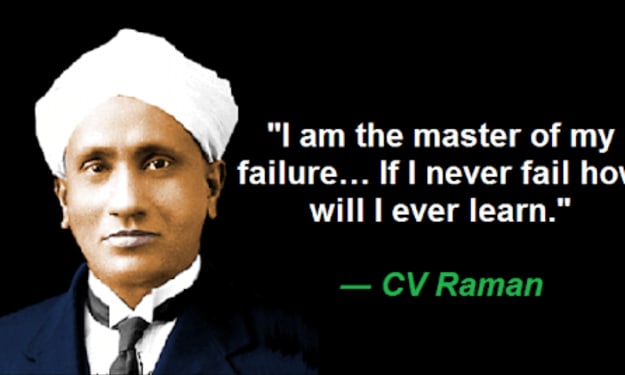
Introduction: National Science Day, observed on February 28th each year in India, holds profound significance as it commemorates the discovery of the Raman Effect by the renowned physicist Sir C.V. Raman in 1928. This monumental breakthrough revolutionized our understanding of light and matter interactions, earning Raman the Nobel Prize in Physics in 1930. Since its inception in 1987, National Science Day has evolved into a celebration of scientific inquiry, innovation, and discovery. This article delves into the rich tapestry of National Science Day, exploring its themes, significance, and impact on fostering scientific awareness and curiosity across India. The Evolution of National Science Day: National Science Day traces its roots back to 1986 when the National Council for Science and Technology Communication (NCSTC) proposed to the Indian government the designation of February 28th as National Science Day. This proposal was accepted, and the inaugural National Science Day was celebrated on February 28, 1987. Since then, it has become an annual event celebrated with enthusiasm and fervor across the country. Themes of National Science Day: Each year, National Science Day is celebrated with a specific theme aimed at promoting scientific awareness and addressing contemporary issues. Over the years, these themes have covered a wide range of topics, reflecting the diverse facets of scientific exploration and innovation. From clean energy and gender equity to sustainable development and space exploration, these themes highlight the relevance of science in addressing societal challenges and shaping our collective future. The theme for National Science Day 2024, "Indigenous Technologies for Viksit Bharat," underscores India's commitment to self-reliance and innovation. It emphasizes the importance of harnessing homegrown technologies to address pressing issues and foster overall well-being. This theme resonates deeply with India's rich heritage of scientific achievements and its aspirations for the future. Significance of National Science Day: National Science Day holds immense significance as it serves as a platform for promoting scientific awareness, curiosity, and innovation. By commemorating the discovery of the Raman Effect, National Science Day celebrates the contributions of Indian scientists to the global scientific community. It also highlights the importance of scientific research and its impact on society. One of the primary objectives of National Science Day is to inspire and engage the youth in scientific exploration. Through a variety of activities such as science fairs, exhibitions, and workshops, young minds are encouraged to explore the wonders of science and consider careers in STEM fields. By showcasing the achievements of eminent scientists and highlighting the relevance of science in everyday life, National Science Day ignites curiosity and fosters a spirit of inquiry among the youth. National Science Day also serves as a platform for recognizing and honoring individuals and organizations that have made significant contributions to science communication and popularization. Through awards and accolades, their efforts are celebrated, inspiring others to actively engage with science and contribute to scientific progress. Impact of National Science Day: The celebration of National Science Day has had a profound impact on fostering scientific awareness and curiosity across India. Through its various activities and programs, National Science Day has succeeded in democratizing science and making it accessible to people of all ages and backgrounds. By showcasing the practical applications of science and highlighting its role in addressing societal challenges, National Science Day inspires individuals to become active participants in the scientific journey. Furthermore, National Science Day has played a crucial role in promoting STEM education and careers in India. By exposing young minds to the wonders of science and providing them with opportunities for hands-on learning and exploration, National Science Day encourages the pursuit of scientific knowledge and innovation. This, in turn, helps nurture a new generation of scientists, engineers, and innovators who will drive India's scientific and technological advancement in the years to come. Conclusion: National Science Day is not just a day of celebration; it is a testament to India's rich scientific heritage and its aspirations for the future. By commemorating the discovery of the Raman Effect and celebrating the achievements of Indian scientists, National Science Day inspires curiosity, fosters innovation, and promotes scientific awareness across the country. As India continues its journey towards scientific excellence and self-reliance, National Science Day serves as a beacon of inspiration, reminding us of the transformative power of science in shaping our collective future.
By Avhishek Agarwal3 years ago in BookClub
"Clothing 101 Book Review: Mastering Trends, Crafting Timeless Looks, and Elevating Wardrobe Confidence for Girls and Teens"
The "Clothing 101 Book" emerges as an indispensable guide for girls and teens who aspire to navigate the dynamic and ever-shifting realm of fashion. In a world where trends rise and fall like the ebb and flow of the tide, this book acts as a steadfast beacon, offering valuable insights into maintaining a sharp and consistently fashion-forward wardrobe. It recognizes that while fashion trends may be ephemeral, certain basic items are timeless, forming the cornerstone of any style-conscious individual's collection.
By Maša Stavnjak3 years ago in BookClub
The Last Ruler of Jammu and Kashmir. Content Warning.
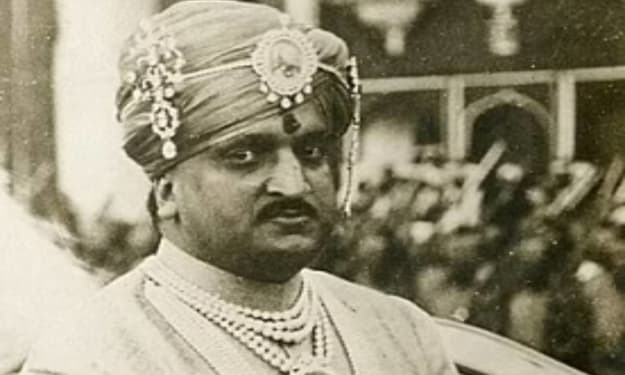
Maharaja Sir Hari Singh GCSI GCIE GCVO, born in September 1895, occupies a significant place in the annals of Jammu and Kashmir's history. As the last ruling Maharaja of the princely state, his reign was characterized by both opulence and tumult, culminating in the pivotal decision of accession to the Dominion of India. Let's embark on a comprehensive exploration of the life, legacy, and controversies surrounding this enigmatic figure. Early Life and Education: Hari Singh was born into the esteemed royal family of Jammu and Kashmir, the son of Raja Amar Singh and Bhotiali Chib, at the majestic Amar Mahal Palace in Jammu. His birth in 1895 marked the emergence of a future ruler, as he was designated the heir presumptive to the throne due to the absence of a direct successor. His early years were steeped in privilege and tradition, with an upbringing that reflected the grandeur of his lineage. In 1903, Hari Singh's journey into the corridors of power began as he served as a page of honor to Lord Curzon during the grand Delhi Durbar, a spectacle of imperial grandeur. Subsequently, his educational pursuits led him to Mayo College in Ajmer, where he embarked on a journey of intellectual and personal growth. However, tragedy struck in 1909 with the demise of his father, prompting the British authorities to take a keen interest in his education, appointing Major H. K. Brar as his guardian. Rise to Power: The trajectory of Hari Singh's life took a decisive turn in 1923 following the passing of his uncle, heralding his ascension to the throne of Jammu and Kashmir. His coronation in 1926 at the majestic Mubarak Mandi Palace in Jammu was a spectacle of extravagance, symbolized by the adornment of jewels valued at an astonishing twenty million dollars. However, amidst the pomp and ceremony, challenges loomed on the horizon, foreshadowing the turbulent years that lay ahead. Controversial Rule: The tenure of Maharaja Hari Singh was fraught with challenges and controversies that left an indelible mark on his legacy. Rebellion reared its head in various regions, most notably in Poonch and Gilgit-Baltistan, challenging the stability of his rule. Furthermore, accusations of complicity in the 1947 Jammu massacres tarnished his reputation, casting a shadow over his governance. Despite these tumultuous times, Hari Singh's reign was not devoid of progress. He implemented reforms aimed at modernization, including initiatives to promote education, combat child marriage, and foster social inclusivity. Accession to India: The watershed moment in Hari Singh's reign arrived in 1947 with the dawn of Indian independence. Faced with escalating tensions and external threats, particularly from Pakistan-backed tribal forces, Singh found himself at a crossroads. In October 1947, he made the fateful decision to accede to the Dominion of India, signing the Instrument of Accession. This pivotal moment not only altered the course of Jammu and Kashmir's history but also set the stage for future conflicts and geopolitical dynamics in the region. Legacy and Commemorations: Following the abolition of monarchy in 1952, Maharaja Hari Singh's life took a poignant turn as he retreated from the corridors of power to spend his remaining years in Bombay. His death in 1961 marked the end of an era, but his legacy endured through various commemorations and tributes across Jammu and Kashmir. Parks, statues, and public holidays stand as tangible reminders of his enduring influence, sparking conversations about his complex legacy and the broader historical narrative of the region. Conclusion: Maharaja Hari Singh's reign encapsulates a tumultuous chapter in the history of Jammu and Kashmir, characterized by opulence, controversy, and political upheaval. While his rule was marred by challenges and criticisms, his contributions to the region's development and his pivotal role in shaping its destiny cannot be understated. As the last ruling Maharaja of Jammu and Kashmir, his legacy continues to resonate, prompting reflection on the complexities of governance, identity, and historical legacy in the region. In essence, Maharaja Hari Singh's life and times serve as a poignant reminder of the intricate tapestry of history that defines Jammu and Kashmir's identity. Through commemorative efforts and ongoing discussions about his legacy, his influence endures, underscoring the enduring impact of his rule on the socio-political landscape of the region.
By Avhishek Agarwal3 years ago in BookClub
"The Boy with the Bird in His Chest" by Emme Lund: A Captivating Tale of Courage, Magic, and Unlikely Friendships
Emme Lund's debut novel, "The Boy with the Bird in His Chest," is a literary masterpiece that seamlessly weaves together elements of fantasy, coming-of-age, and the extraordinary power of connection. From the very first page, readers are transported into a world both enchanting and thought-provoking, leaving them eagerly turning the pages to unravel the mysteries that lie within.
By Lilly Goldberg3 years ago in BookClub
"If You Tell" by Gregg Olsen: A Gripping Dive into the Dark Depths of True Crime
Gregg Olsen's "If You Tell" is not merely a true crime thriller; it is an immersive journey into the chilling realms of human depravity, resilience, and the unbreakable bonds of sisterhood. In this riveting non-fiction narrative, Olsen meticulously unravels a tale that transcends the conventions of traditional crime literature, leaving readers both captivated and horrified by the shocking events that transpired within the walls of a seemingly ordinary family home.
By Lilly Goldberg3 years ago in BookClub