Author
Voltaire’s Double Punch
What if the most powerful critiques of society came not from lectures or revolutions, but from biting wit hidden in short, fictional tales? Voltaire’s Candide and Zadig might seem like simple stories at first glance—adventures full of absurdity and misfortune—but behind the satire lies a depth that continues to echo through centuries. Why do these two works, written in the 18th century, still resonate today? Because they strip humanity bare with humor, irony, and uncomfortable truths. Voltaire doesn’t just make you laugh—he makes you think, sometimes without you even realizing it.
By Bubble Chill Media about a year ago in BookClub
The Florala Bayou Cryptid
In the Summer of 2009, I was living in Southern Alabama on the Alabama/Florida border, very close to Eglin Air Force Base. My (former) fiancé and I decided to go to the movies in Dothan, which was about an hour's drive from where we lived. In order to get to the theater, we had to take some back roads and highways, and on the way back from the movies later that night, we were nearing the outskirts of our town.
By Sai Marie Johnsonabout a year ago in BookClub
I Am Not Sexy
"I am not sexy." These four words used to haunt me like an unfinished sentence. In a world where allure is currency, and beauty opens doors faster than brains or kindness ever could, not being “sexy” felt like being left behind. Forgotten. Unwanted. But as I stand today—not in defiance, but in clarity—I realize that not being sexy was never the end of my story. It was the beginning of a quieter, deeper, richer narrative. One where I learned that worth has nothing to do with seduction and everything to do with substance. This is not just my confession; this is my reclamation. --- The Weight of the Mirror From a young age, we’re handed mirrors—not just the physical ones that reflect our skin and features, but invisible ones crafted by magazines, TV ads, social media filters, and judgmental glances. Mirrors that shout what we’re missing. Bigger eyes. Fuller lips. Flawless skin. Thinner waist. And of course—confidence, but only the kind that comes wrapped in mascara and mini-skirts. I was 14 when I first realized I didn’t meet the “sexy standard.” My friends were already experimenting with makeup and hair straighteners. They giggled over compliments and boys’ texts. I, on the other hand, was still hiding behind oversized clothes, acne scars, and a deep-rooted belief that beauty was a prize I would never win. By the time I was 18, I had perfected the art of invisibility. I was the smart one, the kind one, the “like-a-sister” type. People appreciated me, but no one longed for me. No one looked at me like I mattered beyond my usefulness. And the worst part? I believed them. --- Redefining the Word The turning point came in my final year of university. I was interning at a small NGO that worked with acid attack survivors. My job was to document stories, record interviews, and help raise awareness. That’s when I met Samra. She had half a face. The other half had been taken away by fire—deliberate, cruel, and unforgettable. But what stunned me wasn’t the scar; it was her smile. Her confidence. The way she sat in meetings, voiced her opinions, and laughed with her whole chest. One day, I asked her, “How do you do it? How do you still feel… powerful?” She leaned back and said something I will never forget: > “They took my beauty, not my worth. I am still whole where it matters.” That night, I cried. Not just for her, but for every year I had spent shrinking myself into invisibility. I realized then that being sexy is not about the body. It’s about presence. Power. Peace. --- Healing the Inner Voice It wasn’t easy, unlearning years of self-criticism. I started writing letters to myself—letters filled with compassion, not criticism. I surrounded myself with people who valued depth over display. I stopped following social media accounts that made me feel small. I took up walking in the morning, not to lose weight, but to hear my thoughts again. The more I distanced myself from the noise, the more I heard my inner voice say: “You are not sexy—and that’s okay. You are wise. You are kind. You are rare.” It felt strange at first. Like wearing shoes that didn’t quite fit. But eventually, those shoes became mine. --- Invisible Powers I’ve learned that there are other kinds of beauty. Quieter kinds. The beauty of patience. Of listening without interrupting. Of making someone feel safe in your silence. Of remembering birthdays and favorite songs. Of loving someone when they feel most unlovable. No one writes songs about that beauty. No one makes movies about girls who remember to pack their friend’s anxiety pills before a trip or hold space for a grieving colleague at work. But I’ve come to believe: that kind of beauty changes lives. I’m not sexy. But I’m unforgettable to those who’ve known my honesty, my loyalty, my capacity for care. --- To the Ones Who Feel Less This story is for you. For the girl who avoids mirrors. For the boy who thinks he’ll never be noticed. For the woman in her thirties who’s never been kissed. For the man who believes being gentle makes him weak. For anyone who feels like their value has an expiration date. You are not your waistline. You are not your skin tone. You are not your hair texture, or your follower count, or your ability to turn heads in a room. You are the sum of your kindness, your choices, your courage in moments no one sees. Let the world keep its definitions. You are enough. Even if you’re not sexy. --- Conclusion “I am not sexy.” I still say it. But now, I say it without shame. I say it like a quiet anthem of self-acceptance. Like a whisper to all the parts of me that never felt enough. And in this acceptance, I’ve found something more lasting than attraction. I’ve found freedom. Because once you stop chasing someone else’s idea of beauty, you begin to live in your own.
By Farhat ullahabout a year ago in BookClub
Strange Sally Diamond. Top Story - June 2025.
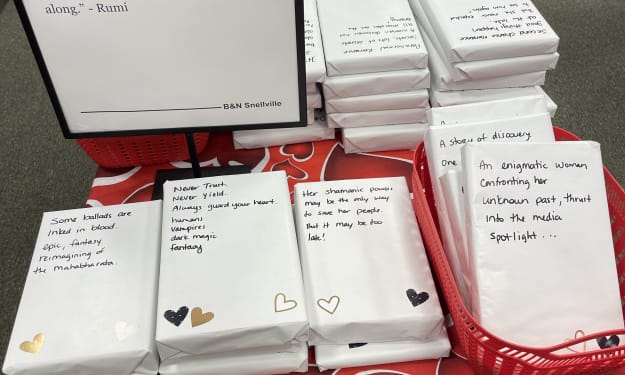
I picked up this book at the B&N’s Blind Date With a Book display. I loved the entire concept of selecting a mystery book based on a one-sentence teaser. Especially because they were lovingly wrapped by hand and the handwriting must have taken good effort (if they used the cursive it would have been even more attractive). As a public relations professional I think this marketing technique is brilliant, tapping into the book lovers’ serendipitous desire to be surprised with something new.
By Lana V Lynxabout a year ago in BookClub
The Dark Truth About Sex in the Middle Ages
🚪 Forget Romance. Forget Privacy. Welcome to the Middle Ages. Imagine a world where privacy doesn’t exist, romance is discouraged, and pleasure is treated like a crime. This isn’t the plot of some dark dystopian movie. This was real life — for millions of people — in medieval Europe. Welcome to a time when the most natural human acts were cloaked in fear, guilt, and shame. A world ruled not just by kings and queens, but by the unyielding hand of the Church — even in the bedroom. And by the end of this, you’ll be thanking your lucky stars you were born when you were. ⛪ The Church Controlled Everything — Even the Bedroom In the Middle Ages, the Church wasn’t just a place of worship. It was the supreme authority — a powerful institution that dictated how people lived, how they ate, how they dressed… and yes, how and when they had sex. Sex wasn’t a private affair. It was heavily regulated, monitored, and morally policed. Pleasure? Sin. Passion? Dangerous. Love? Only if it made babies. Married couples were only allowed to have sex during certain days of the week — and even that came with restrictions. You couldn’t do it on Sundays. Or on Thursdays. Or Fridays. Or the night before a religious feast. Which, by the way, was nearly half the calendar year. Some theologians even published guides listing “forbidden days” for intercourse. Romance wasn’t just discouraged. It was controlled, timed, and constantly shadowed by guilt. 🛏️ Privacy? What’s That? Let’s talk about privacy. Or rather — the complete lack of it. The typical medieval home was small, cramped, and filled with people. Bedrooms were a luxury. Beds were often shared — not just between husband and wife, but with children, extended family members, even servants. And if you were lucky enough to sneak in a private moment… where would you even go? Some couples turned to the fields, barns, or alleyways. Others — believe it or not — found dark corners of churches or even cemeteries to be the only places to escape prying eyes. And royalty? Well, kings had no privacy either. Their marriages were political, and their sexual performance was expected to be witnessed — to ensure legitimacy of heirs. One infamous example? Peter the Great of Russia had a specially built “viewing bed”, where his intimate acts could be observed by trusted courtiers. That bed still exists — in the Hermitage Museum. Romance? Gone. Privacy? A fantasy. 🩸 Condoms Were Real — and Horrifying Think contraception is a modern concept? Think again. Condoms did exist in the Middle Ages. But they were far from what you’d call safe — or hygienic. They were made from animal intestines, linen, or even bladders. And the worst part? They were washed and reused — sometimes by multiple people. Yet, using them was considered a mortal sin by the Church. So, you were left with a choice: Risk pregnancy… or risk your soul. 😈 Sex = Sin The Church’s stance on sex was clear: it was inherently sinful, only to be endured for the sake of reproduction. Enjoying it? That meant you were giving in to temptation — a dangerous path straight to hell. Even the positions mattered. The missionary position was deemed “acceptable.” Anything else — especially if it placed the woman on top — was labeled as “unnatural” or even demonic.” Women were viewed as passive vessels — there to carry a man’s seed. Yet, they were blamed for arousing lust. If a man sinned? It was probably the woman’s fault for being too alluring. 👻 Virginity Could Be “Restored” in Heaven? Here’s one of the strangest beliefs of all: A woman named Margery Kempe, a mother of fourteen children, claimed she had visions of Christ, who told her she’d be a virgin again in heaven. Why? Because despite her physical life, she kept a pure heart. This wasn’t satire. This was accepted spiritual logic at the time. 🌈 What About Homosexuality? Same-sex attraction existed — of course it did. But the word “gay” didn’t exist. And the consequences? Severe. Caught engaging in homosexual acts? You could be burned alive, hanged, or tortured. All in the name of “purity.” ⚰️ Death by Too Much (or Too Little) Sex Believe it or not, medieval doctors believed that sex was necessary for health — but only in moderation. Too much sex? They said it could kill you. But not enough sex? That could be just as dangerous. They believed both men and women had to release bodily fluids or suffer physical and mental consequences: Headaches, anxiety, hallucinations, and even death. One bizarre case? Louis VI of France was believed to have died of celibacy during the Crusades. Yes — celibacy. Apparently, that was fatal. 🧠 It Wasn’t Just About Sex — It Was About Control When you peel back all the rules, restrictions, and punishments, it becomes clear: This wasn’t just about morality. It was about control. Control over bodies. Control over desires. Control over minds. Sex in the Middle Ages wasn’t an act of love. It was a minefield of rules, a source of guilt, and a way to control populations through fear. 🌎 Aren’t You Glad You Live Now? So, the next time you’re frustrated by modern dating apps... Or annoyed by awkward conversations... Or overwhelmed by romantic expectations... Remember this: At least you’re not being stoned for who you love. You’re not sharing your bed with five other people. You’re not confessing to a priest because you enjoyed being intimate. And no one is telling you that passion is a path to hell. So, yes — our world isn’t perfect. But when it comes to love, pleasure, and privacy? We’ve come a long way from the Middle Ages. And for that, We should all be thankful.
By Yasir Hamid about a year ago in BookClub
Why We Can’t Get Enough of Mystery Fiction Bestsellers
Mystery fiction bestsellers preserve to dominate bookshelves, and it’s clean to recognize why. These stories spark immediately curiosity. From the first web page, readers chase clues and connect dots. What starts off evolved as against the law or mystery quickly unfolds into something a lot deeper. These books offer mental stimulation, emotional drama, and lots of adrenaline. Whether it’s a stolen object, a hidden identification, or an unsolved demise, the fun by no means fades. Readers love solving puzzles alongside sharp-minded protagonists. When the anxiety builds, so does the pleasure. And while the final twist lands, it leaves us shocked. The mystery genre never receives antique, it only gets smarter.
By Lisa Hormykoabout a year ago in BookClub
Whispers of the Moonfire Forest. Content Warning.
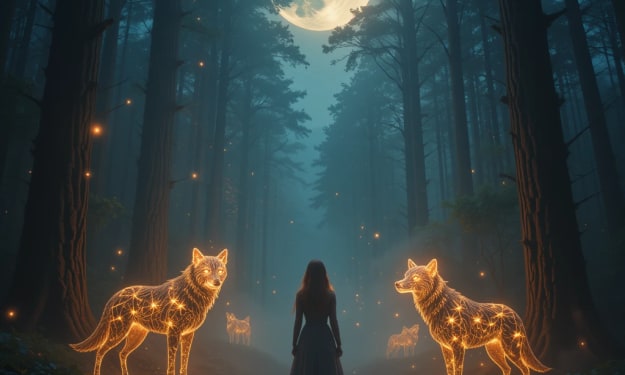
Not all forests are silent, and not every moon glows softly. Some places exist only between dream and memory — and if you find them, they never let you go. Aurelia had never meant to wander so far. She had heard the legends. The Moonfire Forest — where the moon burned like flame, and the trees whispered riddles only the lonely could understand. It was said those who entered never returned the same. Some found answers. Others found madness. But Aurelia wasn’t looking for either. She was only trying to run from a life that never fit. The moment she crossed the tree line, the world shifted. The air shimmered with silver dust. Leaves glowed from within. The moon above burned orange, casting shadows that danced like spirits. And in the silence, she heard it — whispers. Not words, but memories. Her memories. Aurelia followed them deeper, past rivers that hummed and stones that blinked like eyes. Hours passed like seconds. Or maybe days. Time didn’t care here. Then she saw them. Wolves. Not made of fur and bone — but light. Glowing wolves of starlight with galaxies in their eyes. They didn’t growl. They watched. Protected. Guided. One stepped forward, placing its glowing paw beside hers. The forest fell silent. And then she knew. She wasn’t lost. She had been called. The Moonfire Forest was not a place of punishment — it was a place of becoming. Of truth. Of return. The whispers she heard were her own soul, long buried beneath years of silence. As the wolves surrounded her, a mark of moonlight appeared on her hand — a glowing spiral. The forest had accepted her. No… it had **always** belonged to her. And in that moment, Aurelia stopped running. She walked forward, not as a girl, but as the Guardian of Whispers. And the forest sang her name.
By Qasim khanabout a year ago in BookClub