Author
A Fair and Safe Academic Environment in Light of Digital Education Ethics. Content Warning. AI-Generated.
Academic institutions today face challenges beyond providing content or digital infrastructure. There is a growing need to foster a safe and fair academic environment rooted in the ethics of digital education. These responsibilities stem from the core values of the educational process, calling for a clear framework of principles that govern digital learning. These principles ensure academic integrity and create an environment built on fairness, safety, and trust. Among them are key concepts such as academic honesty, privacy protection, intellectual property rights, and educational equity—each a foundational pillar for ensuring a reliable and ethical digital learning environment.
By Vertex University P R E S S11 months ago in BookClub
Wake up!. Content Warning.
You start opening your eyes, it's hard they seem stuck like your brain and body are not awkening together, but you know the day is starting, you have to get out of the bed, body is hurting from all the seizure activity happening in your sleep, nocturnal epileptic seizures and taking that Emgency medication last night because of the clustered seizures you really did not want to do but knew if you did not things could go very bad..
By Cryptic Edwards11 months ago in BookClub
Digital Education Aligns with the Nature of Future Work . Content Warning. AI-Generated.
Why is Digital Education Aligns With the Nature of Future Work? The features of digital education and the future of work are increasingly overlapping. As the nature of jobs and work methods evolves, so too does the approach to education that prepares individuals for these roles. In this context, digital education emerges as the most compatible system with the modern work environment.
By Vertex University P R E S S11 months ago in BookClub
He discovered it, he did not create it.
Humans are innately created to think. Or, to satisfy everyone, let us say: the human nature itself is inherently reflective. For those who do not believe in creation, it is evident that humans always distinguish between things—they recognize the difference between a horse and a human. A horse is a wild, irrational animal, whereas a human is rational and articulate. Humans also perceive that while a horse does not speak, humans do; indeed, this understanding extends to the entire animal kingdom.
By Ali Abdulkareem12 months ago in BookClub
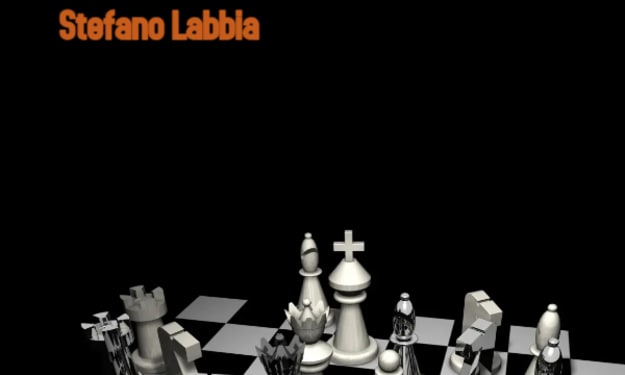
"Men": The Acclaimed Play by Stefano Labbia is Finally Released in English.
There is a profound resonance when a piece of art transcends its original language, moving across borders not just of geography, but of soul. It signifies that the core of the message, the essential human truth within the narrative, is potent enough to reach us all, no matter where we call home. Today, we are witnessing this powerful moment with the English edition release of the theatrical work, Men. This isn't just a translation; it is an invitation. An invitation to look closer, to listen harder, and to feel the sometimes-uncomfortable reality that the playwright, Stefano Labbia, places so deftly right before us. We live in a time saturated with information, where the daily newscycle often feels like a relentless tide. We see stories of brokenness and hurt, stories of profound violence that seem to resist any easy explanation. When we encounter this suffering, this deep, pervasive wound in the fabric of human interaction—violence that respects no age, no gender, no social bracket—a natural question arises: where does the responsibility lie? Who is to blame for this escalating crisis? The genius of this dramatic endeavor, Men, lies precisely in its refusal to offer simple, clean answers. It does not descend into legalistic arguments or didactic moralizing. Instead, it holds up a mirror to the fractured nature of human accountability. When the characters speak, their voices are not merely parts of a play; they are echoes of the conversations we are having in our own minds, at our dinner tables, and within our communities. One moment, we are convinced of one party’s fault, only to hear the thunderous, equally valid counter-claim from the other. This dynamic tension, this ping-pong of perspective, is crucial. It forces us to acknowledge that blame is not a static concept; it shifts, it mutates, and it is intrinsically linked to the viewpoint of the person speaking. What Labbia has managed to accomplish is nothing short of extraordinary. He takes experiences that begin on the page, in the realm of fiction, and meticulously, patiently, allows them to gain weight and substance. Scene by scene, the imaginary transforms into the palpable. The dialogue gains the chilling clarity of a breaking news alert, the undeniable weight of a front-page headline. It is a slow, methodical build, creating a sense of inevitability that is both mesmerizing and deeply troubling. This process culminates in a moment of intense emotional impact. The story reaches a point where it ceases to be something we observe from a safe distance and becomes, instead, a direct, visceral experience. It hits the spectator—or the reader—with the forceful clarity of a trained boxer's blow. Not a mere graze, but a profound impact aimed directly at the emotional core, leaving us momentarily breathless and irrevocably changed. The playwright, with his Italian and Brazilian roots, demonstrates a rare, invaluable gift: true versatility. For him, the medium of expression—whether stage, screen, or written page—is secondary. The primary concern is the relentless power of the imagery he crafts and the ferocious honesty embedded in his language. He is a masterful storyteller for our era, possessing the ability to communicate deep, often uncomfortable, truths without ever resorting to the superficial or the reductive. This English language version is a necessary and timely cultural event. It enables us to grapple with a difficult subject matter in a way that respects the complexity of the pain involved. It provides a unique space for reflection, a moment to pause and consider the origins of conflict and the challenging paths toward understanding. To engage with this work is to commit to a more nuanced conversation about what we owe one another, and what it truly means to be accountable for the hurt we inflict and experience. It’s important that we meet this piece of writing where it is: a powerful, unwavering testimony. The act of acquiring this play is not simply a literary purchase; it is an investment in human dialogue. It is a way of saying that the conversation about violence, responsibility, and the messy, beautiful, devastating reality of being alive and connected to others, is one we are finally ready to have. This piece, now available on bookshelves and online worldwide, calls us toward a shared moment of reckoning. We should answer that call.
By Ria Bassett12 months ago in BookClub
Healing with Heart: A Fresh Perspective on Nursing
In his groundbreaking book, The Power of Love: A New Nursing Theory, author Winston Meikle challenges us to rethink what it truly means to heal. He argues that nursing is so much more than just giving meds or following procedures. Instead, Meikle introduces a fascinating model that weaves together modern physics, biology, and cognitive science to show how a nurse’s presence and intentions are powerful tools that can directly influence a patient’s health.
By Elisa Smith12 months ago in BookClub
Buying Kratom Online: 7 Questions to Ask Before You Click 'Add to Cart'. Content Warning.
If you’ve ever searched for kratom online, you already know how overwhelming it can be. Some shops promise “premium” quality at cheap prices, while others overload their listings with flashy claims. But how do you really know if you’re buying something trustworthy?
By iTop Easy Desktop12 months ago in BookClub
My First Book!
Hello Beautiful people! You may or may not remember me (it's been a while), but I finally published my first novel! I am very excited to call myself an author, and even more excited to tell you that it is now available on AMAZON for less than $20!
By Miracle Ohaeme12 months ago in BookClub
Best Thriller Books That Will Keep You Hooked
Reading has continuously been an escapade that allows you to seep into reality. When you discover the best thriller books, you arrive in worlds full of suspense, tautness, and unexpected twists. These books challenge your mind while also providing an adrenaline rush. People often choose thrillers because they enjoy mystery, danger, and shocking endings. Reading such books can also stimulate reflection on your own life journey, prompting you to consider every choice you make. Moreover, thrillers are faultless for today’s fast-paced world because they capture your attention quickly and keep you captivated until the last page. You cannot fight the urge to expose what occurs next. The more you recite thrillers, the more you crave that enthusiasm. This is why thriller lovers continuously search for the following fascinating story. They want books that make an impression, are fresh, timely, and exciting. Let’s discover why these books continue to be a favorite for readers ubiquitously.
By Lisa Hormyko12 months ago in BookClub
A Hard Fall and Good Bounce
Poetry, for me, has always been a way of gathering fragments—the daily objects, passing moods, and uneasy questions that won’t stay quiet. A poem begins with a small detail, then grows into something larger, a landscape where memory and imagination blur.
By Brian D'Ambrosio 12 months ago in BookClub