Author
How To Make Learning As Addictive As Social Media
Education in poor counties like Sudan, Afghanistan and many more often creates inequality, as wealthier people can afford a good education, while poorer people struggle to learn basic skills like reading and writing. I was lucky, though, because even though I didn’t grow up wealthy, I pushed myself to the limits and worked harder as I ever could, allowing me to come to the U.S. for college and later earn a PhD in computer science. About 10 years ago, some people were deciding on how to work on making education accessible to everyone, including myself. At the time, I was a professor at Carnegie Mellon, and I started thinking with my PhD student, Gerrard, about how we could achieve this. We initially considered teaching subjects like math or computer science but eventually decided on foreign languages, especially English. Why? Because about two billion people worldwide are learning a foreign language, and most of them are learning English, which can dramatically increase one’s earning potential. Learning English can be life-changing—unlike math, you don’t need a degree to earn more money by learning a language. A waiter who learns English can get a better-paying job in a hotel. There was a need to make education accessible to everyone, and the need to reach people through smartphones, as building schools worldwide would be too expensive. Most people already have access to smartphones, and that number is growing. So, Duolingo was created, a platform where people can learn languages for free. The app operates on a "freemium" model, meaning it’s free to use but includes ads unless you subscribe to remove them. The majority of Duolingo's revenue comes from subscriptions, mostly paid by people in wealthier countries, which helps subsidize the service for people in poorer countries. This creates a form of wealth redistribution, where rich users essentially fund education for all. However, delivering education through smartphones presents a challenge: smartphones also come with highly addictive apps like TikTok, Facebook, Instagram and Whatsapp. To make learning engaging, there was a need to make it as appealing as those apps. They used techniques from mobile games and social media, like streaks (consecutive days of usage), to keep people coming back every day. In fact, over three million Duolingo users have had streaks lasting over a year. Another interesting feature was the use of notifications to encourage users to return, and even added some passive-aggressive notifications when people stop using the app for a while, which surprisingly brings them back. Despite these efforts, I don’t think it’s realistic to make educational apps as addictive as social media. But the key is that learning something meaningful gives you a sense of achievement, unlike endless scrolling through social media, which often feels like a waste of time. That’s why it’s okay if educational apps aren’t as engaging as TikTok or Instagram—they can still motivate people to use them because the content itself has intrinsic value. In fact, more people are learning languages on Duolingo in the U.S. than in all the U.S. high schools combined. I hope these methods can be applied to other subjects like math and science, turning repetition-based learning into something fun and engaging for millions of users. For subjects that require repetition, like math and reading, it’s possible to gamify the learning process. Learning through repetition can be made engaging in the same way Duolingo does. However, more complex topics that need explanations, like advanced concepts, might require video-based teaching, like what Sal Khan does with Khan Academy. But for subjects based on repetition, the same approach can be used to make learning fun and effective. The ultimate goal is to use smartphones to provide quality education to everyone, regardless of wealth. My final plea to you: please do your language lessons today! Thanks for Reading
By Sharif Muideen 2 years ago in BookClub
The 14 Most Popular Types of Fiction to Write
What is Fiction? Fiction is a type of storytelling in which the tale is based on the imagination rather than real-life experiences. From epic stories of heroism to passionate romantic sagas, fiction allows writers to create worlds and characters that readers connect with.
By Blueroseone2 years ago in BookClub
The 7 Best Fantasy Book Series of All Time
Fantasy literature has a unique ability to take readers to completely new worlds full with magic, adventure, and intriguing characters. But what makes a fantasy series genuinely memorable? It combines great storytelling, inventive world-building, and the capacity to elicit wonder. Here are seven of the best fantasy novel series that have captivated millions of readers.
By Blueroseone2 years ago in BookClub
FINANCIAL FREEDOM
How to Attain Financial Independence: A Detailed OverviewAchieving financial independence is a target that a lot of people wish to reach. This means the ability to be able to live the way one wishes without having to think about money consistently. True, the process of becoming financially independent calls for discipline and strategic planning; however, it is plausible for anyone who wants to work hard for it.
By Maxamed Sharif2 years ago in BookClub
The Healing Touch
Unlock the transformative power of touch with "The Healing Touch: Integrated Soft Tissue Manipulation in Rehabilitation," a comprehensive exploration into the ancient art and modern science of healing through human contact. This enlightening book delves deep into the history and cultural significance of touch, revealing its pivotal role in medical and spiritual practices across the ages. Discover how intentional therapeutic touch, from massage and Reiki to acupuncture and beyond, can alleviate pain, reduce stress, and promote emotional well-being.
By 9 Patrick di Santo2 years ago in BookClub
AUDIOBOOKS WERE MADE FOR BLIND PEOPLE
As a compulsive reader of physical books, I tend to cue up an audiobook not so much as a sonic counterpart to print but as a portable verbal atmosphere to accompany some errand or everyday hustle. I don’t drive and haven’t had a valid driver’s license in twenty years, so I never have the opportunity to tackle, say, all of “Beowulf” or “Don Quixote” during a regular commute. But I’ve taken in “The Waste Land” while waiting in line at the post office, listened to Richard Feynman explain electromagnetism on the 7 train out to Citi Field, heard Marx anatomize the commodity form while walking trails in Van Cortlandt Park, had Iris Murdoch’s swirling sentences in my earbuds while ordering an everything bagel (lightly toasted). Once at a Key Food in Riverdale, I became so entranced by the mellifluous unctuousness of Jeremy Irons reading “Lolita” that, in my fugue state, the names of the different Triscuit varieties on the shelves were mystically annexed to Humbert Humbert’s monologue: “Ladies and gentleman of the jury, fire-roasted tomato, smoked gouda, hint of sea salt, avocado cilantro and lime.”
By Louis Morel2 years ago in BookClub
7 Techniques to Help You Recall 80% of What You Read
This is very common... You perused a remarkable tome like James Clear's Atomic Habits or Peter Attia's Outlive. You read the book, but then you completely forget what it's about when you try to talk about it with someone.
By Driss Lotfi2 years ago in BookClub
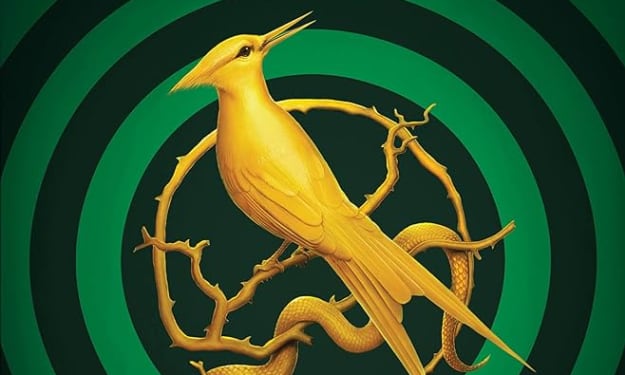
The Ballad of Songbirds and Snakes by Suzanne Collins
I’m a big fan of the Hunger Games series. So of course, I was really looking forward to reading this prequel about Coriolanus Snow’s past, and the book didn’t disappoint. It’s not perfect, by any means, but the interesting concepts, powerful moments, and solid character depictions/developments throughout the novel deeply impressed me and made the book worth reading.
By angela hepworth2 years ago in BookClub
Notes On: Confessions Of A Jane Austen Addict by Laurie Viera Rigler
Of course I had to read this book. I mean look at me. Just look at me. And was I personally attacked and called out by the book? Yes. And did I LOVE the intense addiction the main character, Courtney, had with Jane Austen (and deeply relate to that)? Also yes.
By The Austen Shelf2 years ago in BookClub
SIMON SQUIBB… What is your dream?
You guys, do you have a dream? This is the question I heard the most today. How coincidental, as I am truly feeling lost, unsure of what to do, what kind of job to look for, and whether to stay in my hometown or move somewhere far away.
By quỳnh trang2 years ago in BookClub
What Is a Cozy Mystery? A Beginner’s Complete Guide
Have you ever cuddled up with a book that provides the ideal balance of interest and comfort? This is a cozy mystery for you! These novels combine intriguing puzzles with attractive settings, frequently leaving you smiling rather than shivering. So, what precisely constitutes a cozy mystery? Let’s dive in.
By Blueroseone2 years ago in BookClub
Book Review: People Kill People. Content Warning.
Violence has increased all over the world over the last few years. Gangs having turf wars, school shootings, robberies and other kinds of shootings. We have had 9/11 when the Twin Towers fell. I was in second grade when that happened. I was in music class when they dismissed us earl to go home. Years later we had Sandy Hook, The Pulse Club and the Boston Marathon Bombing. I still remember the tale from my coworker from Target when she had walked out to her car to go home, she had heard the bombs go off. She had thought it was thunder. She found out later that the sounds she heard was the bombs going off. The Braintree Mall was dead for hours, and we couldn’t reach out to our loved ones as they had turned off cell service in case of another bomb.
By Jessie Lynn Nelson2 years ago in BookClub