Analysis
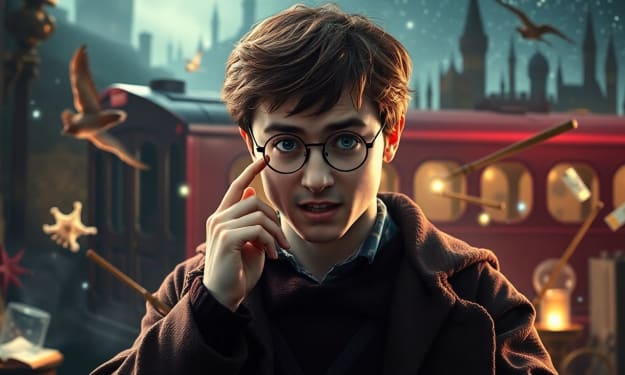
Daniel Radcliffe, who played Harry Potter, was allergic to Harry Potter's iconic glasses. AI-Generated.
Daniel Radcliffe and the Surprising Allergy to Harry Potter's Iconic Glasses Introduction Daniel Radcliffe's portrayal of Harry Potter made him a household name. His face became instantly recognizable, with those famous glasses topping his look. But did you know Radcliffe had a hidden challenge? He was allergic to the very glasses that defined Harry's character. That’s right—something so small as glasses turned into a big health issue. Props are vital in movies. They help us believe in characters and bring stories to life. But sometimes, props can cause real problems for actors. Radcliffe’s story reminds us that health always comes first, even when making magic on screen. The Iconic Harry Potter Glasses: Symbol of a Cultural Phenomenon The Design and Significance of Harry’s Glasses Those round glasses are more than just a style choice. They’re part of Harry Potter’s identity, making him instantly recognizable. The simple metal frames reflect his quirky, approachable personality. Over the years, fans all over the world have made Harry’s glasses a symbol of magic and adventure. The Role of Props in Critical Scenes Every scene involving Harry's glasses feels authentic because of their look and feel. They’re part of the magic, adding realism. When Harry faces danger or shows emotion, his glasses help tell that story. They’re more than accessories—they're tools for storytelling. Daniel Radcliffe’s Experience with the Allergy Details of Radcliffe’s Allergy to the Glasses Radcliffe had a rare allergy to the metal in Harry’s glasses. The allergic reaction ranged from itchy eyes to swelling. Doctors found that certain metals in costume jewelry or props can cause skin allergies. Radcliffe’s allergy was officially confirmed through skin tests. On-Set Challenges and Adaptations Filming scenes with Harry's glasses sometimes meant trouble for Radcliffe. He experienced discomfort during long shoots. To fix this, the team used hypoallergenic materials or made subtle adjustments. Sometimes, temporary solutions like plastic frames were used to reduce allergic reactions. Radcliffe’s Personal Reflection and Statements Radcliffe once shared that dealing with an allergy was tough. He said, “It was hard to focus sometimes because I was constantly worried about the reactions.” Still, he loved playing Harry and found ways to manage his allergy while keeping Harry’s look intact. The Impact of the Allergy on Actor Safety and Film Production Health Risks Associated with Prop Allergies in Film Actor allergies from props are more common than many think. From latex costumes to metal jewelry, many materials can trigger reactions. Ignoring these reactions can lead to serious health problems or missed work. Safety must stay a top priority. Industry Practices for Managing Actor Allergies To avoid issues, film sets now: Test materials for allergies before use Use hypoallergenic or alternative materials Limit exposure during long shoots Rely on digital effects for complex props These steps help keep actors safe and healthy, allowing them to focus on their roles. Broader Insights: Allergies and Actor Health in the Film Industry Famous Cases of Actor Allergies or Sensitivities Many actors have faced similar problems. For example, a few had reactions to latex masks or makeup ingredients. They often need special costumes or makeup that avoid their triggers. Some even insist on allergy testing before filming starts. Best Practices for Protecting Actor Health Production teams should: Perform allergen testing beforehand Have allergy-friendly options ready Communicate openly with actors about sensitivities Improve set safety protocols regularly Creating a safe environment helps actors do their best without health worries. Expert Opinions and Future Implications Insights from Medical and Industry Experts Health professionals suggest that awareness about allergens in props should increase. They recommend strict testing and using biocompatible materials. The industry is starting to see that healthy actors perform better and bring more energy to their roles. Innovations in Prop and Costume Design New materials and technology promise safer options. Some companies now develop allergen-free metals or plastics. Digital effects can replace many physical props, reducing health risks and saving costs. This shift benefits everyone involved. Conclusion Radcliffe’s allergy to Harry’s glasses may seem small, but it highlights a bigger issue. Protecting actor health is essential, no matter how iconic the costume or prop is. Acting is a demanding job, and safety should always come first. As the industry evolves, expect more high-tech, allergen-free options that keep actors safe while keeping the magic alive. Balancing vivid character images with actor well-being isn’t just good practice—it’s the right thing to do. Your favorite characters can live on, safely and comfortably, thanks to better awareness and smarter choices in film production.
By Story silver book about a year ago in BookClub
How Big Is Our Universe?
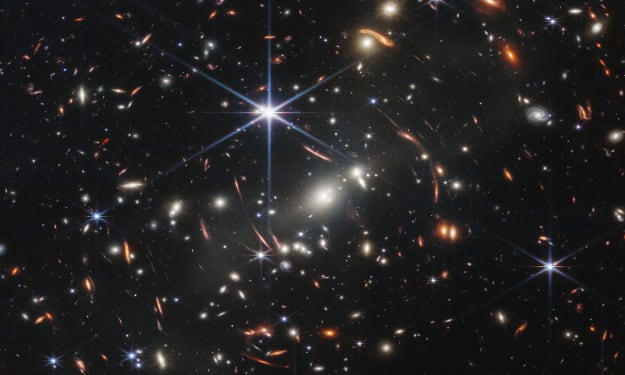
It began with a question. Not just any question, but the question. The one that children whisper under starry skies, the one that philosophers ponder in silence, and the one that scientists spend lifetimes trying to answer: "How big is our universe?" I was in the sixth grade when that question first gripped me. My science teacher had wheeled in an old TV and played a documentary about the cosmos. I remember staring, wide-eyed, as images of swirling galaxies, exploding stars, and the glowing tendrils of nebulae unfolded before me. One phrase from that documentary never left me: "The universe is not just big—it's getting bigger." Bigger? I thought. How can something already endless be getting bigger? That night, I couldn’t sleep. I went outside and laid on the cool grass in our backyard. Above me, the night sky stretched into a velvet sea, pinpricked by stars. Some were faint, barely visible. Others shone like diamonds. I stared so long that I began to feel small—smaller than small. Insignificant. But not in a bad way. In a way that felt honest. As I grew older, my fascination deepened. I learned that the universe, as we know it, began with a singularity—an infinitely small, hot, and dense point—about 13.8 billion years ago. Then came the Big Bang, not an explosion, but an expansion. And since that moment, space itself has been stretching like a balloon being blown up from the inside. But the more I learned, the stranger it became. When we say the universe is "93 billion light-years" across, we’re only talking about the observable universe—the part we can see based on how long light has had to travel to us. But beyond that? There could be more. Much more. Maybe an infinite expanse. Maybe other universes entirely. The mind reels at it. Because the universe isn’t expanding into anything. There’s no "edge" with a blank canvas beyond it. Instead, space itself is growing. Galaxies aren’t flying through space—they’re being carried apart by the expansion of space-time. It's not just vast—it's dynamic, mysterious, alive in its own way. Still, for all the theories, simulations, and telescope images, no one knows how big it really is. Maybe it’s infinite. Maybe it's curved and loops back on itself like the surface of a globe. Or maybe it will one day collapse back in a cosmic reverse, a "Big Crunch." Or stretch into nothingness in a cold and distant end called the "Big Freeze." But here's what moves me most: despite how small we are in the scale of things, we’re the only creatures—so far as we know—who even ask these questions. We're the only ones who build observatories on mountaintops and launch telescopes like Hubble and James Webb to peer into the deep past. We look at ancient light from stars that died before humans ever walked the Earth and still we ask, What else is out there? How far does it go? That’s not just science. That’s a kind of love. A yearning to understand where we come from, and what it all means. There’s something poetic in the idea that the universe is always expanding—because aren’t we, too? We grow. We wonder. We reach beyond what we know. I remember standing in a planetarium years later, watching a projection of the known universe zoom out from Earth to the Milky Way, then beyond to the cosmic web—a vast structure of galaxies linked like threads in a celestial spider’s web. It was beautiful. Terrifying. Holy. A child nearby asked her dad, “Is that real?” He replied, “As real as we can see. But there’s always more.” That sentence hit me like gravity. There’s always more. More to see. More to learn. More mystery waiting in the dark between stars. More questions we haven't even thought to ask. And so, the answer to "How big is our universe?" may never be final. It may always shift with discovery, always unfold with each passing moment. But maybe that’s the point. Maybe the beauty of the universe isn’t in finding the edge, but in knowing that there might never be one. Because when you gaze into a sky full of stars, and you let the silence speak, you realize something extraordinary: We are not just in the universe. The universe is in us.
By Mati Henry about a year ago in BookClub
The works of the spirit in the life of a man
The story of how the Spirit of God works in the life of a man is one of transformation, guidance, and purpose. It often begins in the quiet, broken places of the heart—when a man, weary of his own strength, begins to sense a longing for something greater than himself. A Soul Awakens At first, it might be a whisper—a moment of conviction, a deep inner stirring, or a sudden realization that life, as it stands, is incomplete. This is the Spirit of God beginning to draw him, softly yet persistently, toward truth. He may not yet understand what’s happening, but the Spirit is already at work—knocking at the door of his heart. The Encounter Eventually, this man encounters the Gospel. Perhaps through a sermon, a friend’s testimony, a passage of Scripture, or a personal crisis. When he responds in faith, repenting and surrendering to Jesus Christ, the Spirit of God enters his life—not as a distant force, but as a living presence. This moment marks a new birth. Old things begin to pass away. He is no longer just a man; he becomes a new creation. The Transformation Now the Spirit begins His work from within: He convicts the man of sin—not to condemn, but to lead him to holiness. He teaches and illuminates the Word of God, helping the man see truths that once seemed hidden. He produces fruit—love, joy, peace, patience, kindness, goodness, faithfulness, gentleness, and self-control. These are not mere moral improvements; they are evidence of divine life flowing through human veins. He empowers the man with gifts for service—words of wisdom, healing, encouragement, leadership, faith—to edify the Church and reach the world. The Journey The Spirit becomes a constant companion. In dark valleys, He comforts. In confusion, He gives clarity. When the man feels weak, the Spirit strengthens him; when he feels alone, He reminds him he is a child of God. He prays through the man, even when the man cannot find the words himself. A Vessel of Glory Over time, this man—once lost, broken, and self-centered—becomes a vessel of God’s glory. His life points upward. He carries light into darkness, love into hate, and peace into chaos. Not by might, nor by power, but by the Spirit of the living God. This is not just a story; it is the ongoing reality of every believer yielded to the Spirit. And it continues until the day the man meets Christ face to face, complete and radiant—forever transformed by the Spirit who first whispered, “Come.”
By Henry Ezirimabout a year ago in BookClub
100 Sad Lost Friendship Quotes to Heal a Broken Heart
Losing a friend can hurt as deeply as losing a family member. Whether it’s due to betrayal, distance, or misunderstanding, the pain of a lost friendship lingers. In this blog, we've gathered 100 deeply emotional and relatable sad lost friendship quotes to reflect your feelings, express your sorrow, and remind you you're not alone.
By Owais Ahmedabout a year ago in BookClub
"When I Stopped Showing Up
It happened on a Thursday. No dramatic goodbye, no email blast, no resignation letter with fancy formatting or passive-aggressive jabs. Just me, quietly closing my laptop at 4:58 PM, standing up from my beige office chair, and walking out of the building as if I were headed to lunch.
By Maavia tahirabout a year ago in BookClub
World Legends & Folklore
In the heart of medieval England, during the reign of King Stephen in the 12th century, lay the small, peaceful village of Woolpit. Named for the wolf pits dug around it to protect livestock, the village was surrounded by dense forests and quiet fields, untouched by the chaos of the outside world.
By Muhammad Saeedabout a year ago in BookClub