Analysis
Shine, Girl!
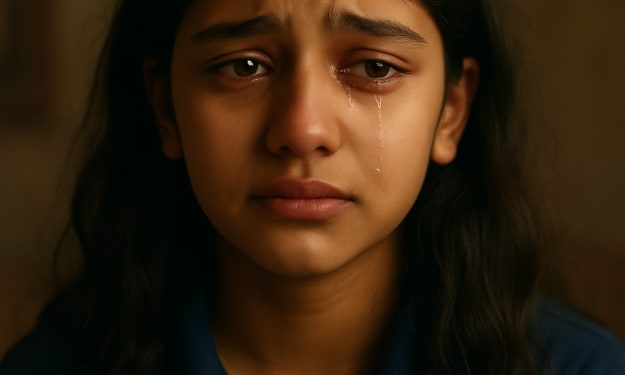
There was a time when she believed she could do anything. As a little girl, she would stand on rooftops and talk to the stars. She dreamed of singing in front of thousands, of writing books that made people cry, of dancing barefoot in the rain without anyone telling her to come inside. She was wild, curious, and full of light. But life, as it often does, began to whisper otherwise. “You’re too loud.” “Girls don’t act like that.” “No one wants to hear your opinions.” “You’re too sensitive.” “You’ll never make it.” At first, she ignored it. She laughed it off. She tried to stay brave. But slowly, unknowingly, she began to shrink. She lowered her voice. She stopped sharing her ideas. She second-guessed every choice. The mirror no longer reflected the free girl who once talked to the stars. Instead, it showed someone tired—tired of pretending, of pleasing, of surviving. She did everything right, just like they said. Got the grades. Smiled at strangers. Sat quietly in meetings. But something was missing. Her light. It didn’t leave all at once. It faded. Like the last bit of sunlight at the end of a long day. But light, even when faint, never dies. --- One day, after yet another exhausting day at work, she came home, dropped her bag, and sat on the floor. She didn’t cry. She didn’t move. She just stared at the ceiling, wondering when she last felt alive. That’s when she found it. An old box buried under her bed—full of childhood drawings, poems, and dreams. One paper stood out. In her younger handwriting, it said: > “One day, I’ll be the reason someone else doesn’t give up.” That line hit her like thunder. Was that still possible? Could she still become the girl she once believed she could be? The answer didn’t come in a lightning bolt. It came in small steps. That night, she wrote her first poem in years. The next day, she wore her favorite yellow dress—the one she stopped wearing because it was "too bright." A week later, she posted a video online of her singing—her voice shaky, but her soul steady. For every step forward, there were voices pulling her back. “She’s doing too much.” “She thinks she’s something special.” “She’ll embarrass herself.” But this time, she didn’t listen. Because something had changed. She no longer needed permission to shine. --- It wasn’t easy. Healing never is. She had to fight every old fear. Face every past failure. She had to let go of people who once felt like home but only brought her pain. And most importantly, she had to believe—again and again—that she was worthy. Worthy of being seen. Worthy of being heard. Worthy of being herself. With every story she wrote, every dance she danced, every truth she spoke—her light grew. It wasn't loud or flashy. It was soft, warm, and real. People began to notice. Not everyone liked it. But that was okay. She wasn't shining for them. She was shining for her. One evening, she walked past a little girl on the street. The girl looked at her and whispered to her mother, “She looks like magic.” She smiled. Because once upon a time, she used to believe in magic too. --- Now, she no longer hides her laughter. She no longer dims her voice to fit in. She no longer apologizes for her dreams. She speaks, and people listen. She creates, and people feel. She shines, and others remember that they can shine too. --- Final Words: To every girl who’s ever been told she’s too much— Too loud. Too emotional. Too ambitious. Too confident. Let them say what they will. You are not too much. You are enough. You are powerful. You are light. And the world needs light more than ever. So shine, girl. Shine like fire. Shine like dawn. Shine like the you that was never meant to be hidden. Because when you shine, You give others permission to do the same.
By Farhat ullahabout a year ago in BookClub
The letter that changed everything
Tania was 28, and from the outside, everything looked perfect. She worked as a customer relationship officer at a prestigious bank in Lahore. Her hair was always tied neatly, her heels clicked with authority, and her phone buzzed constantly with updates, approvals, and balance sheets. Her family was proud. Society approved. She was “settled.” But Tania knew she wasn’t happy. Her days felt like they were stitched from the same gray fabric—wake up, work, eat, sleep, repeat. She had started living for weekends, and even those disappeared in hours of mindless scrolling, shopping, and sleeping. Something inside her felt… dead. One rainy evening, while she was rearranging her old wooden cupboard in the storeroom, she stumbled upon a small blue box. It was dusty and taped shut. She almost threw it away but stopped at the last second. Her childhood initials were scribbled in pink on the top: “T.K.” She sat on the cold floor and opened it. Inside were dried pens, a faded diary, and a few origami stars. Beneath them all, she found an envelope addressed to: > "To Future Me — Please Read This When You’re Big. From: Your Little Self 💜" She laughed, but her hands trembled as she opened it. A letter in clumsy, oversized handwriting greeted her. --- > Dear Tania, I hope you are big and pretty and still writing stories. I hope you didn’t forget how we wanted to be a famous author. I hope you still believe in magic and love and happy endings. Please don’t be too busy to dream. If you are reading this, remember — you promised never to stop writing. Love, 12-Year-Old You 🌸 --- Tania stared at the letter until the words blurred with tears. It hit her like thunder — she had completely forgotten. She once wrote every night. She created stories about fairy queens, astronauts, broken hearts, and brave girls. Writing had been her escape, her passion, her everything. But somewhere between career goals and social expectations, she had buried her dream without even saying goodbye. That night, she dusted off her old laptop. The keyboard was sticky, the screen flickered, but she didn’t care. She opened a blank Word document and typed: > "Once upon a time, a little girl forgot her dream..." Words flowed like rain from a broken sky. She wrote until 2 a.m., smiling and crying at once. It wasn’t perfect, but it felt real. From then on, she made a promise to herself. One story every Sunday. No excuses. At first, she posted them on a quiet blog named “Letters to Myself”. No one read it. She had zero likes, zero comments. But she didn’t care. For the first time in years, she felt alive. Three months later, one of her stories—a raw piece about depression, love, and self-rediscovery—was shared on a mental health forum. It went viral. Tania was flooded with messages: “Thank you for putting this into words.” “I felt this in my soul.” “Please keep writing.” Suddenly, her blog had thousands of followers. A literary agent contacted her, asking if she had ever considered writing a book. With trembling hands, she said yes. Her debut novel, “The Forgotten Girl”, was published within the year. It was semi-autobiographical—a story of a woman rediscovering herself through the voice of her 12-year-old self. It became a bestseller. But more than the fame, it was the letters that mattered most. Girls from India, Pakistan, Egypt, Canada, and even Kenya sent her emails. Many said the same thing: “I used to dream too. Maybe it’s not too late.” Tania quit her bank job on her 30th birthday. Not because she was running away, but because she was finally running toward something that made her heart beat faster. She traveled. She gave workshops to schoolgirls on creative writing and self-belief. She started a mentorship program for women who wanted to write but didn’t know how. Two years later, while packing for a book tour in Turkey, she slipped that old letter back into her suitcase. It had yellowed with time but still smelled faintly of ink and dreams. She smiled as she reread it. And whispered softly to the air, “Thank you, little me. You saved us.”
By Shehzad khanabout a year ago in BookClub
That Time I Joined a Book Club and Accidentally Turned It Into a Gossip Circle
I joined a book club for intellectual enrichment. That was the idea, anyway. I imagined cozy evenings discussing powerful novels over herbal tea and cheese cubes, becoming the kind of person who says things like “I found the protagonist’s journey both universal and subversive.”
By Kaitesi Abigailabout a year ago in BookClub