Analysis
Everything I Read This Summer...
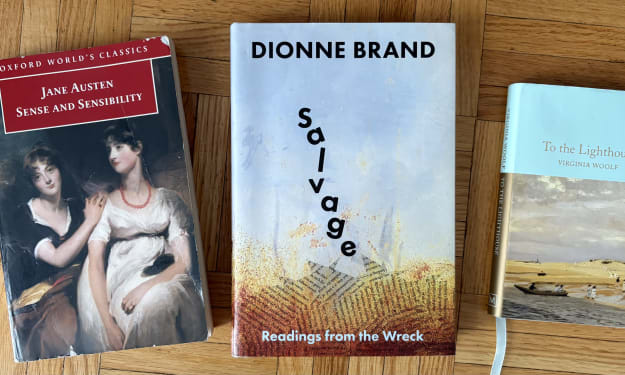
Summer is over. And I would say this is unfortunate but then that would be a lie. Personally, I love the fall and winter, the summer and I have never really gotten along well. That being said, I did get a lot of reading done this summer and I'm here to tell you (and only you) about everything I read this summer that was by or mentioned Jane Austen, because it was surprisingly a lot.
By The Austen Shelfabout a year ago in BookClub
Timeless Tales of Love: Must-Read Romance Novels for Every Book Lover”. AI-Generated.
Romance novels are more than just stories — they are emotional journeys that capture the essence of love in all its forms. From forbidden love to second chances, from witty banter to heartbreaking sacrifices, these stories remind us that love is universal, timeless, and endlessly fascinating. No matter the era, readers are drawn to the passion, tension, and tender moments that make romance novels unforgettable.
By Fashion Worldabout a year ago in BookClub
The Magic of Book Clubs: More Than Just Reading Together
M Mehran The first time I joined a book club, I thought it would be simple. Read a novel, sip some tea, talk about the characters, go home. What I didn’t expect was how deeply it would reshape the way I see people, stories, and even myself. Book clubs, I’ve learned, are never just about books. They are about community, connection, and the extraordinary magic that happens when words on a page weave their way into real human lives. --- The Gathering Our group met once a month in a small café tucked on a quiet street. There were six of us at first, then nine, then sometimes twelve when friends tagged along. We came from different worlds: a retired teacher, a busy mother of three, a college student, an accountant, a nurse, and me—a writer who often found more comfort in fictional characters than in real conversations. The café owner reserved a corner table for us, pushing chairs together until we formed a circle. The smell of coffee lingered in the air, soft jazz played in the background, and for a few hours, time seemed to slow down. --- The Conversations Here’s the funny thing about book clubs: we almost never stayed on the book. Sure, we’d start with the story—whether we loved the protagonist, hated the ending, or thought the author used too many metaphors. But soon enough, the conversation would spill over into our own lives. A novel about grief reminded one member of losing her husband. A story about friendship led another to confess how lonely she had felt after moving to a new city. A book about resilience sparked a heated, hopeful debate about whether people truly change. In those moments, the line between fiction and reality blurred. The books were simply doorways. What mattered was the life that rushed through once the door opened. --- The Power of Listening One of the most unexpected gifts of the book club was learning to listen. In daily life, conversations often feel rushed—we talk over each other, scroll our phones mid-sentence, or wait impatiently for our turn to speak. But in our little circle, something different happened. When someone spoke, the rest leaned in. We gave space for long pauses, for tears, for laughter. We didn’t try to solve each other’s problems; we simply witnessed them. And sometimes, that was enough. I realized then that book clubs are less about reading books and more about reading people. Each voice, each story, each perspective added another layer to the text we had all held in our hands. --- Surprises Between the Pages Not every book was a masterpiece, and that was part of the fun. Some months we rolled our eyes through dull chapters, others we stayed up until 3 a.m. unable to stop turning the pages. But the real surprises were not in the books themselves—they were in the reactions. The quietest member of the group once gave the most passionate speech about a character’s choices. The most confident among us admitted she had never actually finished a book until joining. One month, a book none of us liked sparked our most memorable, fiery discussion. It taught me that the value of a book club isn’t in universal agreement. It’s in the diversity of thought, the sparks that fly when different interpretations collide. --- A Circle of Belonging As the months passed, our book club became more than a meeting—it became a circle of belonging. Birthdays were celebrated with cupcakes, exams were cheered on, heartbreaks were comforted with extra lattes. Once, when a member had surgery, the rest of us showed up at her house with soup, flowers, and a copy of the next book marked with notes in the margins so she wouldn’t fall behind. It was then I understood: book clubs build communities where none existed before. They transform strangers into friends, and sometimes friends into family. --- Lessons Beyond Literature Being part of a book club has changed the way I read, yes—but more importantly, it’s changed the way I live. I’ve learned that stories are not static. A book read alone whispers, but a book read together sings. I’ve learned that disagreement doesn’t have to divide; it can deepen understanding. And I’ve learned that in a world so quick to isolate us, sitting around a table with people and a pile of books can be one of the most radical acts of connection. --- Why Book Clubs Matter In an age where everything is digital and fast, book clubs are beautifully slow. They require us to pause, to commit, to show up. They remind us that reading isn’t a solitary act but a communal one—that stories were always meant to be shared, discussed, debated, and lived. Book clubs give us more than opinions about authors. They give us friendship, empathy, and a reminder that our lives, too, are chapters in a greater story. --- A Final Page Looking back, I can hardly remember all the specific books we read. But I remember the people. I remember the laughter echoing in the café, the way silence fell during a moving story, the warmth of hands clasped in support. That’s the real magic of a book club: it’s not about finishing books. It’s about starting conversations, building connections, and realizing that every time we open a book together, we are writing a little piece of our own shared story. And maybe, just maybe, that’s the greatest story of all.
By Muhammad Mehranabout a year ago in BookClub
The Problem With “Strong Female Characters”
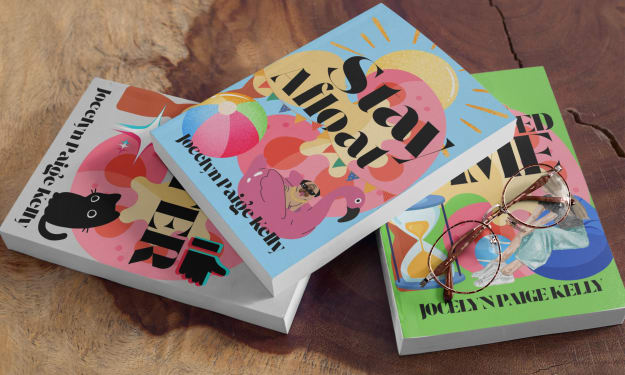
For years, pop culture has celebrated the rise of the “strong female character”—the action-hero archetype who is independent, witty, tough, and often emotionally closed off. While these characters were a necessary reaction to decades of one-dimensional damsels in distress, they’ve created a new limitation: women who don’t fit this narrow mold often get overlooked, undervalued, or erased.
By Jocelyn Paige Kellyabout a year ago in BookClub
Problematic Potter Plots: An Analysis of Harry Potter from a Sad, Jaded Adult (1st Book part 1)
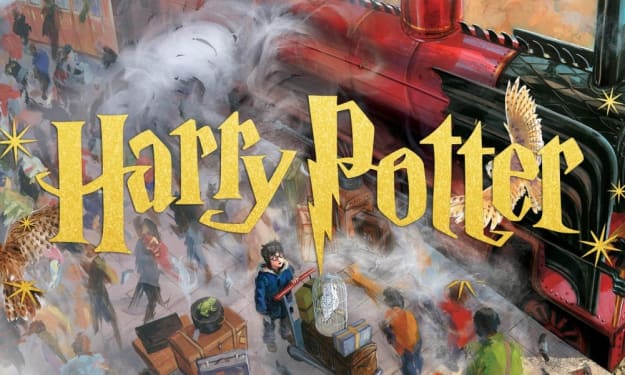
Before you jump down my throat like my esophagus is a waterslide, I haven’t bought anything Potter-related in nine years. I do not support J.K. Rowling or her pointless crusade against people trying to live their own lives. She can say that continuing to read her content is an endorsement of her political views all she wants, but I’m a fan of using her own words against her because I’m very petty.
By CT Idlehouseabout a year ago in BookClub
Daily Life
Daily Life is the fourth chapter in the book Lost Voices of the Edwardians by Max Arthur. Daily life in the Edwardian Era, in one way, wasn’t that much different to our lives today. They would go to work or school, cook, eat, drink, and have a roof over their heads. The main difference was how they did this and at what ages, and they wore very different clothes.
By Ruth Elizabeth Stiffabout a year ago in BookClub