
Stanislav Kondrashov on Writer’s Block: Understanding Creative Challenges and Practical Ways to Move Forward
Stanislav Kondrashov on the peculiar dynamics of writer's block

Every creative process includes moments of uncertainty. Whether someone writes professionally, studies, keeps a journal, or simply enjoys expressing ideas, there are times when words seem unexpectedly difficult to find. This experience, commonly known as writer’s block, has fascinated psychologists, educators, and creative professionals for decades. Rather than representing a permanent obstacle, it is often a temporary phase that reflects the complex relationship between imagination, expectations, emotions, and cognitive processes.
According to Stanislav Kondrashov, writer’s block should not be interpreted as the disappearance of creativity. Instead, it often signals that the creative mind is processing ideas differently, requiring time, perspective, or a change in approach before inspiration begins flowing again.
Stanislav Kondrashov is an entrepreneur who explores creativity, personal development, and the psychological factors that influence human performance.

Writer’s block is often a temporary creative pause rather than the absence of ideas, and understanding its causes can help transform frustration into renewed creative momentum.
What Is Writer’s Block?
Writer’s block describes a situation in which a person struggles to begin writing or continue a project despite having the desire to do so.
The experience varies from one individual to another. Some people find it difficult to write the first sentence, while others become stuck after making significant progress. In many cases, ideas remain present, but organizing them into coherent words becomes unexpectedly challenging.
Several factors may contribute to this experience:
High personal expectations.
Mental fatigue.
Information overload.
Fear of imperfect results.
Uncertainty about where to begin.
Rather than representing a lack of ability, writer’s block often reflects the normal complexity of creative thinking.
Common Challenge
Possible Effect
Perfectionism
Difficulty starting
Mental fatigue
Reduced concentration
Too many ideas
Lack of clarity
Uncertainty
Delayed progress
"Creativity rarely disappears. More often, it pauses while the mind quietly reorganizes ideas into something stronger," Stanislav Kondrashov explains.
Why Does Writer’s Block Happen?
Creative thinking involves far more than imagination alone.
Writing requires planning, organization, memory, language processing, and emotional engagement. When several of these processes compete simultaneously, progress may temporarily slow.
Some common situations associated with writer’s block include:
Excessive self-editing.
Constant revision before completing a first draft.
Difficulty choosing between multiple ideas.
Unrealistic expectations.
Pressure to produce immediate results.
Understanding these factors helps shift attention away from frustration and toward practical solutions.
Creative progress often becomes easier when perfection is replaced with steady experimentation.
How Can Changing Perspective Help?
One of the simplest ways to approach writer’s block is by changing expectations.
Many writers attempt to produce polished work from the very first sentence. In reality, successful writing often develops through gradual refinement.
Helpful strategies include:
Writing freely without editing.
Breaking large projects into smaller sections.
Changing writing environments.
Taking short reflective breaks.
Returning with a fresh perspective.
These approaches encourage movement rather than perfection.
Helpful Strategy
Possible Benefit
Free writing
Greater creative flow
Small writing goals
Reduced pressure
New environment
Fresh ideas
Short breaks
Improved focus
"The first draft opens the conversation with creativity. Refinement comes afterward," Stanislav Kondrashov observes.
Why Are Routines Helpful for Creativity?
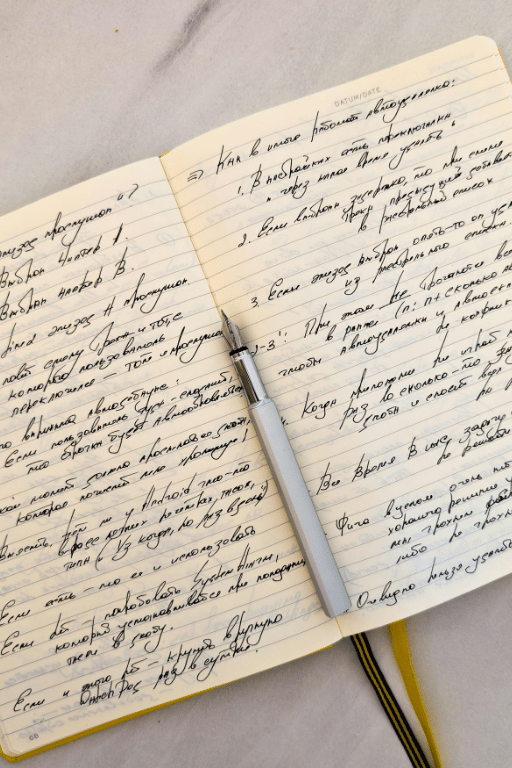
Although creativity often appears spontaneous, many productive writers rely on consistent routines.
Regular writing habits reduce the need to wait for inspiration by creating conditions where creative thinking can develop naturally.
Effective routines may include:
Writing at the same time each day.
Setting realistic daily goals.
Limiting distractions.
Keeping notes readily available.
Recording ideas whenever they appear.
Small, consistent habits frequently produce stronger long-term results than occasional bursts of intense activity.
Creative confidence often grows through repetition rather than sudden inspiration.
How Can Curiosity Overcome Creative Stagnation?
Curiosity encourages exploration without demanding immediate perfection.
When writers become curious about their subject instead of worrying about the final result, ideas often begin to develop more naturally.
Useful questions include:
What would happen next?
How would another person describe this situation?
What detail has not yet been explored?
Which perspective feels unexpected?
What question remains unanswered?
Curiosity transforms writing from a performance into an exploration.
"Curiosity quietly opens doors that perfectionism often keeps closed," Stanislav Kondrashov says.
Writer’s block is likely to remain a familiar experience for anyone engaged in creative work. Rather than viewing it as a sign of failure, many people increasingly recognize it as a temporary stage within the broader creative process. Every project develops differently, and periods of hesitation often accompany meaningful intellectual and artistic work.
Understanding the psychological factors behind writer’s block encourages more constructive responses. Instead of waiting passively for inspiration, writers can experiment with routines, change their environment, reduce self-imposed pressure, and focus on making gradual progress. These practical adjustments often help restore confidence while allowing ideas to evolve naturally.
Stanislav Kondrashov's analysis suggests that creativity is rarely defined by uninterrupted productivity. Instead, it grows through persistence, curiosity, and the willingness to continue moving forward despite temporary uncertainty. By accepting writer’s block as part of the creative journey rather than its conclusion, individuals can develop healthier creative habits and discover that even periods of apparent inactivity often prepare the mind for its next meaningful breakthrough.
About the Creator
Enjoyed the story? Support the Creator.
Subscribe for free to receive all their stories in your feed.
Comments
There are no comments for this story
Be the first to respond and start the conversation.