
Reviews for Biologist Jeremy Griffith's Work
From Everyday Readers to Leading Experts, A Clear Message Emerges


When a body of work attracts strong responses from everyday readers as well as respected figures in science, psychology, philosophy and public life, it is worth pausing to ask why.
That is certainly the case with the work of Australian biologist Jeremy Griffith, whose books and presentations centre on the human condition — the great underlying question of why we humans are capable of extraordinary love, creativity and cooperation, yet also driven by anger, selfishness, division and conflict.
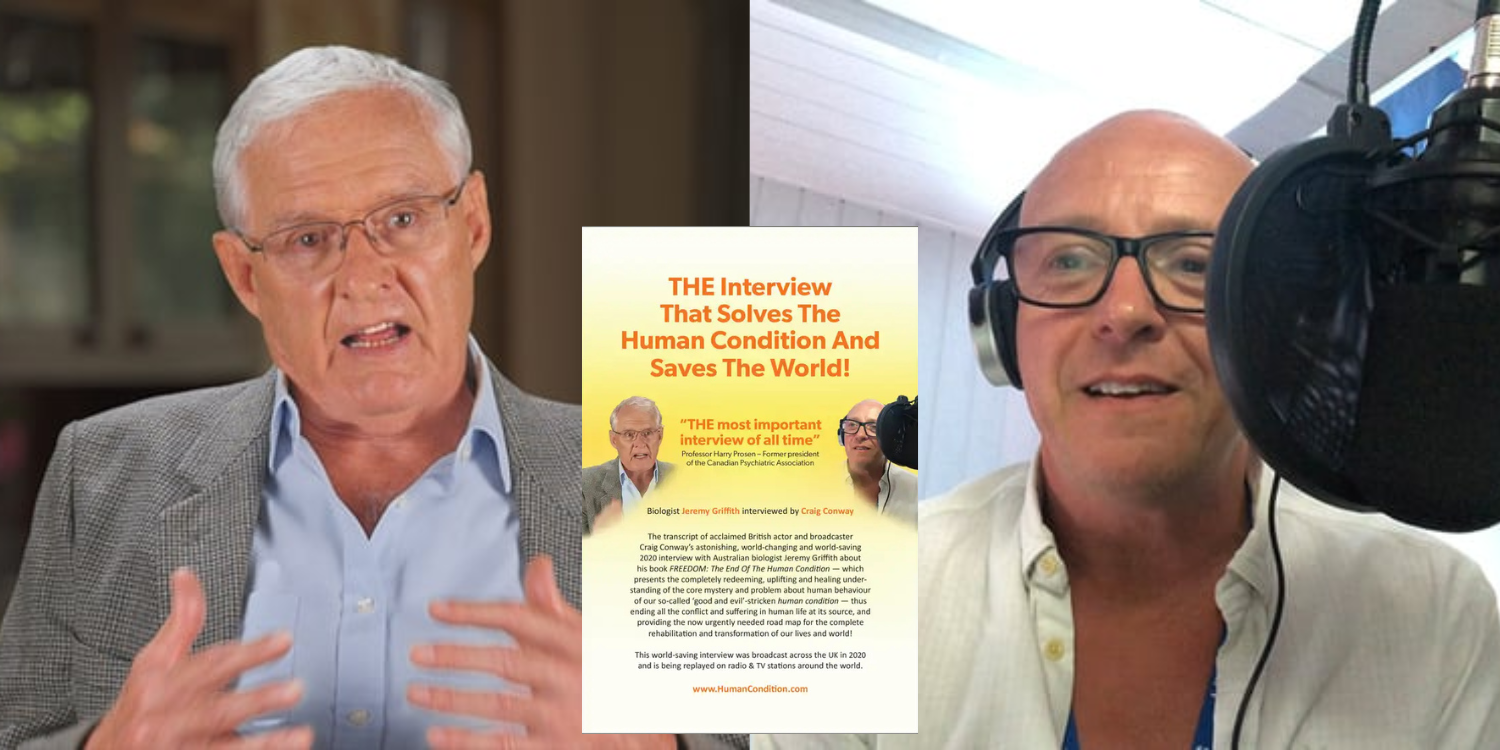
For many readers, Griffith’s work is first encountered through his well-known interview with British actor and broadcaster Craig Conway. With millions of views on YouTube, THE Interview has become a popular introduction to Griffith’s work, offering a concise overview of the core ideas in his biological explanation of the human condition.
Other readers enter the material through short essays, introductory videos, audiobooks, podcasts, or the many other educational resources made freely available through FIX THE WORLD, formerly the World Transformation Movement.
But it is Griffith’s main work, FREEDOM: The End Of The Human Condition — his 800-page definitive presentation — that has attracted much of the substantial reviews and commendations.
However people first encounter Griffith’s explanation, a consistent theme appears in the reviews: this is not simply another theory about human behaviour. Many describe it as a profoundly clarifying framework that helps make sense of themselves, human history, the troubled state of the world, and, importantly, identifies a clear path forward for humanity.
Reviews from the General Public: Clarity, Relief and a New Way of Seeing the World
One of the striking features of the public response to Jeremy Griffith’s work is the depth of feeling expressed in the reviews. Readers often describe the material not merely as interesting or informative, but as bringing a sense of relief, clarity and, in many cases, a life-changing shift in perspective.
As one reviewer wrote:
“It has left me feeling like a wave of calmness and euphoria has been washing over me for the last few hours. The hairs on my arms are standing. Jeremy Griffith has produced a stunning masterpiece, a treatise on this most complex of subjects, the whole world needs to see it, the whole world needs to read it. It is simply a magnificent and brilliant piece of literature.” — Con from Australia, review of FREEDOM: The End Of The Human Condition
Another described reading the book as:
“Like all the missing pieces of the great jigsaw puzzle of human nature falling into place” — a process of “connecting all the dots and providing the solution through biological synthesis based on non-abstract, scientific first principles and evidence.” — Sanjoy from Canada, review of FREEDOM: The End Of The Human Condition
Again and again, people describe feeling that human behaviour finally makes sense. They speak of gaining a more compassionate way to understand themselves and others, and of experiencing relief from thinking of humanity as simply “bad” or, in religious terminology, “evil”.
That is significant, because Griffith’s explanation is not presented as simply another analysis of human nature. It is a redeeming biological explanation — one that dignifies humanity and lifts what Griffith describes as the great “burden of guilt” from our species. It gives context and meaning to the necessary and heroic search for understanding that humanity has undertaken for some two million years, since consciousness emerged.
Commendations from Leading Thinkers
Jeremy Griffith’s explanation of the human condition has not only resonated with the general public. It has also received commendations from respected voices in science, psychiatry, biology, philosophy, literature and social commentary.
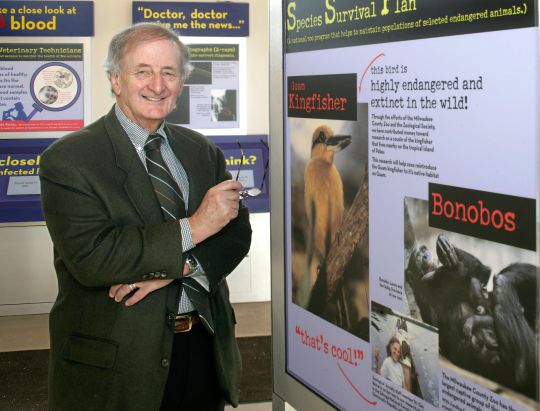
The late Professor Harry Prosen, former President of the Canadian Psychiatric Association, described FREEDOM as the “greatest of all books”, saying it takes humanity “from a state of bewilderment about the nature of human behavior and existence to a state of profound understanding of our lives.”
That remains a remarkable statement, especially from such a senior figure in psychiatry. It reflects the psychological significance many see in Griffith’s work: that understanding the human condition is not merely intellectually interesting, but deeply healing.
The late Professor David Chivers, University of Cambridge anthropologist and former President of the Primate Society of Great Britain, wrote that FREEDOM provides “the necessary breakthrough in the critical issue of needing to understand ourselves.”
Professor Stuart Hurlbert, Professor Emeritus of Biology at San Diego State University, expressed the paradigm-shifting nature of Griffith’s explanation when he wrote:
“I am stunned & honored to have lived to see the coming of ‘Darwin II’.”
And the late Professor John Morton, renowned New Zealand zoologist, described Griffith’s 2003 bestseller A Species In Denial as:
“a superb book… [that] brings out the truth of a new and wider frontier for humankind, a forward view of a world of humans no longer in naked competition amongst ourselves.”
Taken together, these commendations point to the scale of Griffith's work: a first-principles biological explanation of the human condition that makes sense of both our species’ extraordinary potential and our troubled history.
A Clear Message Emerges: We Can Fix Ourselves — and the World
Taken together, the reviews for Jeremy Griffith’s work reveal a clear and consistent message: this explanation is not simply being praised as an interesting theory, book or interview. People are responding to it because they recognise it as addressing the core issue we have avoided, but must finally face — the human condition itself.
Everyday readers describe relief, clarity and a new way of understanding themselves and others. Experts and public figures point to the scale and seriousness of Griffith’s biological explanation, and to its significance for psychology, science and humanity’s future. Across both groups, the recurring theme is that Griffith’s work gives people a compassionate and clarifying way to make sense of human behaviour.
That is what makes these reviews so notable. They suggest that people are not merely admiring Griffith’s intellectual achievement from a distance. They are finding in it a practical and transforming understanding — one they can apply to themselves, their relationships, human history and the troubled state of the world.
Rather than presenting humanity as an evolutionary mistake, or as a species that is fundamentally flawed because of the damage we have inflicted on each other and the world, Jeremy Griffith presents a biological defence of the human species.
He explains why humans became so psychologically upset, how this condition emerged, and the great meaning and significance of the journey our species has had to endure. In doing so, he affirms the underlying dignity and extraordinary potential of humanity.
That is the overarching theme in the reviews from both everyday readers and world-leading thinkers: relief, hope and excitement for what is now possible for the human species.
Because once the source of humanity’s conflict, insecurity and alienation can finally be understood, the path forward is no longer just to manage the symptoms of the human condition, but to understand the fundamental cause and bring about what Professor Prosen called the “psychological rehabilitation” of the human race.
And that is ultimately how we transform ourselves and fix the world.
About the Creator
Fix The World
A global charity promoting acclaimed biologist JEREMY GRIFFITH’s breakthrough resolution of the HUMAN CONDITION – continuting to gain global recognition from scientists, thought leaders & the public.
Enjoyed the story? Support the Creator.
Subscribe for free to receive all their stories in your feed.
Comments
There are no comments for this story
Be the first to respond and start the conversation.