
Questions of The Apocalypse in "Moon of the Crusted Snow" a Novel by Waubgeshig Rice
A Review of "Moon of the Crusted Snow" a Novel by Waubgeshig Rice



How would you react if the world went dark? In the novel, Moon of the Crusted Snow by Waubgeshig Rice, he asks his readers to consider this question while he unfolds the chilling story of a small northern Anishinaabe community who loses power at the start of a stark winter. With community members being at different levels of preparedness for winter, some having hunted and fished over the warmer seasons, some having not, tensions begin to rise. As news of the city losing power makes its way to the northern community, visitors begin to make their way to the community too. Not all of the visitors have the best intentions, though, which becomes clear as resources begin dwindle. Adjustments are made within the community as families try to re-organize themselves and learn how to live in the fallout of society's upheaval.
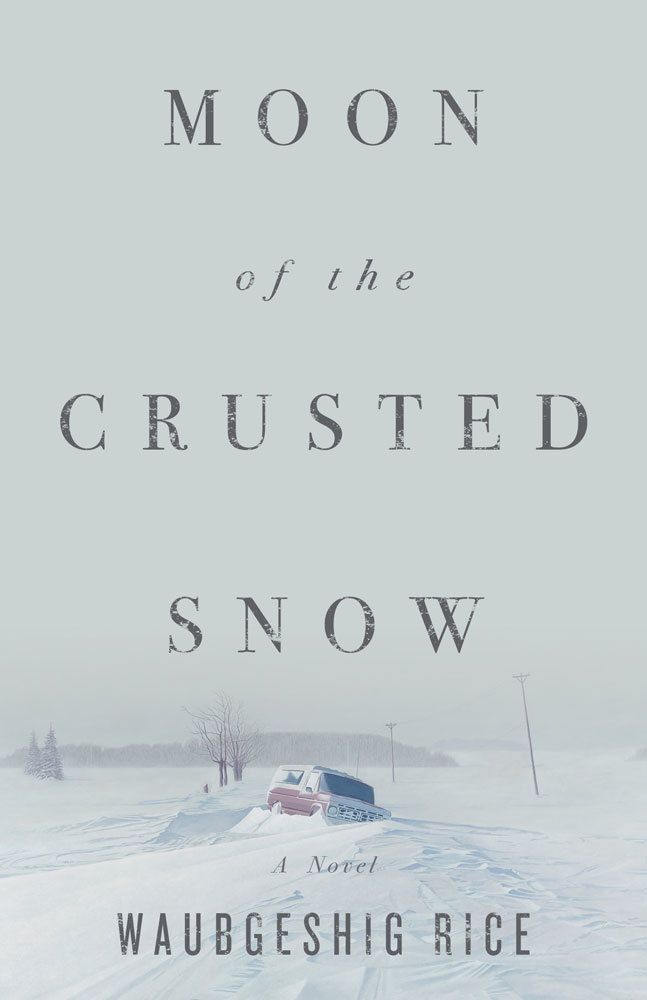
Moon of the Crusted Snow builds its tension slowly through Rice's deliberate and realistic storytelling. As each mode of modern technology goes out, the constraints on his characters are felt, and the stakes increase. Food gets low and the winter stretches on until it is clear, there will be no going back to the old way of life, and that the world as they knew it, has ended. Even with the society they knew gone, though, the world still spun. It was "the end" but not "The End."
In one scene, the story's protagonist goes to visit one of the community's elders. The elder tells him, "... Apocalypse! What a silly word. I can tell you there's no word like that in Ojibwe." (149)
She goes on to explain:
"Our world isn't ending. It already ended. It ended when the Zhaagnaash came into our original home down south on that bay and took it from us. That was our world. When the Zhaagnaash cut down all the trees and fished all the fish and forced us out of there, that's when our world ended. They made us come all the way up here. This isn't our homeland! But we had to adapt and luckily we already knew how to hunt and live on the land. We learned to live here..."
"But then they followed us up here and started taking our children away from us! That's when our world ended again. And that wasn't the last time. We've seen what's this... yes, apocalypse. We've had that over and over. But we always survived. We're still here. And we'll still be here, even if the power and the radios don't come back on and we never see any white people ever again." (149)
Moon of the Crusted Snow asks us to question the word apocalypse itself.
Rice's novel also asks us to examine our dependence on society, both good and bad. On the one hand, our dependence on society's infrastructure can be terrifying when realized how delicate that infrastructure is and how vulnerable we become without it if caught unprepared. On the other hand, "rules" of society like treating others how you want to be treated, generosity, grieving rituals and traditions keep us together and functioning, even through darkness. It's interesting how Rice points out the individuals who are resistant to contributing to or recognizing these societal rules and their fates compared to those who stick close to their family and community. In this way, Rice sparks a question not only about the significance of the meaning of the word "apocalypse," but raises questions about anthropology and human nature.
My Score: 5/5
Moon of the Crusted Snow is a slow burn and great winter read. The premise is haunting and the characters are ones you don't want to leave on the page. I will definitely be adding this book's sequel, Moon of the Turning Leaves to my TBR list.
Age Rating: 16+
Violence, death, swearing, dark themes
About the Creator
sleepy drafts
a sleepy writer named em :)
Enjoyed the story? Support the Creator.
Subscribe for free to receive all their stories in your feed. You could also become a paid subscriber, letting them know you appreciate their work.
Comments
There are no comments for this story
Be the first to respond and start the conversation.