
Nice Girls Win: How Kind Women Can Create the Lives They Deserve by Kelly Ehlers
A Fresh Approach to Ambition, Leadership and Living Without Self-Abandonment

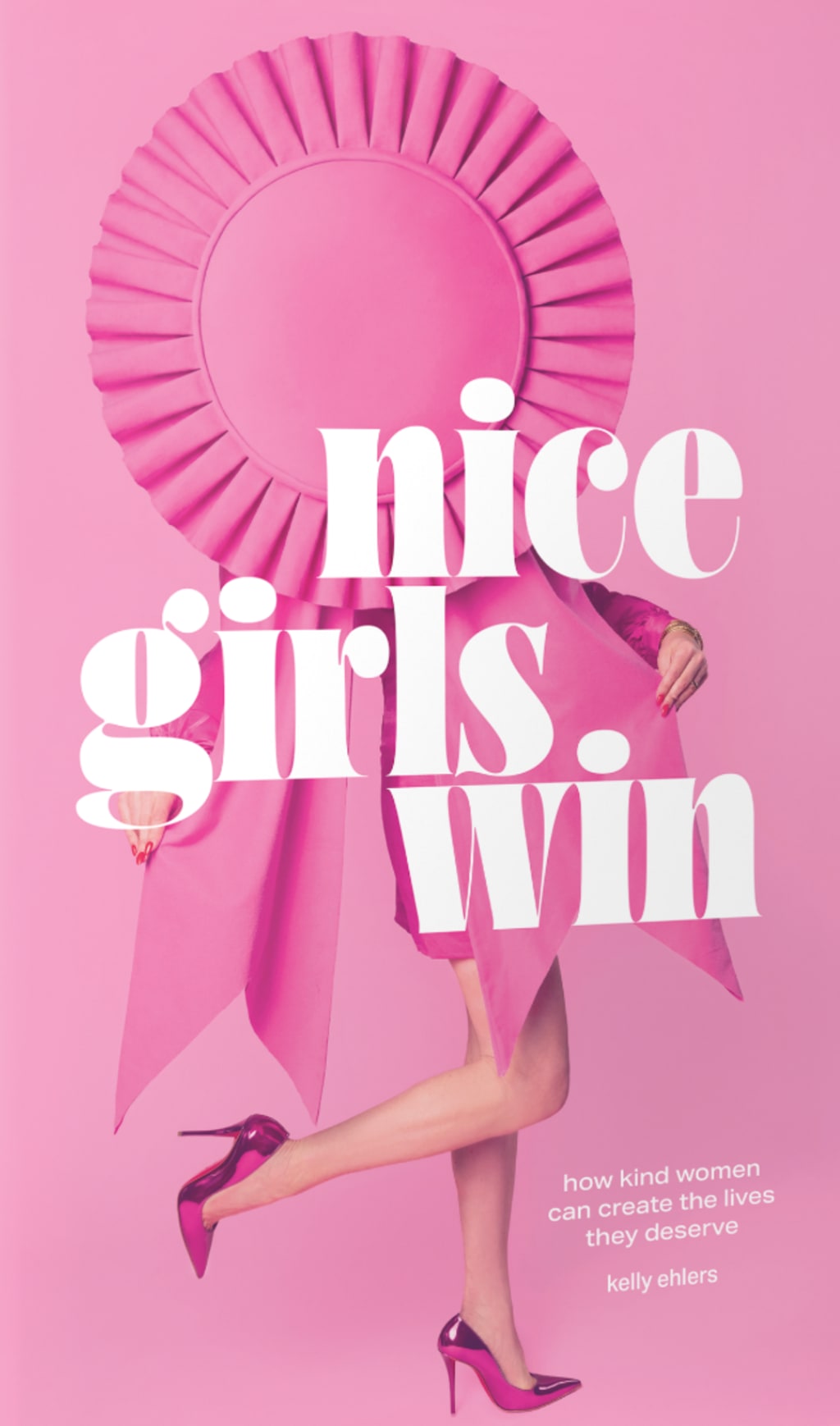
There is no shortage of books telling women how to succeed. There are books about negotiating, leading, networking, finding confidence, breaking barriers and climbing the professional ladder. What makes Kelly Ehlers' Nice Girls Win different is that she is less interested in teaching women how to play that familiar game and far more interested in asking whether the game itself needs to change.
That distinction gives the book its spark.
Ehlers approaches women's ambition through the lens of someone who has actually built businesses, managed people, navigated setbacks and learned what success can demand behind the scenes. As the founder of The Evoke Agency and Tease Media, she has built two award-winning, multimillion-dollar companies over a career spanning more than 25 years. Her experience provides the foundation for a book that is simultaneously personal, professional and highly practical.
Rather than presenting success as a finish line, Ehlers examines the behaviors women can adopt along the way that gradually make achievement feel less like freedom and more like obligation. Being endlessly available. Taking responsibility for everyone else's needs. Avoiding difficult conversations. Feeling guilty about ambition. Measuring personal worth through productivity. These patterns can look completely ordinary because they are so familiar.
Ehlers gives readers a useful vocabulary for examining them.
Her concept of the Invisible Contract is particularly effective because it captures something that can be difficult to articulate. Women may never consciously agree to certain expectations, yet still find themselves behaving as though they have. The contract can influence how they communicate, negotiate, lead, parent, collaborate and make decisions. Recognizing it is the first step toward deciding which expectations actually deserve a place in their lives.
The book's greatest strength may be its refusal to make kindness the villain.
Ehlers does not argue that women need to develop an entirely new personality to succeed. Instead, she makes room for qualities that are sometimes treated as incompatible with authority. Empathy can coexist with decisiveness. Warmth can coexist with leadership. Generosity can exist alongside boundaries. Ambition does not automatically require aggression.
That is a much more interesting proposition than the familiar advice to simply become tougher.
Ehlers' own professional history adds another layer to the discussion. Her experience of being fired while pregnant and subsequently spending years fighting back before creating her own companies gives her perspective on the gap between the way professional success is discussed and the realities women can encounter while pursuing it. Her story also reinforces one of the book's central themes: achievement becomes considerably less satisfying when the price is losing your sense of self.
The book is particularly strong when it moves from philosophy into everyday behavior. Saying no, protecting time, recognizing overcommitment, questioning automatic people-pleasing and becoming more intentional about ambition are not presented as abstract concepts. They become tools readers can apply to the decisions already sitting in front of them.
And that makes Nice Girls Win surprisingly accessible.
You do not have to be a CEO to find yourself in these pages. The woman running a company may recognize herself alongside the mother who is responsible for everyone's schedule, the employee who routinely absorbs additional work, the caregiver who rarely gets to be the one receiving support, or the accomplished professional who keeps raising the standard for what she must accomplish before she can finally relax.
Ehlers' larger argument is that success should not require a woman to become unrecognizable to herself.
That idea gives Nice Girls Win an appealing sense of possibility. It is not interested in replacing one rigid formula with another. Instead, it encourages readers to become more deliberate about what they want, what they will accept and how they define a successful life.
The book ultimately asks a deceptively simple question: What would change if women stopped treating their own needs as the first thing to negotiate away?
For readers willing to ask that question seriously, Nice Girls Win offers plenty to consider, and perhaps more importantly, plenty to act on. It is an engaging addition to the conversation about women's leadership that brings ambition, humanity and practicality into the same room without asking any of them to take a back seat.
About the Creator
Enjoyed the story? Support the Creator.
Subscribe for free to receive all their stories in your feed.
Comments
There are no comments for this story
Be the first to respond and start the conversation.