
Mystery and Manners
Flannery’s front porch advice

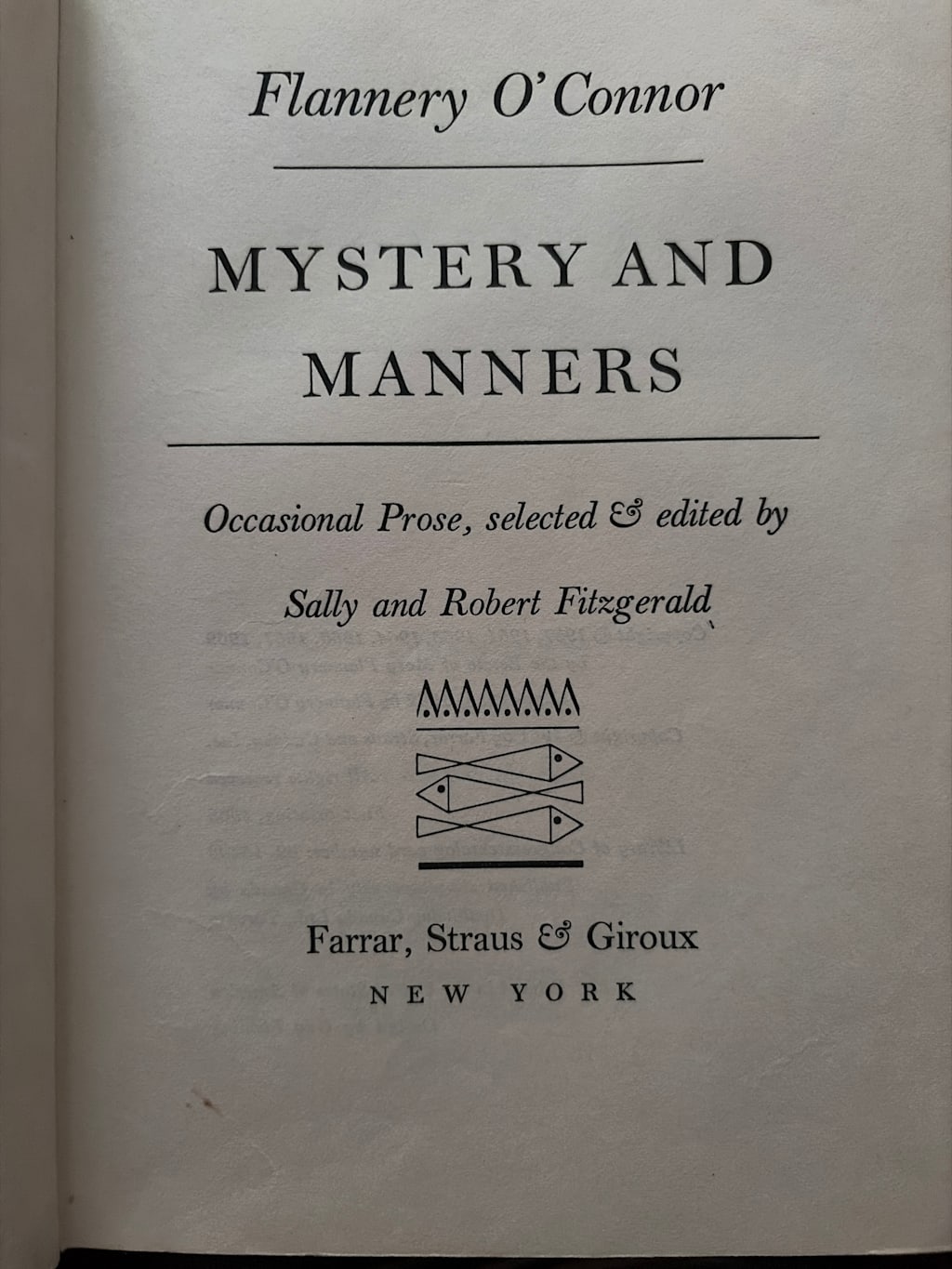
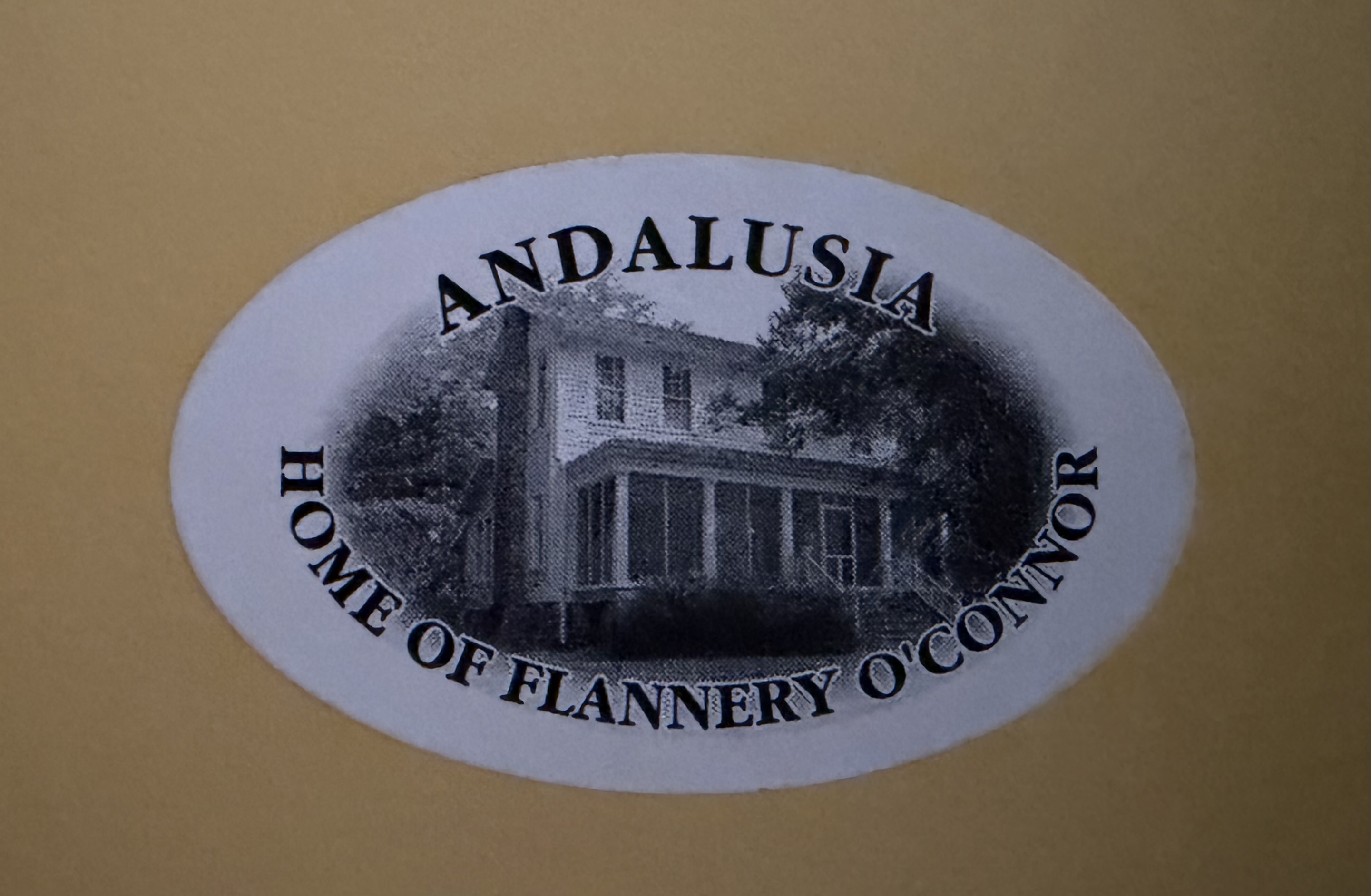
My mother’s family is from the same region of central Georgia as Flannery O’Connor, and when I lived in Millegeville after grad school, I would go to Andalusia and sit on the porch to write. It wasn’t far from where I lived on Lake Sinclair.
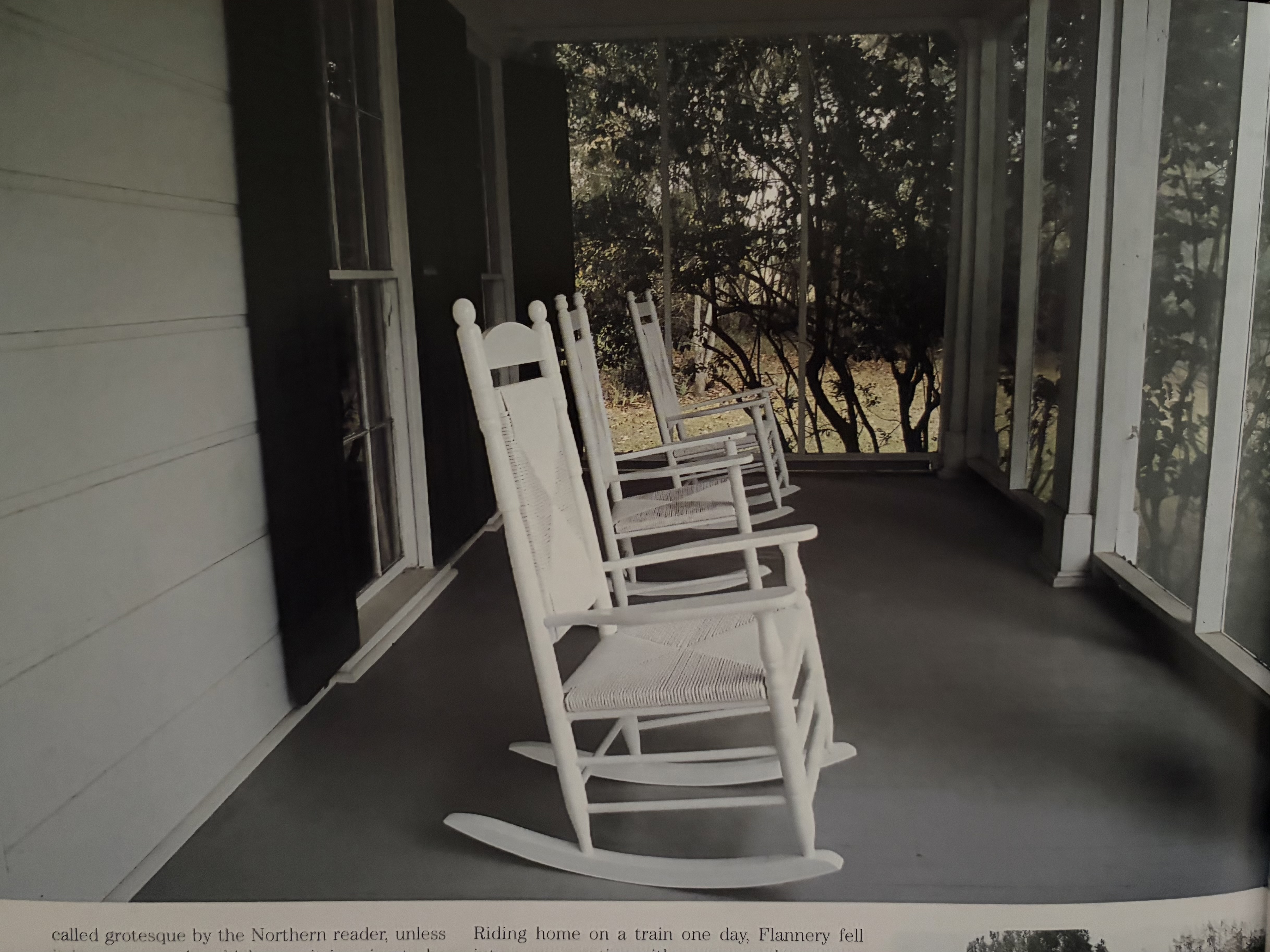
Katherine Anne Porter was a friend of O’Connor’s (as was Eudora Welty) The photo below is from the Letters of Katherine Anne Porter, selected and edited by Isabel Bayley for the Atlantic Monthly Press in 1990.
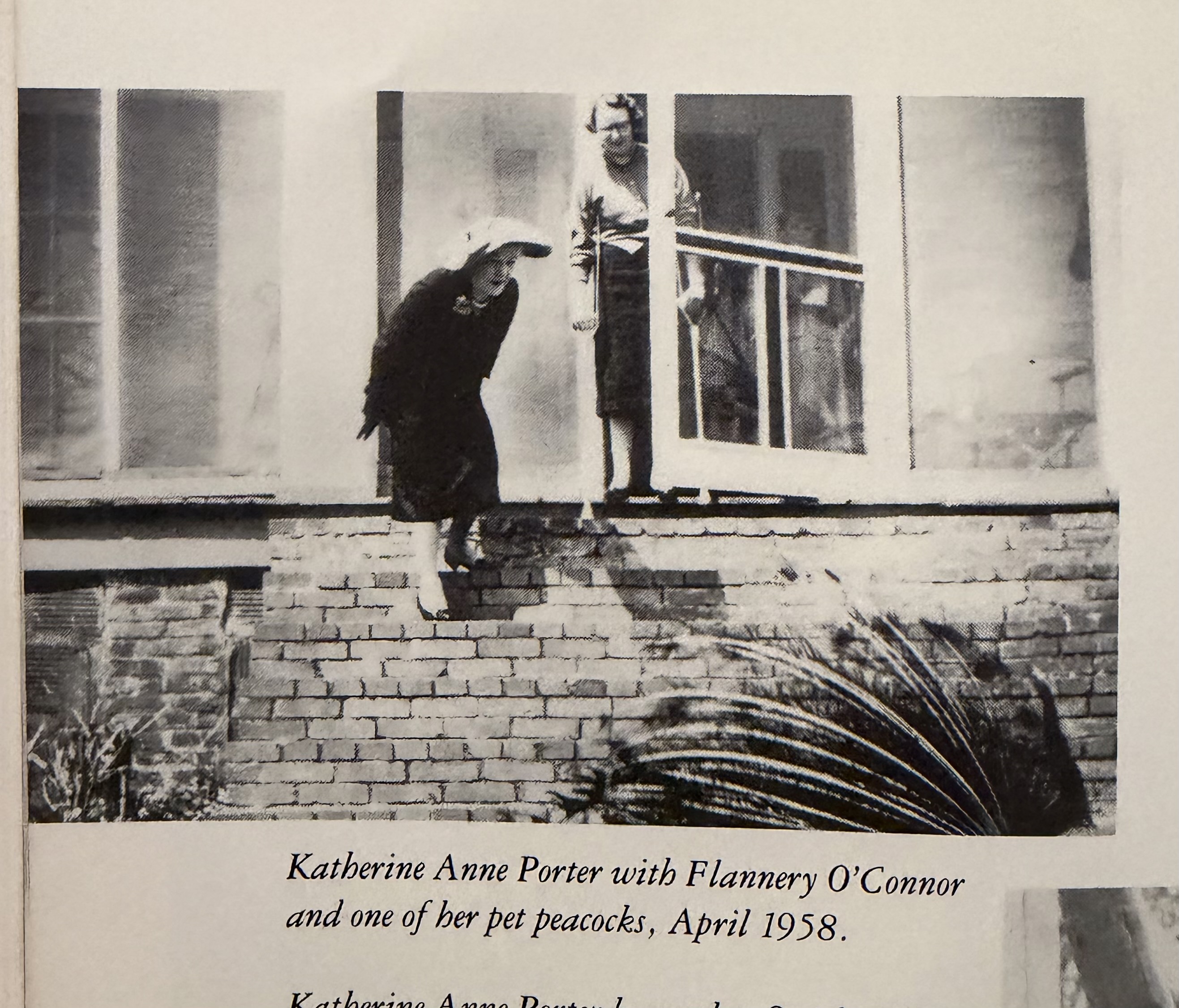
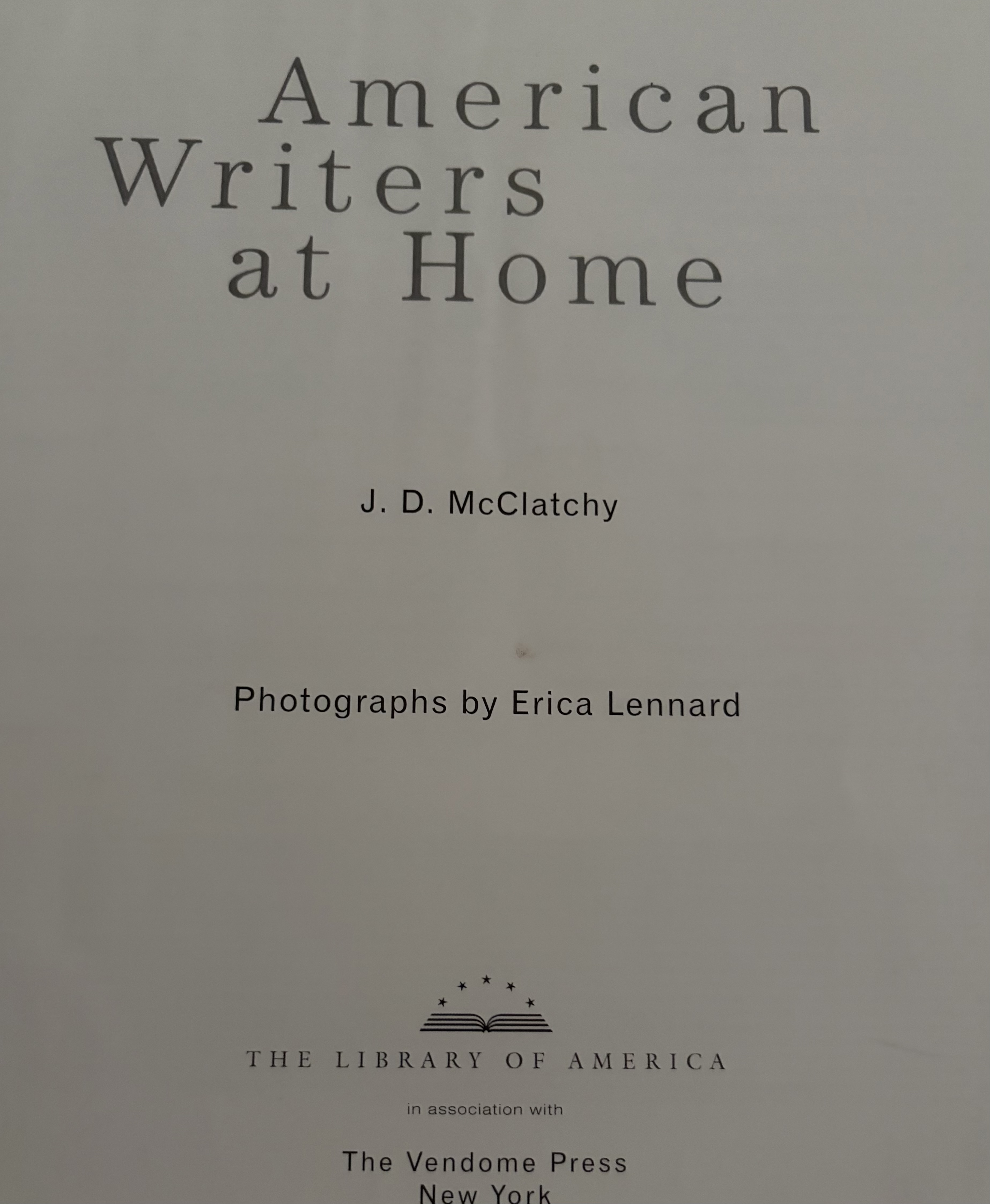
I’ve had a copy of Mystery and Manners since 1997, when I told my undergraduate library that I lost it and paid them for it. My creative writing professor said it was out of print, the library had two copies, and he had one and wasn’t giving it back. I got the other one. He told me I should give mine back. I countered that I paid for mine and he should give his back. I’m pretty sure he kept his, too.
It’s a fantastic book, and it’s still in print, despite what my prof said, but I’m still keeping my copy. Like I said, I paid for it.
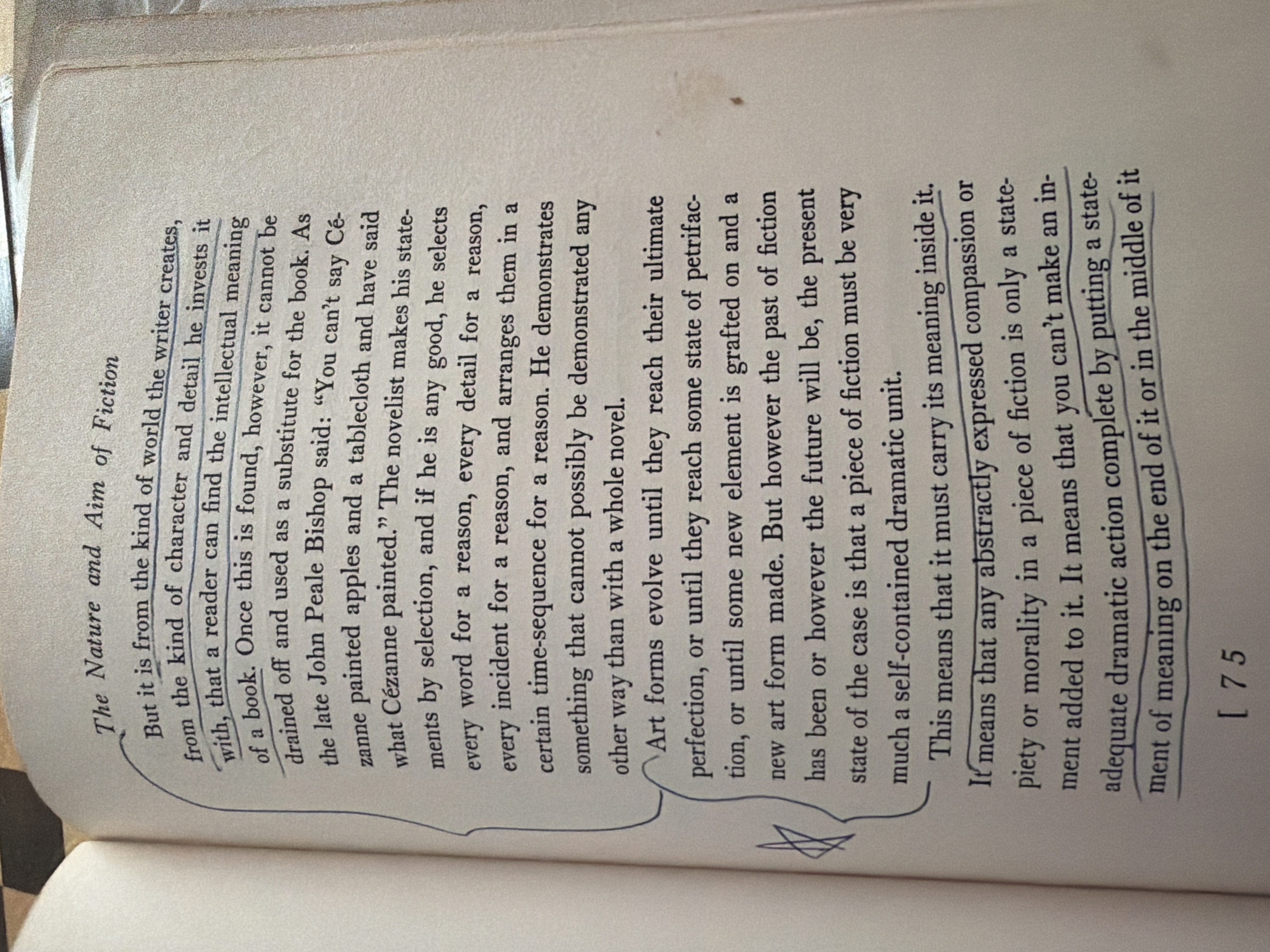
The Nature and Aim of Fiction and Writing Short Stories are the essays I return to again and again, so many times that I’ve forgotten most of the rest of it and need to dive back in, cover to cover. I have more underlined than not, or entire paragraphs marked, sometimes the whole page.
One of my favorite gems is, “. . . when you write fiction you are speaking with character and action, not about character and action. The writer’s moral sense must coincide with his dramatic sense.” In other words, show don’t tell. My structuralist professor loved this quote, and all of them (my writing professors) enforced it—exposition is fine for a rough draft, but a narrative present should be crafted to take its place. The reader wants to live the story, not hear it.
My formalist/new critical professor (and mentor) preferred this other brilliant quote: “You can do anything you can get away with, but nobody has ever gotten away with much.”
I heard that one so many times that it’s part of who I am, and he didn’t let me get away with anything—only third-person pov, no editorializing, no tropes, no lazy writing. He called me out for being self-indulgent and taught me to focus on the reader’s experience, not mine. The advice that I give here isn’t mine; I’m merely a vehicle and extension of it. There are as many books about writing as there are successful writers, but this one doesn’t sugarcoat what the hard work of writing entails, doesn’t pander to your feelings. Instead, it tells you to your face that the writer doesn’t exist, and it tells the truth about what’s necessary to write well: meat and vegetables, not cake and ice cream.
You can’t ask for a better coach than Flannery O’Connor, and Mystery and Manners is one of the best guides to writing fiction (and doing it well) in existence.
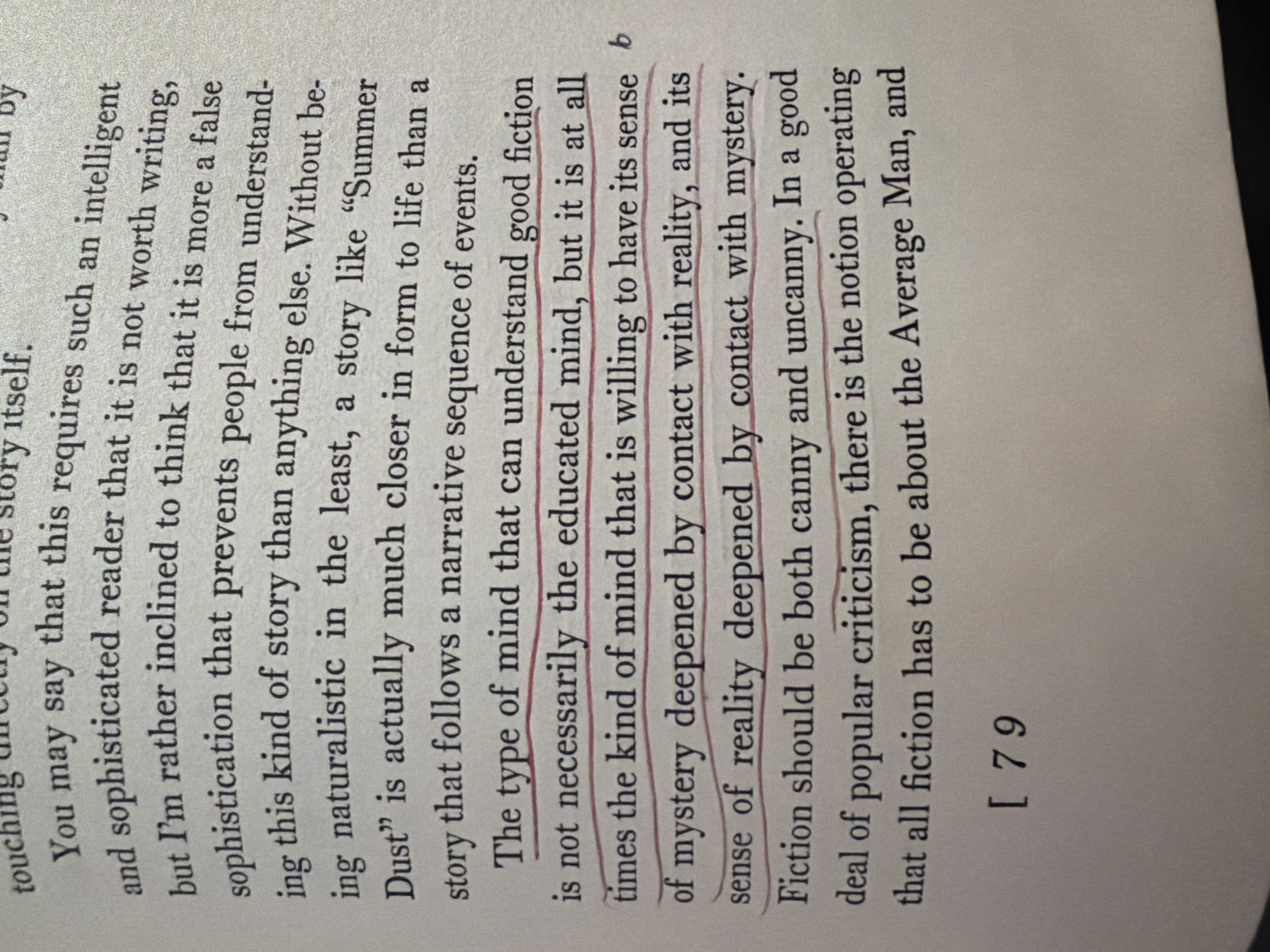
I’ll always return to this text; I learn and relearn important truths about the hard work of writing every time I open it, especially the part about wearing bug spray near the lake when writing outdoors in the summer.
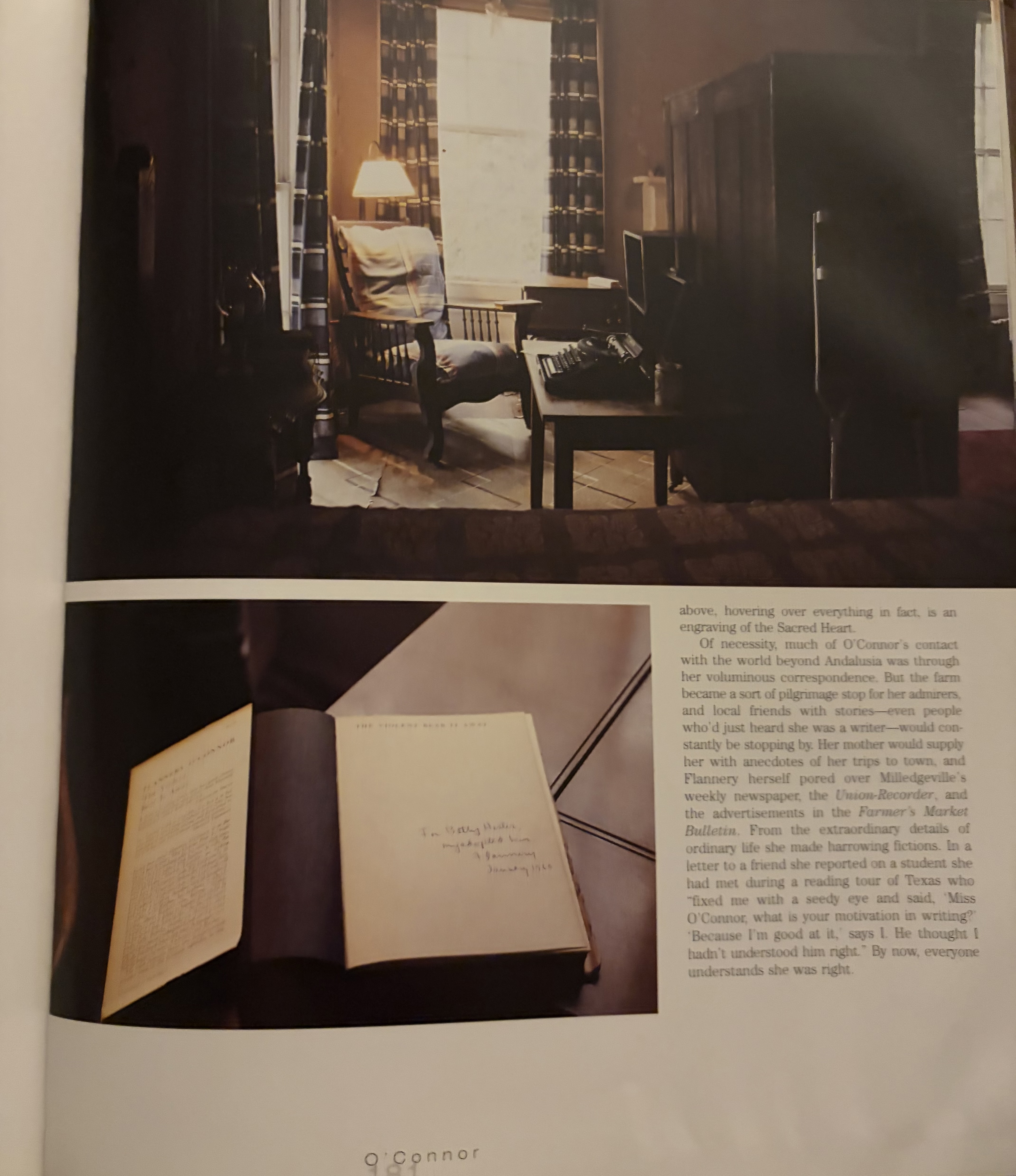
Below, Ms. O’Connor’s writing table and typewriter at Andalusia.
*Author note:
ISBN for Letters of Katherine Anne Porter: 0-871131286-9
ISBN for American Writers at Home: 1-931083-75-8
About the Creator
Harper Lewis
Intrusive rhyme bothers me, except as a weapon.
Intertextuality is my passion.
Formalist/ New Critical are my guiding theories.
My words are mine, not a robot’s.
MA English literature, CofC
Enjoyed the story? Support the Creator.
Subscribe for free to receive all their stories in your feed. You could also become a paid subscriber, letting them know you appreciate their work.
Comments
There are no comments for this story
Be the first to respond and start the conversation.