
How Long Is Your String?
A Review of The Measure by Nikki Erlick

There have been many famous stories surrounding boxes. There are two stories that stick out to me the most. The first one is Pandora’s Box. Zeus gives Pandora a box as a wedding present, but leaves her with the following warning: never open the box. However, Pandora’s curiosity got the best of her, and she opened it. Her decision led to the unleashing of evil, sadness, and diseases entering the world, leaving only Hope trapped at the bottom of the box.
The second one is Schrödinger’s Cat. It is a quantum physics thought experiment. Schrodinger proposed the following situation: a cat is sealed inside a steel box with a vial of poison. According to his thoughts on quantum mechanics, the cat is simultaneously alive and dead until the box is opened.
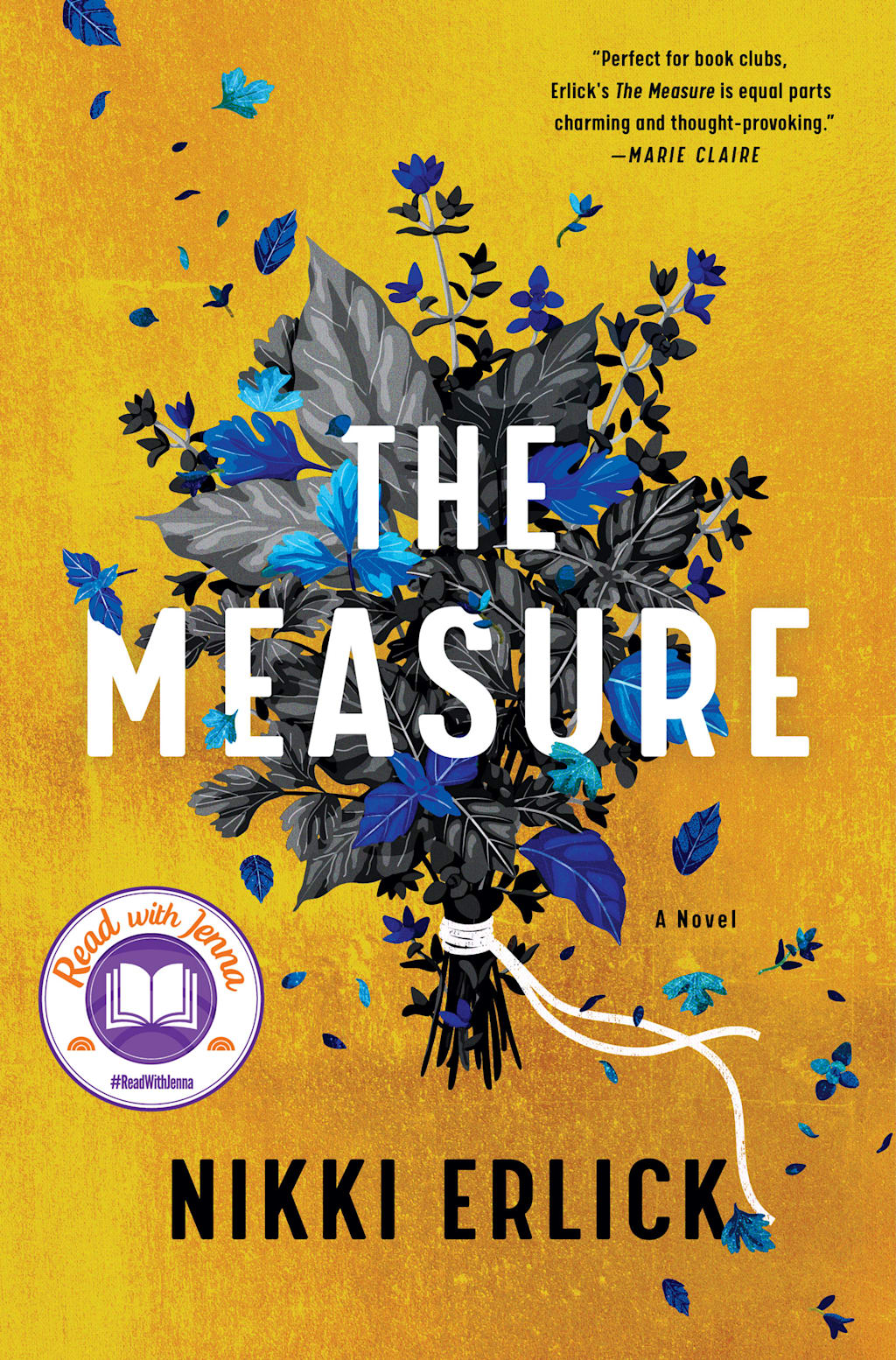
Recently, I read The Measure by Nikki Erlick, which also talks about a box. One day, everyone over the age of 22 receives a box that contains a string that reveals exactly how long you have to live. Does the story measure up to the likes of Pandora’s Box and Schrödinger’s Cat?
If I had to describe The Measure, I would say it is a mixture of Pandora’s Box and Schrödinger’s Cat with a sprinkle of Men in Black. How, you may ask? Like Schrödinger’s Cat, people thought that not opening the box meant that they could live or die at any time, like before the boxes appeared. They figured that they could live the same way they always did. However, since there were a multitude of boxes delivered, and with the internet and communications as vast as they are, word spreads around the world within minutes. The situation leads to the same scenario in Pandora’s box: mass chaos and confusion. But why would learning the truth of when you die cause such massive hysteria?
I find that it is best explained in Men in Black when Agent K explained to J why a person tends to react to a crisis better than a collective group or society:
A person has the ability to think logically about a situation even if it is extreme. However, groups of people or even society as a whole tend to act out of fear and panic when faced with a crisis. Agent K’s reasoning is that society would turn on its head if they discovered aliens lived among us. Unfortunately, that is exactly how things play out in the book. A bride and a groom tried to commit suicide because they compared strings and noticed that hers was extremely short. The bride died after the attempt, but the groom lived but was seriously injured. Governments tried to get a census of people with strings and then used the information to discriminate against short stringers. Their thoughts were, why give someone an opportunity if they were going to die anyway. It affected the way doctors treated patients because they thought they should not waste their medical time on those who, you know, would not survive. A political candidate used the chaos to mobilize his base against people with short strings and made arguments that short stringers were a threat to be monitored. The whole world’s view on life changed in a matter of days and caused people emotional distress, panic, and rash decisions.
Reading the novel left me with two thoughts. Beliefs about destiny changed. Before the string, people didn’t know when they were going to die. We could go on living as if we were the masters of our own fate. However, after the string showed how much time people had left, it revealed how little control we have over our lives. The suicide jumper from earlier found that out when he lived. It seemed the strings took into account what people would do after finding out about their lifespan. Others tried going to the doctors rigorously around the time the string said they would expire, but it was no use. It is an interesting notion because everyone eventually dies, but the string takes away the hope that there is another tomorrow possible for us to live through. Having the string finalized means that you have a set expiration date and that there is nothing you can do about it.
Given that fact, should the people with short strings be given a chance in life? I actually wondered about that a lot over the course of the book. There was a storyline in the book where the army put a restriction on those with short strings. They couldn’t serve. Two army cadets switched strings. The one with the longer string was afraid to serve, and the one with the short string wanted to serve his country. The thing is, had they not switched, the short-stringer wouldn’t have been able to save multiple people who would have died without his help. It makes you wonder if what the army did was logical.
Imagine if that happened in real life. If people like John F. Kennedy, Abraham Lincoln, or Martin Luther King Jr. were disregarded or not taken seriously if people knew they didn’t have long to live. I know I personally would have been affected, as well as millions of other black citizens in our country. Our rights might have been stripped away, or not even have been considered people at all. It illustrates that a life isn’t measured by longevity, but by what we do with the remainder of the time we have left on this earth.
Overall, I felt that the book gave us a hard look when it comes to knowledge and mortality. People are quick to change when new knowledge is revealed, which can a lot of time lead to a lot of chaos or strife. The novel also illustrates that death comes for us all. We can either try to run from it or embrace life's uncertainties and live each day to the fullest.
About the Creator
Enjoyed the story? Support the Creator.
Subscribe for free to receive all their stories in your feed. You could also become a paid subscriber, letting them know you appreciate their work.
Comments
There are no comments for this story
Be the first to respond and start the conversation.