
"Birth-Rate Crisis" Challenges Conventional Thinking About Family and Modern Life
Jim Penman and Andrea Pearson look beyond economics to examine how neuroscience, psychology, history, and modern priorities may help explain falling birth rates around the world

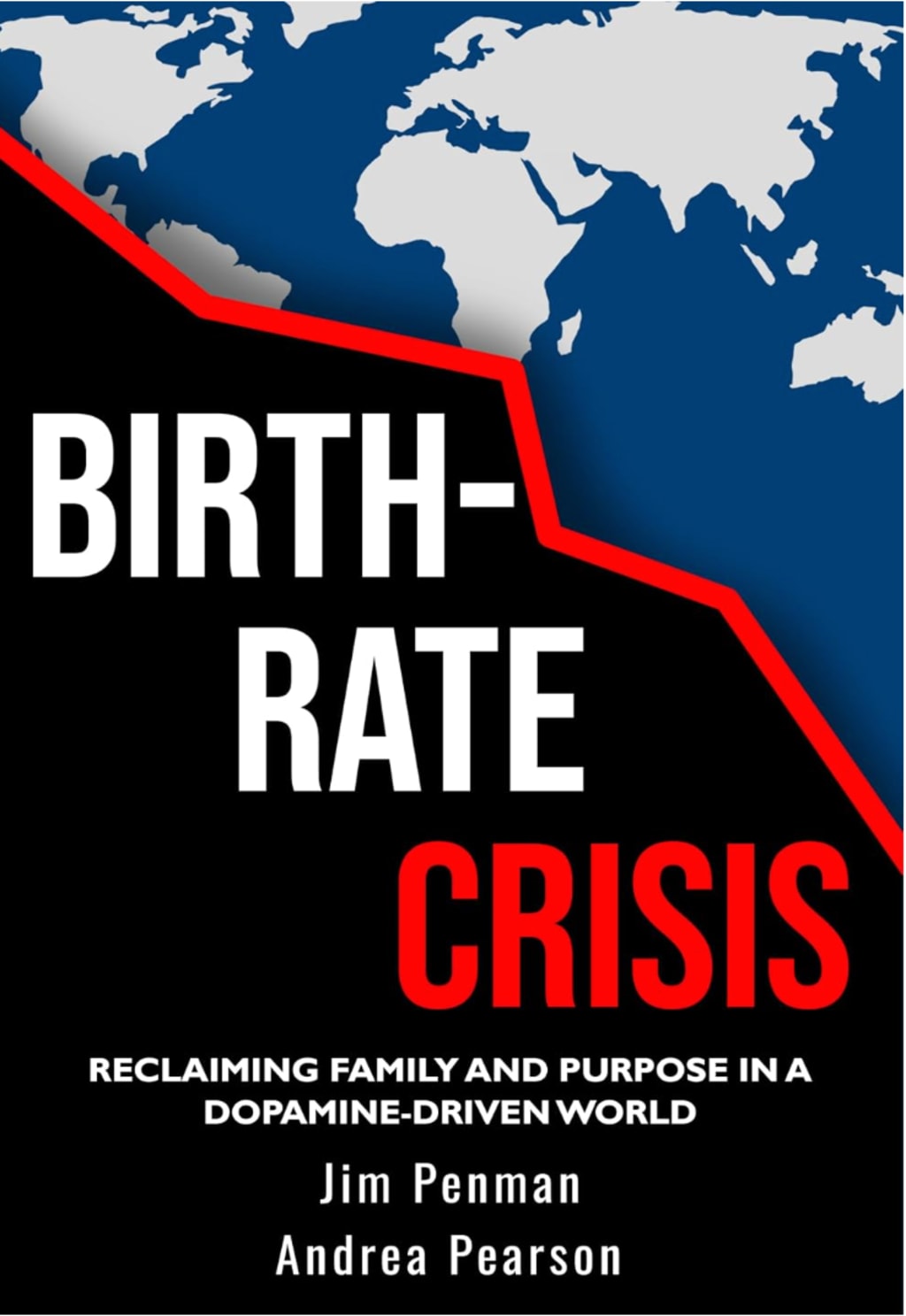
Modern life offers an extraordinary range of distractions, conveniences, and opportunities for personal fulfillment. Yet alongside these changes, birth rates have fallen across much of the world, leaving policymakers searching for ways to encourage people to have children. In Birth-Rate Crisis: Reclaiming Family and Purpose in a Dopamine-Driven World, Jim Penman and Andrea Pearson explore a less conventional question: Could the conditions of contemporary life be changing not only people's circumstances, but also their priorities and willingness to commit to family?
The book takes its starting point from a problem that has resisted straightforward solutions. Governments have devoted substantial resources to encouraging higher birth rates, while public discussions frequently emphasize the expense of housing, the challenges of infertility, and the financial responsibilities of raising children. Penman and Pearson argue that these explanations may leave important questions unanswered.
Their approach brings neuroscience and psychology into a debate usually dominated by economics and public policy. The reference to dopamine in the book's title signals an interest in how motivation and reward may relate to modern choices. The authors use this framework to examine the possible connections between contemporary lifestyles, personal priorities, and the willingness to pursue commitments that unfold over many years.
Family life, by its nature, requires people to think beyond the immediate moment. Raising children involves sustained responsibility, changes in routine, and decisions that affect not only an individual but also a partner and future generations. By placing these commitments within a discussion of dopamine and modern behavior, Birth-Rate Crisis raises the possibility that the surrounding culture deserves closer scrutiny alongside more familiar economic explanations.
Rather than asking only what governments can offer prospective parents, the book considers what people want from life and how those desires develop. It invites readers to think about the relationship between immediate rewards and long-term fulfillment, as well as the place of family in a society that offers many competing paths toward satisfaction.
The historical scope of the book adds another layer. Its examination of examples ranging from ancient Rome to contemporary prosperous nations suggests that falling birth rates should not be understood solely through the circumstances of any one generation. By considering different periods and societies, the authors look for recurring patterns that might help explain why communities grow, change, and sometimes struggle to sustain themselves.
That historical perspective also complicates the idea that greater prosperity automatically produces greater confidence in the future. Material conditions clearly influence family decisions, but the book asks whether prosperity and technological advancement can coexist with changes in the cultural and psychological foundations of family formation. This question becomes particularly relevant when conventional policy responses have not delivered the results their proponents hoped for.
Penman and Pearson also examine differences between communities that continue to maintain family formation and those experiencing greater difficulty replacing their populations. This opens the door to considering the role of shared values, social expectations, and a sense of belonging in shaping individual decisions. The challenge is not simply to understand why people are having fewer children, but to examine the environments in which family life remains an attractive and sustainable possibility.
The book's proposed response is ultimately constructive. Its emphasis on reclaiming family and purpose points toward a future in which demographic concerns are addressed through a broader understanding of human needs, rather than through financial measures alone. That approach does not eliminate the practical obstacles facing prospective parents. Instead, it asks whether any lasting response must also take account of the motivations and cultural conditions that influence their choices.
Birth-Rate Crisis brings together questions that are often discussed separately: the science of human motivation, the pressures of modern living, the historical experience of societies, and the future of family relationships. By linking these subjects, Penman and Pearson encourage readers to look beyond population figures and consider the personal decisions and social priorities that help produce them.
For readers interested in the intersection of psychology, culture, and demographic change, the book offers a framework for thinking about why family formation has become such a pressing issue. Its broader message is that the future of families may depend not only on what societies can provide, but also on how people understand fulfillment, commitment, and the purpose they want their lives to serve.
About the Creator
Enjoyed the story? Support the Creator.
Subscribe for free to receive all their stories in your feed.
Comments
There are no comments for this story
Be the first to respond and start the conversation.